
Something recently came up that I could not resist talking about because it exists at the intersection of my profession and Very Online Culture. If you don’t know how news made, keep reading. If you DO know how news is made, keep reading.
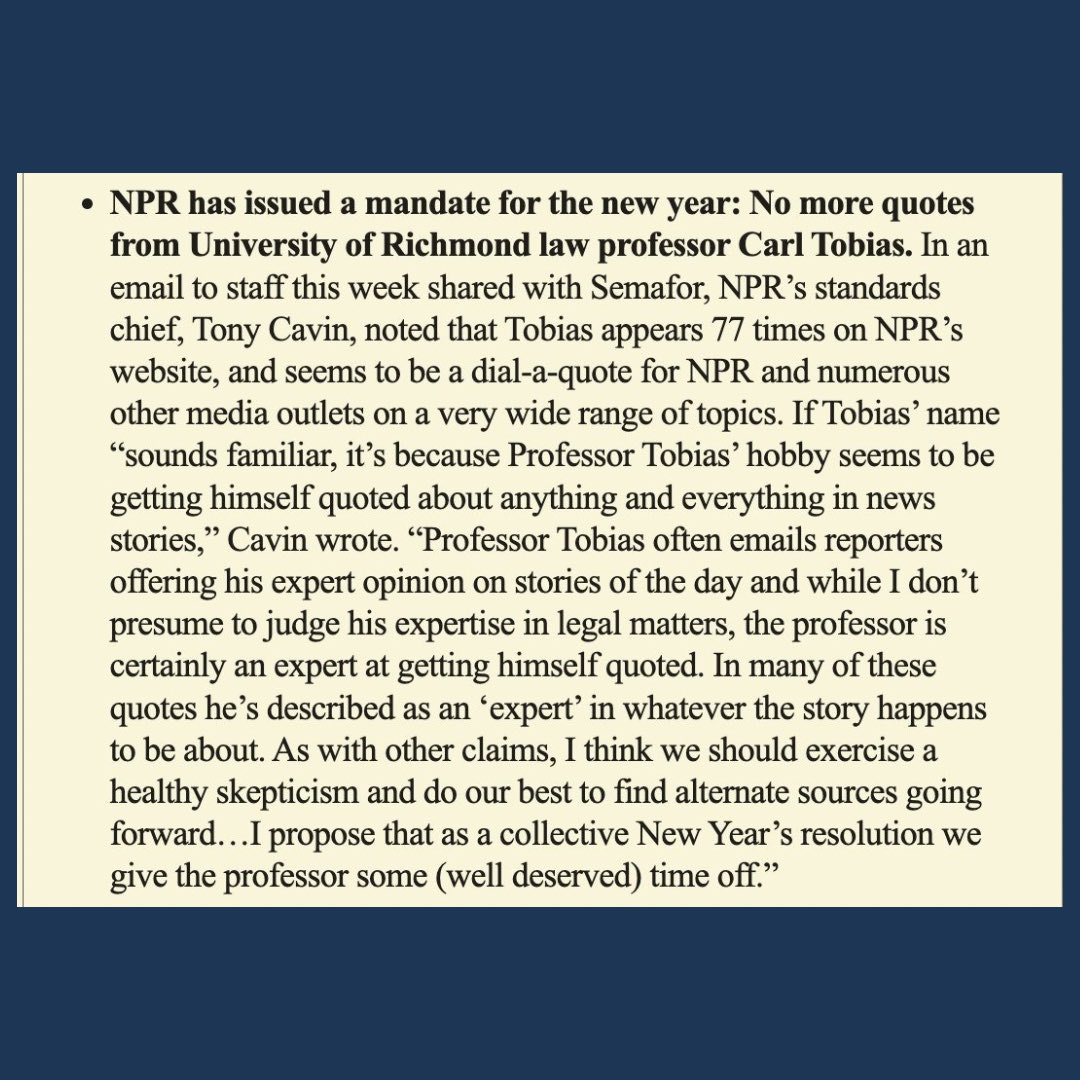
The story begins with a law professor, Carl Tobias. In late December 2025, a post appeared on Twitter noting that Tobias had appeared as a legal expert 77 times on NPR’s website. NPR’s chief of standards issued a statement saying NPR reporters may no longer use Tobias for quotes.
Disclaimer:
I harbor no ill will toward anyone involved.
The expert legal commentator, I presume, is an expert in his field and offers honest perspectives.
The reporters quoting him are on deadline and need a reliable source.
Nobody here is a bad actor. I am explaining how media works.
What’s wrong with this? Why can’t he be quoted 77 times on NPR? Who cares if he’s pitching himself? Fortune favors the bold!

Again, I don’t question his legal expertise. But it is difficult to truly be an expert across such a wide breadth of issues—like Asian restaurants that serve sushi and sesame chicken- tough to do all of that well. And pitching reporters is time-consuming. How does a law professor have time to pitch himself to NPR all day?
Which brings us to the obvious question: why is a communications manager pitching him to NPR 24/7? Isn’t that cringe?
The role of a communications professional is, voilà, securing media coverage. Anywhere you can get it. The Underwood Gazette. Omaha Jewish News. Cat Fancy. This is the business.
So who can blame an enterprising communications professional for landing Mr. Tobias on NPR 77 times? A win is a win.
And the job is hard. We get told “no” a lot. I mean, a lot. So sometimes a comms person will bloom where they’re planted — even if there are, um, a lot of blooms there.
Now, onto NPR reporters Why quote the same guy over and over? Why not look for more specialists?
Simple: the reporters are on deadline and need to get the story out fast. So they go to the usual suspects. The law professor who will answer your email in 15min. is your guy—whether the story is about tax law or tort reform. No need to track down the nation’s leading expert on torts if you have Carl Tobias in the bullpen.
This is the business. I don’t blame the reporters. They have a tough job. So does the communications person.
This is where branding comes in.
In a media environment with deadlines, competition, and limited time reporters look for clearly “branded”, reliable sources.
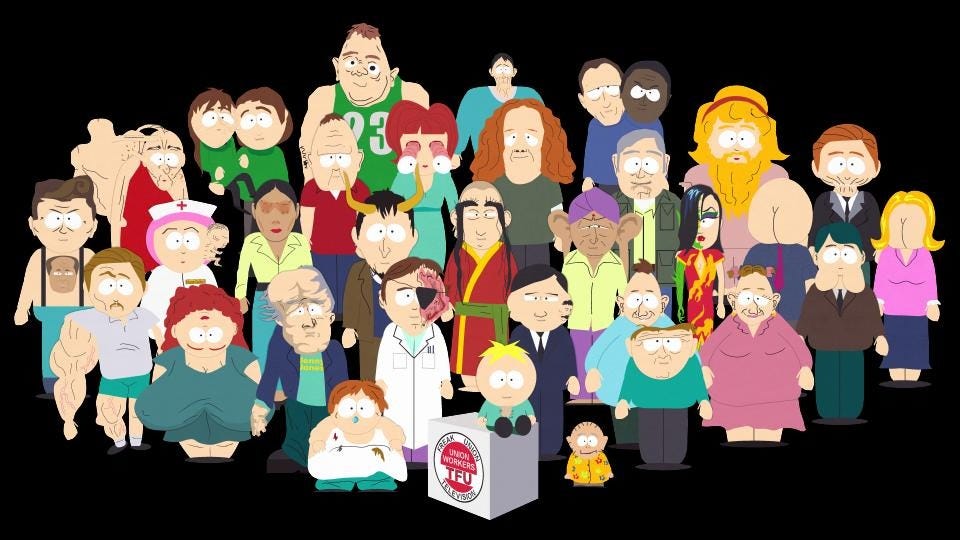
Remember that South Park episode about the True Freaks Union?
The talk-show circuit featured people like “Man Who Looks Like Hammer” and “Disfigured Country Singer” — “freaks,” in the show’s words, not mine. We laugh, but these exaggerated personas made people instantly recognizable, which is why they got booked on talk shows in that episode.
Reporters and producers need you to be recognizable and “branded.” So how do you do that?
1.) Figure out your identity. What actually makes you unique? “Tax expert” may not be enough. Try something like:
Joe Smith, expert in taxes and Trump-era tariffs, senior research fellow at Big Think Tank.
2.) Say it. Over and over. And over again. It will feel cringe. Do it anyway. Your Twitter bio, bylines, and email signature should be consistent. People need to see things many times before they sink in. Reporters are people, just like you and me.
3.) Get it in writing. Start with an op-ed using that byline. This is great to include in pitches because reporters and producers can see that you’ve already built credibility with a publication — and that they aren’t relying on some, um, freak.
💼Job postings and fellowships galore!
🏆You Can’t Succeed By Hating Yourself
✅ Apply here to join the Marketing Meetup, a virtual meetup for experienced marketing and communications professionals to share practical strategies, real-world experience, and what works.
No posts
Comments
Nothing yet. Say the first thing.
Sign in to join the conversation.