
Helen Andrews recently wrote an essay for Compact Magazine, titled The Racial Crossroads, which has been making waves for daring to use the verboten descriptor ‘race communism’ for the acrimonious racial spoils system that has replaced meritocracy throughout the dying West. It’s very good. You should read it.
Personally, I prefer the more descriptive ‘gay race communism’. The progress pride flag is inseparable from the clenched Marxist fist of Black Lives Matter in regime iconography. Moreover, gay race communism is a deliberate subversion of the left’s own ‘fully automated luxury gay space communism’ meme.
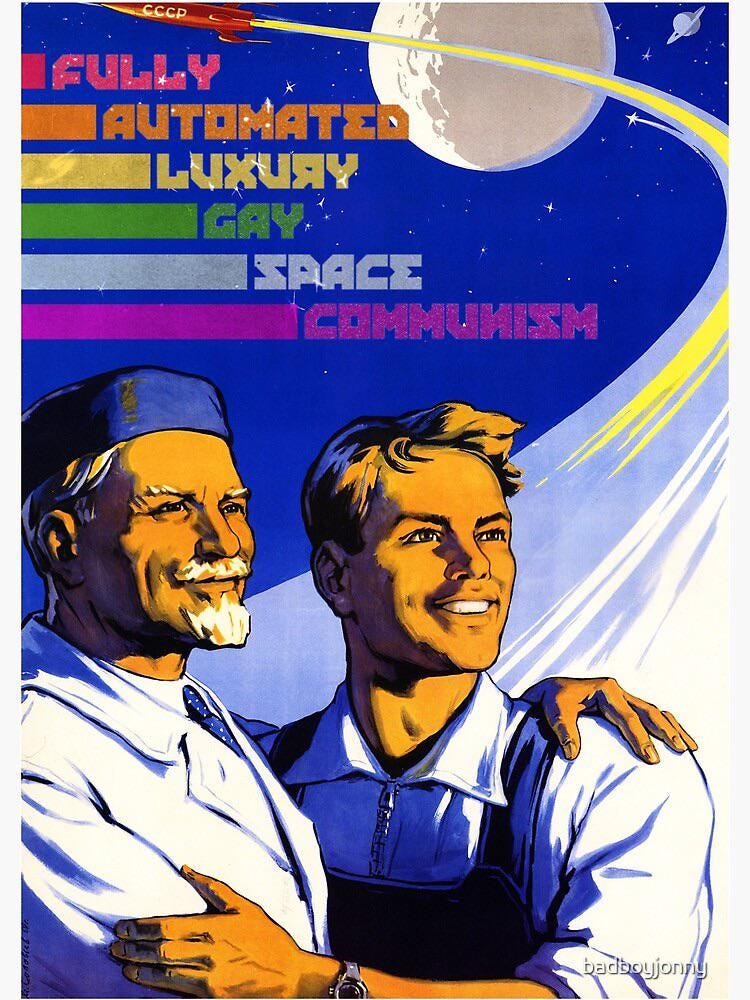
To be fair, Andrews introduces the concept as ‘gay race communism’, and even directly acknowledges its coinage by Twitter anon Drukpa Kunley. It wasn’t that long ago that conservative popularizers laundered ideas emerging from the anonosphere without attribution, as a means of hiding their origin and making themselves look more original, and Helen deserves credit for not doing this. Also to be fair, given the focus of Andrews’ piece, adding the ‘gay’ to ‘race communism’ could be seen as an unnecessarily inflammatory complication. It isn’t, but we’ll get to that in due time.
Andrews spends the first half of her essay detailing how the regulatory framework built by the Civil Rights Act created the cultural conditions for the rise of wokeness, affirmative action, and DEI initiatives. The official explanation given for anti-discrimination laws was that they were well-intended correctives to the legacy of slavery and Jim Crow. Affirmative action was to be an explicitly temporary measure to give American blacks a helping hand, with the understanding that – after a decade or at most a generation of assistance – they would no longer need a thumb on the scale. Once racism was defeated, we could all live in utopian colour-blind race-neutral Star Trek liberalism, judging one another by the content of our individual characters and no more concerned by the phenotypic differences of ancestral population groups than we are by sartorial quirks. Kumbayah and such. This isn’t an original argument: the same points have been made by Christopher Caldwell in his 2021 book The Age of Entitlement, and of course most directly by Richard Hanania in his 2023 book The Origins of Woke (whom Andrews doesn’t mention, possibly because everyone hates Hanania now).
The central point of Andrews’ essay is the following:
The old racial bargain is breaking down, due to a combination of changing demographics and a dawning realization that racial outcomes are not going to converge any time soon. One possible path forward is to throw out the old racial bargain and establish a new one based on equality under the law. The other possible path is to accept permanent racial favoritism at every level of society.
As Andrews sees it, the first problem with the Civil Rights regime is that it reifies the abstraction of equality into a legal presumption that there are no salient biological differences between human population groups. This simply isn’t true, but the assumption that it is true leads to the necessary conclusion that all differences in outcome between groups must be a consequence of discrimination based on irrational prejudice, rather than a natural result of inborn distinctions of cognitive capacity or behavioural profile. Biological differences are real and significant, but the make-believe that they are socially constructed and unimportant incentivizes a perpetual inquisition that dismantles society as it persecutes innocent people for ever more tenuous spectres of racism implicitly haunting the privileged depths of their incorrigbly white ids. This places institutions in an impossible quandary, since the only way to avoid being dragged into court in discrimination lawsuits is to preemptively discriminate in favour of protected groups, which is to say, against unprotected groups. Human resources departments have formed as a direct response to the legal sword of Damocles poised over every institution’s neck: their function isn’t actually to hire the best people, or to hire anyone at all, but rather to ensure that the employer won’t get sued for hiring people from the wrong groups, or not hiring the people from the right groups, or for allowing people from the right groups to get offended by things said by people from the wrong groups. A doctrine predicated on denial of reality must go to war with reality to preserve itself, and as the war on noticing grinds on the battlefront presses into ever more intimate corners of people’s lives, their public speech, their private speech, their silent thoughts, their very emotions.
The second problem Andrews identifies is demographic mission creep. When race communism first got rolling in the 50s and 60s, the focus was quite specifically on African-Americans, who had an arguable claim to restitution on the basis of their long period of bondage on the cotton plantations1. White Americans largely agreed with that, and were trying to do the decent thing, to make up for the abuses and indignities suffered by the disadvantaged blacks.
The mass migration of the third world into the first upsets that balance. America is no longer a 90% white country with a small rump of Africans, but more like a 50% white country, with large and growing minorities from every benighted slum in the Global South ... and every single one of those groups gets to classify itself as an oppressed racial minority from the Global Majority, and therefore help itself to the largess spilling forth from the cornucopia of white guilt. In the 70s and 80s affirmative action was largely no more than an annoyance for white Americans, but in the 2020s young American whites find themselves shoved aside in university admissions, in corporate hiring, in the availability of loans and grants for education, in the availability of venture capital, in promotions, and so on, with these opportunities being bestowed instead upon supposedly oppressed minorities who arrived five minutes ago and were never actually oppressed by white Americans.

On the current trajectory, under the current regime, the white population is dwindling, and will be a minority sometime around mid-century if not earlier not only in the US, but in Canada, Australia, New Zealand, the United Kingdom, and most of Europe. Minority status will not mean that white people will suddenly be able to count upon the advantages of minority rights that they graciously extended towards non-whites. South Africa tells you everything you need to know: whites will simply become a dwindling population of designated oppressors. If anything, the genocidal fervour of what BAP calls the interahamwe left will only intensify. The rhetoric will shift from the rights of ‘oppressed minorities’ required by pluralistic tolerance to the rights of the ‘global majority’, since in Our Democracy the majority rules. We’re already seeing this happen.
Institutional collapse is a near certainty on this track. Our civilization is a staggeringly complex system of systems. Operating and maintaining those systems requires a high degree of competence. Competence has to be learned, but it can’t be learned by anyone. DEI pushes incapable people into key positions, while denying even the opportunity for training to the potentially capable. Eventually, the systems themselves begin to malfunction. Repair becomes impossible, because there’s no one who actually knows how to repair the systems: the ones working in the system are too stupid to understand it, while those who could have learned were locked out and therefore didn’t learn what they needed to know. One system breaks, causing a problem in another system, which leads to a problem in a third system, and soon cascading failures junk the entire machine. DEI – and by extension, Civil Rights – has precipitated a competence crisis, and Complex Systems Won’t Survive the Competence Crisis.
This complex systems collapse is already happening. Andrews uses the example of failures in airplane manufacturing, pilot training, and air traffic control that have made air travel that much more hazardous, and which seem to trace directly to DEI-motivated recruitment policies, although naturally it is difficult to verify this as the regime does everything it can to obscure such a connection. The general enshittification of the Internet is probably at least partly a result of less talented and less scrupulous Indians replacing white software engineers. Entertainment media has become ludicrously bad in direct proportion to the replacement of white male directors, showrunners, screenwriters, animators, artists, and programmers by women of pronouns. Academia is in the midst of a credibility collapse for exactly the same reason.
It is not hard to extrapolate this degenerative process out a generation or two. Instead of building cities on Mars, we will be bouncing over potholes on dirt roads. Tap water will have to be boiled, assuming water even comes from taps. Electricity will only be available a few days a week, and that in the good neighbourhoods. What did South Africans use for light before they had candles? Light bulbs. There are still liberals in South Africa, by the way.
Forestalling collapse is simple. All we need do is reinstate meritocracy within institutions.
Simple does not mean easy. Reinstating meritocracy is in fact ideologically impossible for the regime.
Andrews’ solution to this is a new grand bargain, in which we’ll all agree to put race to one side, and cease trying to police discrimination. People will be free to discriminate as they please, or to not discriminate at all, on whatever basis they wish, and the chips will fall where they may. Reading this, one pictures a round and beautiful oak table, around which are seated representatives of the white community, the African-American community, the Pakistani community, the Indian community, the Mexican community, the Puerto Rican community, the Somali community, the First Nations community, the Chinese community, the Filipino community, the Jewish community, the Chinese community, and all the rest of the hundreds of demographic communitays having a nice calm civilized gentlemanly debate about the new settlement, proceeding from the common understanding that the complex systems must be preserved for the general prosperity of all. Lol. The next thing one pictures is all the representatives of the non-white communities making a fire of the beautiful oak table.
No such settlement is possible, because there’s nothing in it for anyone but white people. Under the existing dispensation non-whites are the beneficiaries of all sorts of special programs that amount in practice to a vast transfer of wealth from white hands to their own. They have no immediate incentive to change this, and will in fact fight bitterly against it. Sure, you could point out that if the systems collapse under their mismanagement and the sheer weight of their shameless parasitism, they’ll be worse off in the long run, but this assumes that they’re capable of understanding second-order consequences, that they can entertain hypotheticals, and that they possess the ability to defer gratification. “But what if the system collapses and breakfast doesn’t get delivered tomorrow morning?” I don’t know what you talkin about, man, I got breakfast right now.
Such a settlement is even more unlikely because, in order to be even minimally stable, it requires everyone to accept that sociobiological stratification along racial lines is an inevitable outcome of human biodiversity. We all know how it would shake out: Africans on the bottom, Hispanics and Indians in the middle, and Jews, East Asians, and Europeans on top*. Subaltern populations will resent superior populations, and the narrative that they are oppressed will always be more attractive than accepting that they are genuinely and objectively inferior in ways that matter. How many black people per capita accept racial IQ differences as the most stubbornly rock-solid finding of the social sciences? How many of them, per capita, even understand per capita?
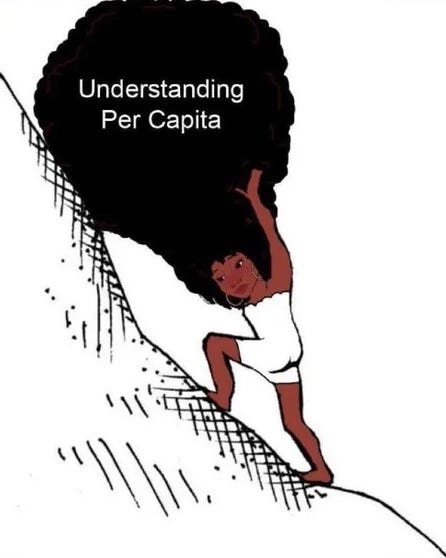
Andrews herself describes the patron-client strategy of the Democratic Party, which all but monopolizes non-white votes by the simple expedient of giving them stuff they take from white people. The Republican Party is essentially the faction of ‘let white people keep their stuff’, which is very popular with whites but isn’t at all enticing for non-whites. This is an intrinsic issue for any democratic system with universal suffrage. The vote of a parasite is rated exactly the same as the vote of a producer, and parasites will vote for whoever promises expropriation. Mass immigration is an accelerant: parasite parties can easily increase their vote share by importing more parasites. It’s a positive feedback doom loop.
A further difficulty is that white populations are divided, because a lot of whites are directly employed in administering expropriation. Think of the armies of white women in human resources, or doing social work, or in the NGOs. Tearing down the civil rights regime would put them out of a job. It does not matter how many facts or how much logic you have on your side, they aren’t going to vote for being put out of a job.
Defeating gay race communism at the ballot box is not necessarily impossible, as Trump’s two2 electoral victories demonstrate, to say nothing of the Brexit referendum, and more recently the new UK Reform Party sweeping local council elections. Populist right-wing parties such as France’s Rassemblement National, Germany’s Alternativ fur Deutschland, or Meloni’s Fratelli d’Italia have enjoyed an explosive growth in popularity. However, these examples also demonstrate the limitations of this strategy. Trump came out swinging when he assumed the presidency for the second time in 2025, with a raft of executive orders, an assault on left-wing funding in universities and USAID, closure of the border, and a significant ramp up in ICE deportations; he also got tied down in the courts, has so far not been successful in deporting illegal migrants at anything like the necessary pace, and has watched more or less helplessly as universities thumbed their noses at attempts to eliminate DEI. It has been broadly similar for Meloni, who has been largely ineffectual because Italian courts won’t let her do things. In France and Germany procedural manipulation has so far succeeded in isolating insurgent right-wing parties from any meaningful participation in power, regardless of the fact that they are the largest single parties. Marine Le Pen was banned from running for office on trumped up corruption charges. In Romania the courts simply cancelled the election of a right-wing president they didn’t like.
A purely electoral strategy suffers from a number of weaknesses. First, it is an uphill battle against an electorate that has been packed with foreigners who should not, but do, hold the franchise, and who will not vote for their own deportations or for any diminishment in their privileges, to say nothing of the votes of the compradors who profit from their presence. Second, this fifth column is continuously increasing in size both due to ongoing migration and higher fertility in migrant populations. Third, the regime is quite happy to use procedural manipulation and lawfare to prevent or nullify electoral victories. Fourth, even if the right succeeds in getting their representatives into office, this does nothing to prevent the left from running interference using NGOs, the courts, the permanent bureaucracy, and international treaty frameworks to blunt every assault on their power. Winning an election is a herculean task, but even if it succeeds, politicians find that the state has been deliberately set up to minimize the electorate’s ability to interfere with the policies decided upon by Our Democracy.
That isn’t to say that electoral victories should not be pursued. Even partial control of the state apparatus is better than no control at all. However, it is by no means a guaranteed solution. Given current migration rates, there is only a very narrow window during which elections can work at all. Across the West whites are already looking at local minority status within the next ten, twenty, or thirty years.
If race communism cannot be defeated at the ballot box, the only remaining alternative – other than the collapse of our civilization – is an end run around democracy. White people, and specifically white men, would need to impose Andrews’ new settlement of race-blind meritocracy via force majeure. Assuming that they’re willing to settle for race-blind meritocracy at this point. Which by that point, they probably won’t be.
And at this point in our meander, dear reader, I find that I must interrupt you to make another point, which is that this it is precisely here where a less generous might be tempted to place a paywall. Yes, yes, I know ... you’ve heard it all before. You know I’m going to lean upon your own generosity now, and attempt to guilt you into sending me money. But a man must eat, even a keyboard-pecking scrivener such as myself. This blog is, at the moment, my sole source of income. There is absolutely nothing preventing you from ignoring this interjected mendicant paragraph, your eyes may skim over it if they please, and continue reading every word of this essay without paying a cent. The majority of you will do precisely this, and I bear you no ill will for doing so, because after all times are hard all around in our enshittified economy. But for those of you, the few, the proud, the aristocrats of the soul, who find it in your hearts to throw a few dollars into the hat, know that my gratitude will be profound.
Force does not necessarily mean open, direct violence. Lawfare is a kind of force. The left is no stranger to using the courts to defeat the will of the people or their elected representatives. In fact, many of the left’s most important political victories have been won at the bench rather than the ballot box.
Of course, force is also a kind of force, and it is precisely the threat of force that makes courtroom decisions so forceful. Direct rule by armed men has often proved an efficient means of overthrowing a democracy, or for that matter any other kind of government, including that of other armed men.
The state is, in its purest form, the totality of armed men within a given territory. Whoever else it employs, it is armed men who give its decisions weight. That means that it is ultimately the beliefs of armed men that really matter, because without their belief in the legitimacy of the state, the state collapses. A shift in alignment within their ranks is the decisive event that brings down every regime when it falls. A split in alignment means a civil war. A dissolution in alignments fragments a regime into warring factions. So long as alignment remains unwavering, however, it assures the monopoly on force that every legitimate state enjoys.
Is the race communist regime legitimate, in this sense? Do the regimes under its sway enjoy the unwavering allegiance of the violence-capable young men in their territories? The most charitable answer to that is probably to say, uh, it’s complicated.
Gay race communists understand quite well the danger posed by the shaky allegiances of the young white men it expects to occupy the role of universal villain and perpetual draft animal. Young white men are historically the most dangerous human type and therefore the deadliest organisms to have ever evolved. This is where the gay part comes in. If you’re white and male but gay, you’re a member in good standing with the Party, and if you cut your parts off you get to visit the VIP lounge. The gayer they can make men act, the less of a threat men are. This is pushed especially hard within the military itself in many countries. The gayer the army is, the less likely the white men who form its teeth are to defect … in part because they’re less likely to join in the first place.
The concept of ‘gay’ should probably be widened somewhat beyond ‘anal masturbation’ to capture its full meaning in GRC, to something like ‘habitual indulgence in sterile hedonism’. In this sense virtually every man alive in the West is a sodomite on some level. Binge-watching Netflix dramas, online sports betting, bedrotten doomscrolling, vidya game playing, and of course gooning all amount to masturbatory paraphilias of one kind or another, as all of them are varieties of the digital narcotics that gay race communism deploys to keep Western men in a distracted and stupefied state. To say nothing of pharmaceutical narcotics, which are also supplied in abundance.
Anyhow, I’m not here to harangue you about sins that I’m as guilty of as anyone, simply making a point about why ‘gay’ is an essential element in ‘gay race communism’, which we might also call hedonic bioleninism to be more specific as to the meaning. Homosexuality is an essential bulwark against mass defection by the violence-capable population.
Back to the opinions of armed men. When armed men dispense with the polite fiction of universal suffrage and decide that no, they are in charge now, we call this a coup d’etat. A coup is usually thought of as a cancellation of democracy, but a successful coup is almost invariably akin to an assertion of the only kind of democracy that really matters: the democracy of chuds. The coup has legitimacy if the kinds of men who could fight against it don’t, even if only for the most practical reasons of self-preservation. If violence capable men agree that the junta is in control, it is. It helps enormously if there is a general sense amongst the violence-capable men that the coup was just or necessary, in other words if the coup is popular. Popular with them, specifically. It does not matter how non-combatant populations - old men, women, children - feel about it, except insofar as their feelings influence the feelings of the men. It is the men, and most particularly the dangerous men, whose opinions matter.
I think at this point that there is for the most part a broad consensus amongst young white men that the regime which rules our countries has severe and seemingly intractable structural problems, particularly from their perspective. Not every white man, to be sure, but electoral maps showing outcomes if only white men voted are mostly a sea of far-right xenophobic fascism according to the taxonomic categories in use by the boomer news. Even those who are mostly withdrawn into their electronic distractions, which is most of us, do so in large part out of demoralized dissatisfaction. Very few have any enthusiasm for a regime that hates us, and those few are mocked as soft-minded fools at best and traitorous collaborators at worst. The persistent recruitment crisis in Western militaries is just one symptom of this.
In recent years coups have not worked very well. In 2024 former South Korean president Yoon Suk Yeol of the People Power Party i.e. the National Incel Liberation Party (look at the gender divide in Korean politics to see what I mean by that) attempted to overthrow the legislature by sending in the military, which seemed very confused about the situation. Incredibly, the Korean parliament simply voted against martial law, at which point the military promptly walked away and arrested the president. The entire thing was over in a matter of hours. He is in jail now.
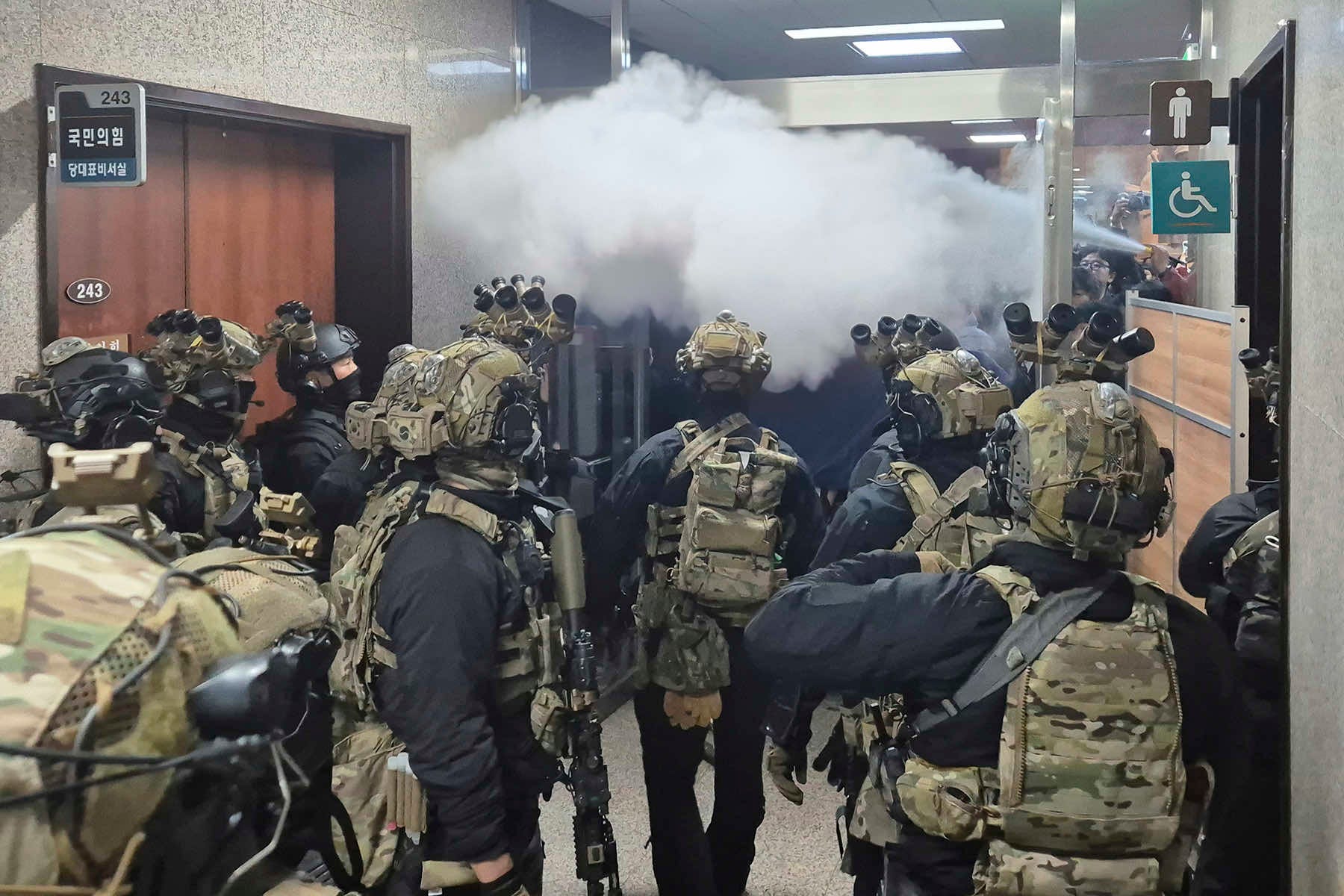
Following Kemal Ataturk’s overthrow of the Ottoman sultanate in 1922, Kemalists in the military intervened in Turkish democracy four or five times in order to preserve secularism in the Turkish state from the theocratic inclinations of an Islamic populace. Interventions ranged from tanks in the streets and rule by junta, to memoranda from the brass that forced elected governments to resign via ultimatum. The most recent coup, however, did not succeed. It was not led by Kemalists but by Gülenists, supporters of an Erdogan-aligned radical Islamist cleric who had been infiltrating the Turkish military for years. The Gülenist coup failed because Erdogan had gotten wise to them and had already started dismantling the network, and because there was simply no broad support within either the public or (more importantly) the military for Gülenist rule. When it failed, Erdogan purged Gülen’s supporters from the military, and used the opportunity to clean out the last of the Kemalists as well, for good measure. Erdogan will probably die in bed, rather than in front of a firing squad.

In Brazil, Lula da Silva flagrantly stole the presidency in the last federal election, with help from the comically corrupt courts. Huge protests broke out, and president Bolsonaro’s supporters called for the military to overthrow the government. There was even a constitutional pretext: Article 142 of the Brazilian constitution describes the military’s mission as being to “defend the Nation, guarantee the constitutional branches of government and, on the initiative of any of these branches, law and order.” Bolosonaro and his supporters argued that this gave the military the right to intervene as a moderating power, should other branches of the government become criminally corrupted. Obviously, the professionally corrupt disputed this interpretation, but it’s really hard to imagine a better legal excuse, and a lot of the Brazilian military’s rank and file agreed and were ready to go. The top brass split, however, with only the commander of the Brazilian Navy backing Bolsonaro. Military leaders had an eye on domestic civil society opposition, along of course with being keenly aware of the opinions of their friends in Washington, at the time under the nominal presidency of Joseph Biden. Bolsonaro and those elements of senior military leadership who were preparing for a coup were arrested, tried, and imprisoned. Brazil’s Supreme Court has since issued a unanimous opinion formally refuting the ‘moderating power’ interpretation of Article 142, thereby closing the brief window during which a constitutionally valid military coup was still possible in Brazil. Bolsonaro was sentenced to 27 years in jail. At 71, and in poor health, he will likely die in prison.
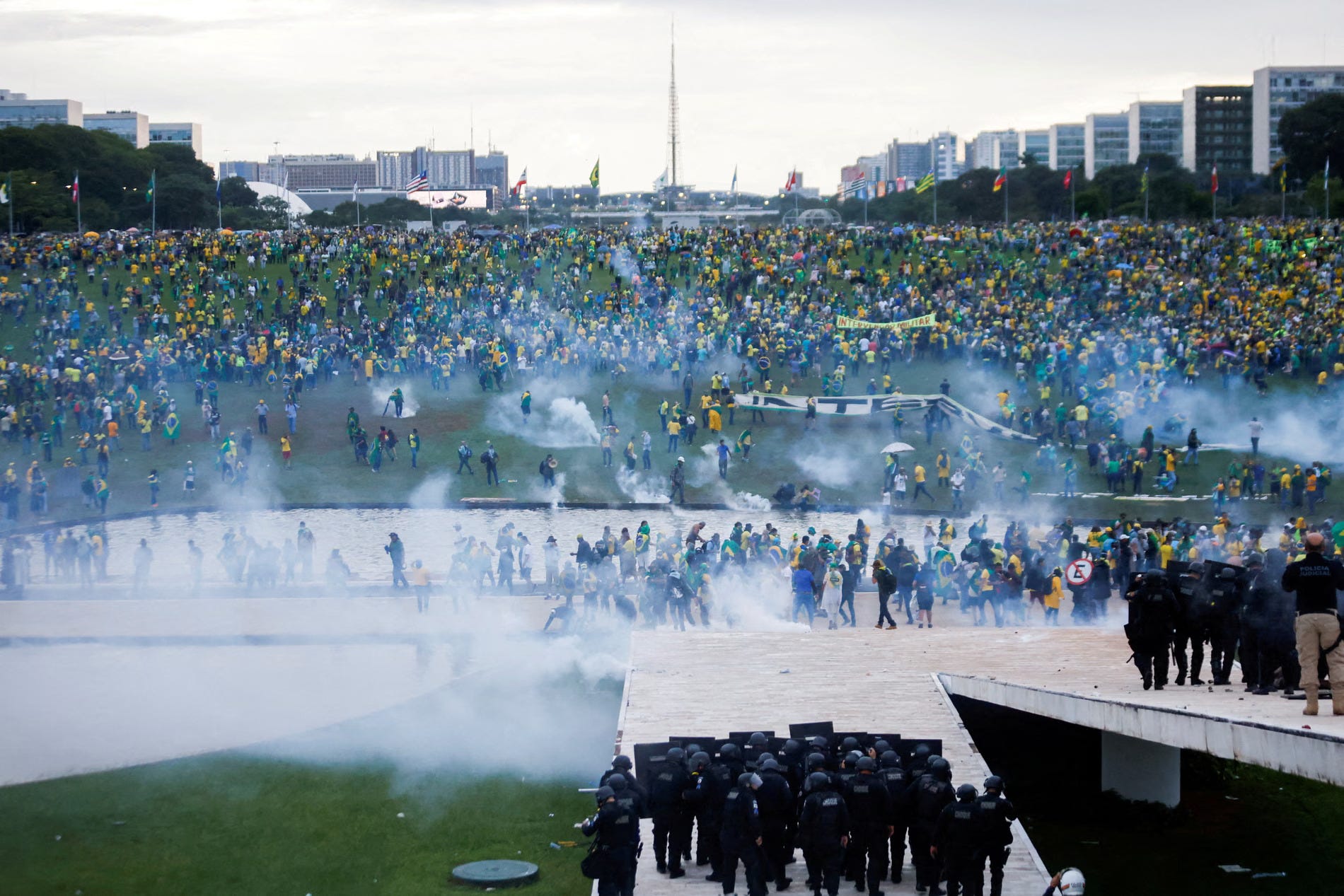
These three cases are interesting because they show how military coups d’etat can fail in three distinct ways. In South Korea, the president did not seem to have done anything to cultivate support for himself within the military, but just went off half-cocked. In Turkey the coup participants were simply one faction within the military, and a marginal one at that. In Brazil there was a seemingly perfect set-up: popular civilian enthusiasm, strong support in the military rank and file, a popular leader, and even a comfortably sized constitutional fig leaf; nevertheless, the coup was stillborn due to a failure of nerve amongst senior leadership.
The Brazilian example is a powerful illustration of the necessity of a unified, decisive command structure for a successful coup. Political science research has identified leadership coordination as the single most important predictive factor in coup success. Popular support within the civilian population and the troops is important to the durability of a military government (or any government) once it’s formed. Without these factors the country will often simply descend into civil war. However, the initial success of the coup in seizing control of the organs of the state is predicated mostly on the ability of the senior leadership to present a unified front and project an aura of institutional inevitability. That sense of inevitability amounts to a kind of magic trick which induces junior officers to fall into line, which then gets the trigger-pullers and door-kickers to follow orders, which then induces civilian compliance.
Modern militaries are coup-proofed. Military command structures are deliberately fragmented. Officer corps are occasionally purged to eliminate command staff inclined towards ideological disloyalty. In the Middle East, clan, tribal, and ethnic divisions are used to fracture command structures, for instance by putting specific branches or units in the hands of rival clans. Another tactic is to set up multiple secret police agencies, such that everyone is watching everyone, encouraging an atmosphere of mutual suspicion and therefore caution.
Western militaries are coup-proofed via a variety of methods. The classical strategy as laid out by Samuel Huntington’s 1957 concept of ‘objective control’ is to professionalize the armed forces, with a core element of the professional ethos being a competence-focused, apolitical orientation in which loyalties are directed at a constitutional order and the principle of civilian supremacy over the military, rather than allegiance to any given political party. Western militaries are also structured around a fragmentary command structure that establishes separate points of accountability and domains of responsibility, thereby creating multiple veto opportunities. In recent years we’ve also seen the adoption of more Sovietesque approaches, in the form of both ideological purges of the officer corps on the pretext of sexual harassment claims, and the insinuation of informal gay race commissars into the command structure via DEI initiatives, thereby establishing an informal layer of political control.
It is very unlikely that a military coup can overthrow gay race communism, because Western militaries are simply too thoroughly coup-proofed. Beyond this, ideological regimes are not generally overthrown by military coups. A coup can prevent the formation of such a regime, as in Pinochet’s removal of Allende’s incipient Marxist government, but once the total state has slimed its way into place it cannot be taken down via internal military opposition.
When single-party ideological states are brought down it is usually due to legitimacy decay amongst the civilian population, accompanied by cynicism and indecision within an elite that ceases to really believe in its own bullshit. There is a political crisis, in which the military must decide whether or not to follow orders to fire upon protesters or something. If the military holds fast to the regime ideology, as recently happened in Iran, then the soldiers shoot, the protesters die, and the regime remains. If the military refuses, as happened in Romania when Ceacescu came down, the regime falls, and its leaders are imprisoned or executed.
Even a regime that successfully holds onto power, however, such as the colonial government of Canada in 1837/38, or the established powers in the revolutions of 1848 that swept across Europe a decade later, will need to contend with the underlying causes of the revolt in the aftermath. This frequently leads to reforms in which concessions are made to many of the demands of the revolutionaries, thereby leading to a sort of spiritual victory for the revolution’s ideals, which is surely a comfort to those who died on its defeated barricades. The Freedom Convoy was a recent example of this dynamic: the organizers themselves were dragged through the courts after the encampment was crushed by mounted riot police, but their demands were met almost immediately, with COVID restrictions evaporating not only in Canada but all over the world.
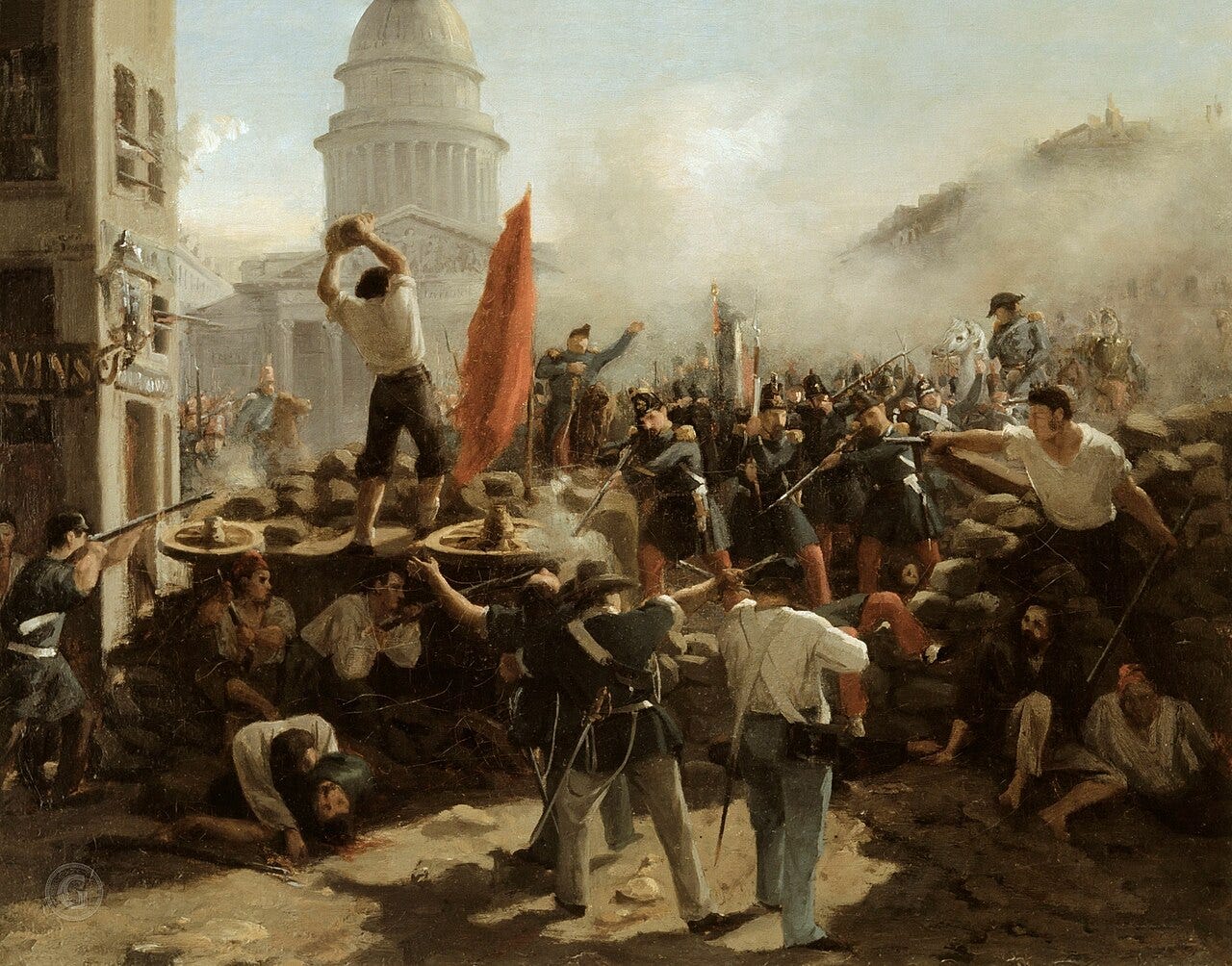
Our situation broadly is actually rather comical. Gay race communism has conquered essentially every institution in the Western world, occupying the high ground of practically every organization that isn’t the Oval Office. As a total ideological state, it has interwoven political control into every large private and public institution, especially the military, making removal via internal coup impossible. GRC has a large constituency drawn from the abundant reservoirs of the slum states of the global south, which it draws into Western countries in order to pack the voter rolls, thereby making electoral defeat difficult. The price of all of this political control, however, is that the entire system has become retarded. It cannot solve core problems, and it flounders in moments of crisis.
As Yarvin points out in his recent essay A Real Path to Grand Politics, itself a response to the Helen Andrews piece that inspired this work, the situation is comical because, as weak and retarded as the senile regime has become, it has so far managed to stand because the opposition is even more weak and retarded. For evidence, just look at Xitter. Or just go outside. See all those dude-bros angered by their dispossession? Of course you don’t: they’re in their gooncaves.
Yarvin’s core suggestion in his Grand Politics essay – aside from the restoration of monarchy, of course – is to lubricate the revolution with a loose network of invite-only anonymized group chats serving as the modern analogue to the secret societies whose clandestine influence underlaid many previous revolutions.

Yarv of course wants to use Urbit, but I think the group chat secret societies are already very much a feature of our political landscape, and imperfect as they are the existing tools are probably already more or less good enough. Every organization already has a layer of official and unofficial group chats on Facebook Messenger, WhatsApp, Telegram, and Signal which serves as a sort of informal communications layer for various groups within the organization. Yarvin thinks we should do this more deliberately, targeting specific organizations and geographical areas for recruitment, until every corporation, every department, every university faculty, every broadcaster, every municipal government, and every geographical locale is penetrated by the invisible college of Chudmasons. There’s almost no defence against this, beyond the intelligence work necessary to infiltrate the group chats and dox its members, which is a lot harder than setting up group chats, particularly if anonymity is strictly maintained (my impression is that his Urbitchats would somehow bake anonymity in).
I say ‘almost no defence’, because in fact there is a very good defence, and it’s one that the system has already erected. The main problem with the group chat secret society strategy is that it assumes that there are enough recruitable employees on the inside of influential organizations to make a difference. It’s not at all obvious that this is actually the case. Your organization can’t be subverted by white guys recruited into fascist group chats if your organization refuses to hire white guys in the first place.

Let’s talk for a moment about a revolution that actually succeeded, and did so recently: Nepal.
The Nepalase have a youth bulge, and their homegrown Marxist government did not do a great job of providing domestic opportunities for them. Most of them made their money on the Internet, doing I have no idea what but it doesn’t take much money to dramatically improve your standard of living in Kathmandu. The scions of local party apparatchiks, on the other hand, lived in the lap of the most wonderful luxury, which they were fond of boasting about on social media, where the hard-grinding sigmas of Nepal’s tenements were only too happy to make fun of the nepo babies. The party apparatchiks didn’t like their little princelings being mocked, so they shut down the Internet, which brought the incel horde boiling forth from the slums to begin hunting the party bosses in the streets. The revolt appears to have been a leaderless swarm that self-organized out of outrage and Internet connectivity. When the military refused to open fire, that was that for the old regime, after which the zoomers scratched their heads and elected an interim government on a Discord server.
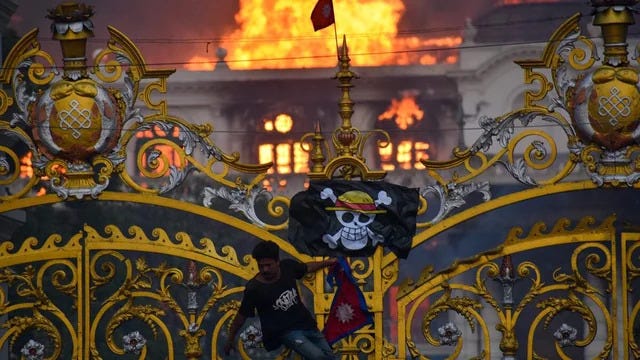
I’m not privy to the details of Nepal’s own internal Internet culture, and while I am sure its social graph follows the same hierarchical power laws of clout that social media invariably generates, so far as I know there was no single leader nor any formal leadership of the uprising.
The same was true of the Canadian Freedom Convoy, which also emerged via a self-organizational process as a collaborative enterprise built around a shared goal, rather than at the direction of a single formal movement leader. While the Convoy involved blockading bridges and occupying downtown Ottawa, thereby applying direct economic pressure to government, the festival atmosphere it fostered involved a de facto local end of the lockdowns, i.e. the Convoy did not so much ask the government to end the lockdowns, it instead began by ending them within the territory under its temporary control.
Occupy Wall Street comes to mind as well, and in fact it also follows the pattern of a non-violent uprising that was crushed but whose imprint led to a moral revolution that completely repatterned the culture. When Occupy started it was about financial crime, economic inequality, debt-based fiat currency systems, and all the rest of the Zeitgeist-era Internet’s core conspiratorial obsessions. By the time Occupy ended, however, the internal conversation had evolved to focus instead around the intersectional oppression structures founded in immutable identities. This was the moral imprint that it left on the culture after it was finally and inevitably crushed by the police, the last words on the movement’s dying lips which thereby entered the ears of the institutions, parrhesia weighted with the gravity of idealistic sacrifice. Woke was the direct result. Whatever the underlying legal framework created by the Civil Rights regime, the hysterical dynamo of Woke’s emotional urgency was powered by the aftershocks of Occupy.
The directionality of this discursive hijacking is interesting. It diverted attention from the post-Bretton Woods debt-based fiat financial system which has enriched a small number of extraordinarily wealthy financiers via Cantillon advantage and compound interest, which was very convenient for them. It also diverted attention from the proximate cause of the financial crisis which had necessitated bail-outs of too-big-to-fail investment banks, that being the extension of mortgage loans to minorities who proved to be exactly as reliable as their credit scores indicated, but to whom the banks had to loan money anyhow because disparate impact. No one in Occupy ever talked about this aspect of the bailouts, so far as I know; the minority loans angle was only something people started noticing as the 2015-era Alt-Right stopped giving a fuck about boomer pieties. In any case, these fundamentally economic concerns were shoved aside by the Millennial successors of the first Civil Rights revolutionaries, and replaced with the baroque sadism of Woke. As the left are fond of noting, the global economy features a trillionaire now; the left does not, however, make the connection with their own useful idiocy.
The point of Nepal, the Freedom Convoy, and Occupy is not that they were all successful. Occupy wasn’t, although the sheer scale of the social changes that rolled out from Occupy’s influence is testament to its effectiveness. The interesting thing that unites them is that they were all apparently leaderless and self-organized.
Elite theory would have it that no success in widespread sociopolitical change is possible without leadership drawn from elites. If the Western situation is examined from the perspective of ‘elites’ as usually defined – wealthy, credentialed professionals – one must despair. Every high point is captured, every formal institution subverted and controlled. The self-organizing structures of Occupy, the Convoy, and Nepal, however, did not really involve anyone drawn from a formal socioeconomic of political elite; they instead generated a sort of temporary and very fluid internal elite themselves, on a largely ad hoc basis, from people who stepped forward on their own initiative to provide services or fulfill functions, including leadership roles.
In Nepal’s Zoomer revolution, there was no formal leadership, elite or otherwise, and the revolting incels3 were entirely locked out of the country’s systems of power. There was no long march through the institutions, no stealthy attempt at infiltration. There was only an angry swarm animated by a single directive: chase the elites out of their homes and offices, hunt them down in the streets, and tear them limb from limb.
While discussing these topics with some friends who wear very serious hats (in, of course, a secret society group chat), one of them briefed me on the extensive study counter-terrorism researcher John Robb has has made of self-organizing guerrilla movements. One of Robb’s core insights is that swarms are aligned by means of what he calls a ‘plausible promise’, meaning a very specific and achievable goal which individual participants can pursue on their own initiative. An effective plausible promise is easy to articulate and understand, meaning that it can be transmitted across a network without loss of meaning. It is general enough that disparate groups can attach themselves to it for their own reasons. It should be something that individual participants can begin implementing on a local scale, such that they can see concrete results from their own actions. In the case of the Freedom Convoy the plausible promise was an end to COVID restrictions; originally, it was even more specifically the end of vaccine mandates for cross-border truckers. In the case of Nepal, the plausible promise was Total Marxoid Death. In the case of Occupy, there was no plausible promise, just a sort of vague grumbling about how we the 99% were getting screwed by they the 1%; as discussed, Occupy was easily co-opted and redirected.
In a formal, hard Party type of organization with a defined leadership and organizational structure, alignment is achieved by internal party discipline and ideological doctrine. Fail to follow orders and you get kicked out, or maybe executed. Same if you depart too far from orthodoxy. This has obvious advantages, but it also has considerable downsides. If leadership is corrupted or subverted, the Party gets redirected away from its aims. Discipline is also tricky in our context, since the number of people in gooner society who will willingly subject themselves to some form of party discipline is vanishingly small. What are you going to do, expel them? Will they care?
Self-organizing swarms are much harder to steer. They are networked hive minds in which no one person or cadre is in charge. The only authority anyone in a swarm has is to connect, to share, and to suggest. Swarms are not built up over time so much as they spontaneously form as a sort of hurricane of emotional energy. Barriers to participation are low to non-existent, which makes gate-keeping almost impossible, and makes infiltration very easy; however, their chaotic nature blunts the ability of infiltrators to redirect them, so long as the ‘plausible promise’ is clearly articulated. They are often difficult for the authorities to deal with, because they form and adapt very rapidly.
Much more to the point, self-organizing swarms have proven themselves to be very effective in the modern era. There are other examples. Trump’s first election victory was largely won by media campaigns generated by a persistent swarm that spawned on 4chan, r/TheDonald, and Twitter. Bolsonaro’s election victory, and Milei’s in Argentina, relied to a large degree on self-organizing swarm tactics. The ‘raise the colours’ campaign in Great Britain acts as a swarm. On the left, 2010s cancel culture, MeToo, and Black Lives Matter were swarms (albeit swarms with substantial formal assistance from elite-controlled institutions).
Can gay race communism be destroyed by a networked swarm? Is it possible to draw the vast numbers of dissatisfied angry young white men into a political hurricane that sweeps the ancien regime away? Or alternatively – and in practice, just as effectively, if less viscerally satisfying – force the present regime to end policies that hurt young white men, and even adopt policies that benefit them?
I don’t see why it isn’t, personally. The emotional motivation is there. The numbers are there. You don’t need anything like a majority to achieve the necessary effect. A majority is necessary to win an election; a sufficiently motivated and frightening minority can simply bully society into adopting its policy preferences, or else. On one side: senile seniors, hysterical females, and foreigners who shouldn’t be here; on the other, young men. If a majority of the young men were to stand together there wouldn’t even necessarily be much in the way of violence. Sheer intimidation would do most of the work.
The key to achieving this is not ‘getting organized’ or ‘taking action’ or ‘building parallel institutions’ or whatever vague bromides people throw around, but identifying Robb’s ‘plausible promise’: an achievable, concrete, clearly articulated, easily understandable, and specific goal that individual actions taken on individual initiative can feasibly contribute to.
In his excellent book Regime Change From the Right, which you really should read (and I really should get around to reviewing), Martin Sellner proposes remigration as the organizing principle. This has the advantage of being clear, simple, popular, and absolutely necessary to the survival of civilization. Moreover, it would solve the gay race communism problem by default: racial preference systems are a moot point if racial aliens have largely been removed from a newly ethnically homogeneous body politic. In order to move towards this goal Sellner proposes a comprehensive strategy involving formal politics, street activism, cultural production, scholarship, and media messaging, i.e. more or less the strategy that the European right has been pursuing, with mixed success, for the last ten or twenty years.
Sellner leaves out self-organizing swarms, possibly because they are too hard to predict or control. This is an unfortunate oversight, as a swarm may well be the fastest and most effective means of achieving remigration. Remigration via conventional pathways involves a laborious process of deportations to remove illegal immigrants, disincentivization to entry or continued residency via reform of the welfare state to remove access to benefits to non-citizens, and possibly a contentious legal fight over denaturalization of new citizens created by the old order. This would be a generational effort that the regime will fight tooth and nail every step of the way.
A remigration swarm would look a lot more like what happened in Belfast earlier this year, but on a much larger spatial and temporal scale: spread across entire countries, and persisting until the migrants vacated European territories en masse. Migrant housing centres, migration reception centres, migrant-owned businesses, Islamic community centres, and mosques would all be targeted for destruction, thereby denying the imported population both a living and a place to live. There would certainly be conflicts with police; there would certainly be street battles with third-worlders; the military would certainly be called out, and ultimately everything would turn on whether the military was willing to resort to lethal force, or if it has been sufficiently demoralized that the nerve of the soldiers fails. It would be chaotic, messy, and destructive, but at the end of it the migrants would be gone. Immediate success would be by no means assured, but even if the state succeeded in crushing such an uprising, in the aftermath it would be forced for entirely practical reasons to place much stricter restrictions on immigration, just as the governing class was forced to adopt liberal principles of democratic governance, constitutional rights, and national autonomy in the wake of the revolutions of 1848. However, if the uprising did succeed, it would certainly carry away the ancien regime in the process.
Street-fighting is not the only possibility. Imagine, for example, if a country’s international airports were effectively shut down by tens of thousands of occupiers blockading the arrival lounges. The occupiers would have a clearly articulated demand, for instance to enshrine the demographic security of native populations at the heart of national immigration policy, perhaps even writing it into the constitution. As their way of politely requiring the government to do this, they would effectively just implement it themselves in the most disruptive low-resolution bad-optics fashion possible, by serving as an ad hoc customs and immigration filter. Instead of asking for passports, the mob would simply look at skin colour: white arrivals would be allowed in; non-whites would not. Whether they had a valid passport or even citizenship would be wholly irrelevant.

Closing the airports in this fashion would be extraordinarily economically destructive. If the blockade lasted for even a few days losses could easily reach billions of dollars. Occupiers would be derided as racists, which they would wear as a badge of honour, and the police and probably the military would be called out. If their numbers were large enough, however, it would be very difficult to arrest and charge everyone involved. In the meantime, the message would be something along the lines of: “We demand demographic security. The existing government, which has responsibility for the borders, does not follow and in fact actively violates this fundamental responsibility. As such we, the people, must reluctantly take border control upon ourselves. We’re happy to reopen the airports when our demands are met.” The regime would be furious, yes, but it would also be extremely anxious to avoid a repeat. It would be especially anxious about this if the airport blockades proved to be contagious. Shutting down one international airport in one country would be an economic inconvenience for that country; shutting down every international airport in one country would bring that country to its knees; shutting them down across the Western world would cripple the global economy.
Airports may be difficult locations to hold. There are usually only a few highways and rail lines in and out, which could be easily blockaded by the authorities, placing the occupiers under siege. On the other hand those access points could themselves be blockaded by the occupiers, which may well prove logistically easier. The point is that airports are symbolically important for the regime, are economically essential, and are the primary chokepoint through which global migration flows move. Most countries, with the US being a major exception, have only a few major international airports. In the United Kingdom, for example, shutting down Heathrow and Manchester for a week or two would basically put an end to population flow into the country.
There’s a certain degree of precedent for citizens seizing control of the border from national authorities. During the Biden administration the state of Texas got into a dispute with the Federal government over border control measures: the feds were refusing to stop the endless flood of migrants pouring across the border, Texas was trying to do something with razor wire barricades, the Feds tore down the barricades because they argued that the border was federal jurisdiction, Texas sent in the National Guard to secure the area and prevent federal agents from tearing down the concertina, numerous states publicly declared for Texas, and Civil War 2 was narrowly avoided when the Biden administration (despite getting a favorable Supreme Court decision) blinked and allowed to Texas to continue. That is not quite the same thing as vigilante customs and immigration mobs seizing control of the airports, of course.
I am not saying that any of this is desirable in some abstract sense. Obviously, peaceful settlements are preferable. I am merely saying that if democratic measures are not successful in securing the demographic security of the West, well, we should keep all of our options on the table.
A swarm may be effective, but initiating one is another matter entirely, and for this the ambitious goal of remigration may well be too distant and abstract to get the ball rolling. Something more concrete and immediately achievable is probably necessary to spark things off; something which connects in an obvious fashion to the larger goal, and which has sufficient immediacy to motivate direct action. Getting the subjects of the Deutsche Demokratische Republik to rise up against Marxism-Leninism didn’t work very well; getting them to tear down the Berlin Wall did, and with it, out went the DDR.
Of course, no one actually got the citizens of East Germany to tear down the wall, in the sense of some kind of organized call to arms. The wall came down because, during a press conference, a hapless party official accidentally gave East Berliners the impression that travel restrictions had been entirely lifted, leading to a mob of eager citizens overwhelming troops manning the checkpoints. After that the wall was opened by default and there was nothing the government could do. The Berlin Wall served a crucial symbolic function as a physical instantiation of the Socialist Unity Party’s absolute political dominance; its penetration therefore removed a psychological barrier, and the regime itself came down shortly after.
The same pattern held across the Eastern bloc. In Poland, the Solidarity movement started not with abstract opposition to the principles laid out in Das Kapital and the Communist Manifesto, but with concrete demands for free trade unions alongside protests against price increases and, crucially, the firing of a specific worker, Anna Walentynowicz, for belonging to an illegal union. In Hungary the revolt against communism began with the public reburial of Imre Nagy, a leader of the failed 1956 Hungarian revolution, by opposition groups who gathered in sufficient numbers to make it impossible for the authorities to prevent it. In Czechoslovakia the Velvet Revolution kicked off over rumours that a student had been killed by police at a protest. Ceausescu’s regime in Romania was brought down by protests that began over the attempted eviction by the Securitate of the popular dissident pastor Tőkés László in Timișoara. In each case, a specific grievance acted as a synecdoche for dissatisfaction with the regime.
The fall of the Iron Curtain cannot be understood purely in terms of popular mobilization around concrete grievances. The East German uprising in 1953, the Hungarian revolution of 1956, and the short-lived Prague Spring in 1968 were all crushed by the mailed fists of Soviet armoured divisions; the revolutions of 1989 succeeded because the Soviet regime itself had become exhausted with its own cynical dysfunction. A contagious preference cascade also played a crucial role: by 1989, discontent with communism had become so widespread that once an uprising started in one country, preference falsification failed, uprisings spread elsewhere, and the authorities were rolled over by what felt like an inevitable historical tide. The 1848 revolutions involved a similar contagion, but were crushed because the existing elites still believed in themselves and were therefore capable of rousing themselves to reaction.
Neither the fall of the Iron Curtain nor the revolutions of 1848 happened in an organizational vacuum. By the time the Soviet bloc fell it was riddled with a dense network of underground dissident organizations, a parallel society disseminating samizdat, holding illegal meetings, clandestine church services, concerts, plays, and organizing sporadic protests. These escalated throughout the 1970s and 1980s in the face of severe regime repression. When the regime began to wobble, these groups were there, waiting, hungry, ready to step in and capitalize on the instability. In exactly the same way the civil society organization advocated by Sellner, and the group chat conspiracies suggested by Yarvin, are essential.
It’s hard to predict what will serve as the spark in our own case. We’ve had no shortage of horrific murders, heinous rapes, arson of historical sites, defacement of statues, high-profile firings, and humiliation rituals in the mediia. The regime has overloaded the social order with insult and atrocity. Grievances against the regime over stalled careers, stolen opportunities, downward economic mobility, ruined communities, and regulatory tyranny are widespread and deeply felt. Amongst the dissident intelligentsia the regime’s moral and philosophical justification is thoroughly discredited, while the regime’s own leading lights are derided as a mixture of overpromoted mediocrities and lying sociopaths.
But all of that is nothing more than tinder. Even with the right spark, absent an appropriate ‘plausible promise’ to align participant action across the network, the resulting brushfire can easily burn itself out to little lasting effect, or worse – as in the case of Occupy – find its energy squandered on behalf of goals that only strengthen the regime. With the right aim, however, it may be possible to harness a storm that tears the entire rotten edifice down in one of those weeks in which decades happen.
Thanks for taking the time to read these scattered thoughts on the subject of regime change. I probably could have gone on for a while longer, but I felt like I was beginning to spin my wheels, I suppose in large part because I’m not really sure how to achieve what I’m talking about, here, and have been trying to feel my way into the subject. I feel quite certain that self-organizing swarms are a crucial tactical formation in this struggle, but as to how to generate and direct them, what the best ‘plausible promise’ might be, your guess is probably as good as mine. It’s my hope that some of you will have some good suggestions in the comments. ‘What Is To Be Done’, as the good Vladimir Lenin had it, is the question of our historical moment, and I get the sense that no one really knows.
As always, my deepest gratitude is reserved for my supporters, without whom I wouldn’t be able to spend so much time writing this blog. Some of you are probably thinking ‘how much time could you possibly be spending writing, you lazy sod, this is the first thing you’ve published in a month’, and this would be a valid critique. The truth is I’ve been writing rather furiously for some time, but have not published very much at all lately ... I have a great many pieces that are sort of 90% complete, which I grew frustrated with and have since languished. I suppose I should spend some time actually trying to finish some of them, but it is also summer, which has made it hard to focus. In any case, once again: thank you.
The merits of that case can certainly be debated: white Americans have spilled rivers of their blood and mountains of treasure to end and make up for slavery, and when is enough enough?; the crime and dysfunction blacks have brought to American cities must surely be included against them in the accounting; the standard of living of the most low-down American hood rat is orders of magnitude better than that of his distant cousins in the shantytowns of Lagos, suggesting that if anything blacks should be grateful for free transport to the New World. Putting all of that aside, the fact remains that American blacks have a long history in America, and therefore have some claim to consideration.
Three, but who’s counting.
No posts
Comments
Nothing yet. Say the first thing.
Sign in to join the conversation.