
I recently participated in an academic conference at Columbia University in New York City.
It was kicked off by a rousing set by Justis Lopez aka DJ Faro, a recent PhD recipient from Harvard, along with a spoken word set from UMass-Amherst Poet-in-Residence, Lyrical Faith, and a freestyle rap from conference co-coordinator, Timothy Jones.
Some examples of sessions: Break Beats & Breakthroughs: Hip Hop as Healing and Resistance; Hip Hop, Neurodivergence and the Music Classroom; Cultivating Genius Through Hip Hop Pedagogy.
The keynote panel I was on was facilitated by Stephanie Sutton, Director of Engagement & Communications at YELLOW, an education nonprofit founded by Pharrell Williams.
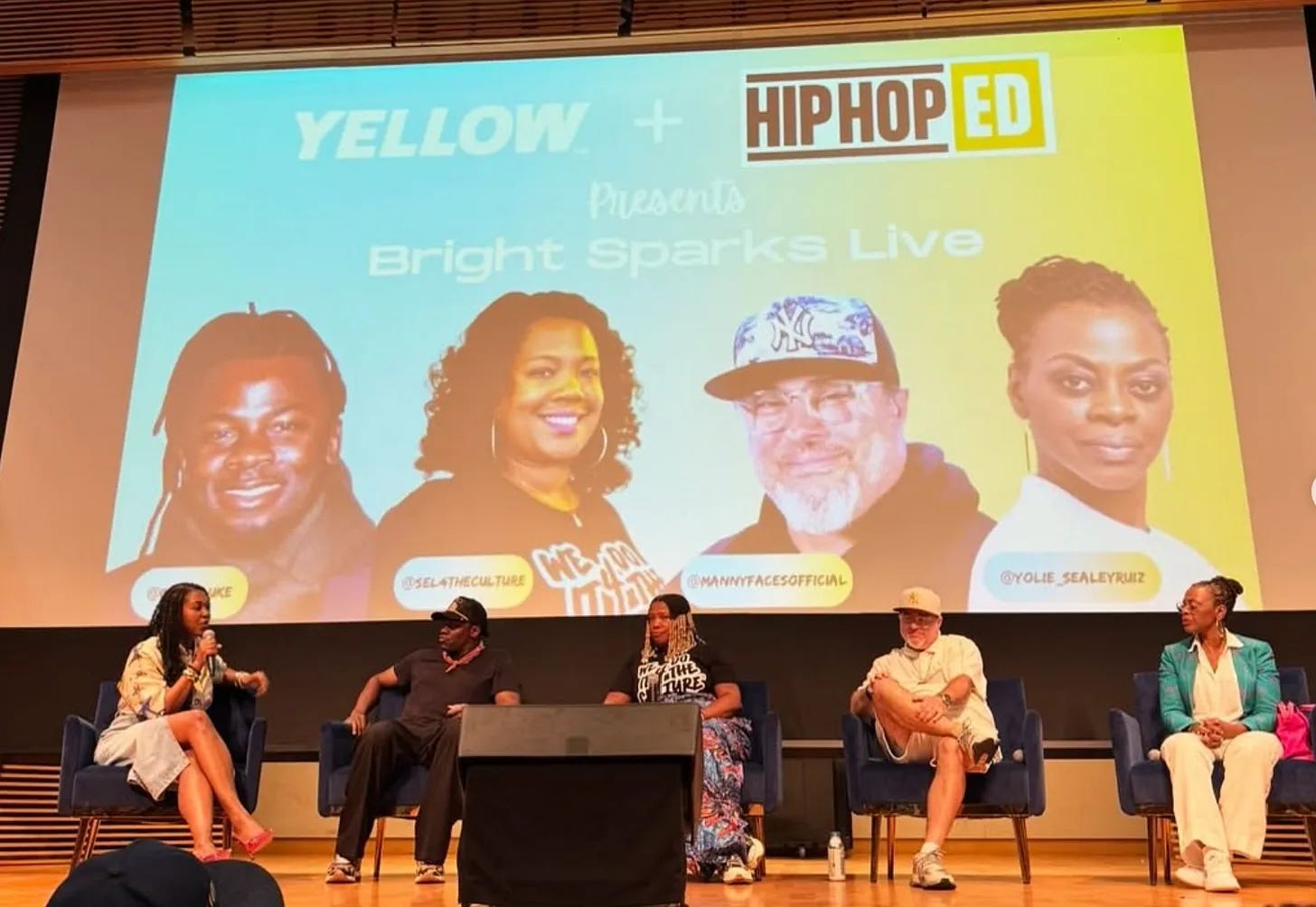
So when I tell you that during this very-atypical-conference, a time was had, I’m talking about brilliance, bars, breathing, breaking bread, bonding, and yes, boots on the ground – in more ways than one.
This might sound appealing to Hip Hop fans of a certain age, who often lament the lack of uplifting substance in “today’s rap music.” We remember when artists like KRS-One, Public Enemy, Queen Latifah, Poor Righteous Teachers,and others were on the radio alongside party music, gangsta rap, and lyrical-spiritual-miracle type wordsmiths.
It was that kind of knowledge transfer that gave us the feeling that Hip Hop could be more than entertainment – it was “edutainment,” a term supposedly first coined by Walt Disney, but re-coined for us by KRS-One. In fact, in one of my keynote presentations in which I talk about Hip Hop’s history of disrupting and innovating technology, I bring up KRS-One’s “You Must Learn,” which critiques a Eurocentric American education system and highlights Black American inventors often excluded from innovation conversations.
At the time, Hip Hop’s Golden Age seemed like the perfect soundtrack for that generation of civil rights-minded activists.
But somewhere along the way, things changed. There are many reasons and theories why Hip Hop as a genre doubled down on violent or sexually explicit music but I believe it all boils down to it becoming a victim of capitalism. Like every other major form of entertainment, sex, drugs, and violence sell, especially in America, and no form of media or entertainment is immune.
This sits at the core of something I’ve been preaching for years through my Hip Hop Can Save America! media ecosystem, a sermon many of us don’t want to receive:
Hip Hop music delivered to the masses is never again going to offer the type of edutainment we once embraced.
Period.
So, respectfully, those of us who wish it would… Kinda need to stop. Stop looking for it there! Stop getting upset when it’s not there! Stop wasting energy talking/posting/complaining about it!
Don’t get me wrong. We actually want the same end result. But I would argue that what we really want isn’t necessarily to turn on the radio and hear Locksmith rapping about Gaza, or noname spitting about prison abolition, or Rebel Diaz going off on immigration policy.
I mean, it’d be nice, sure, but it’s not going to happen. However, what I think we’re really asking for is for Hip Hop to educate, inspire, and innovate – to expand our minds and give us tools to navigate the world – like it once did.
Well, here’s my hot take: It still does. It’s just that the music is a much smaller part of it now.
And honestly, for now, that’s ok. Because in 2025, Hip Hop – the culture – has developed much more effective ways to transmit information and disrupt systems in order to fight racism, inequality, and injustice – and yes, educate, inspire, and innovate – radical, even revolutionary ways, many of which were being shared, discussed, and invented at that conference I attended.
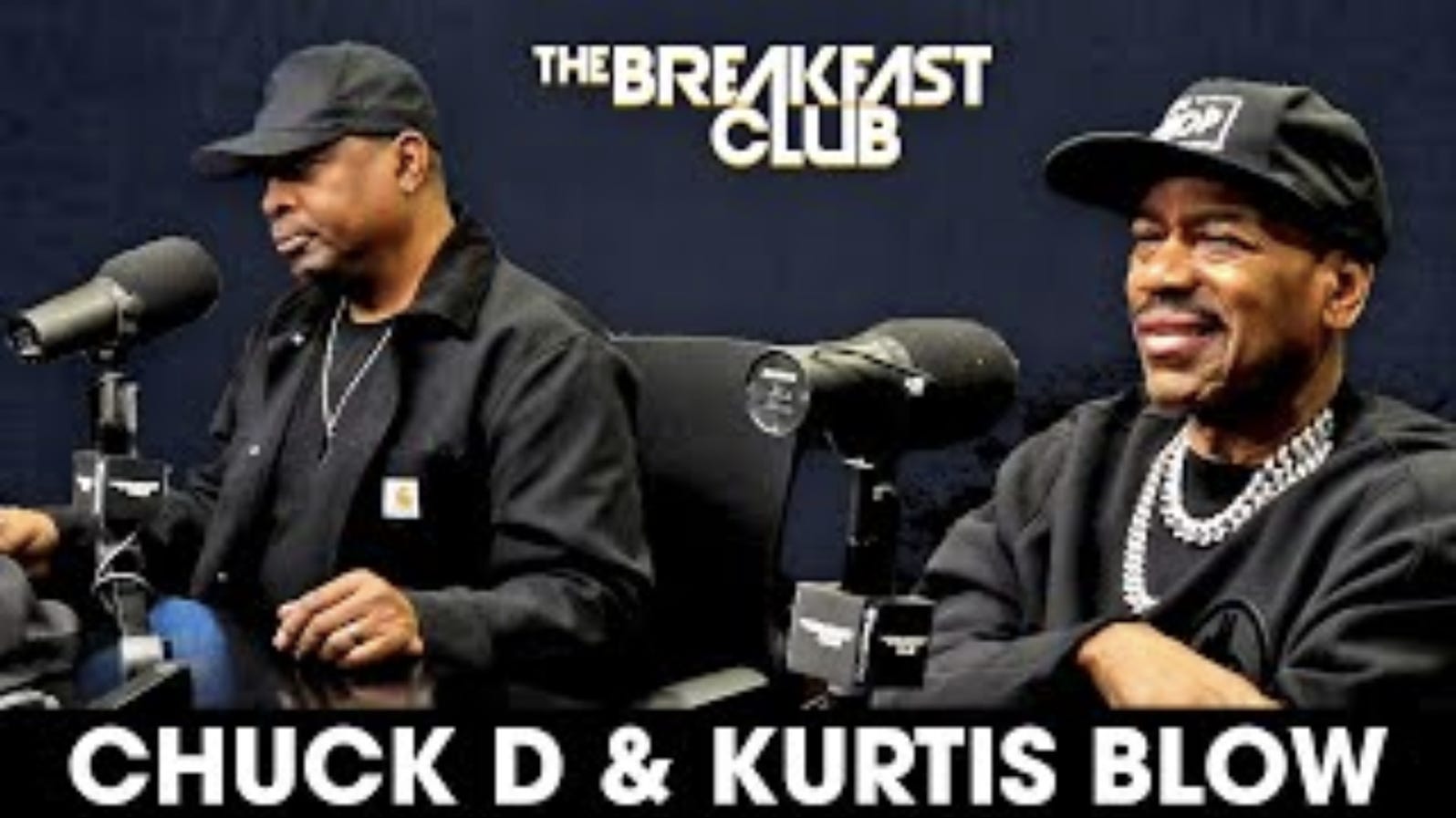
Sadly, this remains uncommon knowledge. Chuck D., for example, was recently asked by Charlemagne Tha God, “Do you think Hip Hop is still the best tool for the revolution?” and without really giving it much thought, Chuck D. replied, “No.”
Respectfully, that’s bullshit. Hip Hop is more poised – and in fact, actively doing more radical and revolutionary work than ever before, in absurdly innovative and inspiring ways.
This has been the basis for my work for well over a decade, including my podcast and livestream, and recently, my debut book, all featuring interviews with folks using Hip Hop to uplift humanity and improve society – with a particular focus on communities that have been long plagued by systemic racism, the ones most in need of revolutionary work.
The HipHopEd conference I mentioned is just one gathering of these types of folks. In this case, a cohort of educators from across the country who proudly and ingeniously bring their cultural identity into classrooms and increase student engagement and output through Hip Hop.
They aren’t just theorists. They have receipts.
Similar innovators can be found in mental health settings, in music education, in some pockets of politics and social justice, Hip Hop-minded or influenced folks disrupting, remixing, and re-designing systems in ways no amount of protest or edutainment music on the radio could ever do.
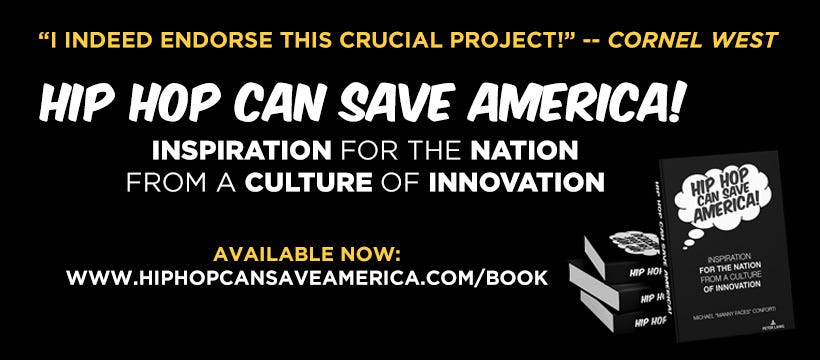
After analyzing all of their efforts, I have developed a thorough understanding as to how Hip Hop really can help save America, and I’ve laid out my case in my book, which esteemed professor and social worker Dr. Raphael Travis calls, “A must-read for anyone seeking to understand and harness the transformative power of Hip Hop culture.”
The iconic intellectual and former presidential candidate Dr. Cornel West agrees, stating, “I indeed endorse this crucial project. There is no doubt these visionary voices are badly needed in our grim times.”
These folks, all those profiled in the book, and myself, have all come to recognize the true power of Hip Hop to radically improve society. We also understand this isn’t going to look or sound like what Hip Hop heads are used to.
To get a better understanding that these ideas are just the tip of a massive untapped iceberg, please check out the book, podcast episodes, newsletter editions, YouTube videos, our Discord community, our Subreddit, etc. Absorb some of the media we’ve put out that demonstrates this way of thinking, and then think about how Hip Hop can innovate your field or your community.
Because these days, it’s not going to be enough to listen to “Fight the Power.” We have to “become the power,” and then enter these existential fights with our full Hip Hop-influenced selves locked and loaded, because today’s challenges require people who know how to innovate, pivot, infiltrate, make a dollar out of fifteen cents, and remix all of the systems that are still in full oppression mode.
If you ask me, I know just the right people for the job.
Featured Writer of the Week:
MANNY FACES
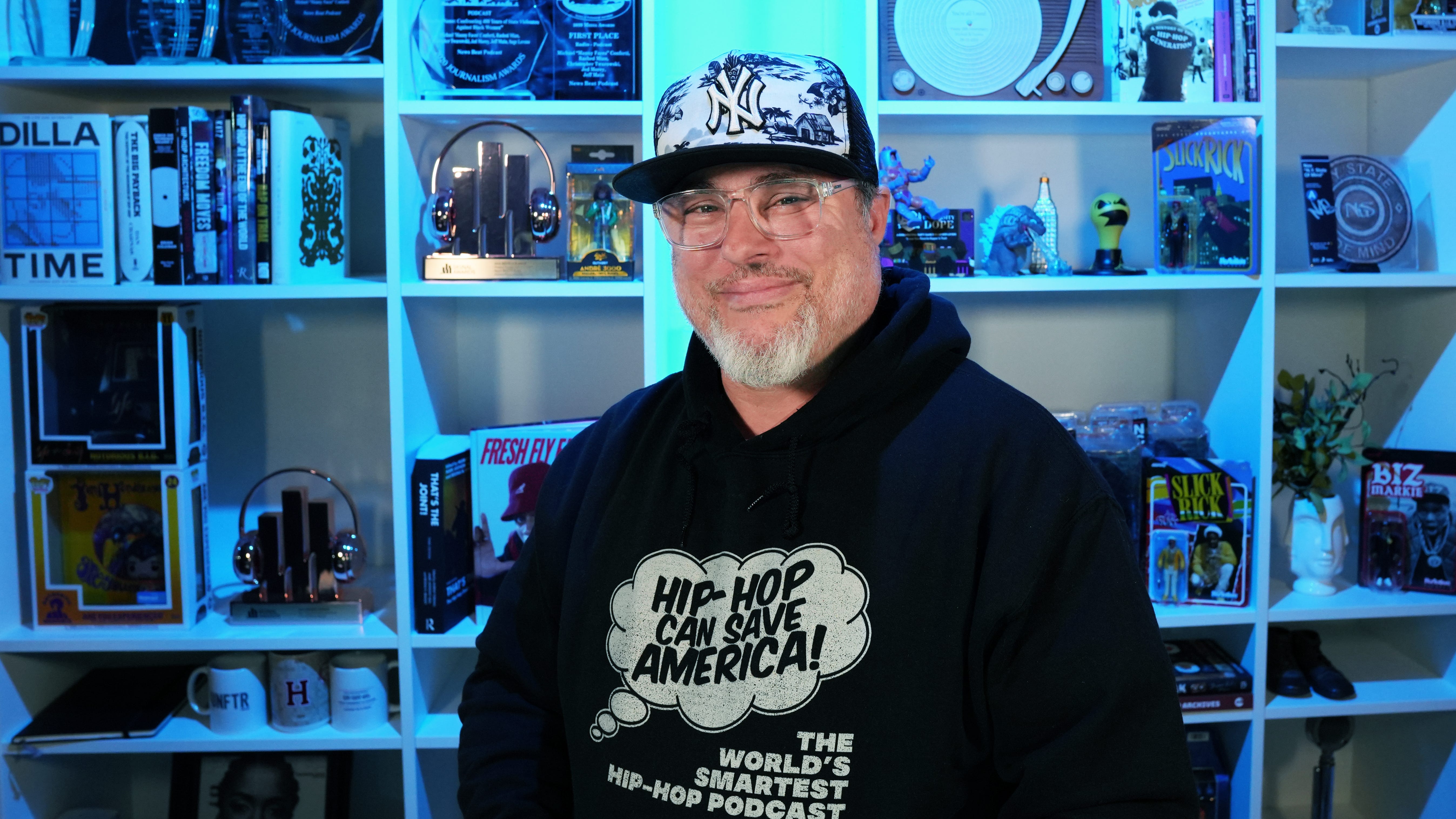
Manny Faces is an award-winning journalist, podcast professional, and founding director of The Hip Hop Institute for Social Innovation. He is a leading voice advocating for the ability of Hip Hop music and culture to help improve society and uplift humanity, and he is the author of the acclaimed new book, “Hip Hop Can Save America! Inspiration for the Nation from a Culture of Innovation.
Hip Hop Can Save America! is a community-supported publication. To help support this critically important cultural journalism, consider becoming a paid subscriber.
HQ: www.mannyfaces.com
My book: www.hiphopcansaveamerica.com/book
The show: www.hiphopcansaveamerica.com
The Youtube Channel: www.youtube.com/@mannyfacesofficial
The org: www.hiphopadvocacy.org
My company: www.mannyfacesmedia.com
My IG: Hip Hop Can Save America!
If you’d like your work to be featured in Bars 4 Ya Mindz, feel free to send us a private message!
No posts
Comments
Nothing yet. Say the first thing.
Sign in to join the conversation.