
This article is part of Army on Screen series, where I explore the military in movies and TV.
Directed by Khairy Beshara in 1974, Tank Hunter (Ṣāʾid al-Dabbābāt) is an 18-minute documentary that highlights the heroism of Mohamed Abdel Ati, while also subtly shedding light on how the Egyptian government sometimes shapes military memory, often overlooking the real, complex experiences of the soldiers whose stories don’t quite fit the official story.
Abdel Ati (1950–2001) was an agricultural engineer from a humble peasant family in Shibat Qash, a village in Minya al-Qamh, Sharqiya. Conscripted into the army on 15 November 1969, he was given the rank of First Seargant, and saw action during the War of Attrition and the October 1973 War.
He was later recognized in Egyptian records for destroying 23 Israeli tanks and three armored vehicles during the October 1973 War. He received the Sinai Star and was frequently featured in state media as ṣāʾid al-dabbābāt, meaning the tank hunter. This figure, repeated persistently, became a well-known fact among the public, despite questions about how such claims are made, verified, or mythologized.
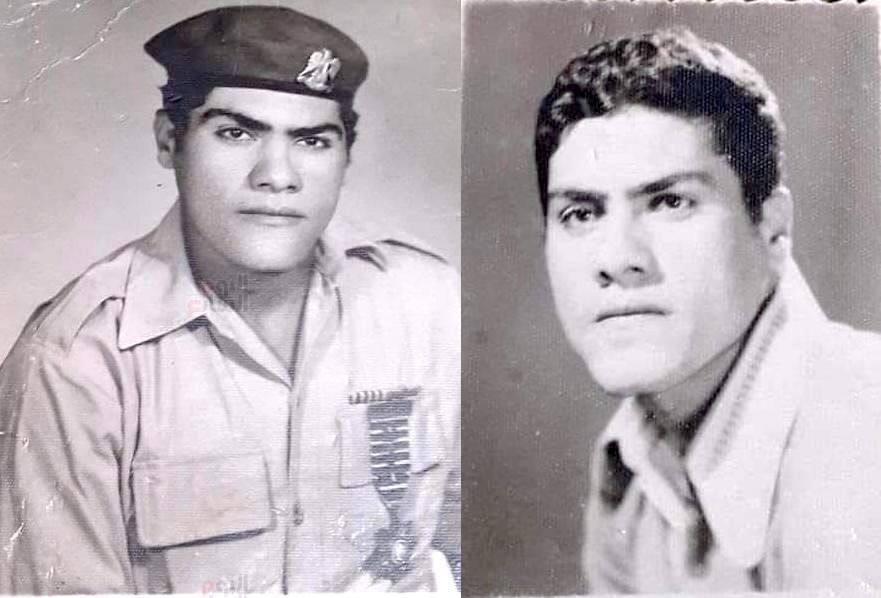
Beshara’s film is appealing but overlooks the context that made those heroic acts possible. In October 1973, Egypt used infantry, engineers, artillery, missile cover, and anti-tank teams with Soviet-guided missiles and RPGs on the eastern front, which was largely decided by tanks.
In 1987, US Armor Corps Major Robert Mixon observed that the Egyptian strategy was limited, emphasizing shallow bridgeheads and absorbing Israeli counterattacks within a dense anti-tank defense. Israeli sources, such as Nathan Jennings, note that armored units advanced prematurely without sufficient infantry or air support, resulting in heavy Egyptian casualties.
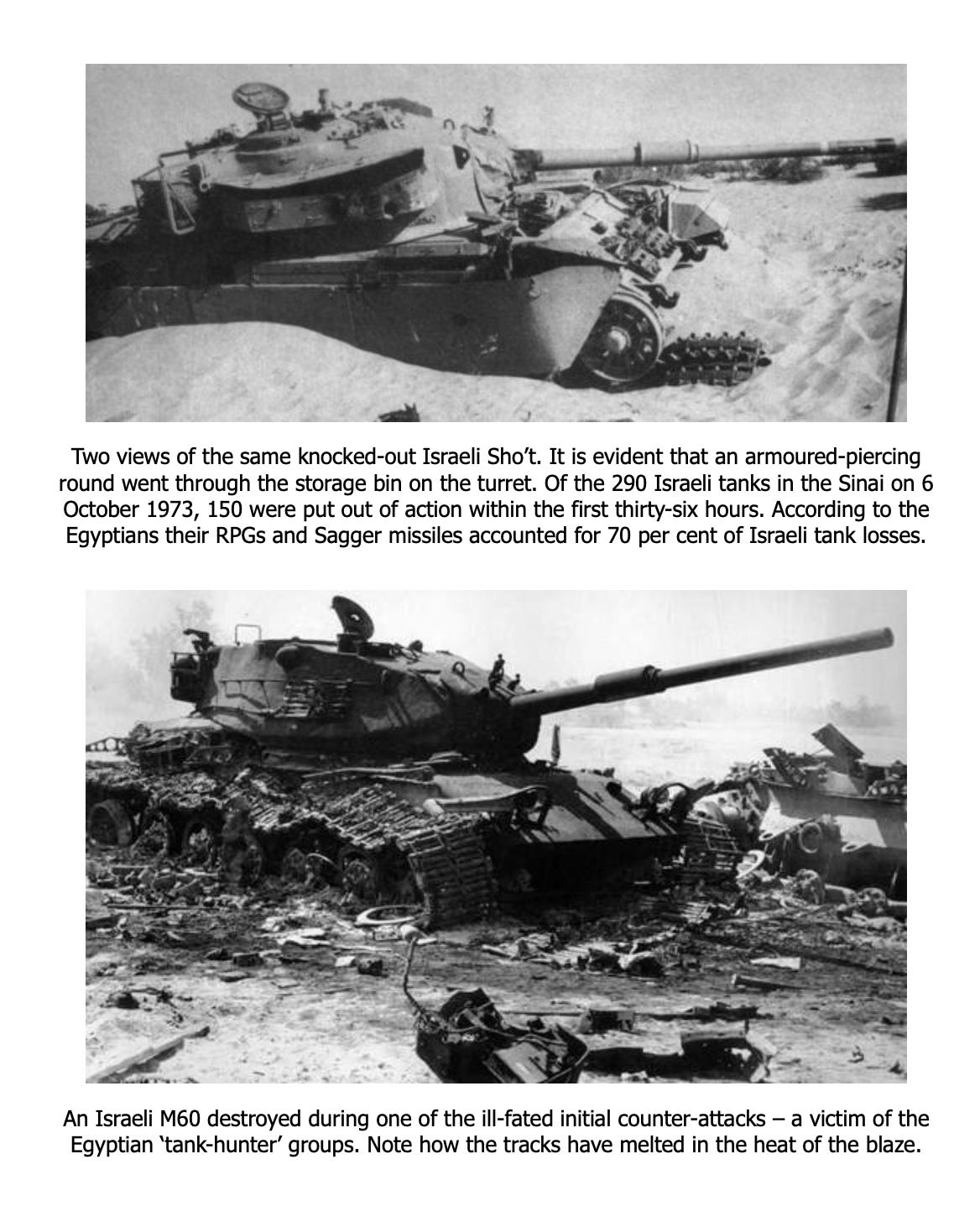
In 1973, infantry effectiveness relied on practical innovations enhancing battlefield operations. Historian Christopher Weeks points out that many of those solutions rose from improvisations and trial-and-error in the years preceding the October War. Water cannons replaced slower explosive breaching methods for the Bar-Lev Line, offering quicker, more efficient engineering. Assault troops used wheeled carts to carry heavy weapons and ammunition across the canal, aiding lightly equipped infantry in resisting armored counterattacks. Load-bearing vests aimed to increase soldier capacity. These practical modifications, not major technological advances, collectively helped infantry hold positions and challenge Israeli armor early in the conflict.
This is the context that produced Abdel Ati. He was certainly skilled and brave as an individual, but more importantly, he was part of a coordinated system where infantry could challenge and even destroy tanks, not just face them.
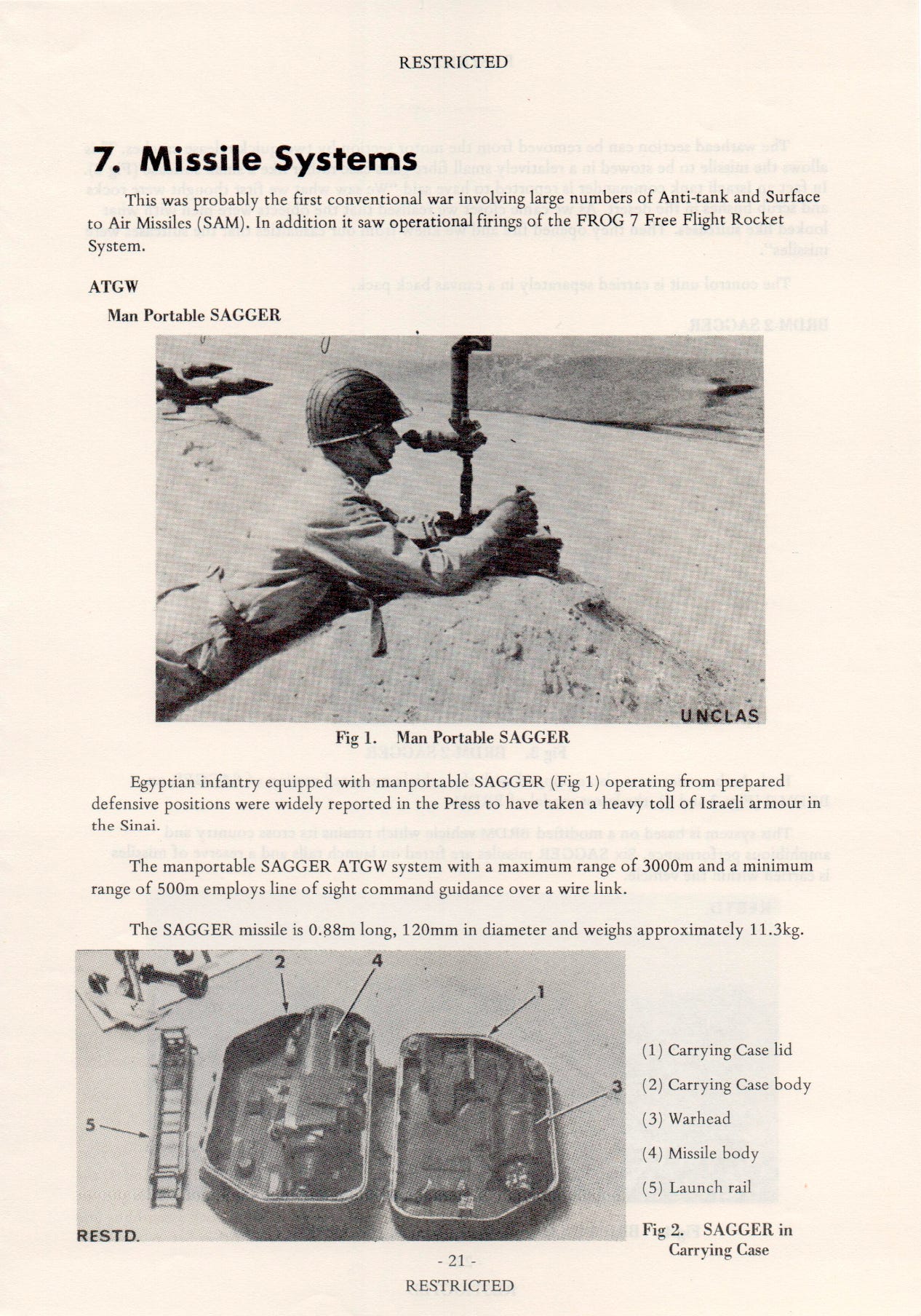
US military strategists took notice. Articles in the US Army’s ARMOR magazine, from Volume 84 issues published between January and December 1975 that I personally reviewed, saw the October battles not as stories of individual heroism but as a shock to military doctrine. Egyptian infantry, armed with anti-tank guided missiles and protected by dense air-defense cover, managed to halt and sometimes even break Israeli armored counterattacks. The key takeaway was clear: tanks advancing without support from infantry, artillery, and airpower could be decisively defeated by well-prepared defensive systems.
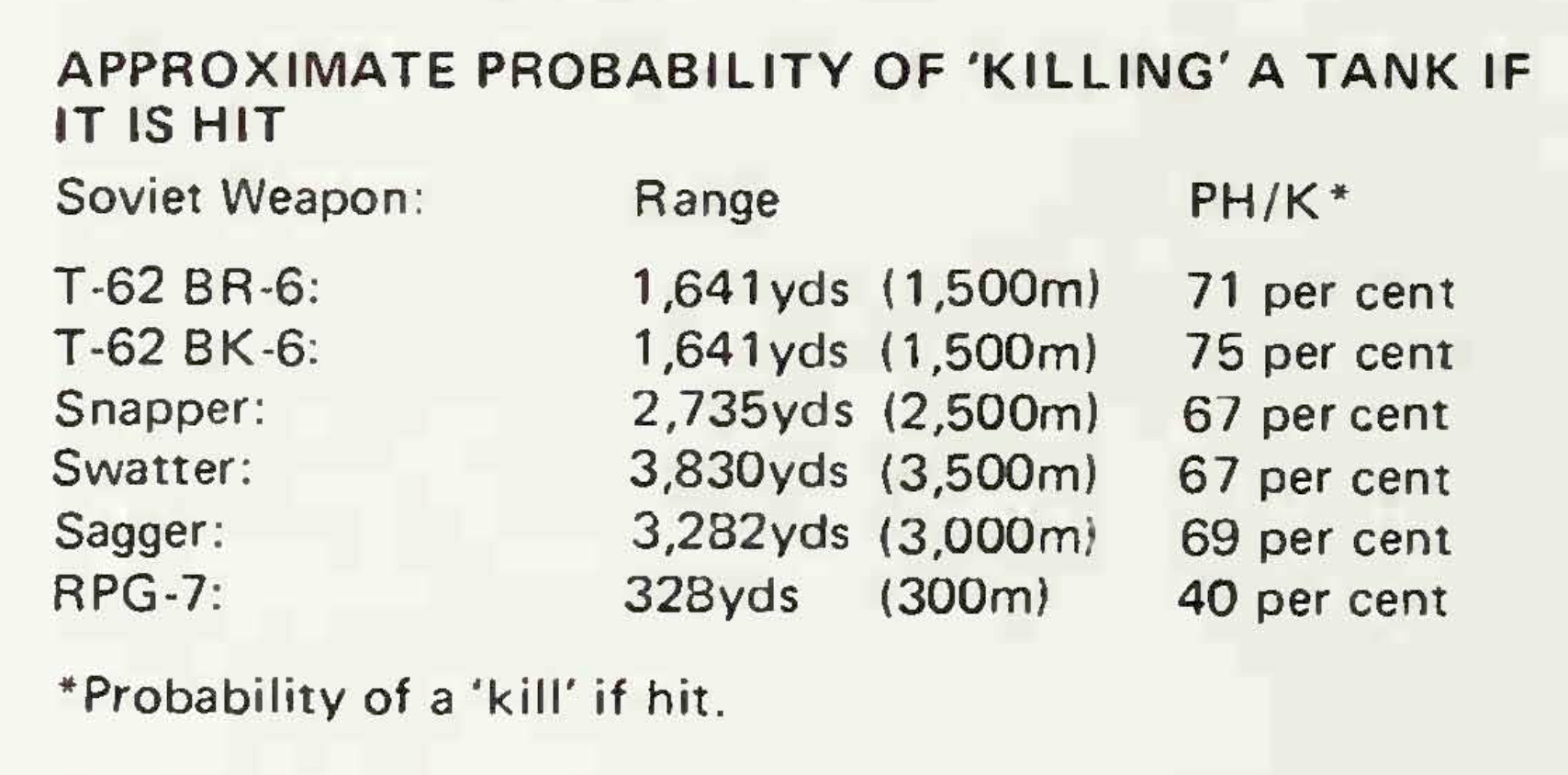
For an Egyptian infantryman to score a “kill,” as the figures above show, he had to let the tank approach, often within hundreds of meters, with an RPG-7, hold his position under fire, and stay exposed long enough for a direct hit. Even with the longer-range Sagger, the operator remained stationary, manually guiding the missile toward advancing armor.
This required proximity, nerve, and repetition. The training burden alone was enormous. Writing in the November-December 1980 issue of ARMOR magazine, US Colonel J. Hemsley notes that Egyptian Sagger operators underwent around 1,000 simulated firings to qualify, with continued field training during the campaign to maintain accuracy.
The performance of Egyptian anti-tank teams made a strong impression on US military thinking, with the lessons of 1973 recurring in American writings, manuals, and training films. The clip below, for example, comes from a 1976 US Army training film titled How to Fight the Soviet Tank-Mechanized Infantry Team:
Even when the entire military strategic context is absent from his film, Beshara still did a good job; he resisted turning Abdel Ati into a superhuman figure: his camera leaves the battlefield icon behind and brings him back to the village that produced him.
Aḥmad, Rašā. “Khayrī Bišāra yarwī fuṣūlan min sīratihi al-ḏātiya.” Asharq al-Awsat, 19 November 2025.
ARMOR: The Magazine of Mobile Warfare. Vol. 84. Fort Knox, KY: US Army Armor School, January–December 1975.
Army Technical Intelligence Review. Restricted No. 105. British Army, 1974.
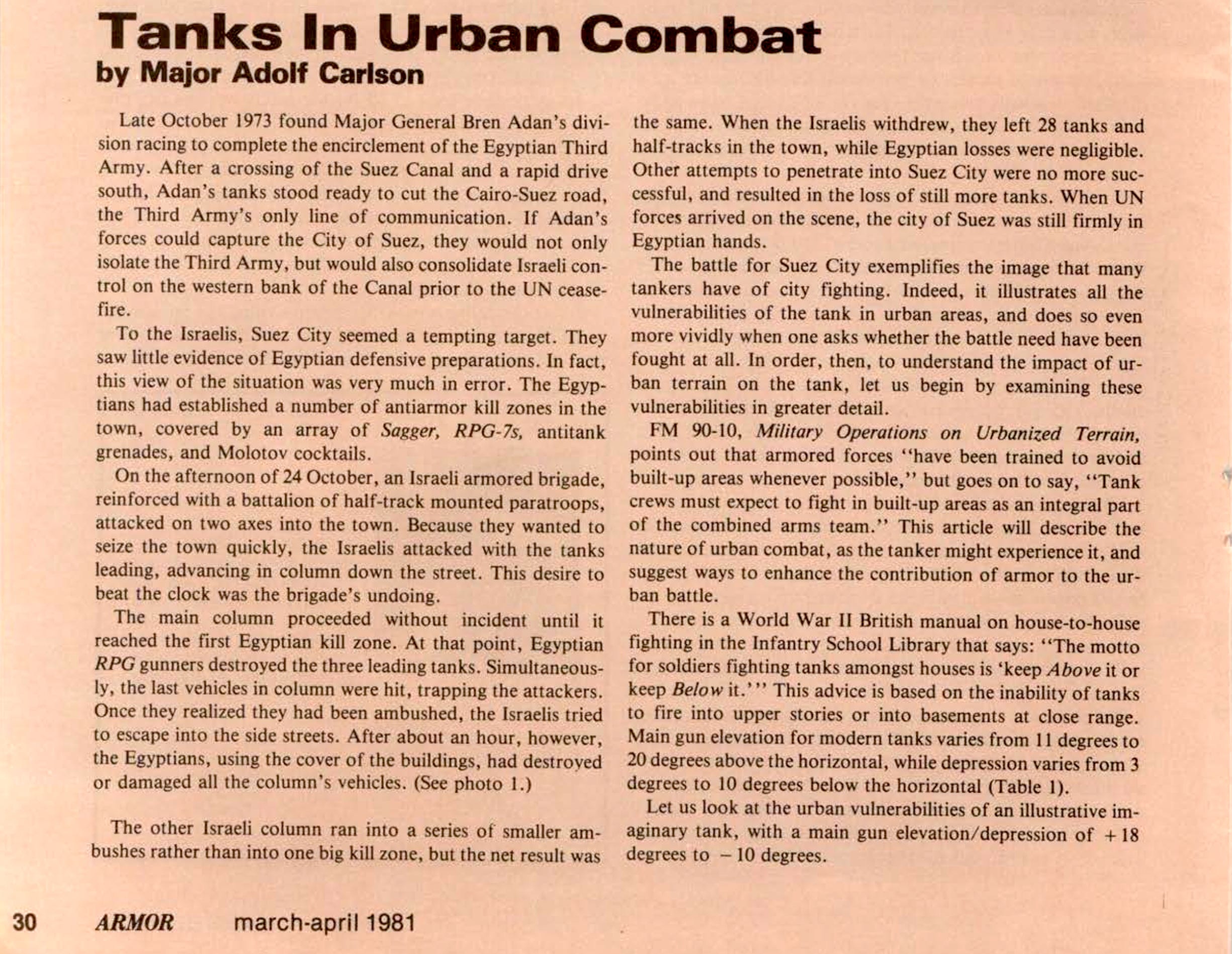
Carlson, Adolf. “Tanks in Urban Combat.” ARMOR (Fort Knox, KY), April 1981.
Ḥasan, Māhir. “Zayy al-nahārda… wafāt ṣāʾid al-dabbābāt Muḥammad ʿAbd al-ʿĀṭī, 9 Dīsambir 2001” al-Masry al-Youm, 9 December 2020.
Hemsley, J. “Antitank Guns—Exigent or Obsolete?” ARMOR (Fort Knox, KY), November-December 1980.
Jennings, Nathan A. “Fighting with Agility: The 162nd Armored Division in the 1973 Arab Israeli War.” Military Review, May–June 2023.
Mixon, Robert W. A Dramatic Challenge to Operational Theory: The Sinai Campaign, October 1973. Fort Leavenworth, KS: U.S. Army Command and General Staff College, 1987.
Shafik, Viola. “Broken Narratives: Egyptian Documentary 1912-80.” Rawi Magazine, no. 9 (2018).
Šawqī, Aḥmad. Khayrī Bišāra: Fīlm ṭawīl ʿan al-ḥayā. Cairo: al-Mahrǧān al-Qawmī li-l-Sīnimā al-Miṣrīya, 2017.
Tucker-Jones, Anthony. Armoured Warfare in the Arab-Israeli Conflicts: Rare Photographs from Wartime Archives. Images of War. Pen & Sword Military, 2013.
Weeks, Christopher. “Egyptian Tactical Innovation in the 1973 War.” Egyptian Askari, 1 April 2025.
Zaloga, Steven J. Modern Soviet Armor: Combat Vehicles of the USSR and Warsaw Pact Today. Prentice-Hall, 1979.
Comments
Nothing yet. Say the first thing.
Sign in to join the conversation.