
This article is part of Army on Screen series, where I explore the Egyptian military in movies, TV, and pop culture.
Dalia Said Mostafa’s The Egyptian Military in Popular Culture explores how the army is portrayed across Egyptian movies, TV shows, songs, graffiti, education, and daily conversations. These portrayals present the army as multifaceted: lovable, sacred, desirable, paternal, tragic, humorous, and, most notably, untouchable.
For Mostafa, culture is the foundation where politics acquires its emotional intensity. The uniform symbolizes masculinity, discipline, redemption, martyrdom, and social mobility. An officer can be seen as a hero, father figure, freedom fighter, patriot, secret agent, or brute. These images are not naturally occurring; instead, popular culture constructs and maintains them.
The book traces the major turning points in this story: the creation of Egypt’s modern army, the Free Officers, the 1967 defeat, the 1973 war, the Mubarak years, the 2011 revolution, and Sisi’s rule. Regimes come and go, but the military endures in the popular imagination as familiar and even beloved.
The army holds a special place in Egyptian nationalism, and this cultural identity, shaped over many years, is rich and multifaceted. While there’s pride in the army’s importance, it’s also important to recognize its darker aspects, such as violence, patriarchy, and ties to authoritarian rule. The aim isn’t to glorify nationalist culture but to understand and explore its internal struggles and contradictions.
The chapter on the 1950s and 1960s is foundational, as this era laid the seeds for an established national identity centered around the idealized officer, who is a tough, disciplined patriot, but also kind, tender, and charming.
Allāh Maʿanāa (1955) links military rebellion to moral cleansing, offering a straightforward origin story and a powerful, blunt political message. Rudda Qalbī (1957) presents a more emotionally layered narrative, blending class resentment, romance, and revolution, depicting the Free Officers’ coup as a response to long-standing social shame, while Būr Saʿīd: al-Madīna al-Bāsila (1956) is an energetic patriotic work that transforms a city, its residents, and armed resistance into a unified heroic vision.
In Fī Baytinā Raǧul (1961) and al-Bāb al-Maftūḥ (1963), the struggle isn’t just led by freedom fighters anymore. Now, households, women, intellectuals, and civilians play important roles, adding layers of tension, doubt, and personal sacrifice to the story. While Lā Waqt lil-Ḥubb (1963) still comes across as a patriotic film, it also weaves in themes of desire and uncertain feelings, making the overall portrayal richer and more nuanced.
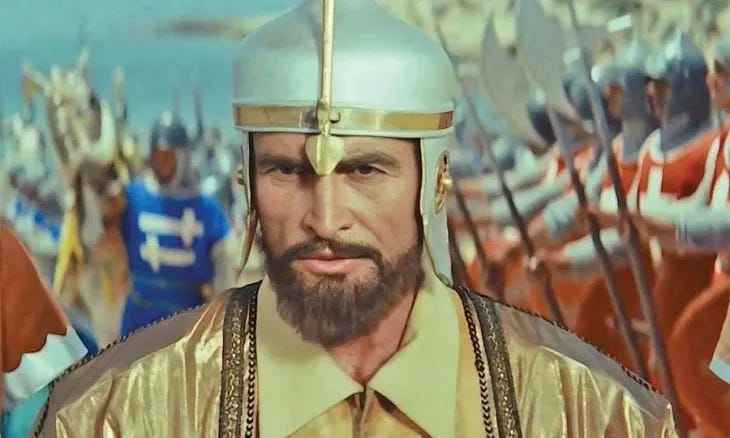
Al-Nāṣir Ṣalāḥ al-Dīn (1963) blends the crusades with modern Arab nationalism to celebrate military leadership as key to shaping civilization’s future. In many ways, it projects post-1952 decolonization onto medieval historical events, leaving viewers with the impression that we, as Arabs, have always been fighting to defend our lands from Western invaders.
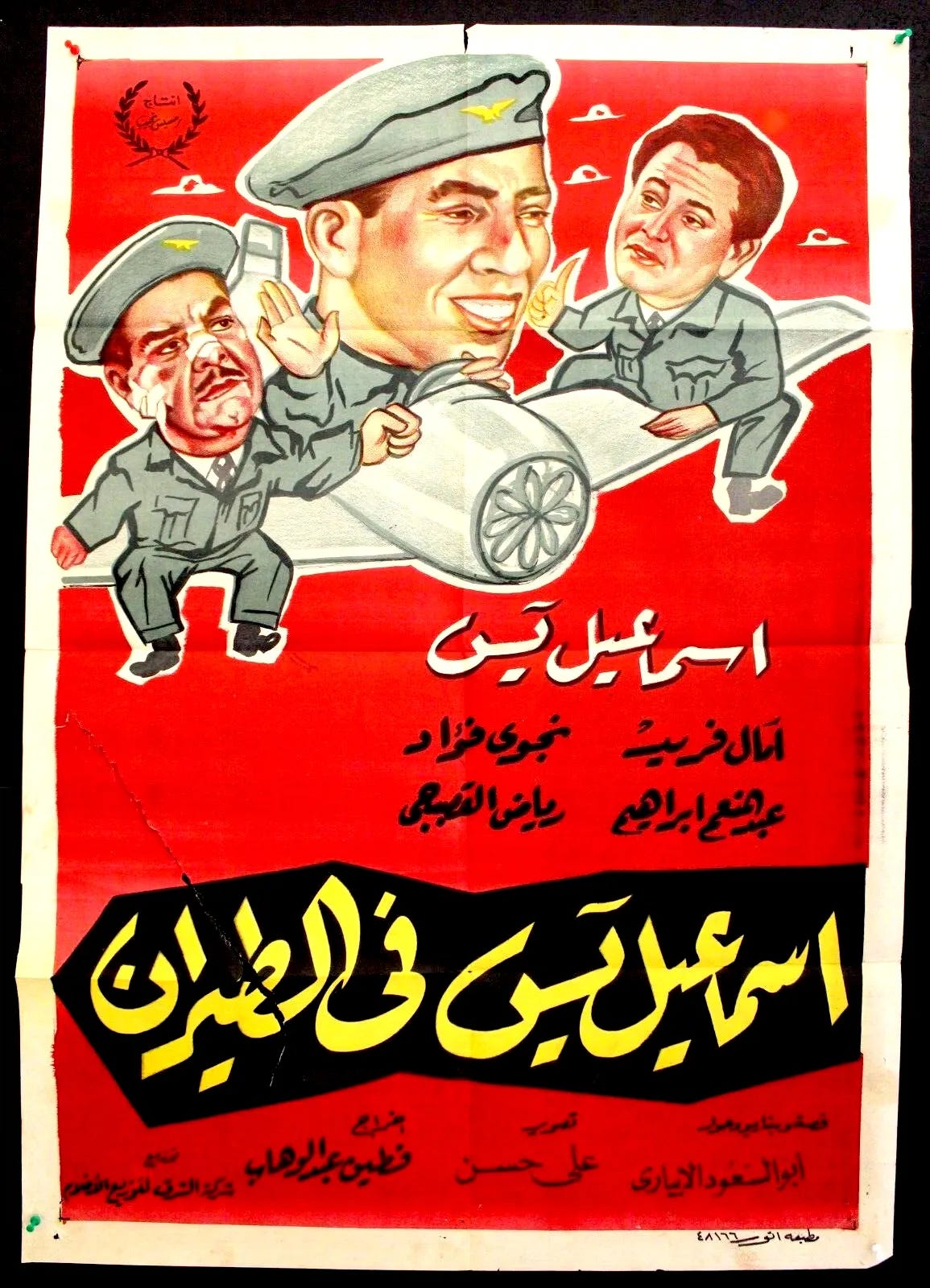
Ismail Yassin’s military comedies, discussed at length in the book, show that military propaganda can be engaging and humorous, not just serious or sacrificial. Humor can effectively honor and promote the army, making service enjoyable for conscripts or officers.
None of this is politically neutral. Yassin’s films are genuinely funny, with sharp timing and an easygoing tone that resonated with a wide audience. Yet, Mostafa is right: soft militarization is still militarization.
Cultural production is never a monolith and cannot simply be reduced to propaganda. There is always room for subversion, especially when the overall context creates space for dissent. The shock of the 1967 defeat naturally had a fallout on all aspects of life in Egypt. The book vividly captures the cracks in the military’s once-proud image. The hero didn’t vanish, but now appeared wounded, absurd, compromised, or mourned—more human and vulnerable. The figure of the martyr stayed central, yet martyrdom no longer guaranteed victory. Instead, grief and suspicion began to take their place, adding depth and complexity to the scene.
Taken together, Al-Simmān wa al-Kharīf (1967), al-Qaḍīya 68 (1968), al-Būstagī (1968), al-Mutamarridūn (1968), al-Arḍ (1969), Šayʾ min al-Khawf (1969), Yawmiyyāt Nāʾib fī al-Aryāf (1969), Mīrāmār (1969), Unšūdat al-Wadāʿ (1970), al-ʿUṣfūr (1971), and Tharthaara fawqa al-Nīl (1971) form an archive of disillusionment. Many of them are not war films, and that is precisely the point. Defeat had spread far beyond the battlefield. It could be seen in social relations, bureaucracy, village life, urban despair, and the declining credibility of national discourse.
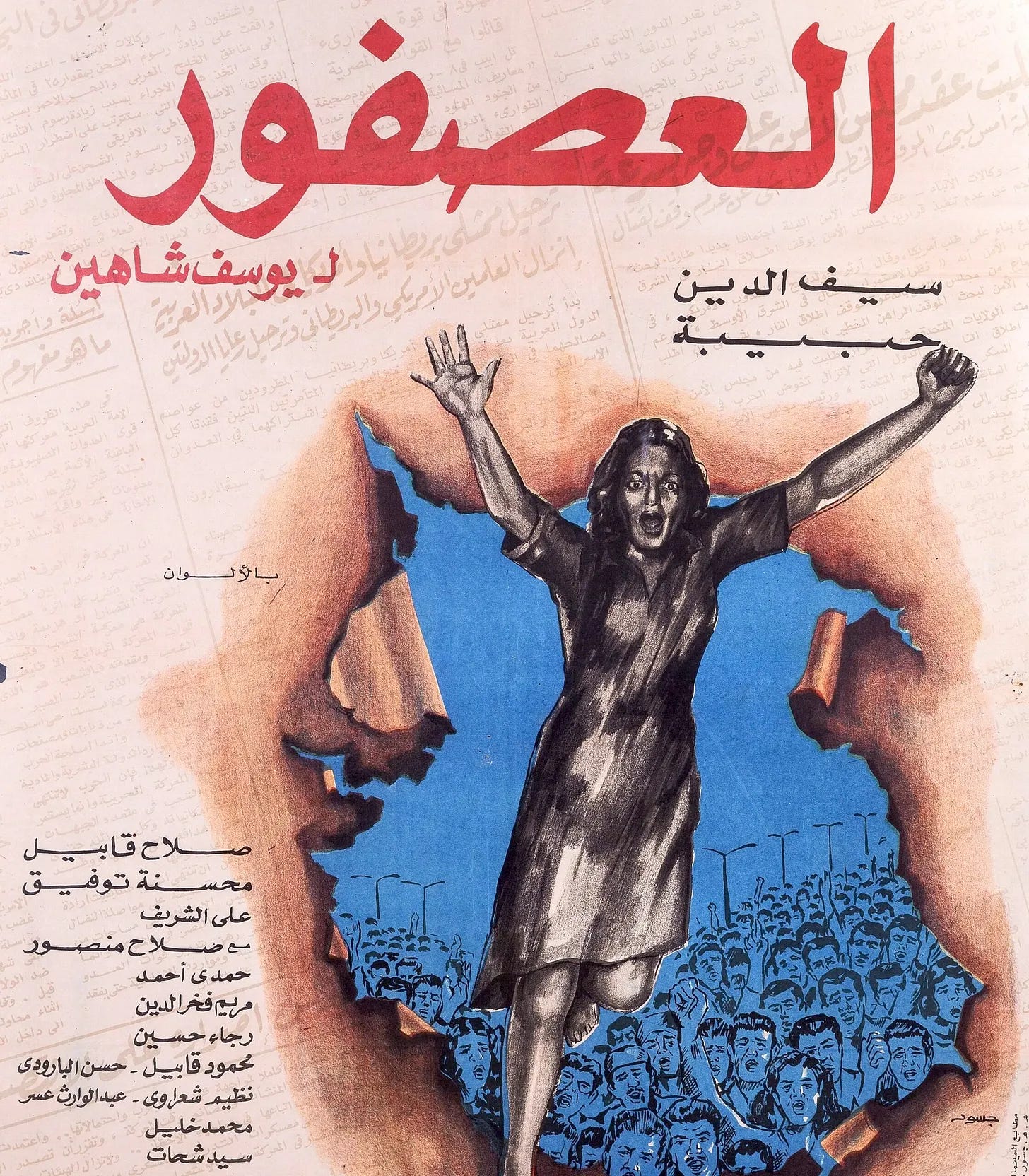
Throughout the 1970s, several films were produced that challenged the image of the military hero, even as the era followed the 1973 October War, when the army was glorified and romanticized. In his quest to reverse and tarnish Nasser’s legacy, Sadat’s regime allowed some space for cultural production that addressed torture.
Here, the book moves beyond the making of national myths and examines how culture could pull them apart. Mostafa gives particular attention to al-Karnak (1975) and Šafīqa wa Mitwallī (1978).
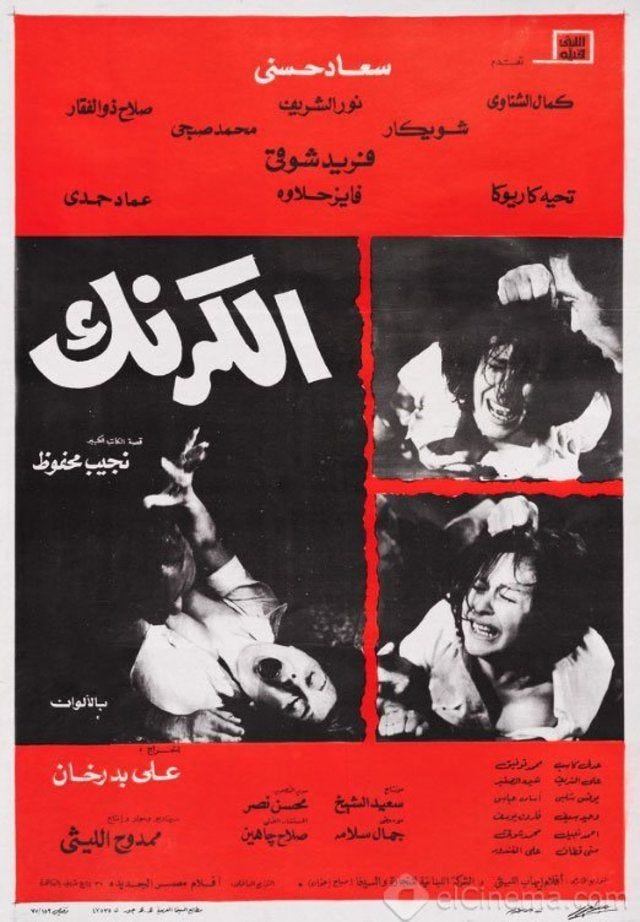
Al-Karnak (1975), based on Naguib Mahfouz’s novel, is a fierce indictment of repression, torture, fear, and the crushing of young Egyptians. Yet Mostafa notes that the film stops short of total condemnation. Its critique still leans toward the post-1973 recovery narrative, in which October partly redeems what June had exposed.
Šafīqa wa Mitwallī (1978) challenges traditional patriotic stereotypes. It narrates the story of a conscripted brother and his distressed sister in a world marked by state violence, class humiliation, and gendered brutality. The film dismisses notions of military glory, instead revealing a social structure that exploits the impoverished.
The October 1973 war did not erase the ambivalence surrounding the army, but it gave the state and popular culture the material to rebuild the army’s prestige. October marked the army’s emotional return. Victory, or simply the memory of it, helped heal the wounds left by 1967.
For Mostafa, 1973 produced more than a passing surge of pride. It left an image that could be reused whenever the military needed to restore its standing. The victorious soldier replaced the broken and tortured figures of the late 1960s, embodying masculine dignity and national unity long after Sadat was gone.
In the Mubarak chapter, Mostafa traces the transition from the admired war hero to the military’s expanding role in the economy and the surrounding corruption. While officers and veterans continue to command respect on screen, stories of greed, inequality, and betrayal are gradually taking center stage, revealing the complex realities behind the official narratives.
Three films stand out: Sawwāq al-Autūbīs (1983), Zaman Ḥātim Zahrān (1988), and al-Muwāṭin al-Maṣrī (1991). All three depict a society in which predators live off others’ sacrifices. Sawwāq al-Autūbīs is full of social anger and shows economic injustice eroding human dignity. Zaman Ḥātim Zahrān addresses the collapse of postwar ideals more directly. Al-Muwāṭin al-Maṣrī is the harshest of the three, confronting class, authority, and expendability with little room for sentiment.
Then there’s al-Barīʾ (1986), one of my top favorites. Atef el-Tayyib’s film sparked controversy, especially for its final scene where a conscript points his weapon at the prison warden and torturers. Although censors removed the ending, bootleg copies kept it alive online.
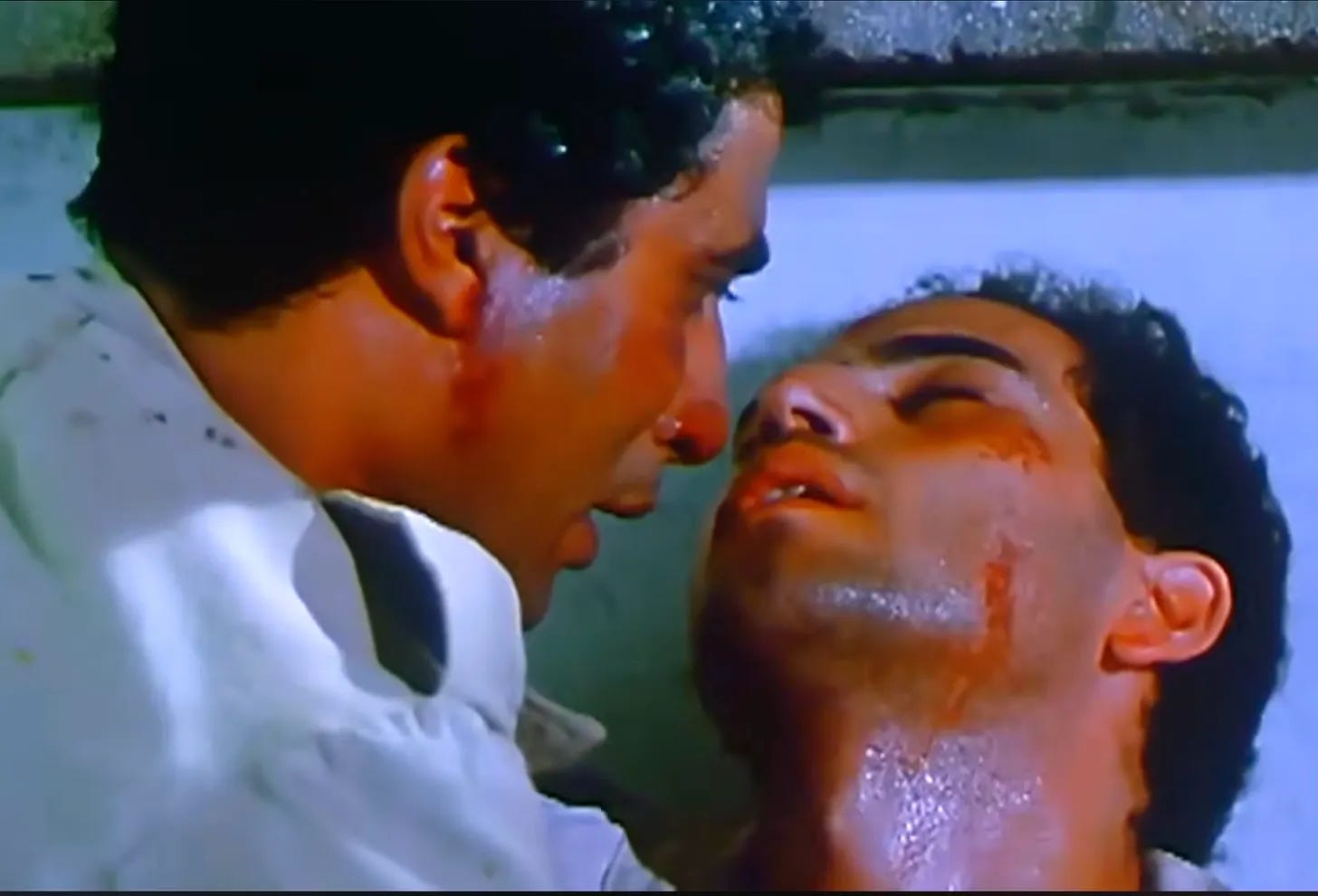
At al-Barīʾ’s core is a young rural recruit slowly turned into a repression instrument. Trained to see detainees as enemies to destroy, his perspective shifts when he recognizes a prisoner from his village. This collapses his taught story, leading him to mutiny.
The book also moves from movie theaters to people’s homes when discussing television productions. Soaps such as Dumūʿ fī ʿUyūn Waqiḥa (1980) and Raʾfat al-Haǧǧān (1989 to 1991) were huge hits, and as a child growing up in the 1980s, I remember how we were glued to TV screens, with zeal and patriotism whipping up adrenaline in our bodies. Intelligence officers appeared human, glamorous, and mysterious, inviting the audience to share in their secret heroism.

The final section of the book turns to history that many Egyptians lived through. Mostafa presents the 2011 revolution as a break with the popular image of the military. Old slogans lost their force. Protesters confronted the army, graffiti ridiculed military rule, and the claim that the army and the people were one came under direct attack.
The revolution created a record that enabled Egyptians to mock the army and challenge its sacred status. However, this opening closed quickly under Sisi, as the regime relied on familiar imagery—heroic officers, martyrs, saviors, legends, sacrifice, and national songs—without creating new myths, since the counterrevolution already had an archive.
Comments
Nothing yet. Say the first thing.
Sign in to join the conversation.