
Polarizing Spielberg might be my favorite flavor of Spielberg (see A.I.), because our reactions to those films say so much more about ourselves than the movies themselves. And ultimately, this is all I want from this art form: movies that make me think, keep me entertained, and reveal something about the artist’s view of our world and us as a people.
How would the world react to the evidence of alien life? What would it do to every belief system we’ve built? What happens when we encounter the truly unknown? Do we fight it, or do we welcome it? And does facing a miracle finally change how we treat each other?
I understand why this movie is divisive, because the answers don’t come through an alien invasion. Instead you have a chase movie nested inside a conspiracy thriller, and the reveal of the film’s thesis is deeper than just UFOs and alien action. In a film with alien technology, our most powerful weapon turns out to be empathy. Spielberg’s sincere message is that our ability to truly see and hear one another is what makes us unique as a species. That’s our superpower.
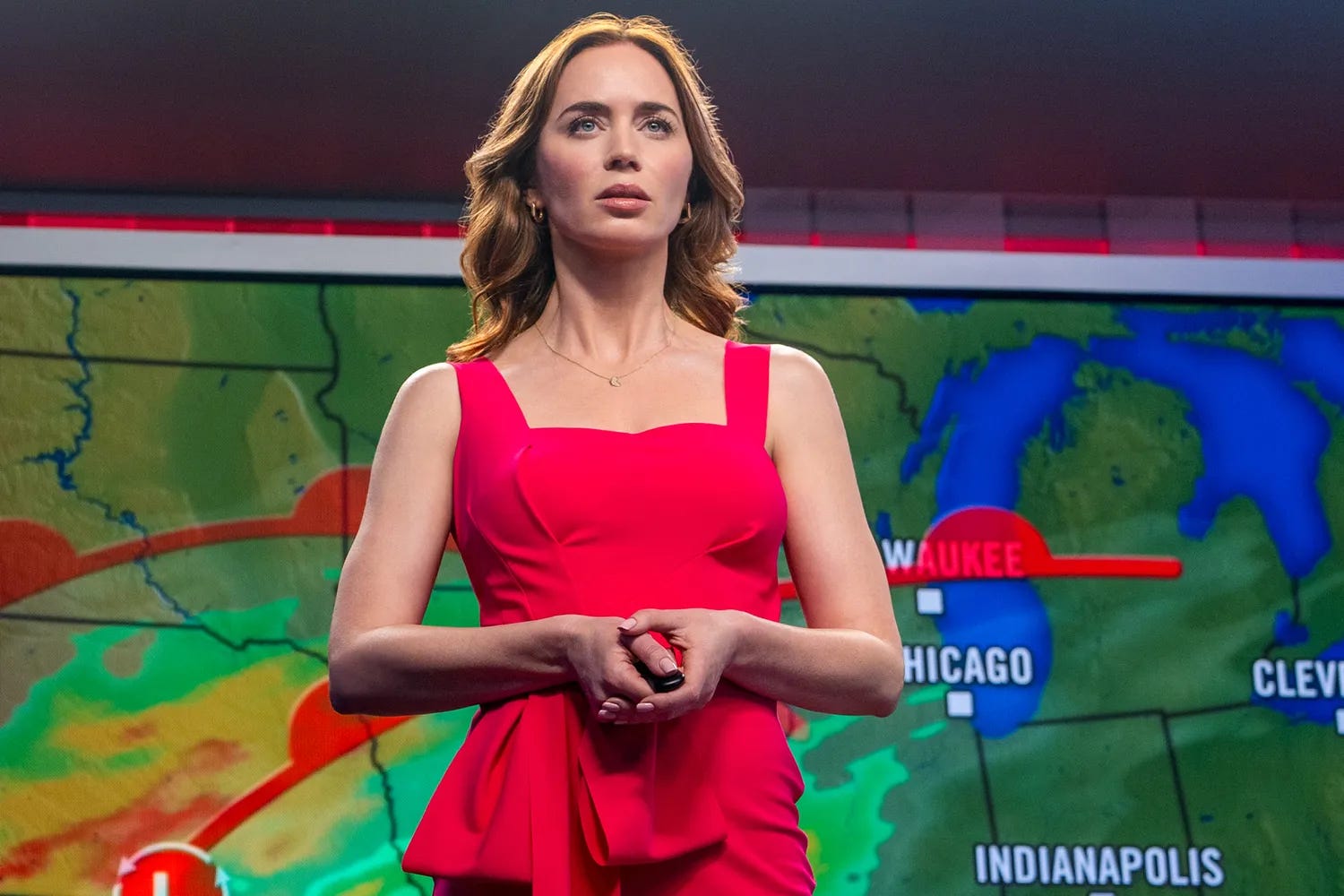
It’s the last thirty minutes that put this movie into a special place for me. Watching the proof of alien life broadcast to the entire world left me with the highest high I’ve felt in a theater since Sinners.
I was on the edge of my seat from the start of the third act… the tension is building like a heist as our characters try to get on air. I’m leaning in, fully invested. At this point our villain is already defeated… he doesn’t even put up a fight, he just stops chasing, overwhelmed by a message too large to contain.
Then the footage drops, and even though I know what’s being revealed I’m still in the same disbelief as the news anchors and the crowds around the world. Shock and awe. Everyone is glued to their screens, including the audience.
The alien footage that’s disclosed is documentary-style found footage that feels raw and authentic, but it’s the feeling of watching earth-shattering news break live into a broadcast that makes this sequence feel real. Spielberg nails the rush we felt when 9/11 broke on live TV, those moments where you’re frozen in front of a screen and the world is visibly splitting into before and after.
But it’s the “Spielberg faces” that complete the immersion. Instead of showing you the thing, he shows you people watching the thing… the spectacle isn’t the aliens, it’s the realization, written across every character, that our world has changed forever.
The best thing a movie can do is to make you forget you’re watching one… it’s what I chase anytime I step into a theater. Don’t just move me or entertain me, but pull me in so completely into the world you’ve built.
I grew up afraid of aliens as a kid. Then the movies taught me to fall in love with the possibility of other civilizations and other kinds of life. So I was moved to tears by the ending of Disclosure Day, because for one disorienting, electric moment, I forgot I was in a theater. I thought I was watching actual proof of alien life being revealed to the world in real time.
That’s Spielberg operating at his highest level. He doesn’t just make you believe that the characters believe it, he makes YOU believe it. And the film’s magic trick is in the final note: the news has been broken to the world, an actual alien is wheeled out, a whisper is shared, Spielberg has our complete attention, we’re all ears, completely open, and he ends it with a simple message tied into one word.
Listen.
It’s beautiful. Disclosure Day is another sci-fi masterpiece from Spielberg, and it’s my favorite film of the year.
Thanks for reading! As always, Deleted Scenes is a 100% free publication. You can support me by subscribing or sharing this article.
Comments
Nothing yet. Say the first thing.
Sign in to join the conversation.