
A warm welcome to all new subscribers who have joined over the past few weeks. You’ve overwhelmingly been directed here from two posts the exemplify the strands I focus on in this newsletter: the challenges of being second-language English ( my most recent post on President Zelensky’s car-crash press conference with Donald Trump struck a nerve with many of you) and how using English as the international language often imposes an Anglo-centric cultural reading on global issues. A clear example of that is also this newsletter’s other focus: the global conversation around fascism: it’s pretty topical these days, which is why a post I wrote last year about my grandfather being a fascist suddenly started being restacked extensively. The comments section under it is fascinating. So welcome all subscribers old and new to ‘News with a Foreign Accent’. And a special thank you as always to paid subscribers, your support makes a massive difference.
I’ll start this post with a confession: I’ve bought a lot of books about fascism. At one point they were dropping through my letter box with alarming regularity (those thin enough to actually fit through the letter box. Others were the size of bricks). Makes sense I guess, as I often write about the topic, so why was the regularity alarming? Well, here is the shameful confession: I haven’t read all of them. Which is a fancy way of saying that some tomes defeated me just a few dozen pages in. I don’t know if it’s my lack of perseverance, the subject matter or the fact that historians don’t have to deal with the short attention spans we contend with on TV news channels, but in truth I found some of those books impenetrable. Opening lots of ‘heavy’ (I don’t want to call them bad) books made me appreciate the good, readable ones. Honorable mention goes to Madeleine Albright’s ‘Fascism - a Warning’. The former US Secretary of State was born in Czechoslovakia in 1937 and her personal experience of both Nazism and Communism enriches her book. It’s not really a history book in the traditional sense but Timothy Snyder’s ‘20 Lessons from the 20th Century’ is also a clear and incisive read.
I could now launch into a tirade about how important it is to read ‘proper’ history books, blah blah blah, but realistically they’re not for everyone. That’s why I’m such a fan of a book called ‘M - Son of the Century’ and its recent TV drama adaptation.
M stands for Mussolini, and the original book is the brainchild of Italian author Antonio Scurati. It’s a scrupulously researched historical biography that reads like a gripping novel. There was no lack of drama in the years that led to Mussolini’s consolidation of power and all of it comes across in the book.
Whatever image you conjure up in your mind about historical TV dramas, this isn’t it. It’s like nothing I’d seen before. Suffice to say that the soundtrack is composed by Tom Rowlands from the Chemical Brothers. The drama’s director, Joe Wright, said he wanted to recreate the energy of that historical period, which “saw the birth not just of fascism, but also of futurism. I wanted to give it a contemporary aesthetic.”
Even after reading the book, two things stuck out in the Drama adaptation for me. The 8 episodes (of what could be series 1 if they make another one) only chart Mussolini’s rise to full dictatorship from right after World War 1 to 1925, when he consolidated his hold over Italy. It really gives the idea of how slowly the power of, and faith in, democratic institutions were chipped away. The demise of democracy was gradual. The other thing that struck me was the violence. Violence was the cornerstone of fascism. No wonder that many of the early fascists had been, like my grandfather, WW1 veterans. They’d seen the horrors of the trenches and must have become inured to the use of violence to obtain one’s ends. I’ve researched and read about several specific murders under fascism, but seeing the violence brutally and graphically depicted on screen seared it into my conscious. We often talk of ‘gratuitous’ violence on screen. In the depiction of fascism, it’s anything but gratuitous. It’s essential.
I spoke to Joe Wright and Antonio Scurati on Sky News a few weeks ago. You can watch the whole interview on my YouTube channel but I’ve selected the best clips for you here. The first question I asked Joe Wright was pretty obvious: Why did you decide to make this drama? His answer about not fully understanding what fascism meant was representative of what I feel is often the starting point for Britons on this subject:
The author of the original book, Antonio Scurati, comes from the opposite end of the spectrum. Like many Italians, he knew exactly what fascism had been. He credits the success of the book and the series to seeing fascism from the inside and, crucially, understanding that it could be within all of us.
The whole point of learning history is to understand the lessons it imparts. So I asked Antonio Scurati the most important question of all: what can we learn from Mussolini’s story? What are the hallmarks of fascism? Listen to his answer below.
My takeaways were Joe Wright saying that though he came to the story as an outsider, the fight against dictatorship is a global responsibility and a global problem.
And Antonio Scurati’s point about fascism being the choice of fear over hope. There’s certainly not a lot of hope around these days, and plenty of fear.
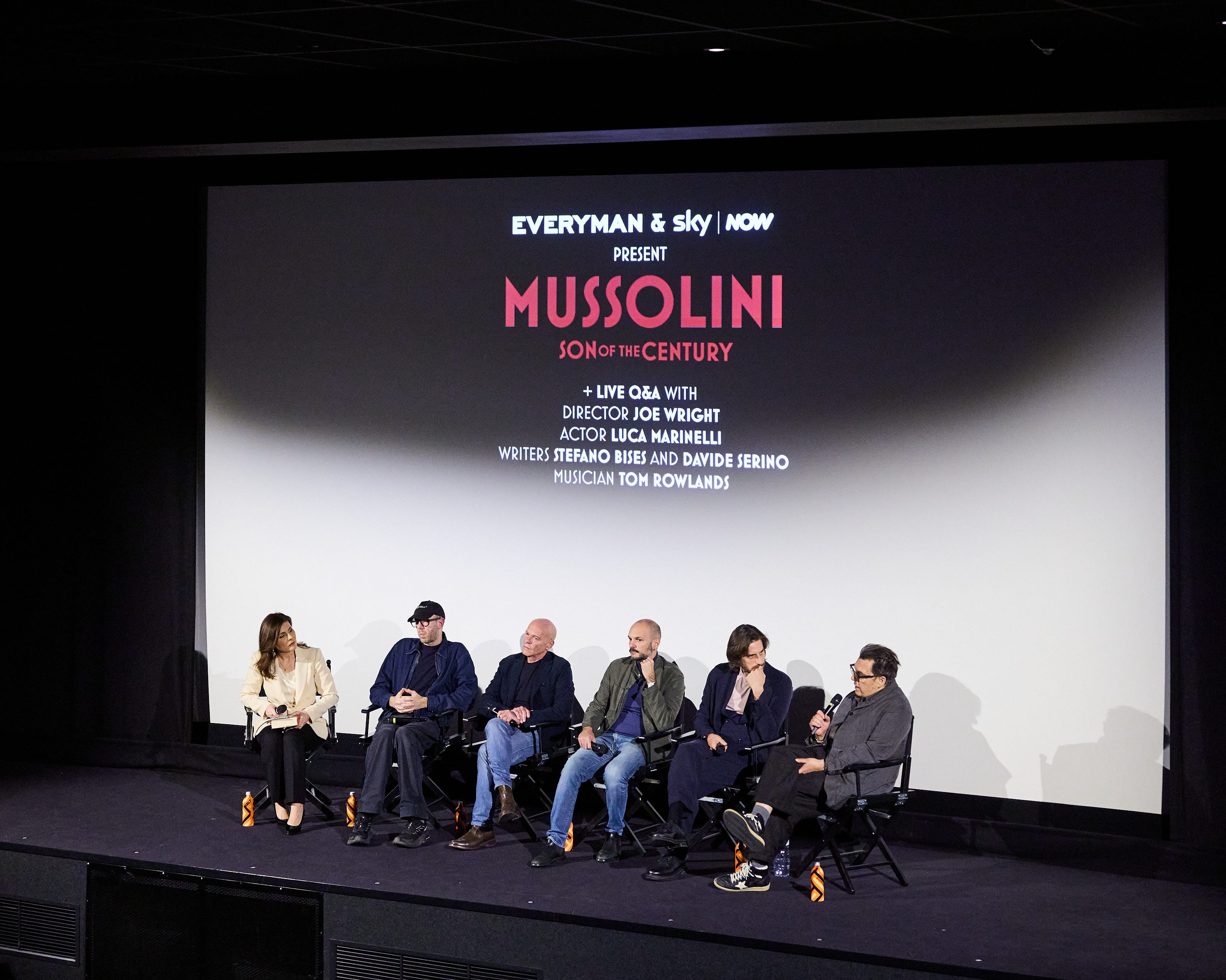
I also hosted a screening of the whole 8-part series at the Everyman Cinema in London’s Broadgate, where Luca Marinelli, the actor who plays Benito Mussolini himself, was also present. He spoke at length about how painful playing the role of the dictator had been - and as you can see in the pictures his transformation into Mussolini is pretty incredible.
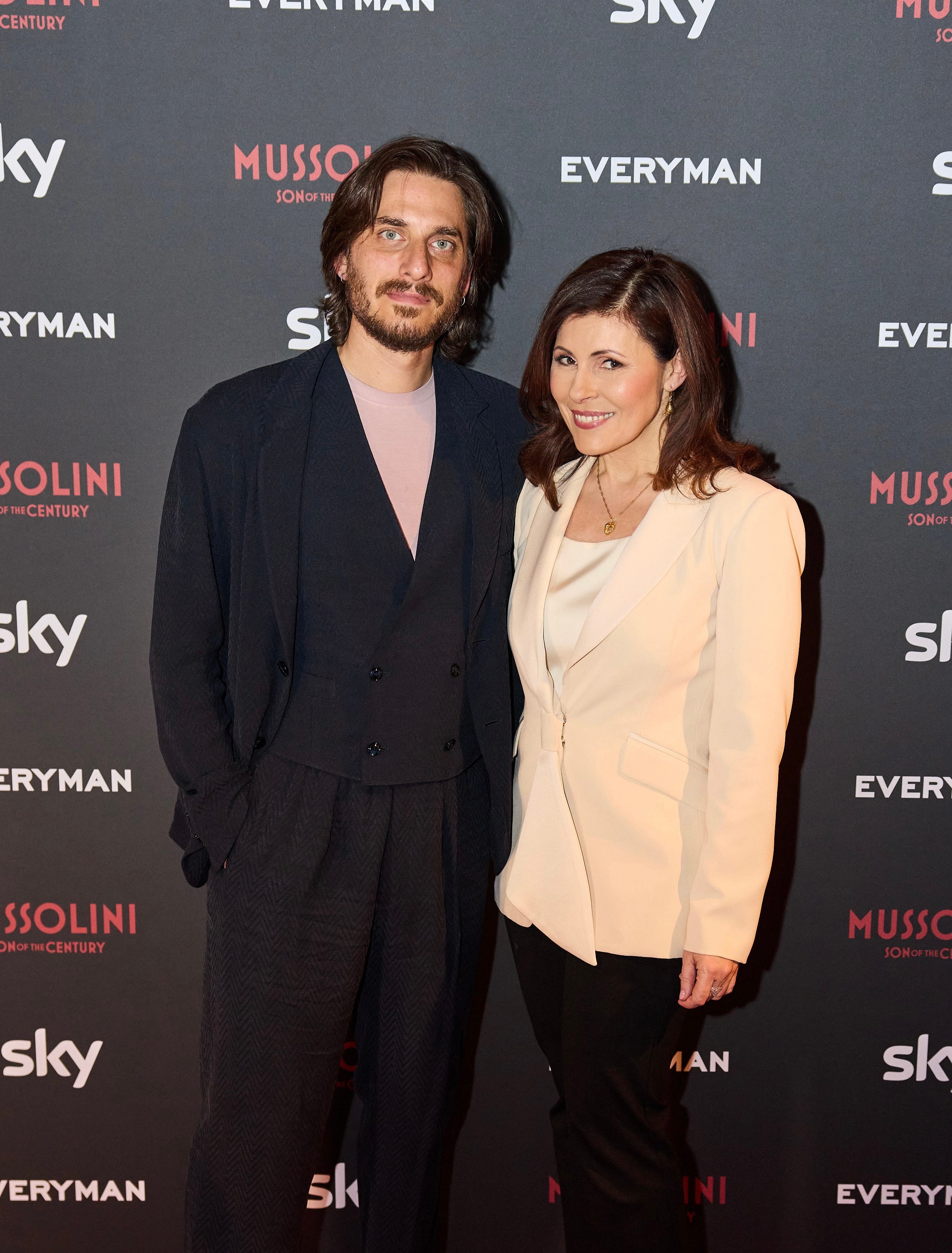
M - Son of the century is available on Sky Atlantic and should also be available soon on streaming in the USA. It’s a great, if not relaxing, watch. The final episode, with Mussolini addressing Parliament after the murder of an opposition politician that he probably ordered and daring MPs to defy him made me shudder.
It’s worth a watch, even if just to pretend you’ve read the book.
Thanks for reading News with a Foreign Accent! The topics around fascism couldn’t be more topical so feel free to share this post.
No posts
Comments
Nothing yet. Say the first thing.
Sign in to join the conversation.