
Oh, how time flies when you’re struggling with the right to remain in a country you’ve called home for years!
Can you believe it’s been a decade since the Brexit Referendum?
Yes, I can definitely believe it. Because in some ways it’s felt like Brexit has been in the background (and often very much in the foreground) of every political twist and turn in the UK over the past decade. So much so that in some conversations, on and off TV, people genuinely refer to Brexit as the ‘B WORD’.
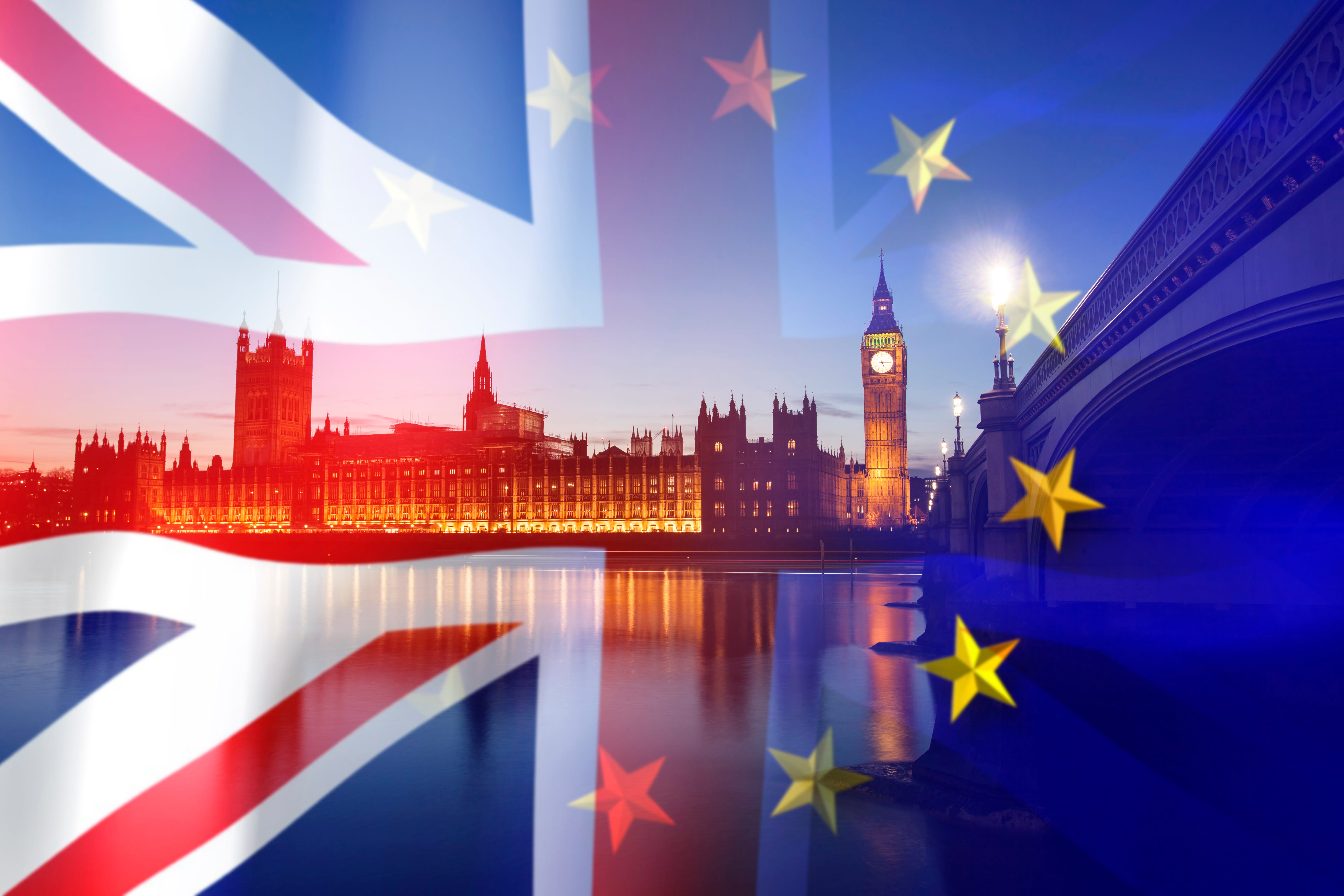
So the last thing we need is another newsletter about Brexit.
Unless it’s THIS newsletter, because I’ll talk about an angle that hardly ever gets a mention: the fate of the millions of EU citizens that call the UK home.
I do mean millions. Around 5.8 million people have applied for settled or pre-settled status, the scheme by which EU citizens already living in the UK could obtain indefinite leave to remain. We should take that figure with a pinch of salt, because it includes double applications and some people on pre-settled status that chose to leave before their permanent status was formalised. The final number of EU citizens in the UK also depends on whether you count Irish citizens, whose right to live in the UK is due to the Common Travel Area (CTA), an arrangement that predates EU membership. And of course there’s many people like me who are dual UK/EU citizens, who didn’t need Settled Status to stay and aren’t officially counted as EU citizens. All in all, I think 4 million EU citizens in the UK is a conservative and reliable estimate. Which makes for a massive community, whose right to live in the UK was plunged into uncertainty from one day to the next, and that you never really hear from.
There are reasons why this community is what I’ve called, in a previous Substack from 2022, the Invisible Europeans. The main one is that they are both one community, and also 27 different communities from the 27 EU member states. Different languages, and often different dynamics that led them to migrate to the UK. Add to that the element of privilege (I speak about it in detail in the video) that EU migration is often linked to, and they not only didn’t have a say in the referendum, but then hardly ever got a platform to truly discuss how it was affecting them.
So, where are we 10 years down the line? I spoke the issues still facing EU citizens in the UK with Elena Remigi, the creator of the In Limbo Project - a collection of testimonies from EU citizens who were directly impacted by Brexit (she then also produced the follow-up about Brits in Europe and the effect Brexit had on them).
Elena and I first met all those years ago. We were both passionate about the issues, both felt that EU citizens didn’t really have a voice and we became friends along the way. It’s been great catching up with her.
I hope you enjoy our chat as much as I did.
TRANCRIPT OF SOME HIGHLIGHTS OF THE CONVERSATION: (but watch video for much more!)
BARBARA:
Hello everyone, and welcome to News with a Foreign Accent. I’m Barbara Serra, and today’s episode is going to be about Brexit, because we’re speaking on the ten-year anniversary of the Brexit referendum vote here in the United Kingdom — a date that I remember very well, and that my guest, Elena Remigi, also remembers very well. Elena, welcome to News with a Foreign Accent.
ELENA:
Thank you very much.
BARBARA:
And what I want to do today, in this newsletter, in this video, is to look at Brexit — a topic, let’s face it, a lot of people have talked a lot about — but look at it through the viewpoint of the EU citizens here in the UK. Because I always felt that, since before the referendum, and certainly in the years after it, just not enough attention was paid to the EU community, or communities, depending on how you want to look at it, and the huge impact that Brexit obviously had on them. We literally all woke up on the 24th of June, 2016, not really knowing whether we still had the legal right to stay in this country. So, Elena, welcome — and the reason that we met, of course, is because you’ve done a lot of work, from I think just a few months after the referendum, trying to help EU citizens here come to grasp everything that was going on. Tell us what it is that you did, all those years ago.
ELENA:
Yes, thank you, Barbara. Well, we started a project called In Limbo in the aftermath of the Brexit referendum, to collect the voices of EU citizens
BARBARA:
tell me about what a lot of the EU citizens came to you for. Tell me a little bit about the kind of stories you were hearing, and some of the problems these EU citizens in the UK were facing.
ELENA:
Well, EU citizens, first of all, were feeling voiceless. They had no way of getting their voices through — it was always in the third person, through the media, and often the stories were inaccurate. They were struggling to live in that limbo that came after Brexit, because we mustn’t forget that from the day the referendum was won, our rights were put on hold, and settled status only came two and a half years later. That’s why we called the collection of testimonies we put together In Limbo — it was a harrowing limbo. People often felt sad, betrayed — ‘betrayed’ is a word they used very often. They experienced Brexit as a betrayal, because our rights were withheld for a long time. And so, people wanted to express how, from one day to the next, they’d gone from feeling at home, feeling at ease — never questioning, in a way, who they were in the UK. I was one of them. I never thought of myself — I suppose I was a newer citizen in the UK, but I never reflected on that. And all of a sudden, from that feeling of being at home, they started wondering: do I really belong? Where’s home? That’s a theme that came up very often. And it goes beyond the impact we can imagine in terms of rights — it’s really that feeling of not knowing where you stand.
BARBARA:
I mean, it’s funny, because it’s such a strange community to both represent and talk about — because, of course, when we say ‘the EU community,’ really we’re talking about people from all the EU countries, and there are huge differences between them. You could look at the old waves of migration — before, I guess, 2003, a lot from Germany. Germany actually has a massive community here, which surprised me. Then, of course, there was the opening of the borders to the east, so you had people coming from Poland, from Romania. Then the Eurozone crisis hit, and many more came from the countries in the south that were affected — Italy, Spain, Portugal, Greece. So, lots of different groups, in different languages, which makes it difficult to find unity. But all united by the fact that the legal right to stay here just disappeared from one day to the next. You mentioned that it was difficult — that people always spoke through an intermediary, through the media, that there were no homegrown EU voices to get the point across. Did you really feel that, in those years? Because I’ll be honest, and I don’t want to prejudge what you’re going to say, but I really felt, as a journalist, like: gosh, we’re this massive community, and there’s no—
ELENA:
—and absolutely, there was very much the rhetoric of the ‘good’ and the ‘bad’ migrant. The idea of putting voices together was to create a different narrative — to show that we’re all individuals with different stories, but at the same time, with a similar background — and to bring forward the stories of those who had struggled. Of course, if you lived in London, in a very cosmopolitan area, you felt the brunt of Brexit much, much less. But for people moving outside London, or if you belonged to an Eastern European community, the situation was very different. In the aftermath of the Brexit referendum, the National Police Chiefs’ Council reported a 57% increase in hate crime — there was graffiti on the Polish community centre. The xenophobia Brexit unleashed was very difficult for people to process, to understand, and many communities lived in fear. We collected these stories, although sometimes people struggled to put them into words. We gathered stories from people with all sorts of backgrounds — academics, scientists, every part of life — who equally didn’t feel at ease, because the narrative around us had changed, the language the media used had changed. We went from being called ‘EU citizens’ to being called ‘migrants’ — meaning economic migrants, weighing on the structures, weighing on the NHS, bringing crime.
BARBARA:
And it’s interesting, I always felt - and I’m not saying this isn’t true - that there was an element of privilege attached to the EU migration story. Because I remember, when I left — I actually came from Denmark, so I’m an Italian citizen who lived in Denmark, who then moved to the UK back in the ‘90s for university. I never had to ask anyone’s permission, I never had to get a visa, I never had to do anything — I just registered with the NHS, because I was an EU citizen. So this word that often gets attached to EU migrants — ‘privileged migrants,’ whichever way you want to look at it — legally, we just didn’t have to ask anybody’s permission for anything. So is that something you felt as well?
ELENA:
Yes. I noticed that sometimes people looked at us as privileged, to use that word. But when you talk about EU citizens, it’s such a varied group — there are people of all different economic backgrounds, old people, vulnerable people, victims of domestic abuse. You’re talking about a very large group of people with very different stories, very different experiences. So, to speak of us as ‘privileged people’ — sometimes I think that’s an inaccurate term.
BARBARA:
Yeah, I mean, obviously it’s all relative, and it depends who we’re comparing EU citizens to. But certainly, when it comes to legal rights — we had a legal right to live here that was then taken away.
ELENA:
Well, as you know, in 2019 the EU Settlement Scheme was introduced, and it obviously didn’t give us all the rights we’d enjoyed before, but it was certainly something that at least gave people certainty that they could live in this country. The Home Office hailed it as a resounding success — I tend to say it worked better than I thought, but there are still many pending issues.
BARBARA:
What are some of those pending issues?
ELENA:
Well, first of all, it’s a digital-only status, so for people who struggle with technology — older people, vulnerable people — it’s a difficult system to navigate.
BARBARA:
So basically, there’s no passport equivalent, right?
ELENA:
No, absolutely not
BARBARA:
But what happens when you show up at the border? You have to have your digital id?
ELENA:
Yes, exactly. And that has created problems — even for people who normally use mobiles and computers, because the system can go down. Some people have been denied boarding; some have struggled to prove their right to rent or to apply for a job. Most of these issues are solvable, but they’ve created delays, stress, missed opportunities in some cases. So that’s one issue. The other major issue is around minors. Many families — I’ve met a few — felt that their children had an automatic right to settled status. I remember meeting a taxi driver from Romania who told me he was fine, his family was fine — but these children, growing up, would at some point need to prove their right to stay, because when they apply for a job or try to rent, they realise they’re undocumented. That’s a serious issue, and the Home Office should keep the information alive in communities, raise awareness, because there’s a risk of a new Windrush generation. And then there are issues with late applications — what they call ‘reasonable grounds’ are often difficult to prove, so people need a lawyer, or they need to pay, and that’s not accessible to everyone. Sometimes it can take a long time to grant people the right to stay, and a right granted late can amount to a right denied. So those are the main issues still surrounding settled status.
BARBARA:
Yeah, I mean, what I found interesting is that, at the time, they did say settled status would be the equivalent — that it would be the same as things were for all of us before Brexit. Now, it has to be said, I’m also a British citizen — I got that years before, so it doesn’t impact me — Nigel Farage has spoken about how foreign citizens will not be eligible for social housing, and that absolutely included people with settled status, regardless of how long they’ve lived here. Of course, a lot of members of the EU community will have literally lived in this country for decades, because they never had to get citizenship — you’d get people who’ve been here since the ‘70s or ‘80s who wouldn’t be entitled to social housing or certain kinds of social support. So that’s quite interesting — so much for that promise that it was going to be exactly the same. Ten years later, it isn’t.
BARBARA:
Okay, well, listen, let’s wrap it up now. I just want to finish by saying: ten years on, I’m of the school that thinks another referendum now would just be too much. I don’t think it’s going to happen, and I also think it would be very divisive, at an already very divisive time. But I’m wondering — how would you describe how EU citizens, or the ones you speak to, the ones who still come to you for help, feel ten years down the line, ten years after that fateful day when we woke up on the 24th of June thinking, ‘oh my goodness, what’s going to happen now?’
ELENA:
Well, last week we asked EU citizens to describe how they felt in a word, and the word that came up most frequently was ‘sad,’ followed by ‘angry’ and ‘betrayed’ — and ‘betrayed’ was the main word people used ten years ago too. We asked more than a thousand people, so it wasn’t a small group. I suppose the wounds are still open — there’s a real sense of sadness, of disappointment, and of not knowing, as you say. Another referendum would be very divisive for the country, and politically it’s a very volatile period, with Starmer and Reform gaining ground, so I’m not sure the country would be ready for it. But there’s still that sense, when we look back on those times, of sadness. And the sense — like somebody once said — once you’ve made the omelette, you can’t put the egg back. That describes it very well. It’s not easy to move forward.
BARBARA:
Yeah, well, there’s certainly no going back to ten years ago. But hopefully, we’ll move forward, you know.
ELENA:
Well, Britain will have to find its way to come to terms with this, and shape its future.
BARBARA:
Yeah, well, I think that’s what it’s trying to do. So, fingers crossed. Elena Remigi, it’s been such a pleasure — thank you so much. We became friends all those years ago, so it’s always nice to touch base and talk about how things have changed in these ten years. Elena, thank you so much, and thank you all for watching. That’s it on News with a Foreign Accent — if you’re watching this now, there should also be the write-up underneath, on my newsletter. Thanks again. Bye-bye.
ELENA:
Thank you.
Comments
Nothing yet. Say the first thing.
Sign in to join the conversation.