
This morning, I was delivering an introductory GenAI talk in a local community center with a 55+ audience. A participant asked a question I had not anticipated, but that in retrospect was obvious:
How are we supposed to learn all this?
The first answer that comes to mind is straightforward. You attend sessions like this one. You read. You experiment. You keep up.
That is a reasonable answer. It is also incomplete.
Attending a session like this is a good starting point. It creates awareness. It provides an entry point.
But it does not, on its own, lead to depth.
What is often missing is a way to continue learning in a more deliberate and structured way. Something that connects one session to the next, one question to the next, and gradually builds understanding.
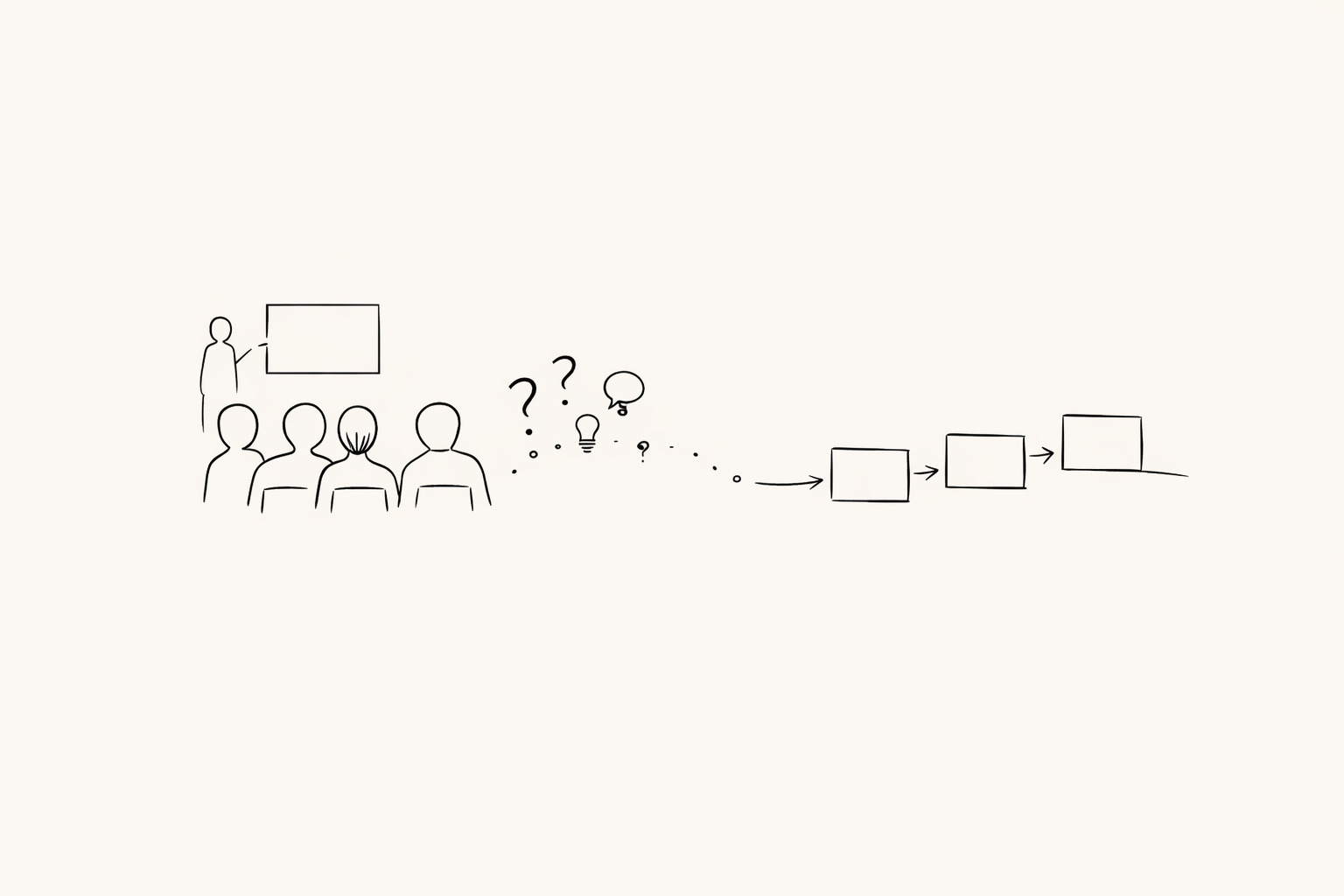
That is the gap.
And it is becoming more visible in areas like generative AI, where the pace of change is high and where the tools are easy to use but not always easy to understand.
The challenge is not access to information. There is no shortage of tutorials, guides, and built-in help.
The challenge is knowing what to learn, and how to approach it.
There are at least three reasons for this.
First, things change quickly. What was accurate a few months ago may already be outdated.
Second, we often do not know what we do not know. It is easy to start using a tool without a clear sense of the underlying concepts, limitations, or risks.
Third, the tools themselves are persuasive. They generate answers that are fluent, confident, and often correct. If you are not already aware that errors are possible, there is little reason to question the output.
Together, these factors make it easy to get started, but much harder to develop a grounded understanding.
This is where a shift is needed.
From: How are we supposed to know?
To: How can I structure my learning so that I can make sense of this over time?
A session like this can be part of an exploratory sprint.
By the end of the session, participants often leave with more than just information. They leave with directions for further learning:
what to explore next, for example how to write prompts that reduce hallucination risks
how to experiment with different tools, such as using Perplexity for more factual questions
new questions, such as whether different tools rely on different sources and why
The session increases awareness. It opens up the space.
But learning does not have to pause until the next session.
This is where a learning sprint becomes useful, as a more intentional and structured way to continue.
A simple version might look like this:
Identify the questions you want to answer.
Consider different ways to find those answers.
Prioritize sources and approaches.
Set aside time and work through the questions.
Review what you learned and what remains unclear.
This does not need to be formal. It does not need to be long.
What matters is the shift from exposure to intentional learning.
If you are already attending sessions, reading articles, or experimenting with tools, you have everything you need to get started.
The next step is to connect those efforts.
Pick one question.
Work through it deliberately.
Then decide what comes next.
That is how learning begins to accumulate.
Comments
Nothing yet. Say the first thing.
Sign in to join the conversation.