
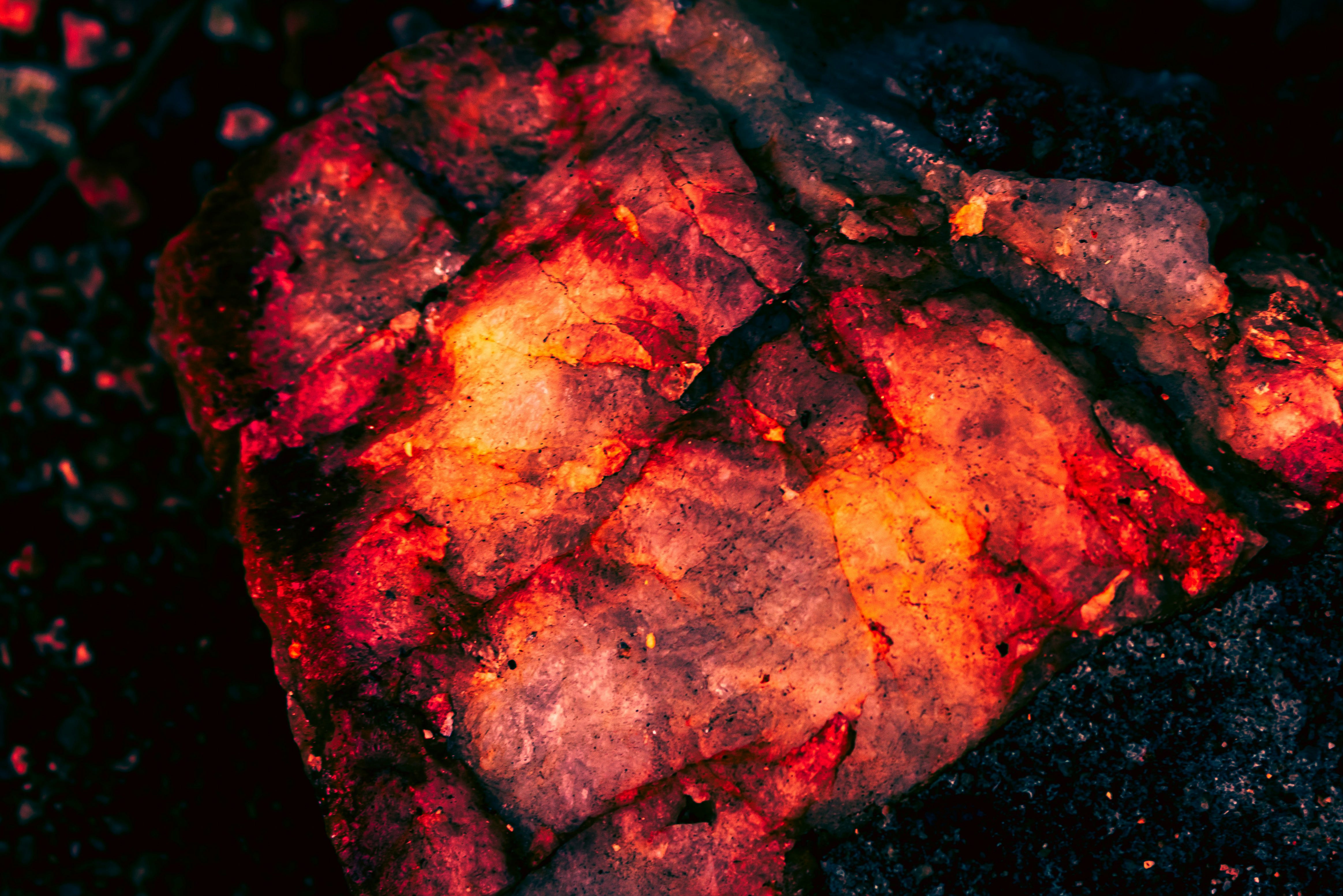
The possibility of life on other planets has been in the news lately, which is almost as interesting as how we decide what does or does not have life right here on earth. Is a river alive, or only the things that swim and grow in it? How about a rock that has been around since the cooling of the earth? Alive or dead? I know June is not the best time to evoke a campfire, but if you have ever sat around one until all that’s left are pulsing embers, it’s hard to believe that what you’ve been watching for hours has no life in it.
According to the Astrobiology program at NASA, there are seven key traits of life as we know it on earth: it 1) is highly ordered, 2) reproduces itself, 3) grows and develops to maturity, 4) utilizes energy to function, 5) maintains homeostasis, 6) responds to stimuli, and 7) adapts to external pressures, evolving in response to them.
This is a perplexing list. Fire satisfies some of the requirements but not all, so it does not have life. A red blood cell can’t reproduce, so it doesn’t qualify either. Mules somehow squeak by, perhaps because it’s impossible to stand next to one of these charming but sterile creatures without noticing how alive it is. A rock, on the other hand, doesn’t stand a chance. It is dead, dead, dead.
Yet even a NASA scientist will tell you that knowing what characterizes life on earth may or may not be helpful in discerning what life looks like on other planets. So a better question for earthlings to ask might be, “How alive is it?” or “In what sense?”
These are the sorts of loopholes I am looking for, since I have such a strong sense that rivers are alive, along with saltwater marshes, deep woods, rock quarries, and some abandoned houses. It’s not just that there are living things in these places that make them come alive. These places draw life to them, the way a lone tree on a high hill draws lightning. They are energetic landscapes composed of some things that breathe and some that do not. They are families of things that act on one another, making no particular distinction between what humans call “alive” and what we call “inert.”
If you have ever walked on a beach and come upon a piece of wreckage that the tide has failed to budge, you know what I’m talking about. There are moats of water around the thing, and wave-formed ripples fanning away from it in the sand beneath your feet. When the tide comes back in, the whole design will change. This is an interesting situation, in which things that officially have no life in them still have plenty of agency to act upon each other—and to affect you too, though you are the only certified living being in the picture.
An American philosopher named Jane Bennett wrote a book called Vibrant Matter that I bought on the strength of the title alone. In it, she questions the ruinous habit of sorting the world into living beings (“vibrant life”) and lifeless things (”dull matter”). In this act of conscious or subconscious separation, full-seven-traits beings are set apart as the ones who make things happen in this world. Everything else waits for us to pick it up, move it around, use it, or decide to toss it out. We are the ones with power to act; everything else exists to be acted upon.
Bennett’s main argument with this set-up is that none of us lives apart from things. Instead, we live in what she calls “assemblages” of vibrant matter. These open-ended collectives include humans, along with all our inventions, but also powerful nonhumans, including electrons, trees, wind, fire, and electromagnetic fields. There is nothing dull about any of these entities. Whether they meet the requirements for life or not, they all belong. They bump up against each other, respond to each other, affect each other. They make ripples together. The sum of their vital force is greater than any of their parts.
To put this idea to work is to wonder when the Granny Smith apple you eat for lunch stops being an apple and starts being you. It’s to notice how a shiny object in the grass can exert its own kind of “thing-power,” causing you to turn aside and look. It’s to hear the mockingbird outside your window imitate the sound of a delivery truck backing up, or to discern a heartbeat in the ticking of a clock—all of these living and not-living things forming a soundscape that you cannot take apart, though each layer of it affects you in a different way. When this becomes your new habit—finding your place in an energetic field that includes all kinds of vibrant matter—then there is a sense in which everything comes alive.
How alive is a rock? I never even thought about it until I was invited to a Lakota sweat lodge to pray for someone’s healing. The assemblage included a bower of tall poplars overhead, a round lodge made of birch saplings covered with green tarps below, a mountain stream running beside it, and a hot fire out front. Eight or nine people were also part of the collective, talking in low voices before they dropped to the ground at the door of the lodge and crawled in on their hands and knees.
When I did this too, other elements became parts of the whole: the smells of damp earth and dried sage, the shuffling of human bodies settling into their places around the cold firepit, the singing as the hot rocks came in, the sizzling of the water when it hit them, and the complete darkness once the canvas flap of the lodge came down. My knees pressed against the knees of people on either side of me. I listened to the songs since I didn’t know the words. Every time I took a sip of breath, the air that came into me was hot, hot, hot.
As more rocks were added to the fire, the life in them became clear. They pulsed with heat, deep red at the edges and flashing orange at the center, like there was a whole forest fire going on inside them. Every time the leader poured another ladle of water on them, they hissed and popped as the steam shot up. Then they glowed red again, remembering where they came from and how long they had been around. Or maybe that was me remembering. I lost track. Me, they, us. The fullness of life in that circle was greater than all its parts.
Jane Bennett takes on larger issues in her book, such as how the separation of reality into full life (ours) and dull matter (things we can use) feeds the sort of hubris that doesn’t think twice about gobbling the matter to gorge the self. This is not only how a planet loses life; it’s also how full-seven-trait human beings become lonely and lost, once we have set ourselves apart from the vital assemblages to which we belong.
May those who have ears to hear, hear.
No posts
Comments
Nothing yet. Say the first thing.
Sign in to join the conversation.