
Postscript: I am indebted to alert reader Elijah Dickinson for pointing out that I repeatedly mistyped “oligoliteracy” as “oglioliteracy” here. It’s just when I kept spelling “Magneto” as “Magento” in that thing about Shuma-Gorath without realizing it. How embarrassing.
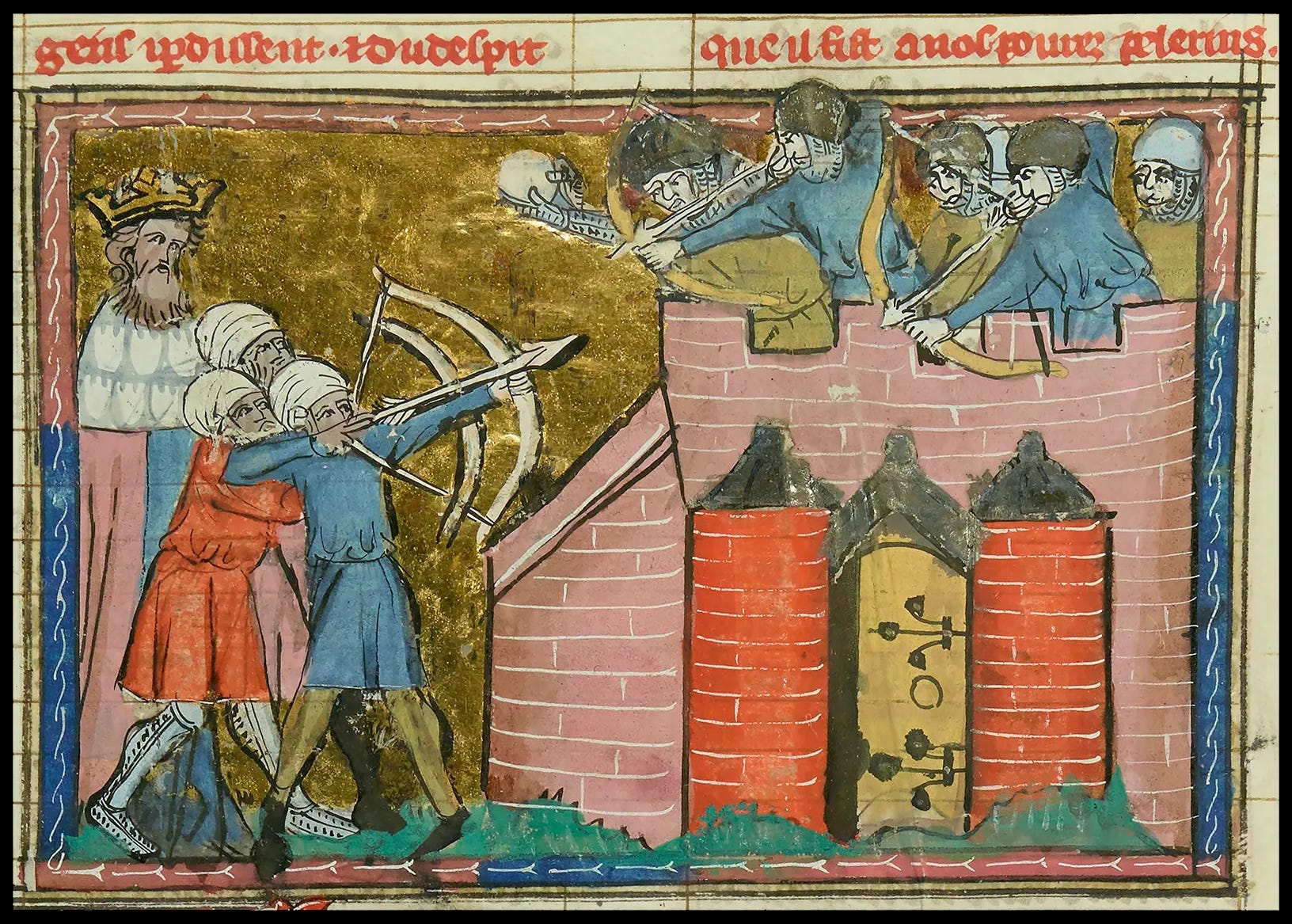
A few months ago I visited a used bookstore and walked away with Christopher Tyerman’s God’s War: A New History of the Crusades (2006). I finally got around to cracking it open, and am about a third of the way through its 900 & some-odd pages. Tyerman’s prose is clunky and his nonobservance of the Oxford comma frustrating, but I’m enjoying his chronicle nonetheless. The Crusades were a truly bizarre and incredibly complicated series of historical episodes—although the idea that there has ever been a simple epoch anywhere is probably indicative of a lack of information or interest.
During an interlude between the First and Second Crusades, Tyerman spends a few pages exploring the means by which knowledge and celebratory myths of the First Crusade were communicated throughout Western Europe.
Awareness of the First Crusade pervaded elite western culture … The scale and rapid production of histories of the First Crusade by eyewitnesses and others eager to interpret the event didactically finds no parallel in medieval historiography. Within a dozen years of Jerusalem’s capture, at least four full eyewitness accounts, three major western histories and part of the great Lorraine version by Albert of Aachen were being circulated along with a bevy of other accounts, more or less derivative, imaginative or polemic. While originating in monasteries and cathedrals, these texts reflected and excited secular interests, for example in local heroes or national pride. Most of the histories sculpted stirring tales of faith, bravery, suffering, danger, tenacity and triumph. The theologians distilled the message of God’s immanence and Christian duty; the no less artful eyewitnesses provided accessible tales of miracles and butchery…
Such texts, while sketching an increasingly fixed canon of adventure stories, fed the language of preaching, as with the invented versions of [Pope] Urban II’s Clermont address (i.e. all of them). A more or less distinctive, although never prescriptive or uniform, corpus of scriptural references and paraphrases became employed by popes and later propagandists and chroniclers of Jerusalem campaigns. In this narrow vocabulary of holy war a defined set of intellectual and religious attitudes and theories emerged at the precedent-obsessed papal Curia and among the propagandists and apologists of the Second Crusade (1146–8) but, until the fall of Jerusalem in 1187 once more made the story immediately relevant, not elsewhere beyond the cloister or the study … Descriptions of the First Crusade and similar later expeditions may have encouraged the applications of the language of the Jerusalem holy war, much of it conventional biblical rhetoric, to other conflicts, forming a specialized literary genre. This hardly constituted a demotic movement.
Let’s halt at “literary” here.
Tyerman refers to Robert of Rheims’s Historia Hierosolymitana as the most popular of the twelfth-century histories of the First Crusade, and cheekily places the word popular between quote marks. It was, of course, composed in Latin. So was the renowned anonymous Gesta Francorum et aliorum Hierosolimitanorum. So was Guibert of Nogent’s Dei gesta per Francos, which derived from and refined the material of the anonymous Gesta, and added material Guibert had heard from returning veterans of the campaign. So was the Gesta Francorum Iherusalem peregrinantium of Fulcher of Chartres, a participant in the First Crusade who lived in Jerusalem for at least a few decades after its seizure.
Where the First Crusade was concerned, there appeared to have been two “strata” of public awareness. The rarefied upper stratum comprising what we might call the “official” histories—which were themselves biased and distorted, especially when they pretended to know anything about Islam or the “Saracens”—belonged to a literate ecclesiastical caste, writing to itself in the transnational language of administration, liturgy, and learning.
During the medieval period, the qualifier for admission into the litterati was being able to read Latin. Fluency in the written form of one’s local vernacular wasn’t enough; a person who, somehow or other, learned to read English, French, or German without an education in Latin belonged to the illitterati as much as the masses of tenant farmers and artisans who had no practical use for letters.
The illitterati were not, however, completely in the dark about the the world of literature to which only the litterati had direct access: “in the Middle Ages,” writes one Ruth Crosby, “the mass of the people obtained their knowledge of literature through hearing others read or recite rather than through reading to themselves.” Those who could not understand written or spoken Latin could be (and were) made aware of certain key texts produced, read, and circulated in the cathedral, explains one Cheryl Glenn:
Diversifications and diffusions of elitist literacy practices existed among the laity to the extent that people at all levels of expertise with texts functioned according to an awareness of key cultural texts, be they religious or legal. Thus it was that both lay men and women alike heard about texts they probably had not read, listened to texts they perhaps could not read … and talked about texts they all had in some measure committed to memory.
While the cathedrals retained what a literate person literate biases might call the “primary sources” of the First Crusade, there was an impetus to translate and disseminate the material into forms the illitterati could make use of. Tyerman again:
More accessible to the partially literate communities of the twelfth century stood oral transmission of ideas, stories and news: sermons, the liturgy, living witnesses, and the Cambrésis monk’s songs, cantica and carmina, chansons de geste, hymns or liturgical chants. Sermons—actual, invented or remembered—sparked ideas and aspirations: the early invented accounts of Urban’s Clermont speech; descriptions of addresses made in 1106 on behalf of Bohemund’s eastern enterprise or in 1103 by the archbishop of Würzburg concerning a plan of [Holy Roman Emperor] Henry IV to visit Jerusalem; or a recruiting circular composed at Magdeburg in 1108 to encourage support for expansion into the lands of the Slavs beyond the Elbe. It was remembered that Bohemund began his sermon in Chartres cathedral to rouse enthusiasm for a holy war against Byzantium in 1106 by relating ‘all his deeds and adventures’, prominently, no doubt, his leadership to Antioch in 1098. Such public performances, alive in the collective memory of historians a generation later, helped to secure a crusade narrative in the minds of listeners…
Information was conveyed by oral testimony. Chroniclers of the First Crusade relied on the reminiscences of returning veterans. Guibert of Nogent picked the memory of his acquaintance Robert of Flanders; Albert of Aachen’s history depended on the testimony of returning members of Godfrey of Bouillon’s contingent.
Most returning Crusaders couldn’t sit down and pen their own memoirs, as retired military leaders might do today. Even fewer people in medieval Europe could write than could read, and preparing inks and working with parchment were technical skills most of the laity did not possess. Fulk le Réchin supposedly dictated his reminiscences of the First Crusade to a scribe, and we can only wonder whether he spoke in Latin (not impossible) or had his story translated into Latin by an amanuensis who very probably belonged to the clergy.
Unlike the laboriously copied and cloistered manuscript, the spoken, chanted, or sung word was liable to taking on a life of its own in the iterative process of reception and transmission. If the eyewitness or veteran skewed his testimony to burnish his personal image or lionize the enterprise, and if the monk composing a chronicle was willing to fudge, omit, or invent details in service of a religious agenda, the minstrel or poet was even less encumbered by an obligation to capture and communicate the truth of what happened in the Eastern Mediterranean between 1097 and 1099. The truly popular narratives of the First Crusade were keyed to and sculpted by the tastes, expectations, and feedback of their audience:
The most effective medium of popular memory remained verse. Although the great [vernacular] verse epics, such as Chanson d’Antioche, found a form stable enough to be written down only later in the century, verses for singing or recitation, perhaps with musical accompaniment, were compiled much earlier. These contain little if any historical as opposed to literary value, but they provided vivid stories. Thus, in his own lifetime, Duke Robert II of Normandy (d. 1134) was confronted with wholly fictitious tales that he killed Kerbogha [Turkish ruler of Mosul] and had been offered the crown of Jerusalem, legends that the Anglo-Norman poet Gaimar had incorporated into his vernacular Estorie de Engleis by the 1140s. Such adventure stories fashioned the image of the First Crusade and conditioned responses to further appeals to holy war. The power of songs and verses operated on a number of levels, from taproom to court, causing disquiet even in the powerful. In 1124, Henry I of England blinded a rebel, Luke of La Barre, because of his effective slanderous songs. In midcentury, Gerhoh of Reichersberg creditied the medium with producing a creeping puritanism: ‘The praise of God is also spreading in the mouth of laymen who fight for Christ, because there is nobody in the whole Christian realm who dares to sing dirty songs in public’…
Not all media of communication told a story. Liturgical chants, hymns and songs encapsulated moods, ideas and admonition, not narrative, as in the very early twelfth-century Jerusalem Mirabilis: ‘There we must go, selling our estates to purchase the temple of God and destroy the Saracens’. More subtly, increased contemporary elaboration of the mass focused attention of Christ and the cross, their transferred vocabulary and imagery helping define the mentality on which crusading depended … The elevation of the deeds of the Jerusalemites, as they were often described, to legendary status marched in step with the programme of the post-Gregorian church and the cultural assertiveness of the ordo pugnatorum, the warrior class…
Reading between the lines at the top of the second paragraph above, you can see Tyerman describing a vibe shift in Western Europe in the decades after the capture of Jerusalem.
I am indebted to an article by one Franz H. Bauml for the clever portmanteau oligoliterate—an apt descriptor for a society in which literacy was entrenched and indispensable, albeit practiced by very few people whose roles necessitated it.
While postliteracy, neo-orality, and retribalization have become on-and-off hot topics as we live and reckon with the consequences of the digital revolution, I wonder if we’d be better off thinking about the present situation as one of neo-oligoliteracy. Perhaps what we’re living through is a long, evolving transitional period exhibiting both superficial and systemic resemblances to the Middle Ages’ bifurcation of the populace into a large mass of illitterati and a small straum of litterati.
Not long ago I happened to catch an episode of Reveal that examined the crisis in American journalism. It addressed a number of interrelated topics, but what I found honest and refreshing was a few honest comments about the grain of truth in the accusations of left-wing bias indefatigably hurled at “mainstream” or “legacy” media. The fact is, the New York Times, the New Yorker, the Atlantic, Harpers, Vanity Fair, and the surviving bastions of longform journalism and investigative reporting do reflect the image and the worldview of an affluent, educated, urban professional class back to itself. Though we ought to insist on the differences as much as the similarities, this bloc does have a lot in common with the medieval clergy in terms of performing important managerial, advisory, and legitimizing functions for a separate but synergized elite sector.
The Reveal episode taps CUNY Professor of Journalism Peter Beinart for an explanation:
[T]hese institutions tend to have people who are of backgrounds that are more secular than most Americans. They’re going to be more urban. They may be more young. They will have come off and out of particular kind of educational institutions and that may incline them to a set of views about what we think of cultural issues, whether it’s guns or LGBT issues or abortion or perhaps even immigration that would mean that they see those things quite differently than Americans who are more religious, more rural, maybe less likely to be college educated.
I believe Beinart speaks a little too cautiously here, because let’s face it: you’re not getting a job at the New York Times or even at NPR if you’re a twenty-five-year-old Christian conservative from rural Iowa with an associate’s degree who works as an auto mechanic and writes about town council meetings and local elections for the tri-county newspaper. You’re just not. Your time would be better spent starting a podcast and seeing where it goes than applying for an internship in New York or Washington, DC.
But, to the point, people with the training, the time, and the taste to read longform print journalism—fact-checked, rigorously investigated, and composed by persons credentialed by the university system, internships, and networks of intra-elite affiliation—can fairly be said to be informed to a degree that someone who gets their information from skimming blurbs on their Facebook timeline or watching CNN usually isn’t.
Should we call this elitism? Yes—absolutely. But between laymen, who do you suppose will be more comprehensively knowledgeable about the political situation in the Middle East: the one with subscriptions to the New York Times, the Economist, and Foreign Affairs (we assume she does read them), or the fellow who gets his world news from TikTok, Instagram, and the Daily Show?
Lately I’ve been watching one or two segments of the YouTube channel Breaking Points every day—or at least I’ve been listening to it while I’m doing something else. It’s the kind of program that early critics of the cable news paradigm would have lambasted for serving chatter instead of journalism. Oftentimes the hosts will zero in on a report published in the New York Times, the Wall Street Journal, summarize its contents, read off excerpts, and talk about it for ten minutes.
Yesterday, the YouTube algorithm tossed this video in front of my face. It’s literally just a guy reading excerpts of a Wired article about low employee morale at Meta and commenting on them. His channel has over a million subscribers. Do we think more people will see his video than will read (or have read) the article he’s glossing and weighing in on?
These sorts of channels behave similarly to medieval interpres, delivering useful information from the proverbial cathedral to the new ilitterati, translating and syncopating it into forms the public is better able to absorb. Judging from these channels’ metrics, people find them extremely valuable.
But—this isn’t really new. In No Sense of Place (1986), Joshua Meyrowitz observes that a scandal of the early 1970s did not attain notoriety or political urgency until reportage passed through the print/television membrane:
The shared forum of television is an arena for the declaration and confirmation of the “reality” of events. Protests, scandals, and disasters that have not been reported on radio and television do not seem to have “happened.” The Watergate scandals became “real,” not when the Washington Post reported the stories, but when network television reported that the Washington Post reported the stories.
Without going into a digression about the differences between the YouTuber, the cable news host, the nightly broadcast news host, and the media formats and ecosystems they represent, we can locate an important structural distinction between the oligoliteracy of medieval Europe and the oligoliteracy of today. In the former, the cathedral and the intrepres shared a mutualistic relationship. The people in the business of producing and curating knowledge and the people that disseminated and popularized portions of that knowledge did not work at cross-purposes. The interpes of the streaming video and podcast era—whose genealogy we can trace back to back to AM talk radio, The Daily Show, and the early blogosphere—have a parasitic relationship to the contemporary litterati and their cathedral. Having watched the checkmarked YouTuber’s dissection of the Wired article about the dismal mood at Meta, why should I pay Wired to read the article and help to keep them in the business of doing journalism?
But will we shed any tears if Wired closes up shop?
If you live in New York, how much do you miss the old weekly Village Voice? Are you reading its new quarterly version? Did you know it existed?
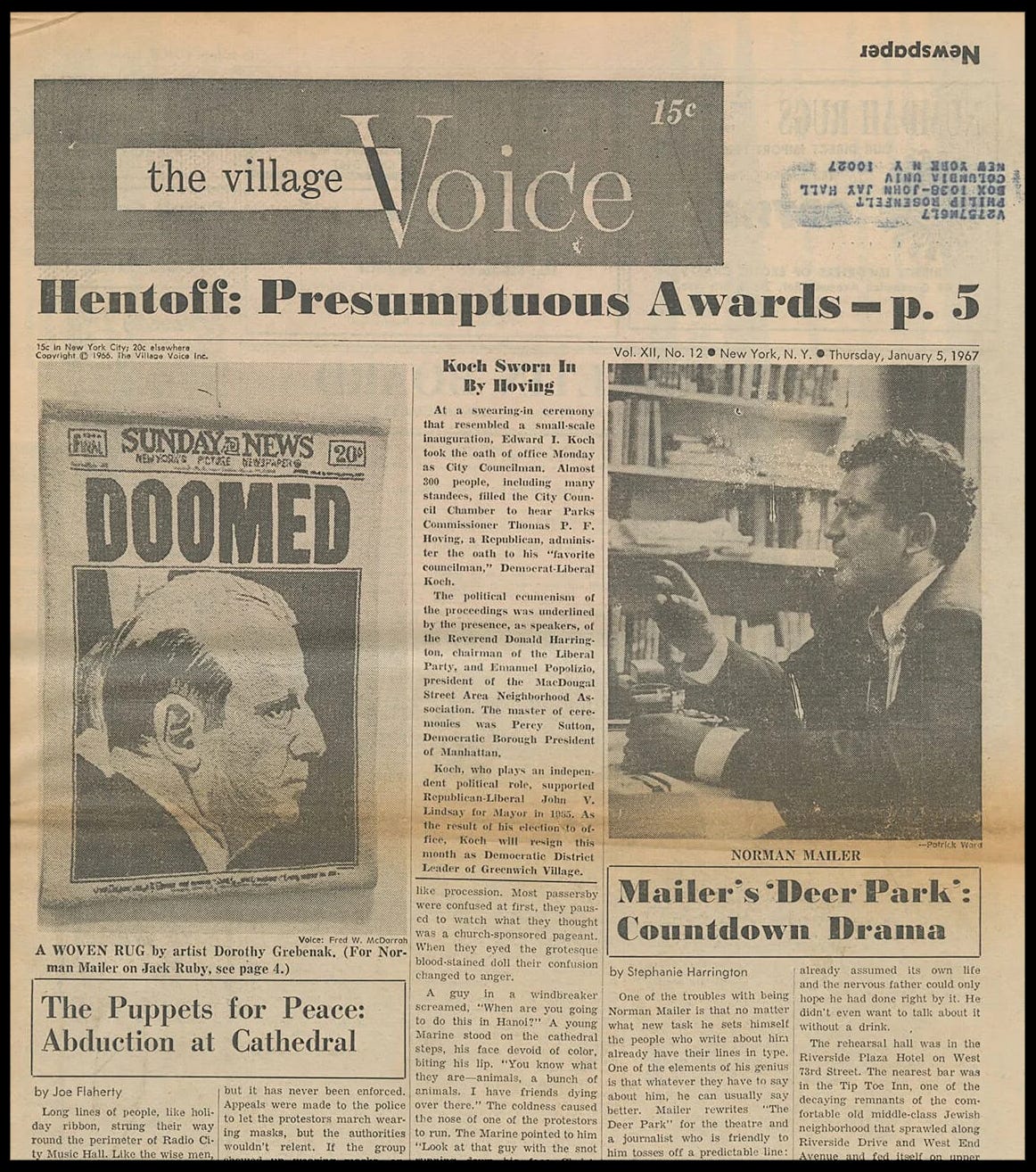
The digital interpres not only summarize current events for us and tell us how we should feel about them, but help us to understand the conversations going on within the proverbial cathedral’s walls. Perhaps there is some need for this: elsewhere in No Sense of Place, Meyrowitz observes that scholars in trendy interdisciplinary fields “develop their own specialized jargon in order to appear mysterious—and therefore more valuable—to other scholars.” Whether we feel the criticism is justified or not—sometimes there is a need to devise language adequate to novel concepts—it’s hard to dispute that English-language academic journals of the humanities were a lot easier for laypersons to read and understand in the early twentieth century (notwithstanding their tendency to quote Latin or Greek texts without providing translations in the footnotes) than they are today.
But there are, of course, hundreds or thousands of YouTubers who have made handsome incomes explaining complicated academic topics to general audiences. Someone who listens to a thirty-minute segment video elucidating the ideas of Das Kapital or Simulacra and Simulation or Gender Trouble while they clean their apartment may be getting nothing more than the basic gist of the text—but maybe that’s already more than most people truly need.
Or—do we believe, as Alexander Pope did, that “a little learning is a dangerous thing?” If one is inclined to look ruefully back upon the heyday of Tumblr and its ripple effects upon popular discourse, social mores, and politics, does it follow that we should like to prevent the ideas of the cathedral from sneaking out and wandering around town unsupervised? Was it a mistake to let the high-fructose stuff of fandom and the erudite stuff of the academy hybridize in an environment that didn’t especially value or advance subtlety, nuance, or rigor? Perhaps we feel that both strands of culture were left worse off after having been braided together?
This is precisely why the medieval Catholic church preferred to hoard its knowledge, policed culture, opposed vernacular translations of the bible, and was horrified by the invention of the printing press. If we heard an echo of Martin Luther in the blogosphere, and in later choruses of denunciation against the biased, dishonest, elitist, cucked, out-of-touch, woke, bought-off, etc. mainstream/legacy media, we shouldn’t discount it as completely incidental. Liberals’ anger at legacy media’s capitulation to the Bush Administration during the lead-up to the Iraq War helped to fuel the popularity of the Daily Show and blogosphere, just as the cultural biases and blind spots of metropolitan newsrooms fostered a bitter resentment towards “mainstream” journalism that found expression in the web’s seedier corners during the 2010s and is still going strong. (“You don’t hate journalists enough” is not an uncommon refrain in those parts.)
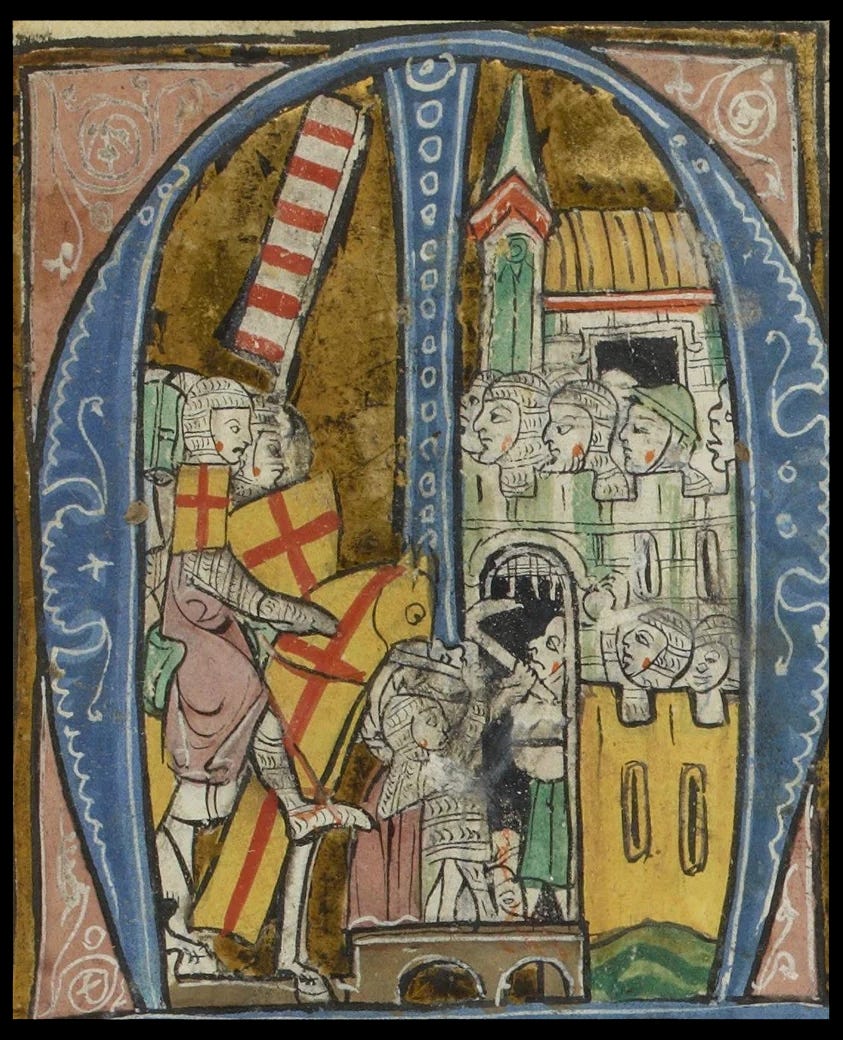
A few spitballs and speculations—certainly provisional, and perhaps superficial—about neo-oligoliteracy:
(1) The most successful and popular interpres, now as in the early twelfth century, are primarily in the business of entertaining the masses, not educating or producing knowledge for them.
(2) The old dividing line between the medieval European litterati and illitterati was training in Latin. What separates the new litterati from the new illitterati is the capacity to read, attentively and comprehendingly, their vernacular language in longform. If the illitterati do not already outnumber the litterati, they will soon. This will not be without consequence for any institution assuming that those qualified to participate in and perpetuate it have the ingrained habits (and biases) of literate persons, and are capable of absorbing and using information in a decompressed format.
(3) The liberal democratic ideal—supposing that a robust free press equips a highly literate voting public to weigh, converse about, and come to reasonable conclusions about regional and national interests—was an evolution of the Protestant reaction against the medieval Catholic church. The religious attitude that sought to democratize vernacular literacy for the sake of permitting individual readings and interpretations of scripture transferred to a secular belief in the desirability of a representative democracy mediated by a public sphere in which the circulation of newspapers, pamphlets, books, etc., provided an indirect means of contact between the governors and the consensually governed. The perversion of the public sphere by profit-making incentives, the retreat of print culture and general literacy, the dysfunction of democracy, and de facto rule by a corporate oligarchy propped up by the institutions of a knowledge-worker class that protests with its mouth but obeys with its feet—these developments are impossible to isolate from one another.
(4) Today’s layperson has little reason to believe that [literate] knowledge in and of itself is power, or that the well-read and informed individual has any particular economic or social advantage over a well-positioned, lucky, or sharkishly ambitious member of the illitterati (as the members of the medieval ordo pugnatorum usually were). For that matter, the boys’ club of the elite no longer recognizes its members by their conversance in the Classical texts their colleges once prized. (And I somehow doubt that Elon Musk, the world’s first trillionaire, is in the habit of reading any one thing for more than five minutes at a time.)
(5) Is “hey Grok” a bell tolling for human interpres? If the futurists are proven right in their predictions about AI, will we face the prospect of a world without a litterati—or even a class comprising creatives, administrators, and knowledge-workers? Do we think that society could function for long? To reiterate an earlier question: are wordcels like us more afraid that it could?
Comments
Nothing yet. Say the first thing.
Sign in to join the conversation.