
In the paragraph that follows, I am going to briefly subject you to something that, if I were not writing a newsletter, I would not ask my worst enemy to read: insights from the mind of Riley Gaines, whose ability to parlay a fifth-place finish at a college swim meet into a career as an anti-trans podcaster is a tribute to what late-stage capitalism can accomplish.
“I think we’re going to continue to see movement and allow the people’s voice to be heard, especially in some of those purple states,” Gaines told Politico last month, after the Supreme Court in West Virginia v. B.P.J. upheld state lawmakers’ power to bar trans girls from playing women’s sports. “Each major decision gives your ordinary person more cover to say something that…was the standard, like the default position to take, really not that long ago.”
In other words, B.P.J. is not (only) about keeping girls like 16-year-old Becky Pepper-Jackson from playing on the same team as her friends. It is about empowering people to feel more comfortable expressing rank bigotry in public.
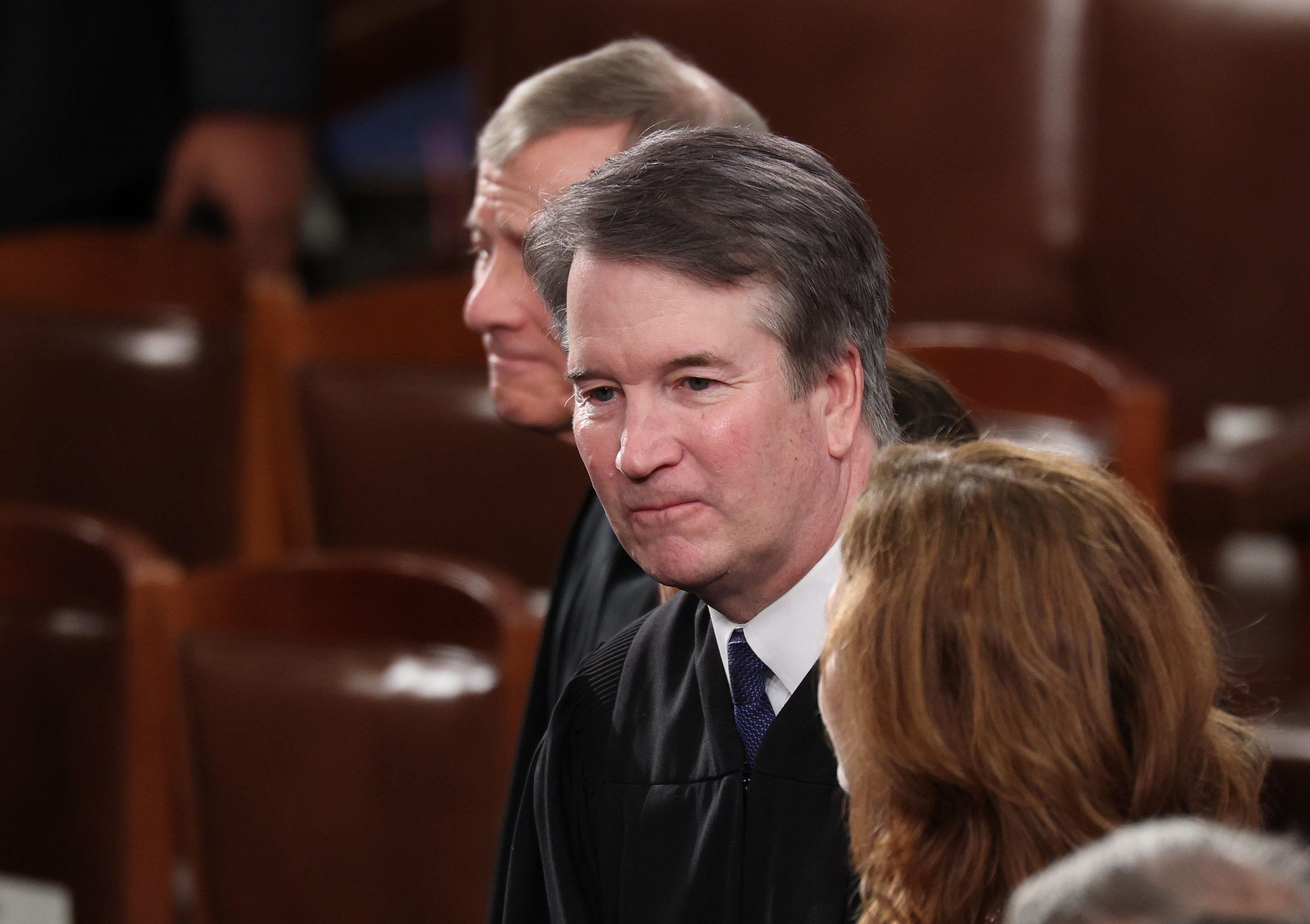
I am bringing this up because a common refrain among defenders of these bans is that when it comes to “political” “debates” about legal protections for trans people, sports are just different. This premise is at the core of Justice Brett Kavanaugh’s majority opinion in B.P.J., which goes on at length about the “enduring” physical differences between men and women, including “height, weight, strength, speed, endurance, and jumping ability.” Especially when it comes to contact sports, he writes, “forcing female athletes to compete against males can create significant safety risks” and “undermine competitive fairness.”
On this basis, Kavanaugh concludes that preventing trans girls from playing women’s sports is a reasonable policy choice, and that lawmakers may make it without running afoul of federal law or the Constitution. But he also tries to downplay the impact of B.P.J. by emphasizing the ostensibly unique nature of sports. For example, he distinguishes between discrimination against trans women athletes—in his view, fine—and discrimination against trans women in settings like classrooms or workplaces, where sex-based differences in, say, “jumping ability” are not relevant. The “factual contexts,” Kavanaugh explains, are “vastly different.”
For anti-trans crusaders within the conservative legal movement, this is a distinction without a difference. Activists pushing sports bans are not motivated by some earnest desire to protect girls’ lacrosse players from concussions. They are using sports as a transphobia gateway drug—a tool for persuading people who are not steeped in right-wing culture wars to see at least one form of discrimination against trans people as a matter of common sense. As the journalist Sydney Bauer wrote in Balls & Strikes last summer, cases like B.P.J. “are about more than just sports—they are about the ability of anti-trans lawmakers to freely discriminate against their constituents without fear of legal repercussions.”
Regular readers of this website understand how this works. But rarely do activists spell it out as plainly as Gaines did here. In her view, the real value of B.P.J. is not the particular state statute it upholds. It is B.P.J.’s place in an emerging canon of anti-trans jurisprudence that gives “ordinary” people “more cover” to support anti-trans policies in more places.
The Supreme Court does not decide a case like B.P.J. in a vacuum. It is playing a role in a reactionary feedback loop, in which anti-trans media personalities persuade voters to elect anti-trans politicians who pass anti-trans laws blessed by anti-trans judges and celebrated by anti-trans media personalities, who then whip voters into an anti-trans frenzy all over again. Sports bans are not the movement’s end goal. They are a framework for getting Kavanaugh and company to bless even more ambitious state-sanctioned discrimination in whichever “factual context” the movement turns to next.
As always, you can find everything we publish at ballsandstrikes.org, or follow us on Bluesky at @ballsandstrikes.org. You can get in touch by emailing us at contact@ballsandstrikes.org. Thanks for reading.
Todd Blanche Understands Exactly Who His Client Is, Jay Willis
Senators asked Trump’s attorney general nominee if he would run an “independent” Justice Department. The thought would never have occurred to him.
Todd Blanche: The January 6 Slush Fund I Approved Is Not My Fault, Madiba Dennie
Trump’s nominee for attorney general has backed off his $1.8 billion “anti-weaponization fund.” Kind of. Mostly.
Supreme Court Justices Ask Congress For More Money, Less Accountability, Madiba Dennie
If the Court wants more public resources, it should show some understanding of what it owes the public in return.
Judges Paved the Way For the Federal Government’s Deadly Occupation of Memphis, Madiba Dennie
The shooting death of Tyrin Johnson is the predictable consequence of the legal system letting Trump turn the American military against Americans.
Lindsey Graham Was Whatever Trump Asked Him to Be, Jay Willis
The Supreme Court’s six-justice conservative supermajority probably does not exist without Lindsey Graham, who would say and do anything for an attaboy tweet from the president.
Nobody Even Expects the DOJ to Be Independent Anymore, Quinta Jurecic, The Atlantic
“Kennedy went on to point out that previous attorneys general had included the brother of one president and the former law partner of another. (The senator did not mention that John F. Kennedy’s appointment of Robert Kennedy was hugely controversial at the time, nor that the law partner in question—John Mitchell, appointed by Richard Nixon—would go on to be criminally charged and lose his law license for his involvement in Watergate.)”
Has the Right Found Their Next Roe v. Wade?, Peter Shamshiri, String In a Maze
“What’s actually happening is that the Justices are responding rationally to the incentives of their media bubble.”
No posts
Comments
Nothing yet. Say the first thing.
Sign in to join the conversation.