
Affiliate Disclosure: This post contains affiliate links. As an Amazon Associate and being a part of the eBay Partner Network (and other programs), if you follow these links and make a purchase, I’ll receive a commission (at no cost to you). I appreciate your support!
This is not buying or investment advice. I’m simply reporting the data I’m seeing. Please do your own research and make your own decisions. Just because cards have increased in value up to this point, it doesn’t mean they will continue to do so.
Slow sales happen, even to me.
Sometimes there’s an obvious explanation. The season slows down, a player cools off, buyers turn their attention elsewhere, or the card market as a whole simply feels quieter.
Other times, I have no idea why.
What I do know is that staring at the same inventory at the same prices and hoping tomorrow will magically be different isn’t much of a strategy.
If my goal is to keep money moving, I’d rather make some changes.
Here’s what I do when sales slow down.
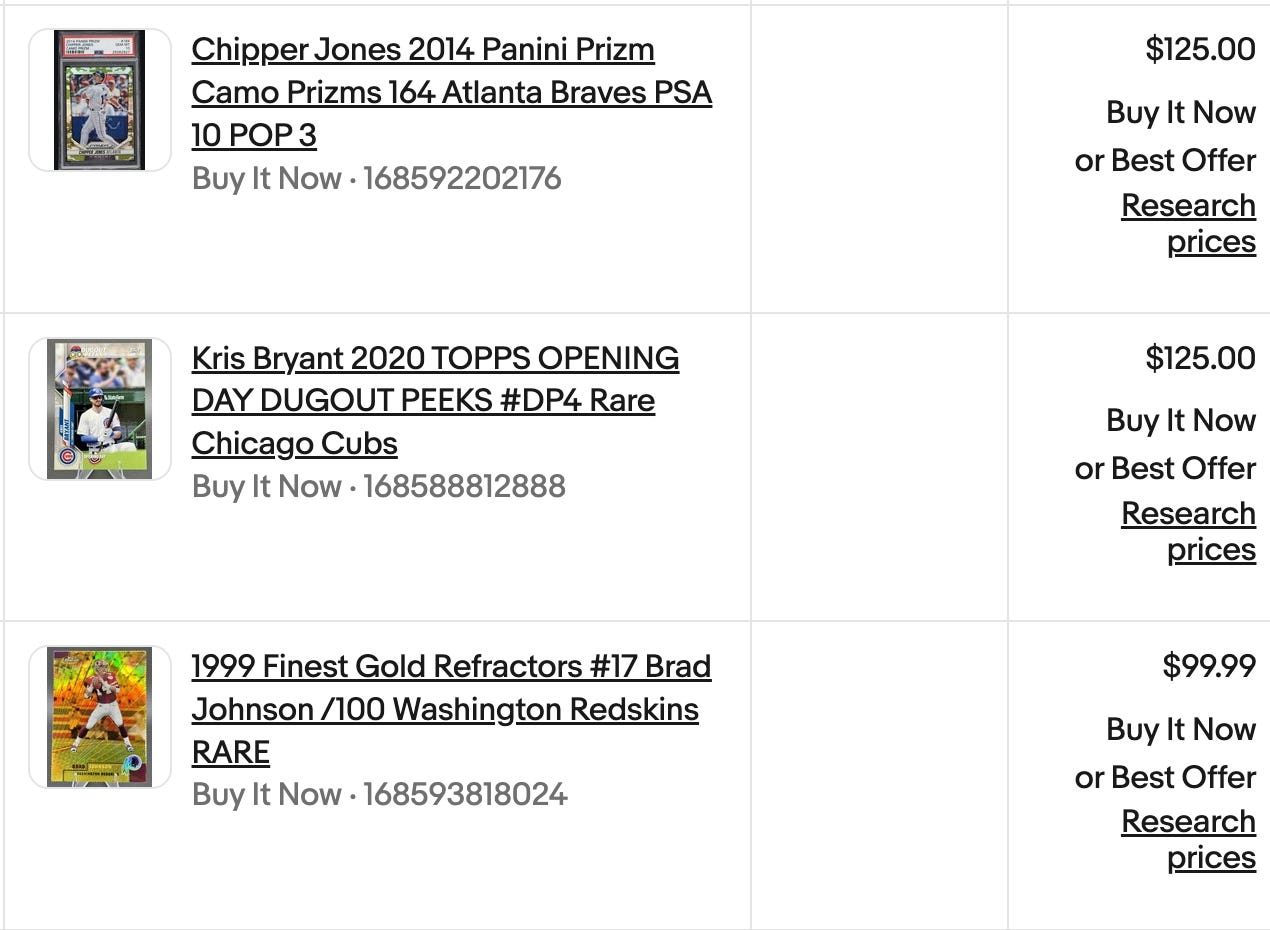
This is the obvious one, but I think there’s a difference between lowering prices and lowering prices enough to matter.
If a card has been sitting for weeks or months, that’s information.
Maybe the card isn’t as desirable as you thought.
Maybe the market has moved.
Maybe there are better copies available.
Or maybe your price simply doesn’t make sense to the people currently looking for that card.
It’s also worth regularly checking what else is available.
If I’m asking $40 for a card and there are multiple comparable copies sitting there for $35, I can’t really be surprised that mine isn’t selling. I certainly can’t expect buyers to choose mine when they can get essentially the same card for less.
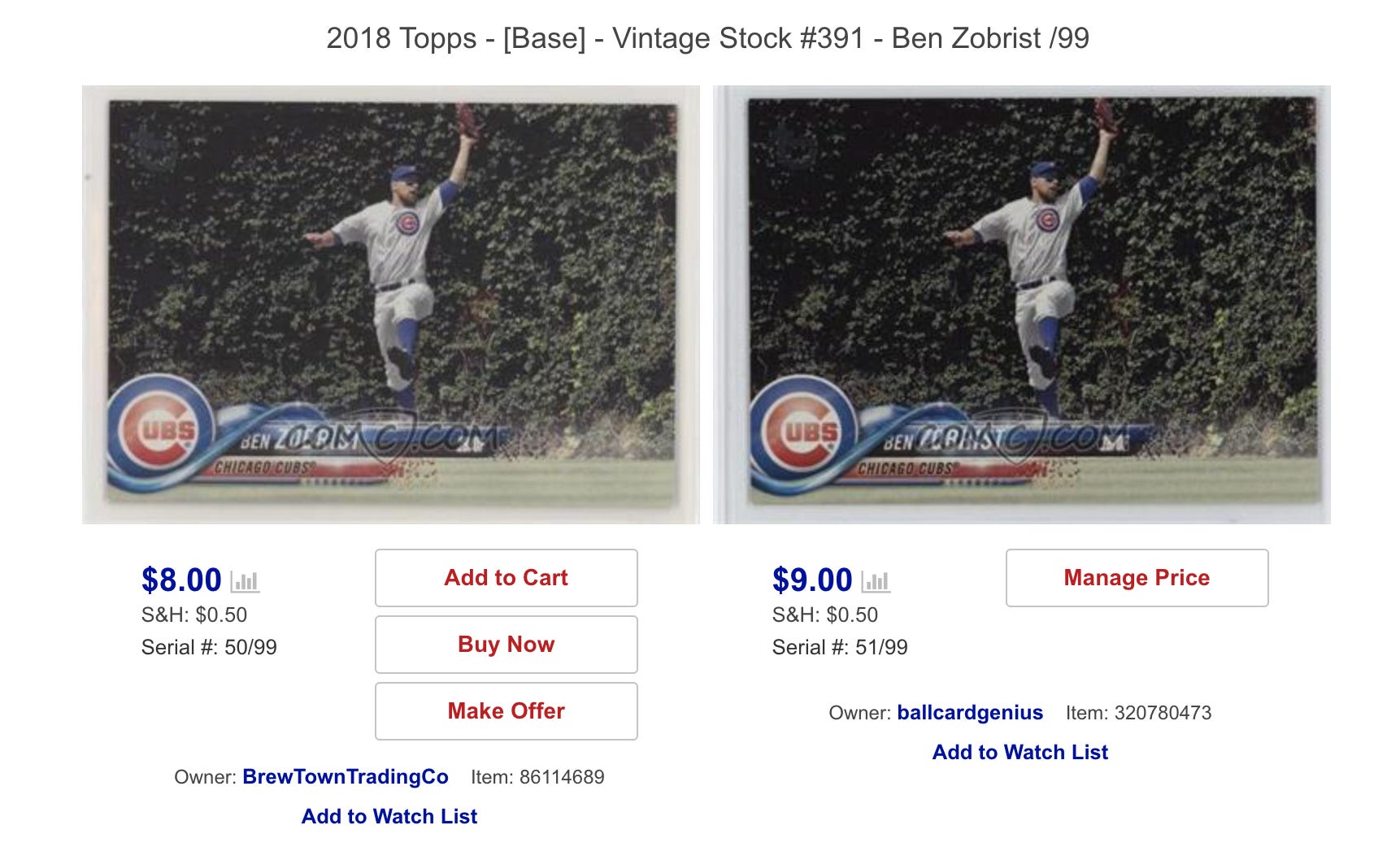
So when sales are slow, I’ll go through my inventory and check the competition.
Am I still competitively priced?
Has someone undercut me?
Have a bunch of new copies hit the market since I originally listed the card?
If my goal is to get money moving again, I generally want to be the lowest-priced reasonable option.
And I’ll usually start with listings that already have watchers. Those are the cards where someone has already raised their hand and said, “I’m interested, but not interested enough at this price.”
So give them a reason to reconsider.
On eBay this is a lot easier—you can see watchers clearly.
On COMC, you have to take a few additional steps because there isn’t a way to “watch a card” on COMC, or at least not a way to see who has taken interest from the seller’s standpoint.
Search for one of your COMC cards on eBay. Here is my Lincecum:
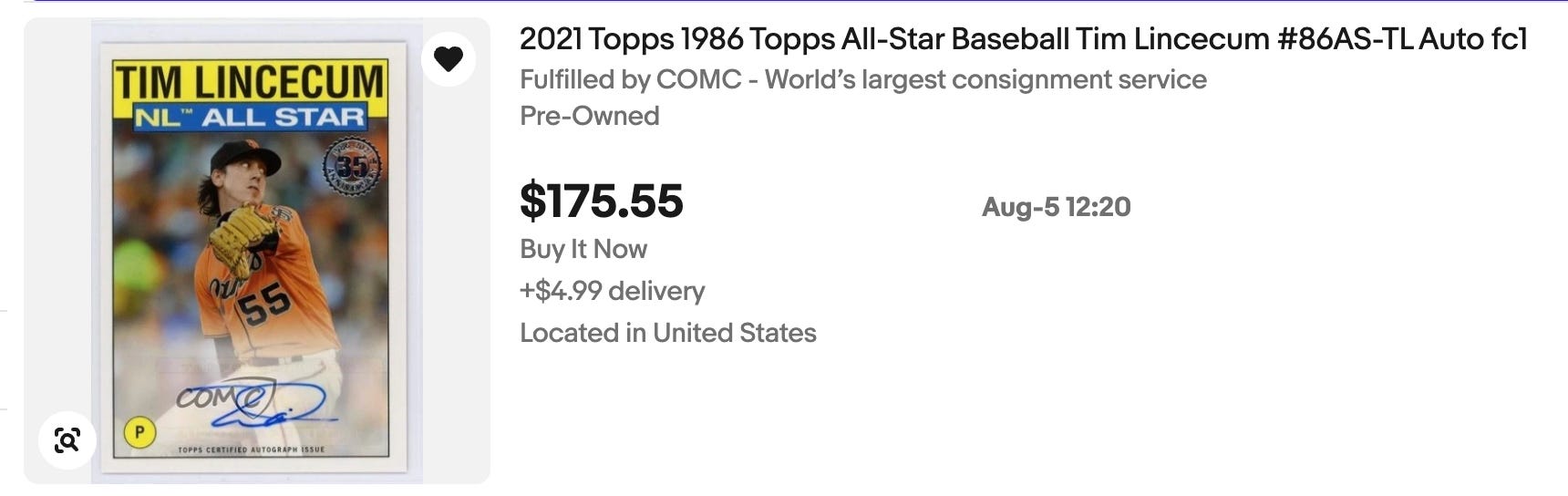
From that listing I can easily see I have 2 watchers, but I don’t want to have to do that for every single card of mine.
So, instead, look at the title. At the end of it, you should see a 3-digit combo, like this:
2021 Topps 1986 Topps All-Star Baseball Tim Lincecum #86AS-TL Auto fc1
It’s not 100%, but “fc1” is found on pretty much all of my listings (and some that aren’t). But, it’s a good start.
Take that three-digit code and go to https://www.watchcount.com/. Then, plug it in as your search term and input comc_consignment as the seller.
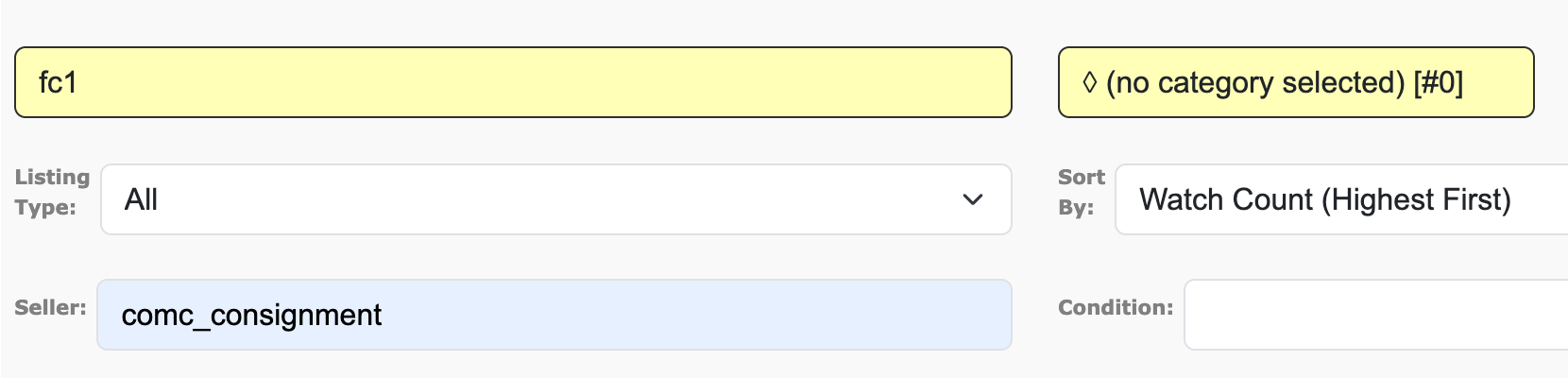
Once searched, you should see most of your cards and the number of eBay watchers:
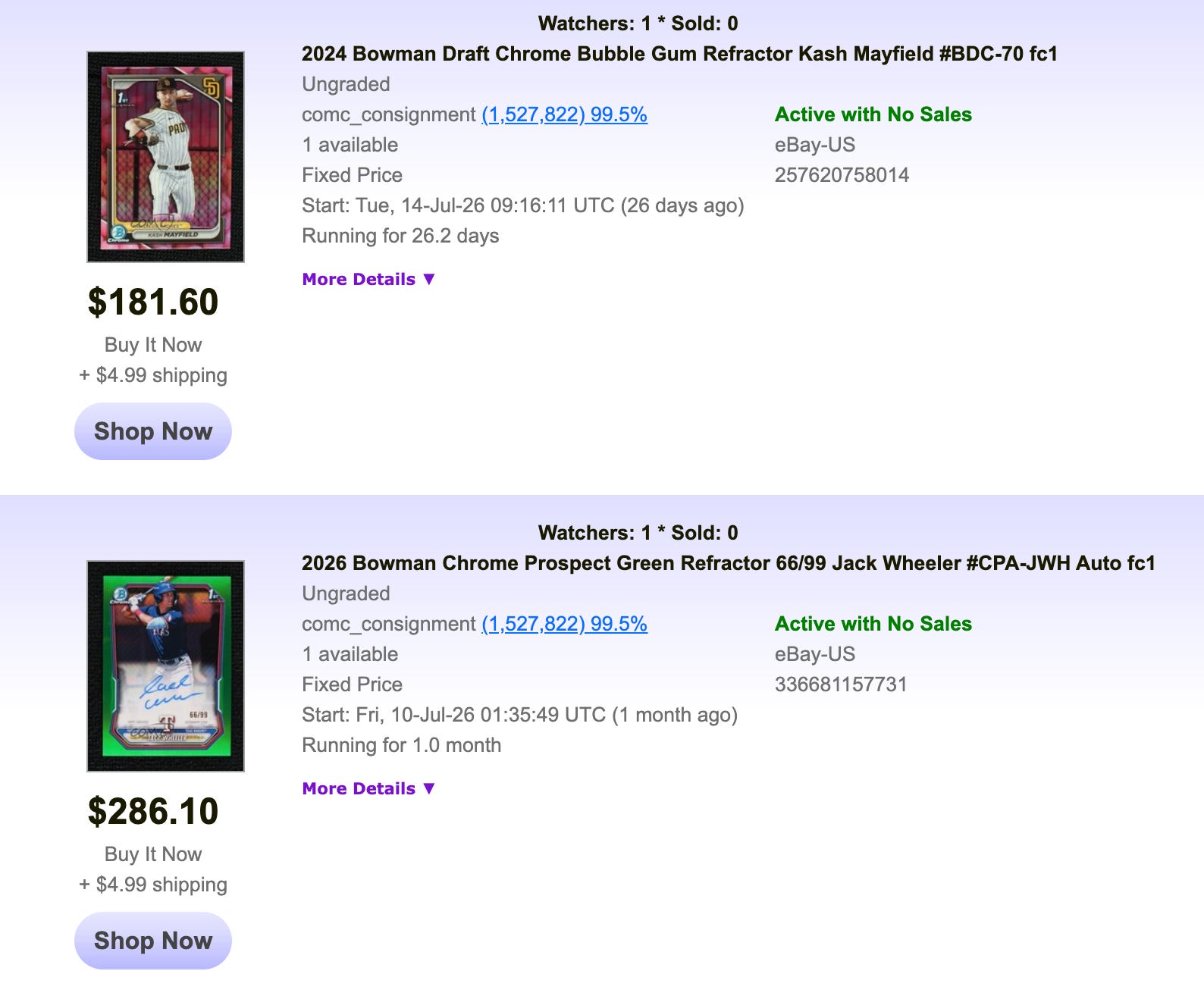
From here, I’m not talking about dropping a $175 card to $165, either. If I’m trying to generate sales, I want the new price to look meaningfully different, and, I want the alert to catch the potential buyer’s eye:
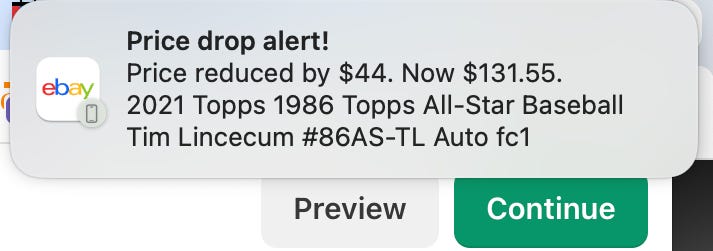
There’s obviously a balance here. I don’t want to give cards away simply because they haven’t sold, but if I bought for $50, I have room.
It’s worth revisiting regularly.
This is something I’m checking every day, whether sales are slow or not.
If eBay gives me the opportunity to send an offer, I’m probably sending one.
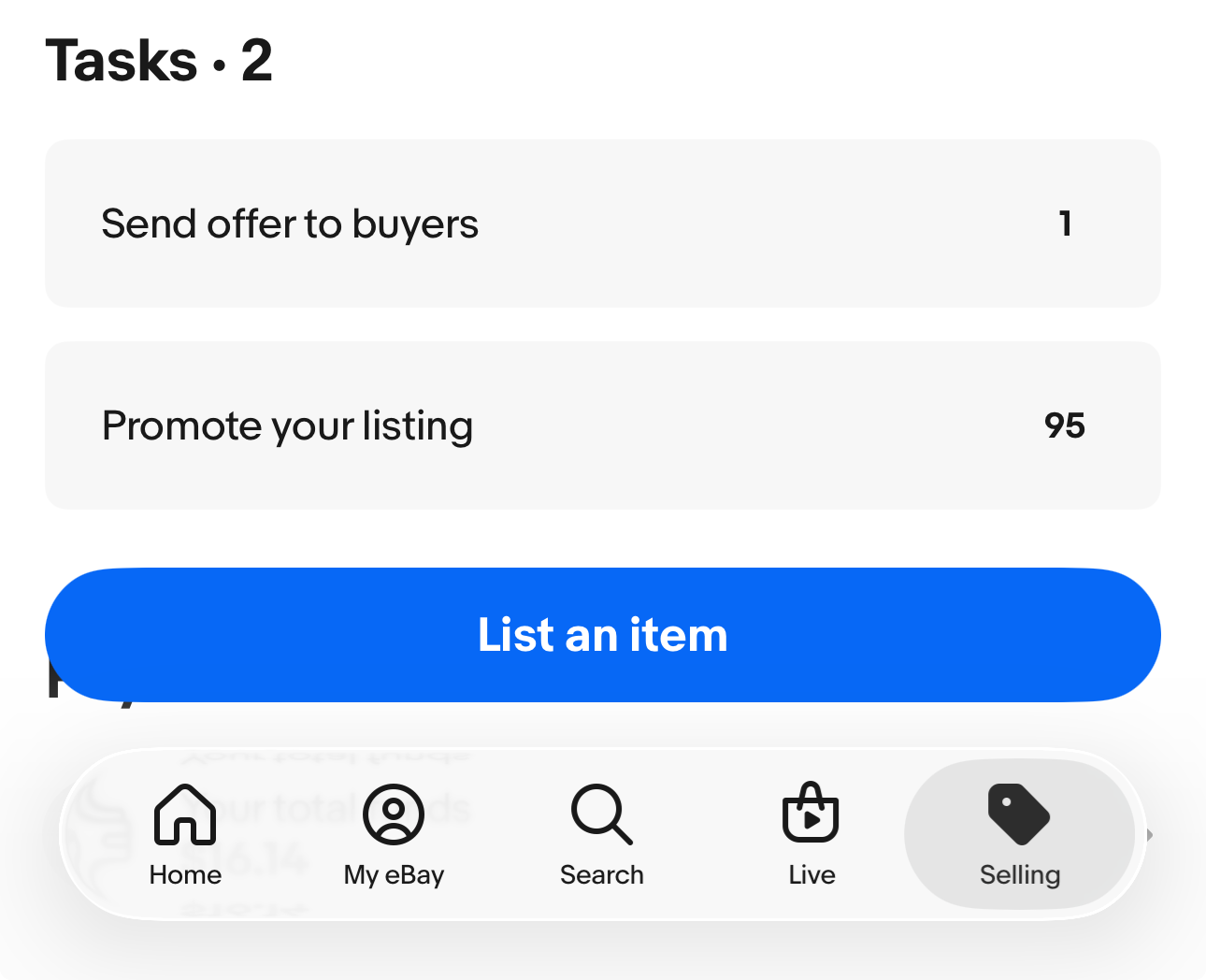
Someone watching your card has already shown at least some level of interest. They found the card, looked at your listing and decided it was worth keeping an eye on.
They just haven’t bought it yet.
So when sales are slow, I’ll get more aggressive with those offers.
Again, the goal here is to get money moving.
If I have a card listed at $40 that has been sitting for a while, I’m not terribly interested in sending a $38 offer. Maybe $35 gets it done. Maybe it takes $30.
Every card and situation is different, but I want the offer to be meaningful enough that the buyer has a reason to act.
This goes hand-in-hand with lowering prices, especially for cards hovering slightly above the eBay Standard Envelope eligibility threshold.
Let’s say I have a card listed for $24.99 plus $5 or so for USPS Ground Advantage.
To the buyer, that’s basically a $30 card.
If it has been sitting and I want it gone, I might drop the card to $19.99 and switch the shipping to roughly $1.65 with eBay Standard Envelope.
Now the buyer is looking at an all-in cost closer to $22 instead of $30.
The interesting part is that I only dropped my actual asking price by $5.
No, I didn’t magically knock $8 off my proceeds. But I significantly changed what the purchase looks like to the buyer by combining a relatively small price reduction with a much cheaper shipping method.
For example, all of these are sitting at $20 + Ground shipping which makes no sense. I need to change shipping to eBay Standard Envelope. I still get the same revenue, but the buyer pays less.
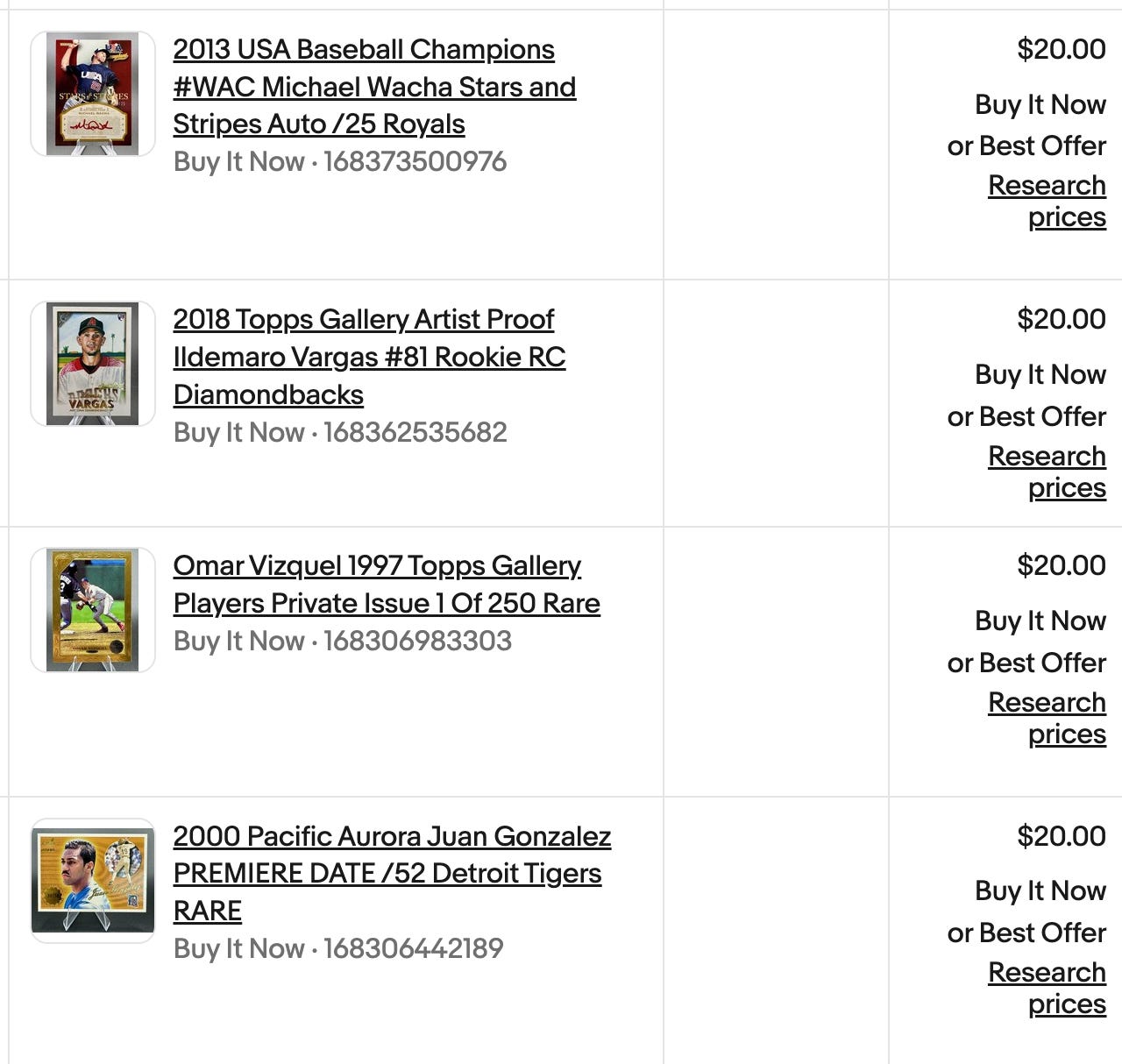
Of course, make sure the card and shipment qualify for eBay Standard Envelope before making the switch.
You know I’m generally hesitant to auction cards I have in hand.
When I own the card and have control over the listing, I usually prefer Buy It Now. I can set my price, wait for the right buyer and accept an offer when it makes sense.
COMC is a little different because you can’t send offers, can’t accept eBay offers, etc.
When things get slow, I’m much more willing to push COMC inventory to eBay auction.
In fact, I probably have 20 cards at auction right now.
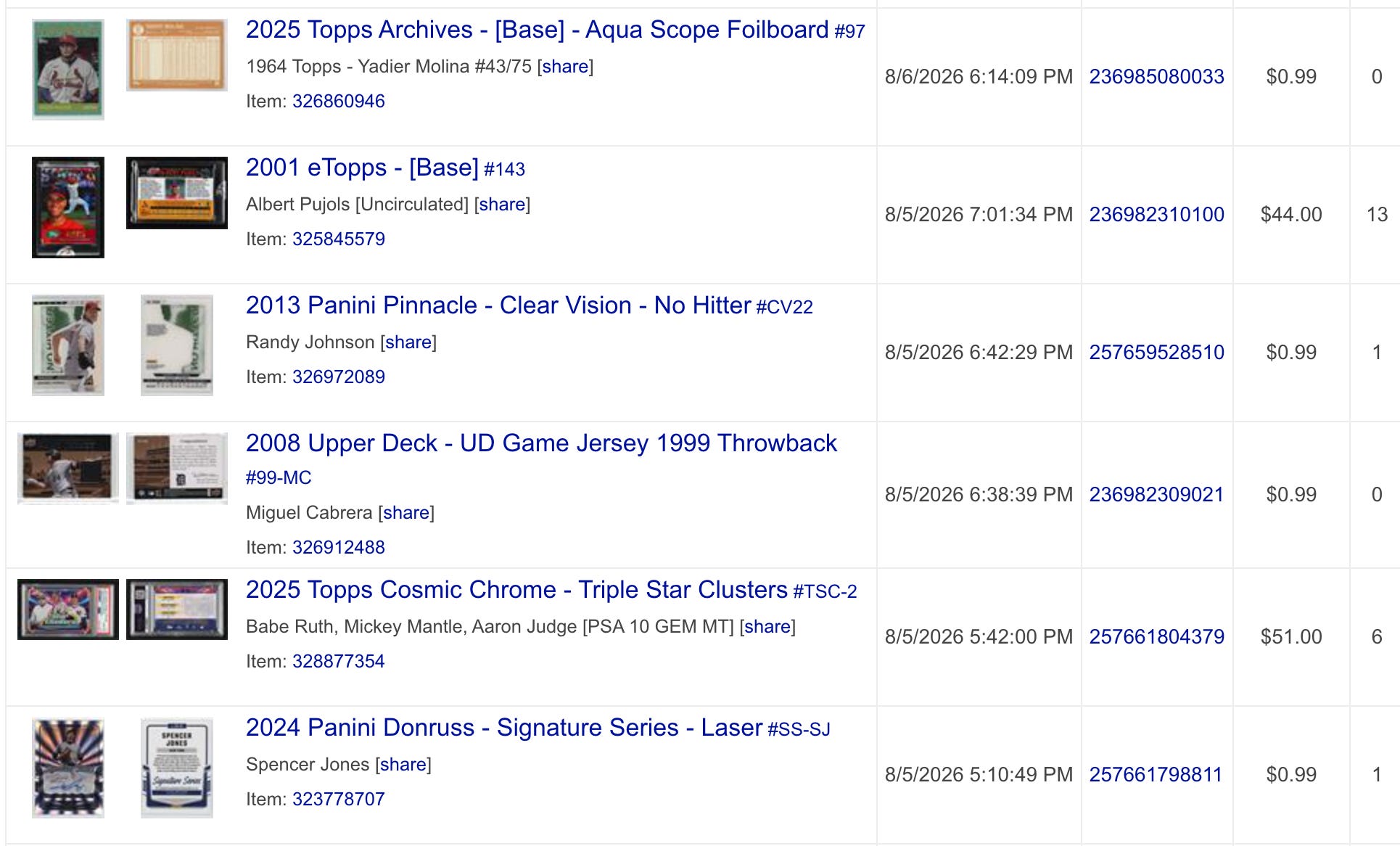
Could some of them sell for less than I’d like?
Absolutely.
The ending hammer price isn’t guaranteed.
But a sale is.
And when my goal is to free up cash, clear inventory and put that money into something I like better, I’m willing to trade some price certainty for sale certainty.
Sometimes the problem might not be the card or even the price.
It might be where you’re trying to sell it.
If you primarily sell on eBay and things have slowed down, try listing some cards on CollX. If you’re a CollX seller and inventory isn’t moving, try eBay.
Different platforms have different buyers, and a card that has been sitting in front of the same audience for weeks or months might get more attention somewhere else.
You don’t necessarily need to move your entire inventory, either.
Take a batch of stale cards and test them somewhere else.
Worst case, they still don’t sell and you’ve learned something.
Just be careful if you have the same card listed on multiple platforms. If it sells in one place, make sure you remove it everywhere else.
Yes, buy more.
It feels counterintuitive.
Sales are slow, so my solution is to spend more money?
Sometimes.
Because slow sales might be telling me I don’t have the right inventory.
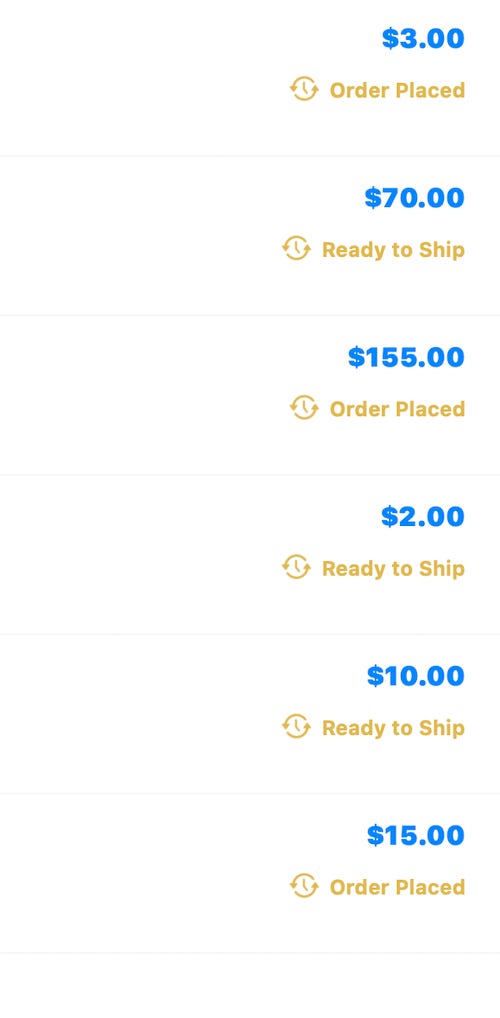
Maybe I have too much of the wrong stuff. Maybe the cards I currently own aren’t getting enough attention. Maybe I’ve been too passive about sourcing lately and my inventory has gotten stale.
Whatever the case, I’m not going to stop buying good opportunities simply because my existing cards aren’t selling as quickly as I’d like.
Of course, this requires some discipline.
“Sales are slow” isn’t an excuse to start buying anything and everything.
If anything, I want to be more selective. If certain types of cards are moving while others are sitting, that’s information I can use the next time I buy.
I want cards I think are underpriced. I want cards with better demand. I want cards that fit strategies that have already worked for me.
Because sometimes the solution to slow-moving inventory is better inventory.
There’s a common thread through all of this.
I don’t want to become overly attached to my inventory.
A listing price isn’t a promise of what a card is worth. A profit target I came up with when I bought a card isn’t something the next buyer has to honor.
If cards aren’t selling, I have options.
I can check the competition and lower prices. I can send more offers. I can reduce the buyer’s all-in cost with cheaper shipping. I can push inventory to auction. I can try another marketplace. I can accept a smaller profit.
And while I’m doing all of that, I can pay attention to what is selling and continue looking for better things to buy.
Will I squeeze every possible dollar out of every card this way?
Probably not.
But that’s not really my goal.
I’d rather sell, reinvest and give myself another opportunity to make money than have a collection of perfectly priced cards that nobody is buying.
When sales get slow, sometimes the answer is to wait.
I’d usually rather give the wheel a push.
Comments
Nothing yet. Say the first thing.
Sign in to join the conversation.