
Sunday lunch, the long table, and it happens again. An uncle you see twice a year turns to you between courses and asks, warmly, with real interest:
“So remind me, what is it you do?”
You’ve answered this question maybe forty times. You have tried everything.
You’ve tried the textbook version, “I design digital products,” which lands like a stone in soup. You’ve tried the example version, “you know how in an app you tap a button and something happens? I decide what the button looks like and where it goes,” which made your aunt ask, gently, if that’s really a whole job.
One year you tried the ambitious version, with words like user and flows in it, and watched your uncle’s eyes perform the exact glazing-over you’d recognize anywhere, because you’ve watched users do it to interfaces.
You designed a bad experience. You could feel it shipping in real time.
So now you say:
“Something with computers.”
And everyone nods, relieved, and the conversation moves to your cousin, who is a dentist and whose job requires no further questions.
Part of the problem is structural and I find it almost funny.
We spend our careers making things invisible. The highest compliment our work gets is that nobody noticed it. The flow just worked. The person got what they came for and never thought about why.
Then we go home and try to show our families the thing we made, and there’s nothing to point at.
Your mom hands her phone to a relative, proud, saying “he made this,” and gestures at an entire banking app of which you made, technically, the transfer flow and part of the settings. And the best part of what you did is precisely the part no one can see.
The dentist can point at teeth.
My grandmother believed until quite recently that I fix phones. Not design for them. Fix them, physically, when they break.
Relatives brought me phones.
For a while I just fixed what I could, cleared some storage, updated things, because it was easier than the explanation and honestly kind of nice. And if you’ve ever quietly accepted a wrong version of your own job because correcting it felt exhausting, then you know exactly the trade I was making.
For years this bothered me more than I let on.
There’s a specific loneliness in doing work that the people who love you most will never be able to picture. They know you’re at a desk. They know it involves the computer.
The actual texture of your days - the argument you won about a checkout flow, the small thing you shipped that 40,000 people now touch daily without knowing your name - none of it can cross the dinner table.
Your professional life is a rumor to your own family.
But somewhere along the way I started hearing the question differently and I want to offer you the reframe that finally settled it for me, in case yours still stings.
Maybe your uncle is not really asking what you do. He can’t use that information. There is no version of design systems that improves his Tuesday.
What he’s asking, in the only vocabulary available to him, is:
Are you okay?
Is it going well, this life of yours I can’t see?
Are you paid enough, treated well, happy at that desk with the computer?
And that question, you can answer at any dinner table on earth.
“It’s going really well, actually. Busy, but the good kind.”
He nods. He’s glad.
The information transferred completely.
“Something with computers” turns out to be a perfectly good translation of your job, into a language where the only words that matter are the ones about you.
See you next week.
P.S. My grandmother still hands me her phone when I visit. I still clear the storage. Some job titles you just grow into.
Thanks for reading :) If something in this issue resonated, please reply and tell me.
Even one line. These replies are my favorite part of writing this newsletter.
See you next Thursday 🙌
— Balint
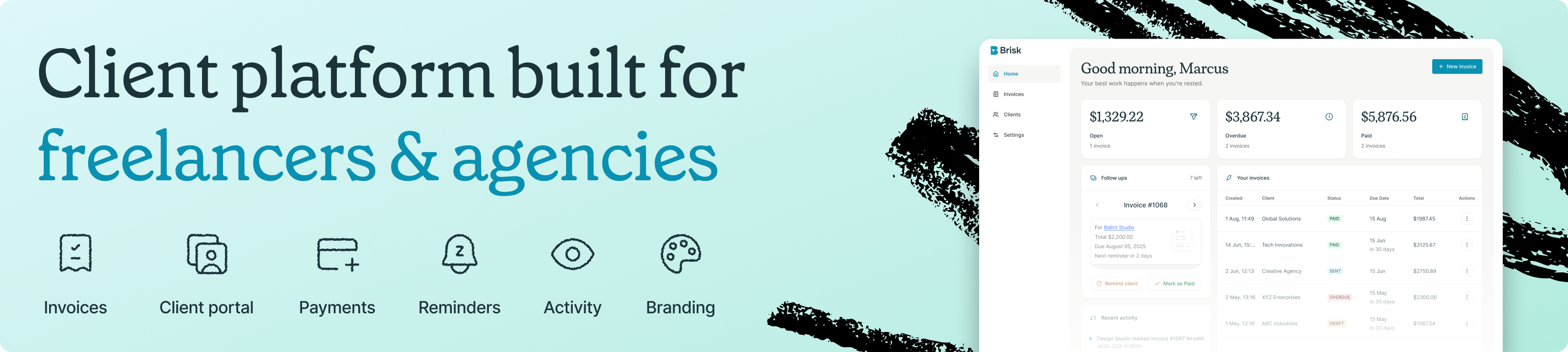
P.S. Here’s what I’m building
A calmer way to run your freelance business.
Brisk helps you give clients a professional experience: from the first agreement to the final payment.
No posts
Comments
Nothing yet. Say the first thing.
Sign in to join the conversation.