
Starting off this evening’s newsletter with some federal science budget news. The Senate Appropriations Committee announced an agreement today on a bipartisan draft of a continuing resolution that would extend funding for the federal government from the end of the current fiscal year (September 30) through December 11. While in theory Congress is supposed to have full year appropriations bills passed by the end of the fiscal year, that has not happened literally in years and leaders on both sides of the aisle are trying to get a continuing resolution (CR) passed early to avoid having to deal with any shutdown controversy during the run up to November’s midterm elections.
A key part of this bill would be blocking the Office of Management and Budget’s proposed revisions to federal grant procedures that would increase the role of political appointees in approving federal science grants while minimizing the role of scientists. Those proposed revisions are currently in review after the mid-July closing of the required public comment period.
The ranking Democratic senator on the Appropriations Committee, Washington’s Patty Murray, released a statement highlighting the blocking of the OMB rules revision, as did her House counterpart, Connecticut’s Rose DeLauro. Politico noted in their article on the Senate CR that Senate Appropriations Chair Susan Collins (R-ME) has publicly voiced support for blocking the OMB rules revisions, and said in a statement today “that she is ‘pleased’ about the move to delay the changes to the way agencies approve billions of dollars in federal grant awards each year, noting that she urged White House budget director Russ Vought weeks ago to nix part of the plan and extend the public comment period.”
While these developments are certainly positive for those opposed to the proposed OMB grant regulations revisions (which includes me), in my opinion the excitement I have seen in some quarters of social media needs to be tempered. This CR would only restrict OMB’s ability to implement the rule changes for the duration of the CR (i.e., through December 11) — and furthermore is not in the text of the corresponding CR that the House has already passed. Unless the House simply adopts and passes the Senate version, any bill that passes the Senate would have to be reconciled with the House version through a conference committee — and the OMB revision might not survive that process. Even if it does, again it is just a temporary hold — and per Politico, Sen. Murray stated that GOP Senators were opposed to any permanent restriction to the OMB grant rule changes.
The Senate is scheduled to take its initial procedural vote on the CR bill on Monday — more to come obviously as the legislative process continues.
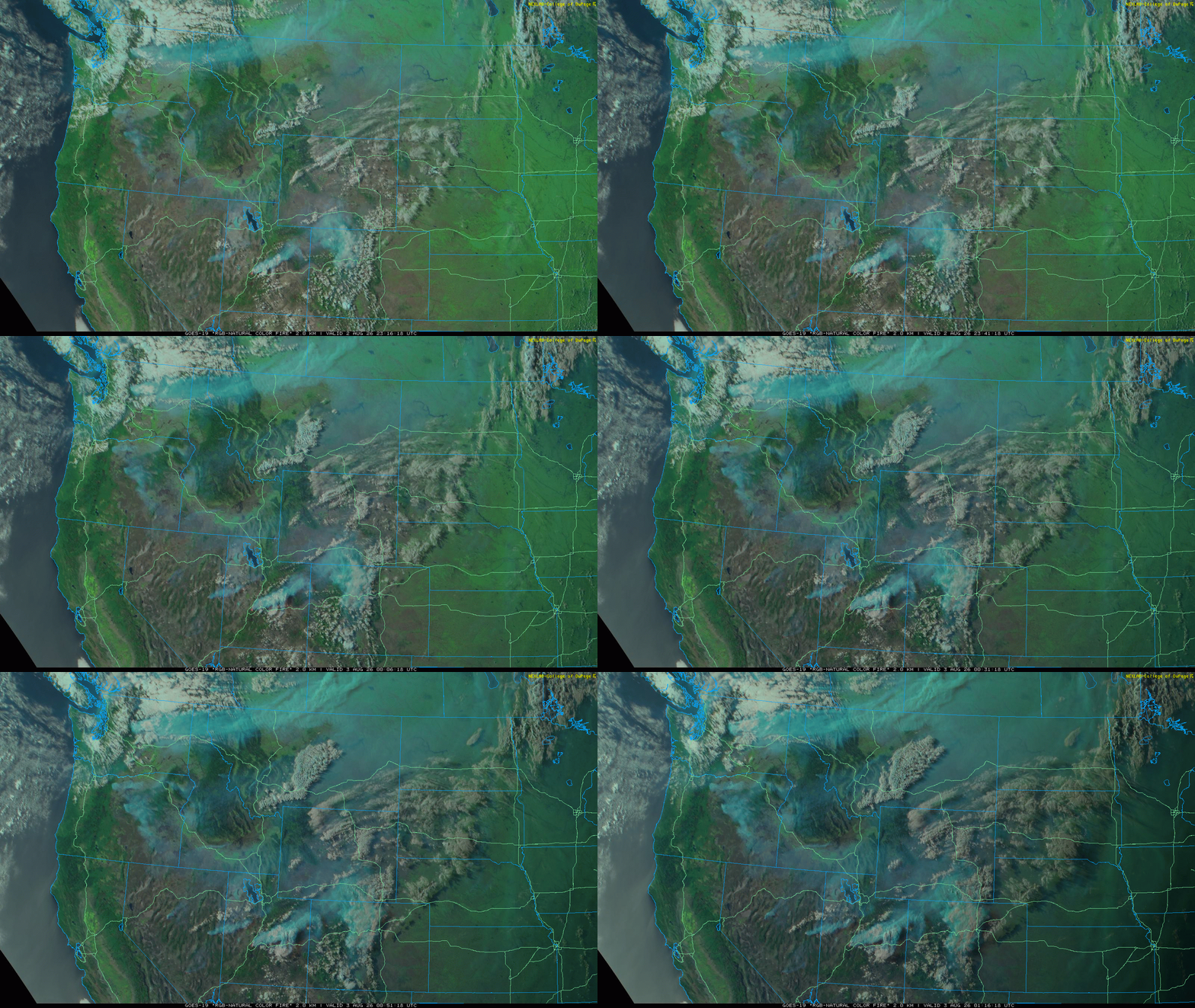
As expected, the major weather stories this weekend have been focused on wildfires and record heat in the western United States. The latest satellite fire product loop shows the heat signatures of numerous large wildfires across the West along with expanding smoke plumes.
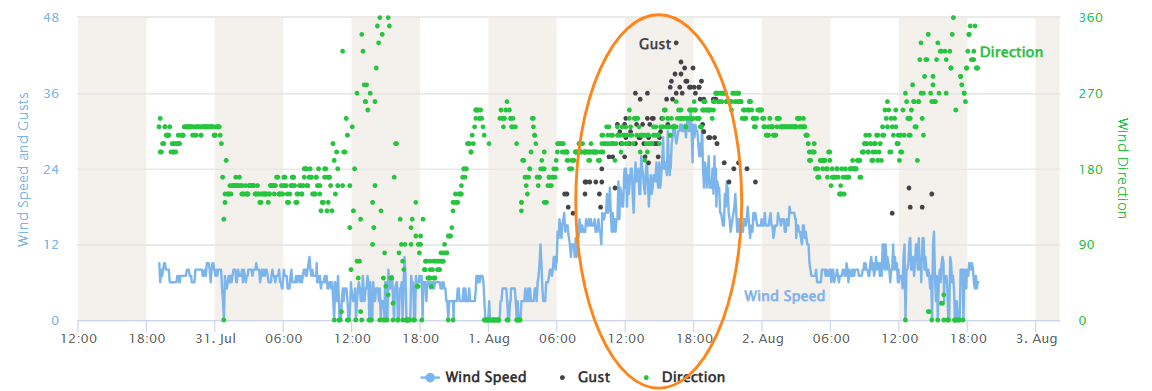
A series of three wildfires exploded in and near the northwest side of the Spokane metro area Saturday afternoon. Driven by sustained winds of 25-35 mph with frequent gusts of 40-45 mph in dry air with relative humidity values of 20-25 percent, the fires rapidly spread through populated areas in spite of intensive firefighting efforts. The Seattle Times reported that Spokane County fire officials had prepositioned resources and escalated their readiness level to the highest possible based on the “particularly dangerous situation” fire weather forecast issued by the National Weather Service.
Officials report that approximately 700 structures were destroyed by the wildfires which would make this event by far the state of Washington’s most destructive wildfire on record. Thankfully, as of now no fatalities have been reported.
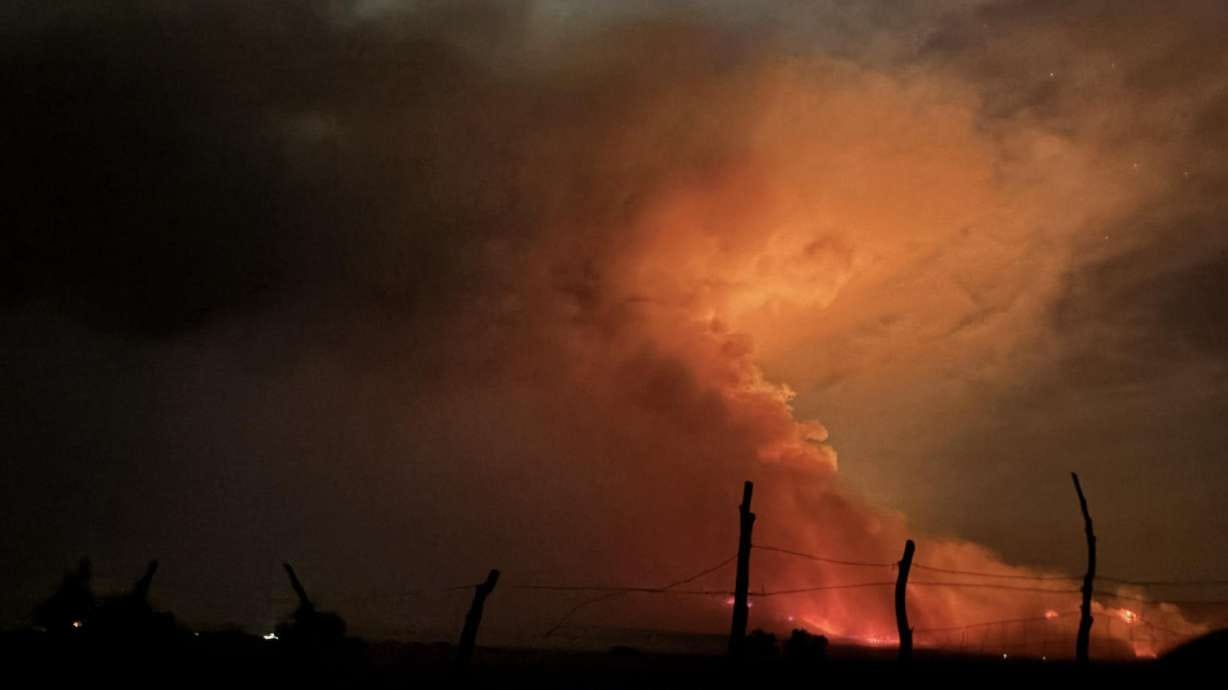
The Spokane area fires are of course only a few of dozens of large wildfires burning in the West. Another fire which has been a major threat to homes and businesses is the Widemouth 2 Fire in Millard County, UT, which was exhibiting “catastrophic” behavior today per officials and forced numerous evacuations.
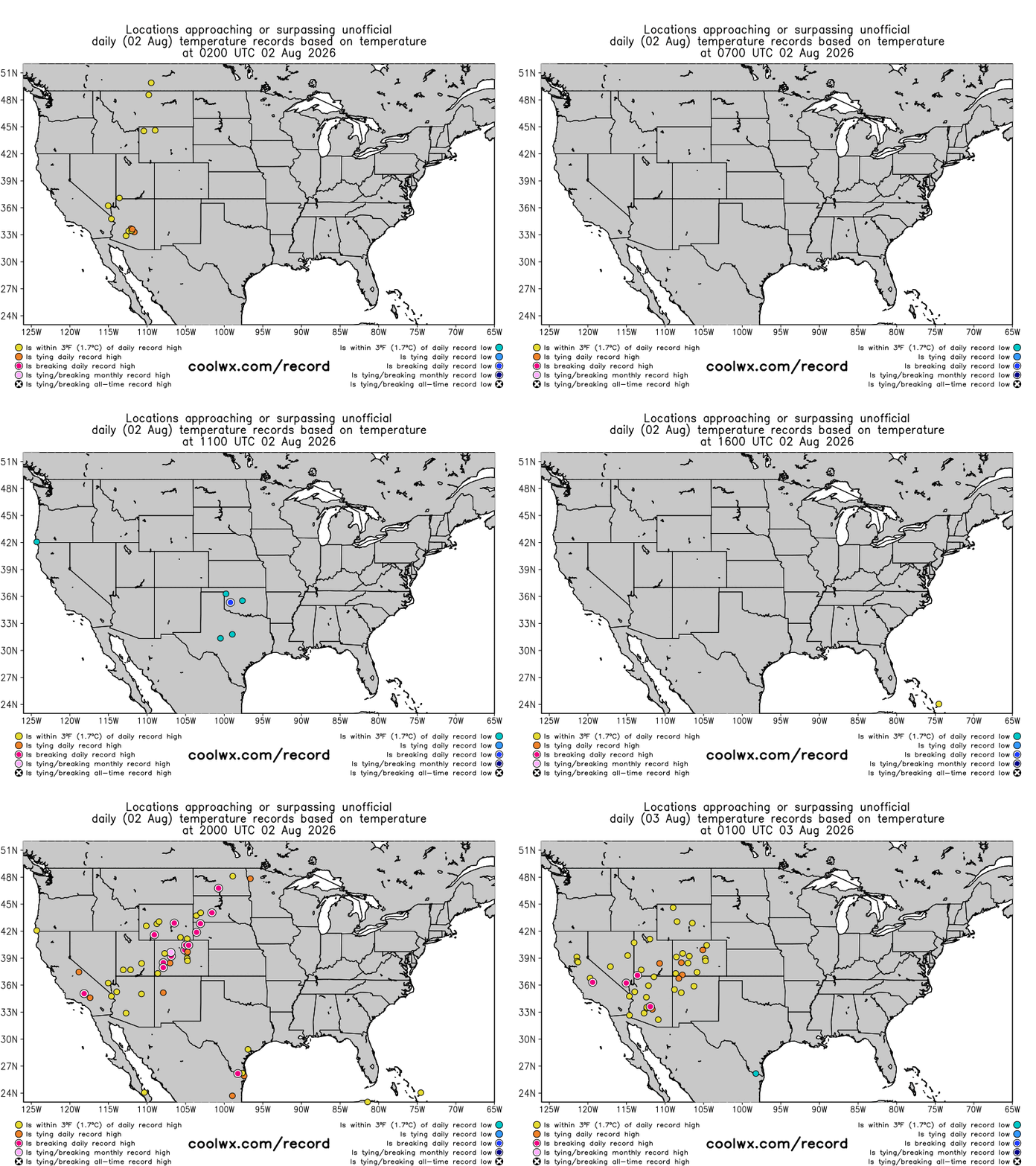
Numerous daily record high temperatures occurred across the West this weekend, including 115F at Phoenix today and 116F yesterday.
Climatologist M. Herrera reported that several all-time record high temperatures were tied in Colorado this afternoon, as well as monthly records at locations such as Scottsbluff, NV.
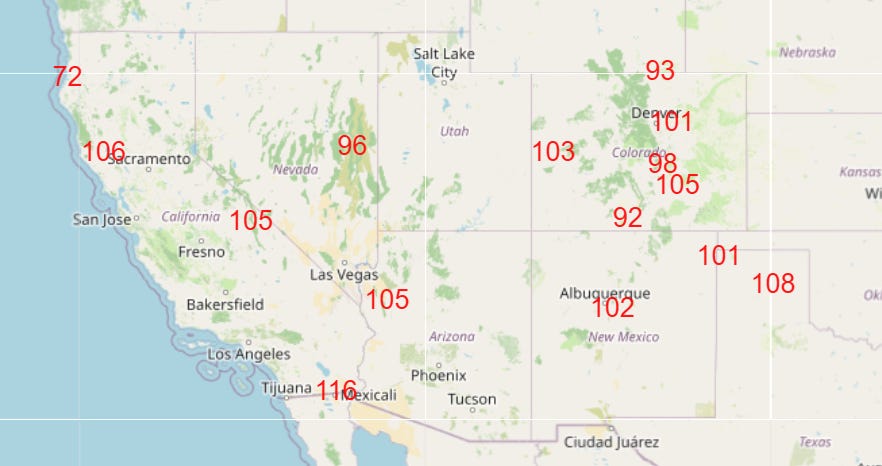
More record high temperatures are on tap for Monday.
Programming note: I am posting semi-regularly again — but family commitments and travel after the passing of my mom will mean those posts will not be as frequent or consistently timed as they typically have been.
Balanced Weather is made possible by the generous support of paid subscribers, who as thanks get access to live Balanced Weather chats and videos as well as the ability to post comments and ask questions on posts. To become a paid subscriber or a free subscriber (also very much appreciated and you will automatically receive new posts in your email), please click below.
Comments
Nothing yet. Say the first thing.
Sign in to join the conversation.