
Most people do not lose progress because they do not care.
They lose progress because they keep waiting to feel ready.
They wait for motivation to arrive. They wait for the right mood. They wait for the morning to feel clean, the mind to feel sharp, the body to feel energetic, and the task to feel easier than it did yesterday.
But many days do not begin that way.
You wake up tired. The task feels boring. The room feels heavy. Your attention is already pulled in a few directions. The version of you who made the plan feels far away from the version of you who has to follow it.
So you wait.
You tell yourself you will start when you feel better.
Then the day keeps moving without you.
This is why motivation is not a reliable starting point.
It may help when it appears, but it cannot be the gatekeeper for your discipline.
The simple rule is this.
Start smaller than your resistance.
When you look at a task and feel resistance, the problem is not always the task itself.
Sometimes the problem is the size of the version you are imagining.
You do not think about writing one paragraph. You think about finishing the whole article.
You do not think about moving for five minutes. You think about doing a full workout.
You do not think about clearing one surface. You think about cleaning the whole room.
The mind sees the full version and decides it is too much.
Then it asks for motivation.
But motivation is often what appears after movement begins, not before.
This is why the first step needs to be small enough that your mood does not get a vote.
Start smaller than your resistance.
That means choosing an action so small that it feels almost too easy to refuse.
Open the document.
Write one rough sentence.
Put on your shoes.
Clear one item.
Drink water.
Read one page.
Set the timer for five minutes.
The goal is not to finish everything immediately.
The goal is to break the waiting pattern.
Once you begin, the task stops being something you are thinking about and becomes something you are already inside.
That shift matters.
The hardest part of many tasks is not the work.
It is crossing the line between not doing and doing.
A small start may not look impressive.
But it protects the habit.
It keeps the connection alive between who you say you want to be and what you actually do on ordinary days.
This is important because consistency is not built only on your best days.
It is built on the days when you are slightly tired, slightly distracted, slightly unmotivated, and still choose one small action.
That small action tells your brain something powerful.
I do not need to feel perfect to begin.
Over time, this changes your relationship with effort.
You stop treating motivation as permission.
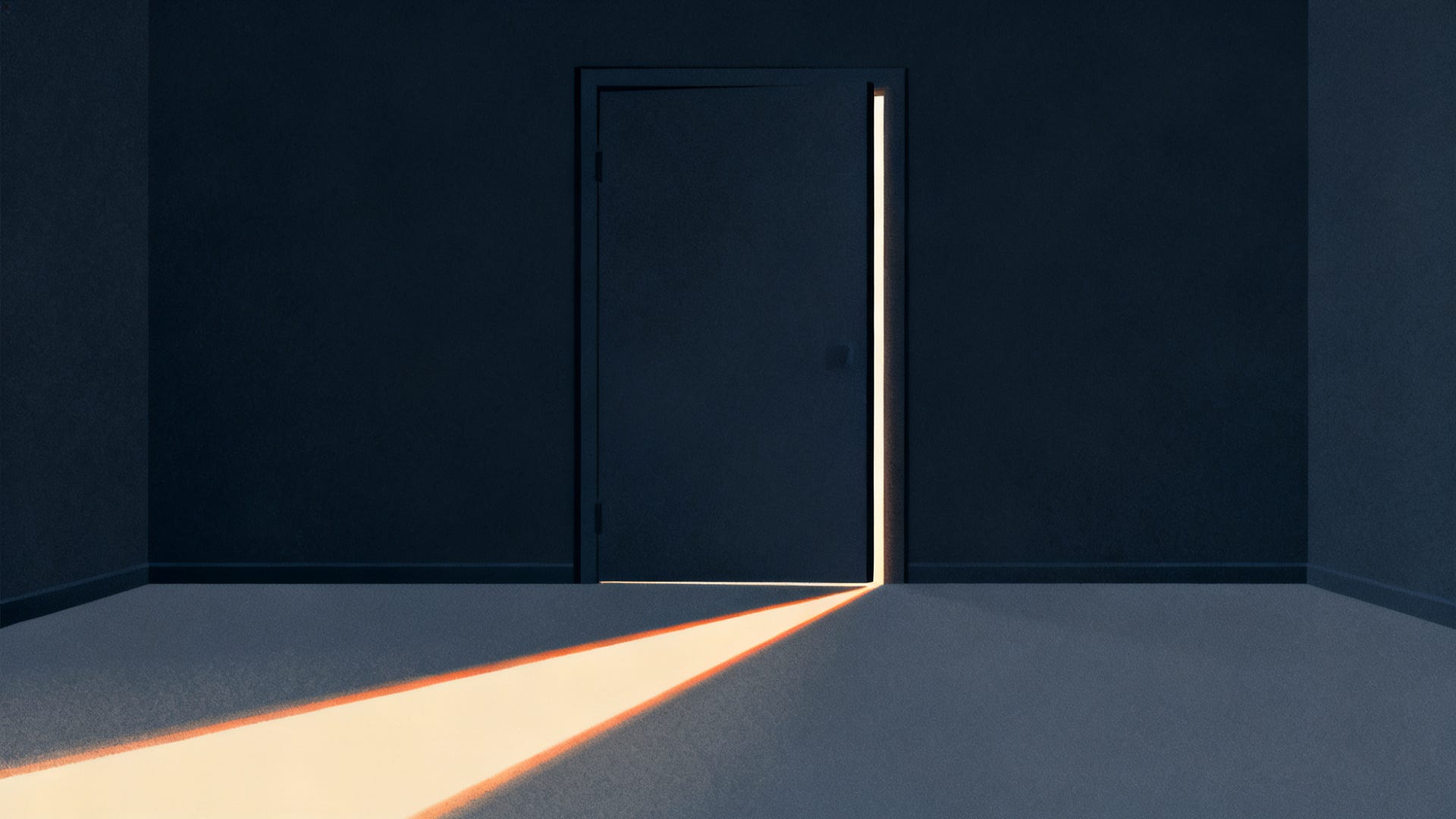
You start treating action as the doorway.
If you want this rule to work, make the first step clear before the moment of resistance appears.
Do not wait until you feel stuck to decide what starting means.
Choose a simple first action for the habits that matter.
For writing, the first step could be opening the page and writing one sentence.
For exercise, it could be putting on your shoes and stretching for two minutes.
For work, it could be closing every extra tab and opening the main task.
For cleaning, it could be clearing one small surface.
For reading, it could be reading one page without your phone nearby.
When the first step is already clear, the mind has less room to negotiate.
You do not need to decide everything.
You only need to begin the next small move.
You do not need to hate motivation.
Motivation feels good when it appears.
It gives energy, emotion, and momentum.
But it is not something you can always command.
If you wait for it, your discipline becomes dependent on weather inside your mind.
Some days the weather is bright.
Some days it is cloudy.
A strong system works in both.
The small start gives motivation a chance to arrive after movement begins. And if it does not arrive, you still made contact with the habit.
That still counts.
There is a quiet kind of confidence that comes from starting before you feel ready.
It is not loud.
It does not feel like a movie moment.
It feels like opening the page when you do not feel inspired.
Taking the walk when you feel slow.
Doing the small version when the full version feels too far away.
This kind of confidence builds slowly.
You begin to trust yourself because you have proof that your mood does not control every decision.
You can feel resistance and still act.
You can feel low energy and still begin.
You can feel uncertain and still take the first step.
That is discipline in its most practical form.
You do not need to wait for motivation to start.
You need to make the starting point smaller than your resistance.
Open the page.
Move for a few minutes.
Clear one thing.
Take the first small step.
Once you begin, the day changes shape.
Not always dramatically.
Not perfectly.
But enough to remind you that action does not need to wait for the perfect feeling.
Sometimes the feeling comes later.
Sometimes it does not.
Either way, you started.
And starting is what saves you from waiting your life away.
Balanced Discipline
No posts
Comments
Nothing yet. Say the first thing.
Sign in to join the conversation.