
Hello there and welcome back to Bake Experiments - a fortnightly newsletter of joyful, elegant home baking.
I am so thrilled to have you here. And if you like what you read, please do press that heart, share, or subscribe. Thank you.
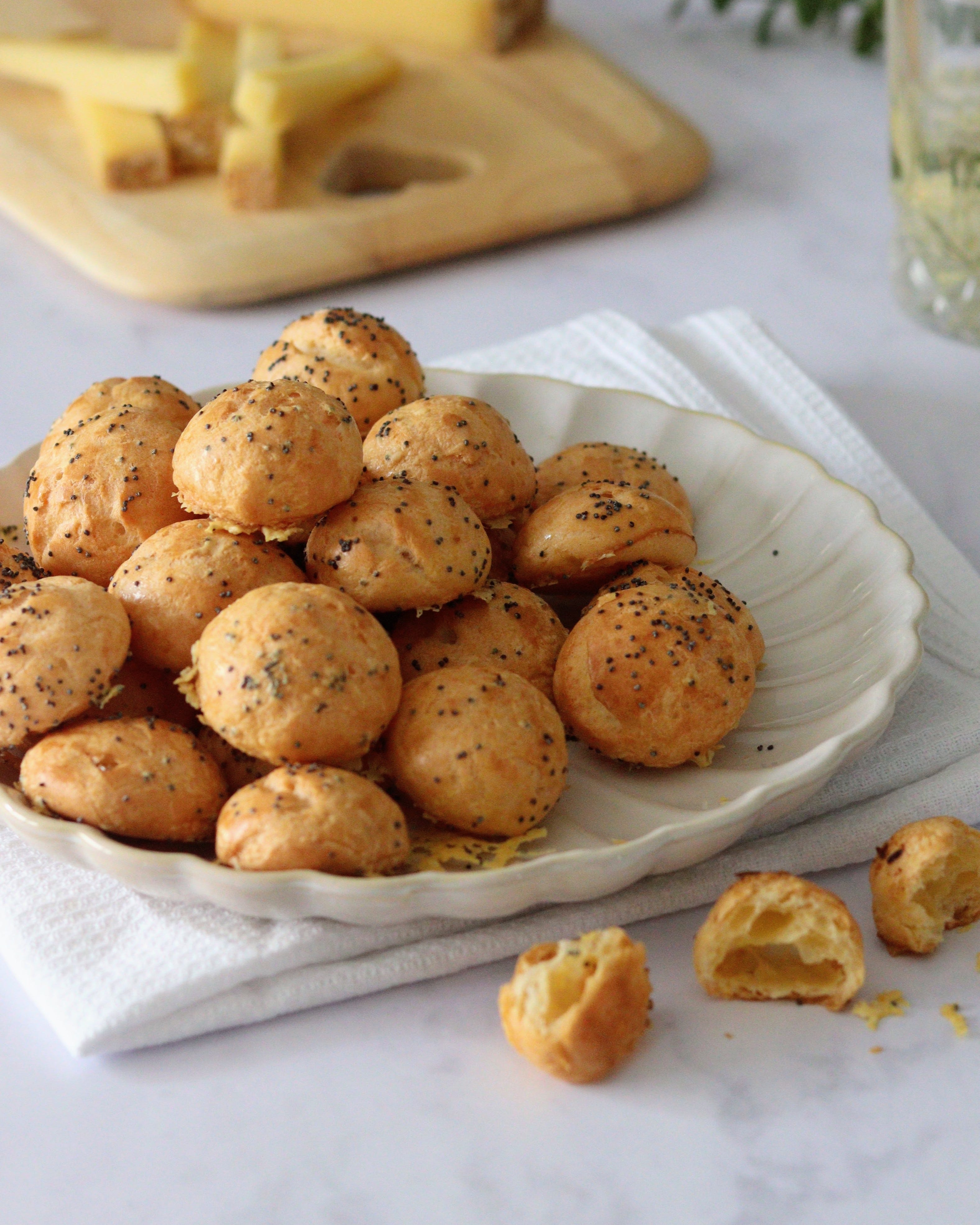
You voted for them, and here they are: Gougères. Cheesy choux puffs of joy.
Gougères, alongside their sweeter cousin Chouquettes, are the perfect choux starter recipe. They are relatively quick to make, and while they can be filled with a cheese sauce, they don’t need a filling. And they don’t involve any complicated glazes or toppings. It really helps you focus on the choux method itself, so you can get your pastry puffs absolutely perfect - crisp, airy and a little fluffy.
Said to have originated in the historical French region of Burgundy1, these salty little puffs are served warm as an appetiser. Wonderful with a glass of wine, and so, SO, moreish. I pulled a batch fresh from the oven yesterday while my husband was on a coffee break. He ate a dozen in ten minutes. I’m lucky I had anything leftover to photograph.
Recently, I had the honour of being interviewed by the lovely Giovanna Solimando about the process of choux, as she recipe tested her wonderful Zeppole - an Italian choux pastry, filled with a lemon crema and topped with an amarena cherry.
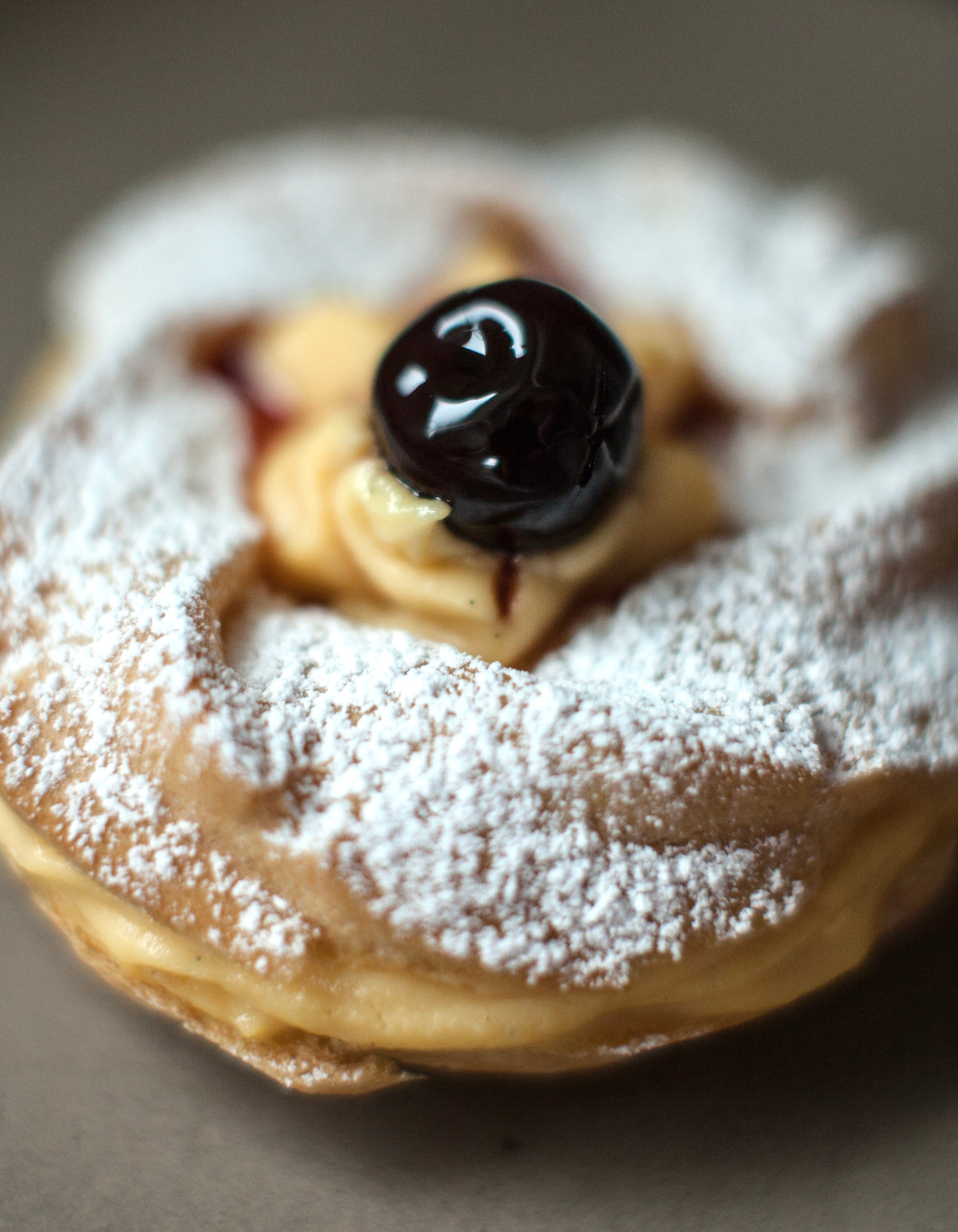
We talked in such depth about the choux process, and the best techniques to ensure an amazing result every time. Giovanna is absolutely meticulous, who pours so much skill and passion into her beautiful stack My half Apulian table. Her food photography and writing is top notch, and you can be confident that all her recipes will work, and taste delicious.
It’s a rare wonder that I get to nerd out to this level with someone about pastry. Our conversations have led me to consider choux elements in a different light, which came into play for this gougères recipe too. Do check out her beautiful zeppole recipe and choux deep dive here:
While I have made a lot of sweet choux, savoury choux is new for me. So, when recipe testing my own cheesy puff version, I experimented with various other recipes, testing different techniques and flavours.
Here's all you need to know to make these elegant little pastries - the perfect canapé to kick off a stylish dinner party. Or just make a Wednesday coffee break feel refined.
Which cheese should you use?
Let’s start with the most vital bit. Traditionally, a strong, hard or semi-hard cheese, like comté or gruyère, is baked into the choux and sprinkled on top. Some recipes include other strong mature cheeses, such as parmesan or mature cheddar.
As I am feeding two British children who can be a bit fussy, I went for cheddar in my recipe. Although I was very keen on the sweet, nutty undertones from the comté.
You will need to add the cheese earlier than you think. And cheese webbing is essential!
Some recipes suggest adding the cheese after or while you add the egg. I found this meant the choux came out a bit lumpy, as the dough had cooled down and the cheese didn’t melt in. This led to my little puffs collapsing in the oven.
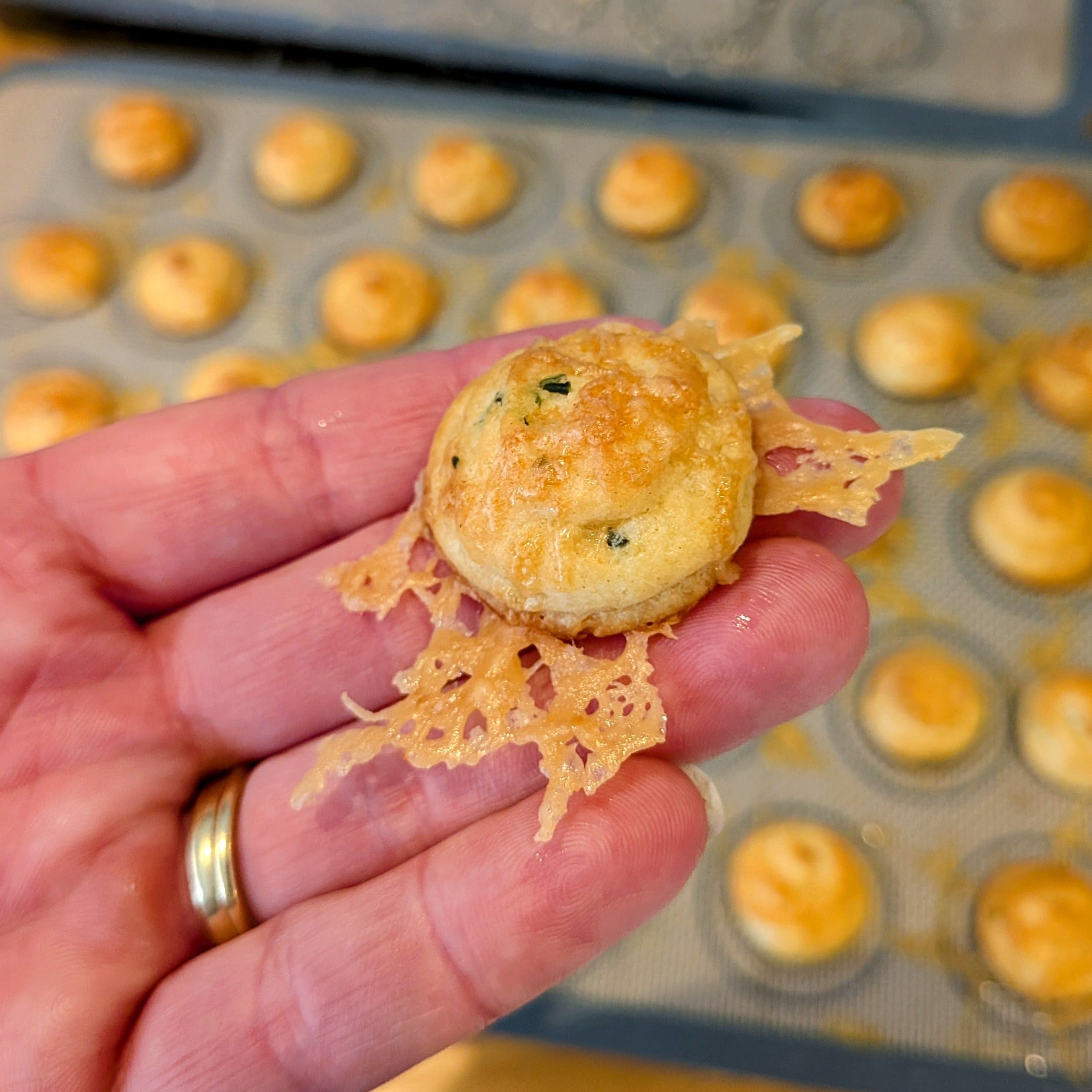
In Rachel Khoo’s recipe, she adds the cheese just after the flour in the saucepan. Giving time for the cheese to melt beautifully into the dough.
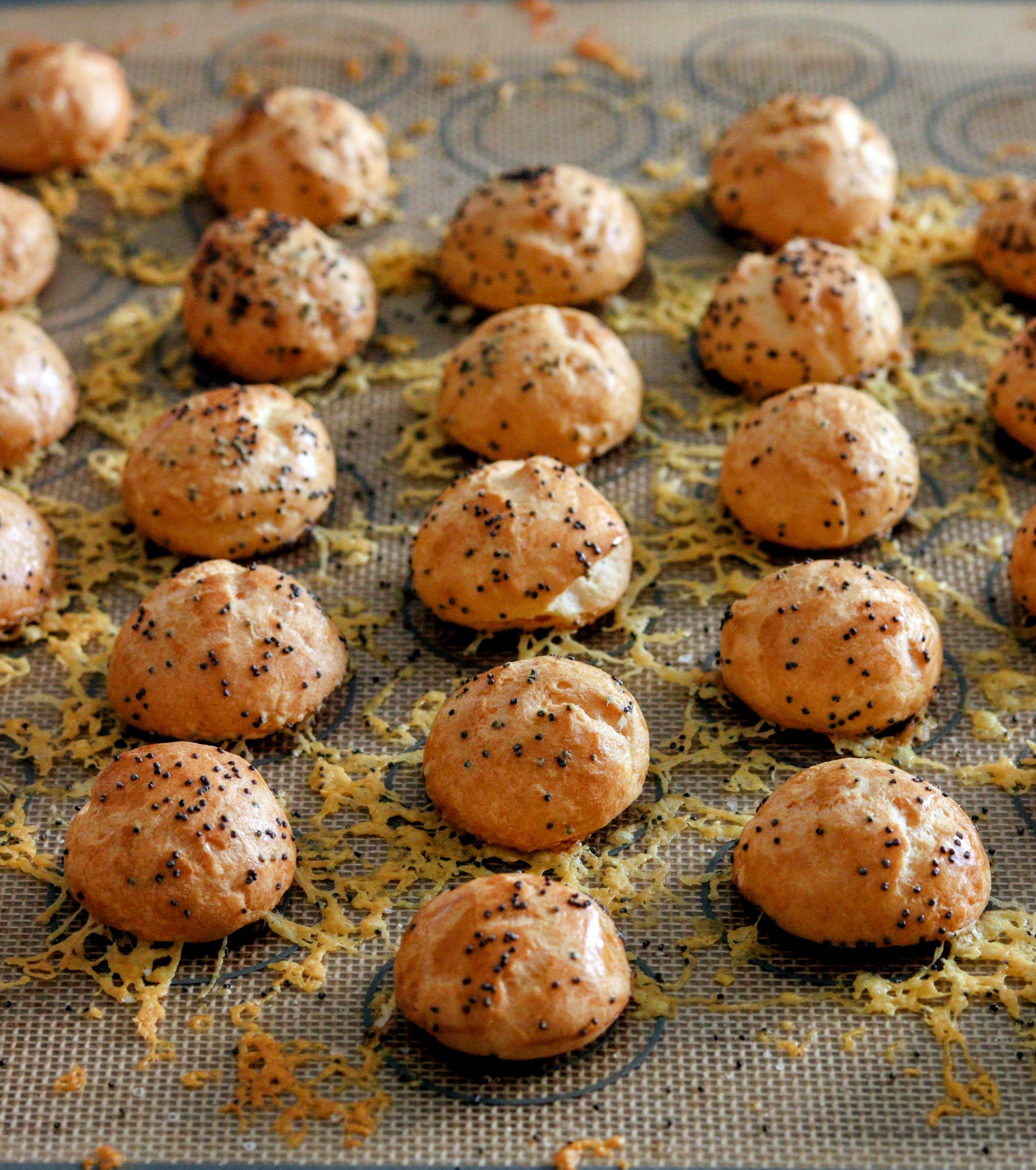
And obviously, you need to scatter some grated cheese on top before baking. In my humble opinion, cheese webbing is essential.
Skip the milk
Some recipes for gougères include a 50/50 mix of milk and water to kick off the choux batter. In her own investigation into gougères, Felicity Cloake tells us this is to make the puffs softer and improve flavour. Yet she argues with all the cheese, they don’t need much help on the flavour front. I agree, and found the milk made the puffs prone to collapse. So, I returned to my usual recipe of only water.
Use plain (all purpose) flour.
In our chats, Giovanna Solimando and I talked in depth about the best flour for choux. Usually for choux, I use a higher protein, strong bread flour. This works very well for larger choux pastries which require definition, such as éclairs. However, for these little puffs? The stronger flour made them a bit tough, when I want them to be lighter than air.
For her zeppole, Giovanna uses white flour with an 11% protein content. This also worked an absolute treat for gougères, giving excellent rise and structure but a softer, lighter texture. So, in the US, this will be all purpose flour. And in the UK, a good quality plain flour, such as Doves Farm.
Seeds, herbs and mustard, oh my! Get creative with other flavours, just be sure they complement your chosen cheese.
You can add finely chopped or dried herbs, such as thyme or oregano, to the dough. Or spices such as a little nutmeg, smoked paprika or cayenne pepper. As I have gone for cheddar in my recipe, I followed Will Torrent’s lead with his Parmesan & Gruyère Gougères in Afternoon Tea at Home, and added a little mustard powder.
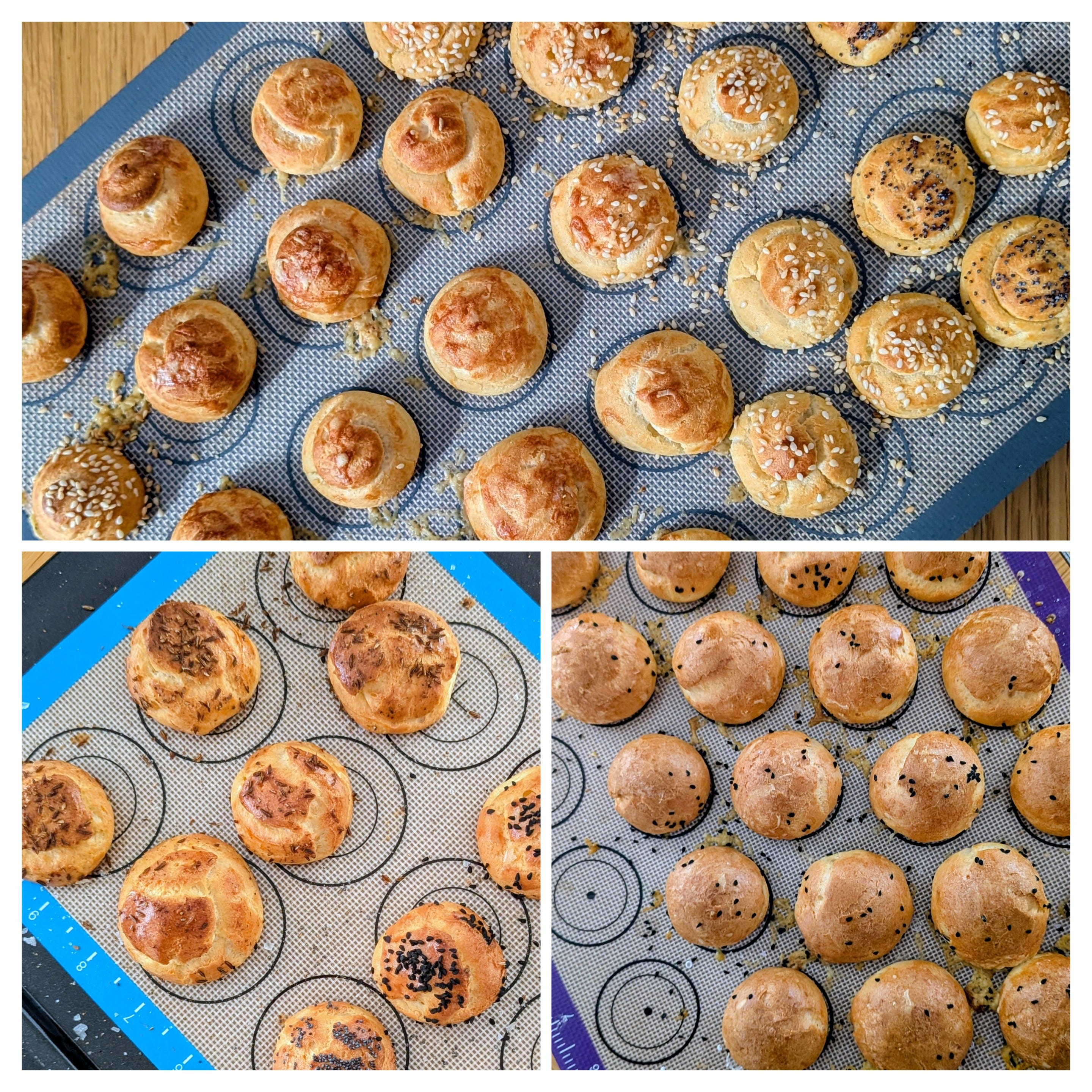
Instead of (or as well as) the cheese scattered on top, you can also sprinkle over some seeds. Famous Borough Market bakery Bread Ahead sprinkle their gougères with sesame seeds, Rachel Khoo also suggests poppy, nigella and caraway seeds. Nigella seeds with comté was a favourite combination of mine, I also found bashed cumin and coriander seeds worked wonderfully, before finally settling on poppy seeds for my own take.
How to achieve the perfect pipe.
Probably the most anxiety inducing bit about gougères; the pipe.
Recipes talk about piping to the size of a walnut… What does this mean? A shelled walnut? An unshelled walnut? A walnut half?
Food blog Sea Salt & Apple Pie suggests the size of a cherry tomato, and Caroline’s Cooking suggests between 3-4cms across. The French Cooking Academy tells us not to pipe them too small, and that you want about a tablespoon of pastry.
Upon pondering this conundrum I decided to test various sizes and go with my personal preference, which was 3cm across (the cherry tomato/shelled walnut size) for bitesize puffs. This more mini version is easier for the novice choux baker too, as smaller choux is more stable and less likely to deflate when they come out of the oven.
If you want to make the larger 4cm version, you will need to increase the bake time by five minutes or so.
Using my macaron mat as a guide, I piped inside the smallest circle (Approx. 3cm across). If you don’t have a macaron mat and don’t want to buy one, you can make yourself a template by drawing circles on parchment paper and flipping it over. Make sure to space them out, as your choux will expand.
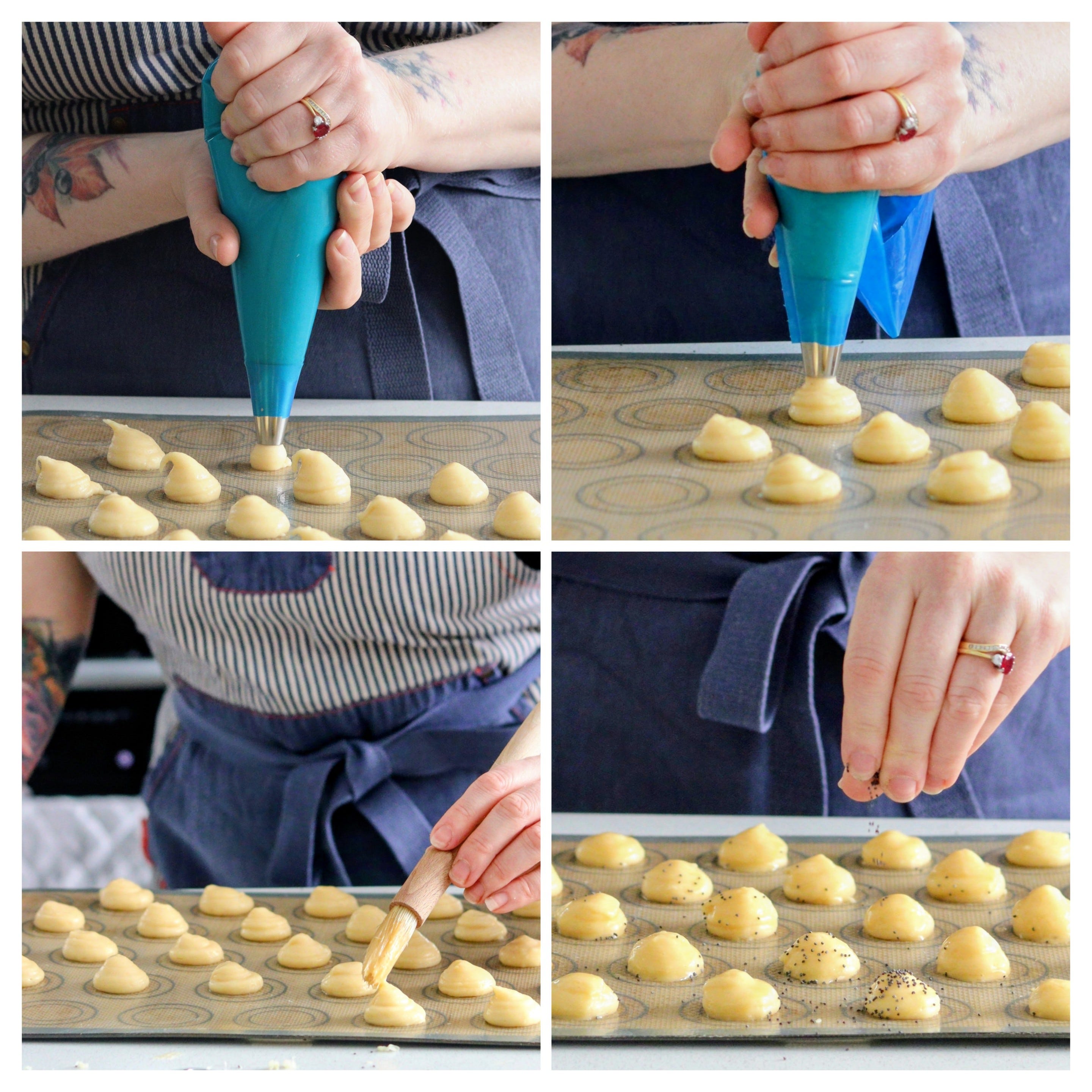
Some recipes used a large smooth piping nozzle, some a small. Bread Ahead uses a star nozzle to make some very pretty puffs. As I am a lady all about balance, who preferred my gougères on the slightly smaller side, I opted for a medium sized smooth nozzle, the Wilton 2A.
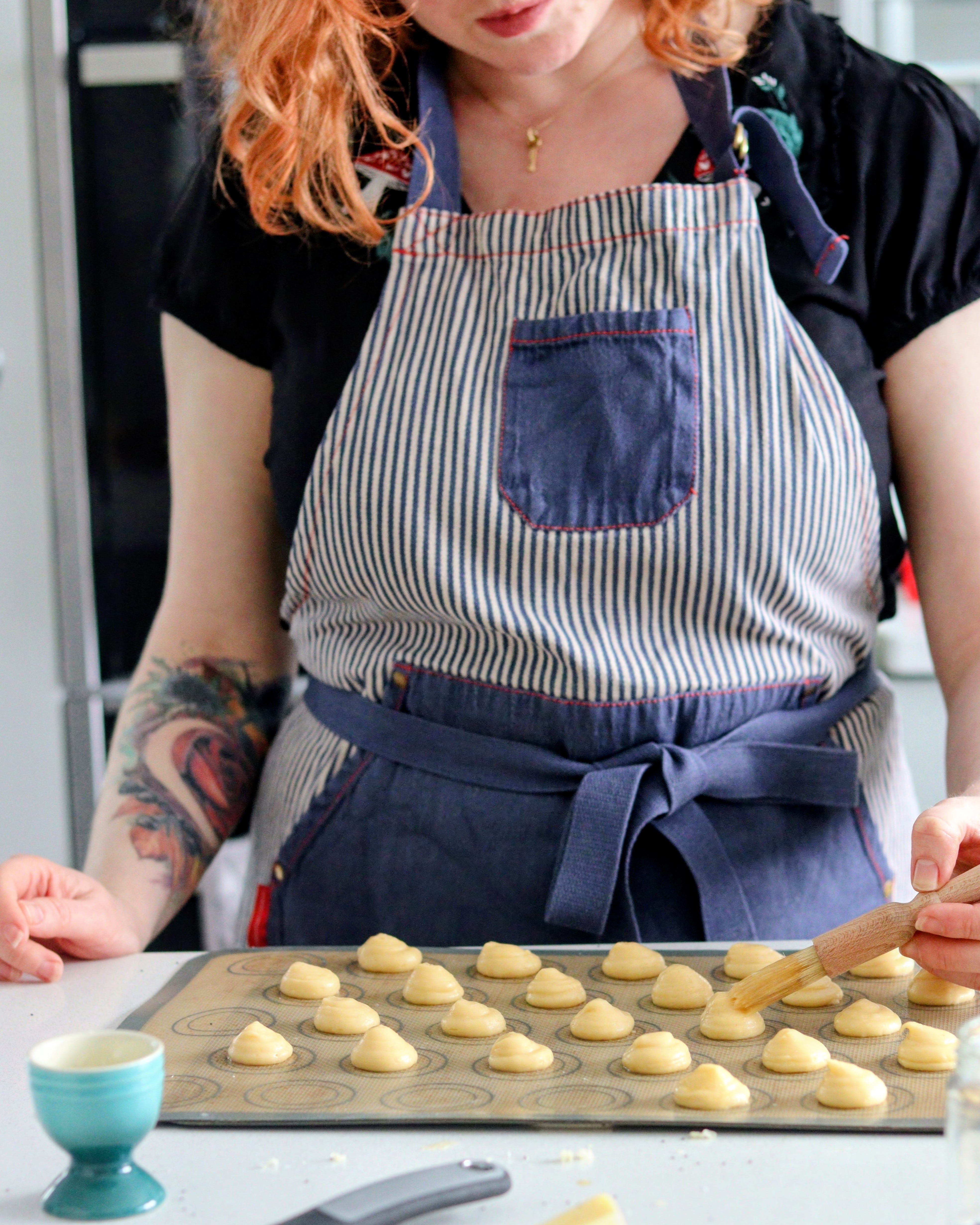
And as for piping technique? For lovely, uniform little puffs, here’s how you do it: hold your bag straight and about half a centimetre from the tray. Squeeze, stop and gently flick to the side, before dipping your finger in a little bit of water and pressing that flick down. Check out my little video to watch the technique:
If you don’t want to faff about with piping, you can also use a spoon to place little rounds. Although you won’t have as uniform a result.
Do egg wash!
I often don’t egg wash choux pastry, just brushing them with water to encourage a smooth rise and help eliminate cracks. But for gougères I decided to, to help the seeds and cheese stick to the puffs, and give my choux a golden glow.
When baking, start with the temperature high, and then turn it down.
For the gougère recipes I tried, they all baked the puffs for 20-25 minutes at 180°C/356°F.
I found with my oven, this meant they came out under baked with squidgy middles. While we want a little fluff, we don’t want a middle that is moist or squidgy. Some suggest pricking your puffs 5-10 minutes before the end of baking time to help dry out the middles. Although I didn’t find this made much difference.
On the flipside, when I pushed the temperature up, they came out overbaked and chewy.
Until I remembered trying Giovanna’s Zeppole recipe (which you must try out!). She initially blasts her zeppole with a higher heat to ensure a good rise, before turning the oven down to ensure the centre bakes well but the pastries weren’t tough on the exterior. And this method worked wonderfully with these gougères too. Ten minutes at 200°C/392°F, followed by ten minutes at 180°C/356°F ensured a good puff and well baked outside, but softer and light in the middle.
If you would like to become a paid subscriber, then thank you! I am most grateful.
You will receive full access to my recipe archive. And everything I personally earn on Substack, I donate to the World Central Kitchen.
Until next time… when we’ll be exploring Bourbon Biscuits in all their glory.
Have you heard about the Bake Experiments Recipe Index? An easily searchable one stop shop for all Bake Experiments recipes and experiments.
Comments
Nothing yet. Say the first thing.
Sign in to join the conversation.