
Hi there, and welcome back to Bake Experiments and a Sunday Special.
Before I head off on my holidays for August, I am delighted to announce an extra special picnic post. A collaboration with culinary master Lisa McLean.
One of the joys of Substack is the community, and connection with food writers and chefs from all over the world. So, when Lisa said how wonderful it would be if we could all come together for a virtual Summer picnic, I knew it would be a beautiful event. Even if it could only happen in our imagination.
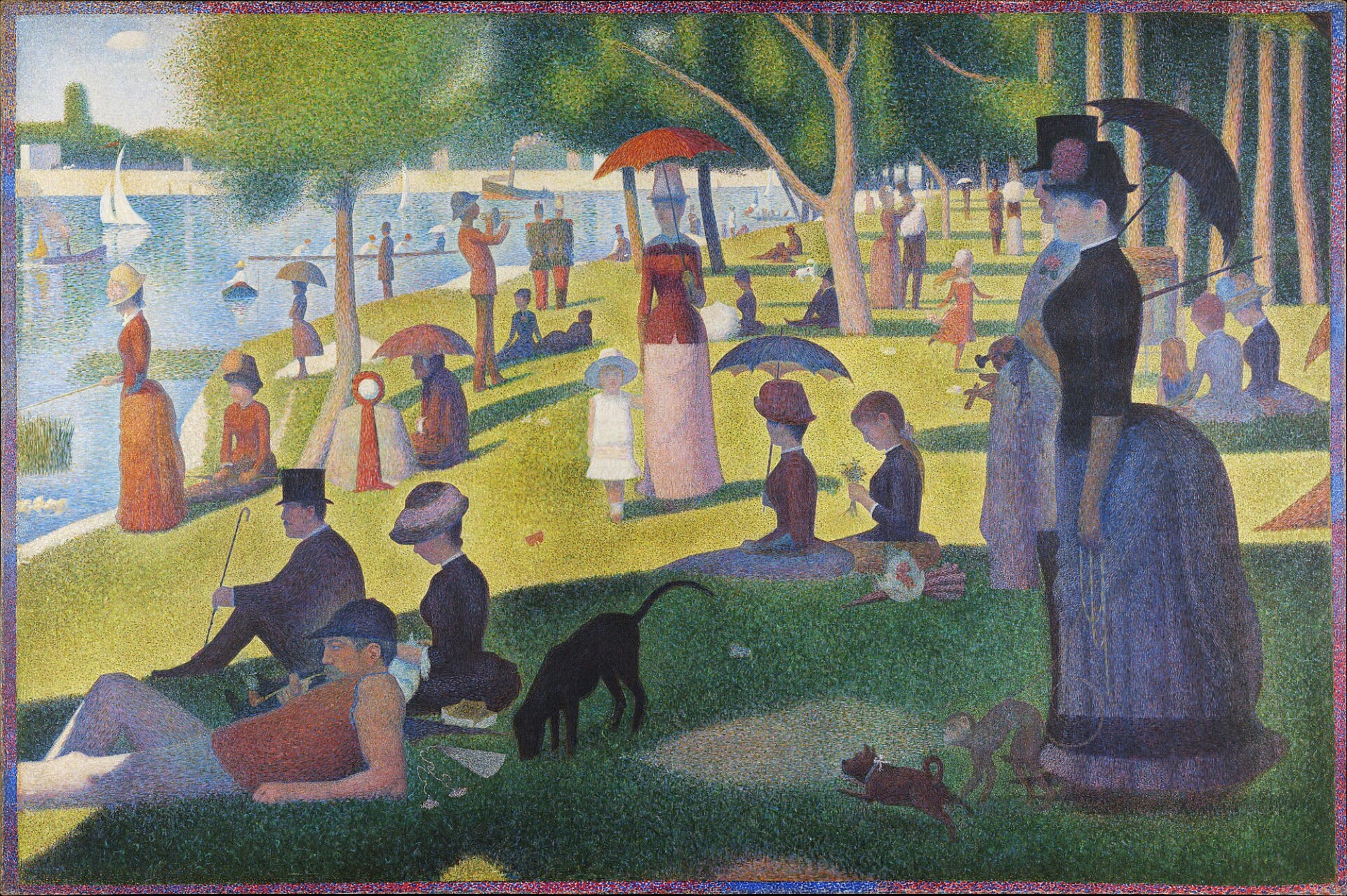
Lisa told me of Georges Seurat’s A Sunday on La Grande Jatte, a beautiful painting which shows Parisians gathered beside the Seine beneath trees and parasols.
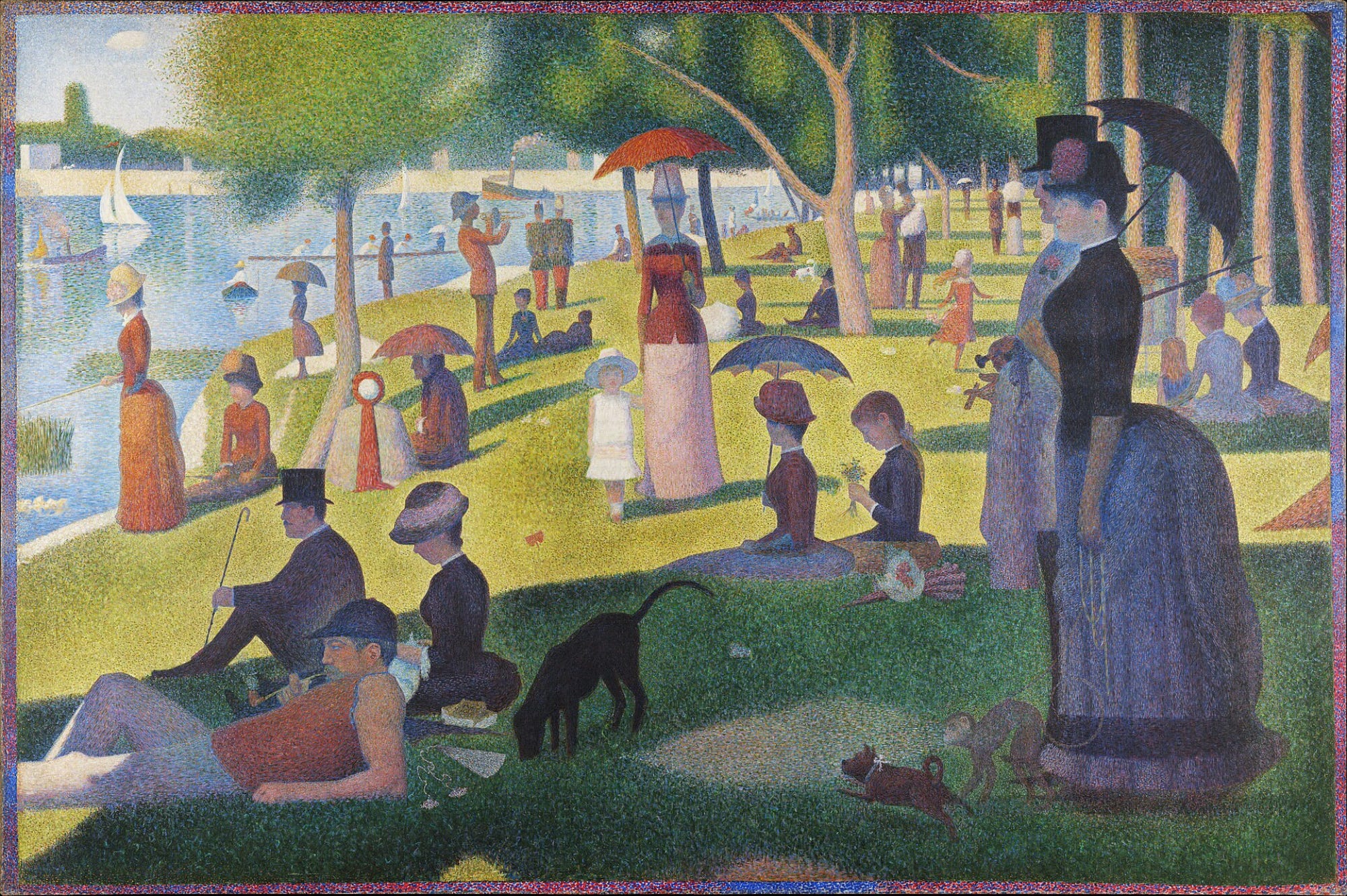
We wondered what might happen if Seurat’s figures shifted from their careful positions, crossed the spaces between them and began to share lunch.
So, we invited a gathering of cooks, food writers, artists, storytellers and friends to join us on La Grande Jatte. They arrived from across the Substack world carrying tarts, salads, breads, cakes, cocktails and picnic baskets filled with food from their own kitchens.
And for you today, we have a jam packed post with everything you would ever need to host the perfect picnic, including:
A plethora of beautiful recipes from our guests - food writers and chefs from across Substack. All together in one epic resource post, How to do Picnic in Style.
Two picnic hosts in conversation - Lisa and I talk of what a picnic means to us.
Music from the lovely Fiona Whittaker, who has created a beautiful playlist for us, which I shall be listening to all summer.
A fabulous game from Feasts and Fables, sure to keep us entertained for hours.
And a wonderful story, from master storyteller Amela Marin, inspired by the life of George Seurat and his paintings.
And Lisa and I have a secret bonus for our paid subscribers. Within this post is an E-magazine of bonus picnic recipes and stories from Australia to Europe, and the many picnic grounds in between.
We have collected the complete picnic table, with links to all our guests and their recipes, in our companion resource post, How to Do a Picnic in Style. A huge thank you to all of our guests for their generosity and providing such beautiful recipes for our picnic.
·
07:50
Discover how to plan the perfect picnic with a generous collection of picnic recipes, refreshing drinks, portable savoury dishes, cakes, music, games and storytelling. Inspired by Georges Seurat’s A …
Shell: Lisa, this gathering began with your idea. What was it about Seurat’s painting that made you imagine a picnic?
Lisa: I was struck by how many people occupy the same landscape while seeming so disconnected from one another. They sit, stand, fish, walk dogs and watch the river, but they rarely appear to speak or meet one another’s eyes.
I imagined what might happen if they lowered their parasols, turned towards one another and began passing plates across the grass. It also felt like a lovely way to bring together friends we mostly know through words and screens, placing us all within the same landscape for one afternoon.
Shell: In my mind, our picnic was much less composed than Seurat’s. There would be laughter, crumbs and a riot of food. What did you see when you first imagined everyone arriving?
Lisa: Baskets spilling over with food, bundles of rugs and cold bottles ready to be opened. The dishes would arrive one by one, but soon the picnic would become too abundant to arrange neatly.
There were contributions from many culinary traditions: savoury pastries, breads, vibrant salads, cheeses, cakes, coffee, chilled drinks and sweets. Each dish carried something of the person who made it.
Like Seurat’s separate points of colour, every contribution remained distinct, but together they made a larger composition.
Lisa: We discovered that our ideas of picnicking were shaped by very different landscapes. What does a picnic mean to you, Shell?
Shell: Hailing from the UK, I find picnics can be a tricky affair. It is often less afternoon tea on the lawn, and more egg mayonnaise sandwiches pulled from a cool bag on a windy beach, while your hair whips across your face and sand finds its way into the food.
If the rain stays away, there are wasps. Or a seagull may swoop down and steal your entire pasty before you have taken a bite.
Still, we persevere. We pass around sausage rolls, strawberries, cake and biscuits, finishing with a flask of tea, coffee or, quite honestly, something stronger. British picnicking may require resilience, but we picnic on!
And you Lisa have spoken about everything from elegant picnics to lunches eaten after rainforest walks?
Lisa: I love many kinds of picnic. There are elegant ones with real plates, beautiful food and glasses wrapped carefully for travelling. I also love winter picnics, somewhere sheltered from the wind, with books, extra rugs, excellent bread and cheese, olives, chutney and whatever else looked irresistible at the deli.
Then there are the picnics we earn: sandwiches unpacked after a long climb, or eaten beside a mountain stream while our togs dry in the sun. There are spontaneous fish-and-chip picnics at the harbour too, shared with persistent seagulls and eaten quickly before the chips grow cold.
For me, the word picnic evokes some of the most carefree, joyful and delicious afternoons I have lived.

Food was only one part of our afternoon.
Fiona Whittaker created a three-hour playlist to accompany the picnic from the opening of the first basket to the last cups of tea. She was guided by sunshine, parks, trees, dappled water, summer heat, France, art, romance and loss, all the associations that Seurat’s painting and Sondheim’s musical brought to mind.
The result moves between classical music, folk, jazz, indie rock and musical theatre.
As Fiona imagined it:
“People listening to it, sitting under shady trees on picnic blankets and chatting, humming along or chilling out and occasionally saying, ‘Oh, I like that one…’”
The music sits gently beneath the afternoon, occasionally rising into notice before returning to the sounds of conversation, glasses and the river.
Fiona also contributed to the picnic table, bringing cocktails and something sweet to share.
Playlist by Fiona Whittaker - The Social Apothecary
Barrie and JoJo from Feasts and Fables took charge of our entertainment with Mölkky, a Finnish throwing game involving numbered wooden pins, a certain amount of arithmetic and, we suspect, considerably more competitive feeling than anyone initially intended to reveal.
It gave us a reason to leave the rugs, move after lunch and disturb the immaculate composure of Seurat’s park.
“Little wooden posts with numbers on the end … knock them over to build a score. Easy enough? Wrong! The numbers tick up … 47 - 48 … just knock over the (2) and you’re the winner. You throw a cylinder of wood towards the vital number … it soars, it bounces awkwardly decimating the (7), (3) and (2) … 60, you ‘bust’ so back to 25 you go, the laughter of other players drowning out your groan. Maddening, hilarious, evil!! Fun for all the family … just don’t think it’ll be easy!!”
Barrie Feasts and Fables


As the afternoon softened and everyone settled once more beneath the trees, Amela began her story.
Written especially for our gathering, The Seurat Variations draws on Seurat’s brief life and work, moving between art, biography, friendship and imagination. In Amela’s words, it is “rooted in a few historical facts” and “enriched with imagination.”
The plates were left unfinished, conversation fell away, and the park grew quiet enough for her words to move with the breeze. A huge thank you to Amela for her work on this wonderful story.
These variations were inspired by the Worldwide Picnic, organised by Lisa McLean and Shell Plant, and by the brief, brilliant life of George Seurat and his paintings. Rooted in a few historical facts, they are enriched with imagination.
1. Introduction: The Father
2. Variation I: The Notary
3. Variation II: Van Gogh
4. Interlude I: Divisionism
5. Variation III: Studio Visit
6. Variation IV: A Letter
7. Interlude II: Borders
8. Variation V
9. Coda: Asteroid
1. Variation I: The Father
George Seurat entered the world stage on December 2, 1859, in Paris, into an affluent family. His father, a customs officer turned property speculator, was an emotionally distant man of rigid habits. He lived alone in Le Raincy, joining his family for dinner only on Tuesdays. The loss of his right arm in an accident had left him with a custom prosthetic. His weekly arrival transformed the dinner table into a tense, silent theatre. Before the roast arrived, he would screw specialized forks and knives directly into his mechanical arm, as if performing weekly for his wife and children to compensate for his absence. He would then silently carve the meat with surgical precision. Exactly an hour later, he would get up, return to Le Raincy, leaving his wife, Ernestine, with their three children at the apartment in the Boulevard de Magenta.
2. Variation I: The Notary
Eccentricity, rigidity and a flair for theatrics passed from father to son. Georges became a man of clockwork routine, his life as methodical as his art. Always smartly dressed in a dark suit, pressed trousers, and top hat, his punctuality and emotional restrain earned him the nickname “The Notary” from Edgar Degas. It was a gentle mockery of his unvarying habits. Yet his friends admired his dedication to his work and his support for outcast artists through the Société des Indépendants.
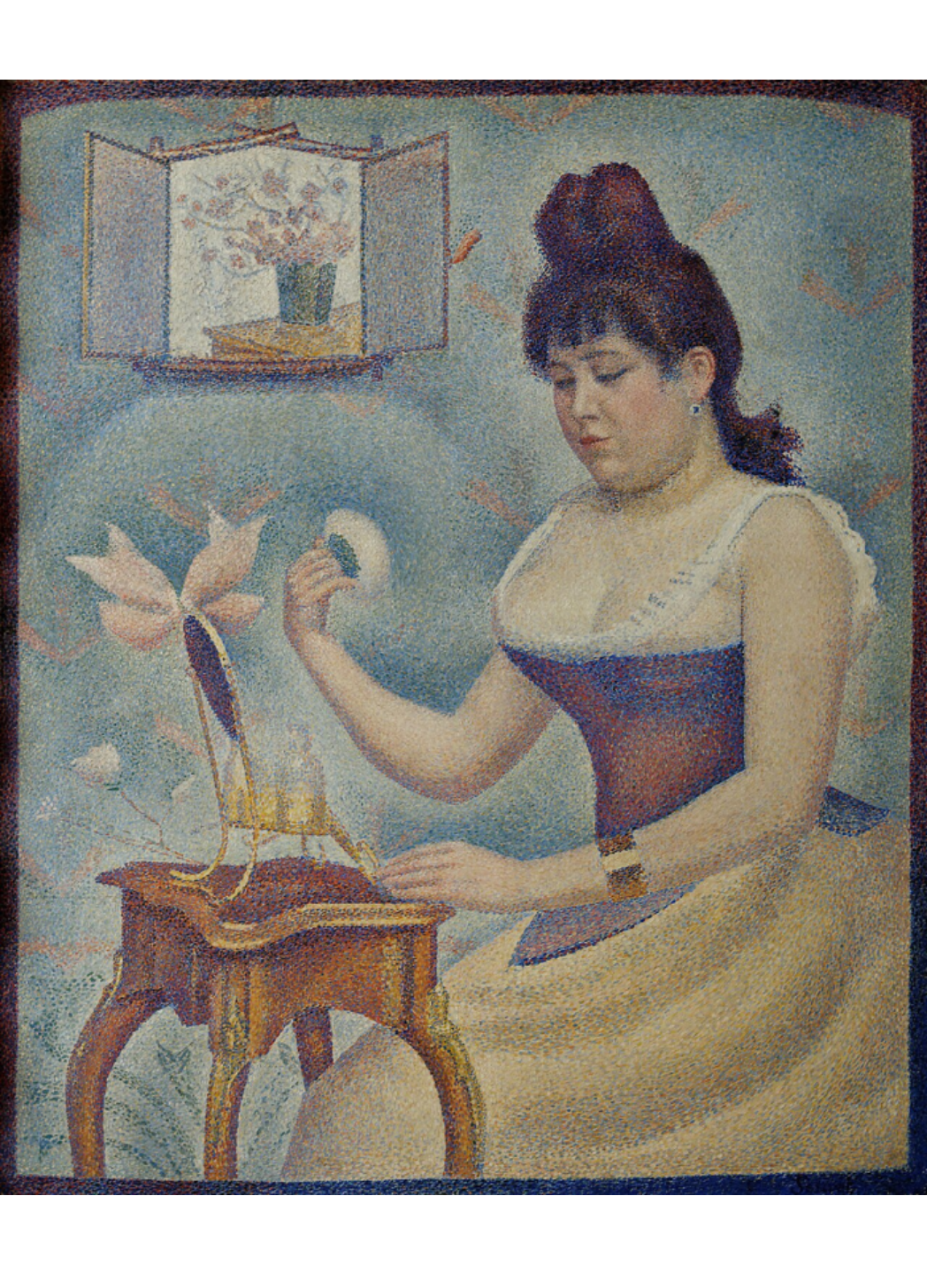
But he was discreet about his private life. Only days before his death did anyone learn about his mistress, immortalised in the painting Young Woman Powdering Herself. Beneath its surface, an x-ray revealed a hidden self-portrait, an indirect acknowledgment of his personal situation. His mistress, Madeleine Knobloch, was pregnant with their child.
3. Variation II: Van Gogh
On November 1, 1887, Vincent Van Gogh organised an exhibition at the Grand Bouillon Restaurant du Chalet, featuring works by five artists of the “petit boulevard”, including Toulouse-Lautrec. Seurat, whose studio was nearby, attended. Van Gogh, having admired Bathers at Asnières and Le Grand Jatte, was eager to meet him.
He invited Seurat to dinner the next day, but Seurat refused, explaining that he dined with his mother every evening. His routine was sacred.
They agreed to meet at the Café du Tambourin, where artists gathered. That evening, a friendship sparked between the two men of similar backgrounds, both seeking a new artistic language beyond Impressionism. Both were young, passionate and doomed to die only a few years later, within a year of each other. The bond, brief and continued only until Van Gogh’s departure for Provence, would echo in their work.
4. Interlude I: Divisionism
“Some say they see poetry in my paintings; I see only science.” Seurat remarked. He called his method “divisionism” or “chromoluminarism” (The critics used a disparaging term “pointilism”.) As In life, he applied precision to every dot.
His regimented life freed him to focus on the painstaking process of his art. “Great things are done by a series of small things brought together,” he explained. For La Grand Jatte, he created almost 100 preparatory studies. He understood that a dot of one colour, placed next to another, creates a whole different hue in the retina.
“Originality depends only on the character of the drawing and the vision peculiar to each artist.”
5. Variation III: Studio Visit
On February 19, 1888, Vincent went to visit Seurat’s studio with his brother Theo. It was the exact day when he was leaving for Provence. The visit left a deep impression. There were seascapes Seurat painted in Normandy, Models in progress, and Sunday on La Grande Jatte. In a letter to Theo, Vincent wrote “I was so struck by Seurat’s canvases. I often think about his system, and yet I won’t follow it at all, but he’s an original colourist”.
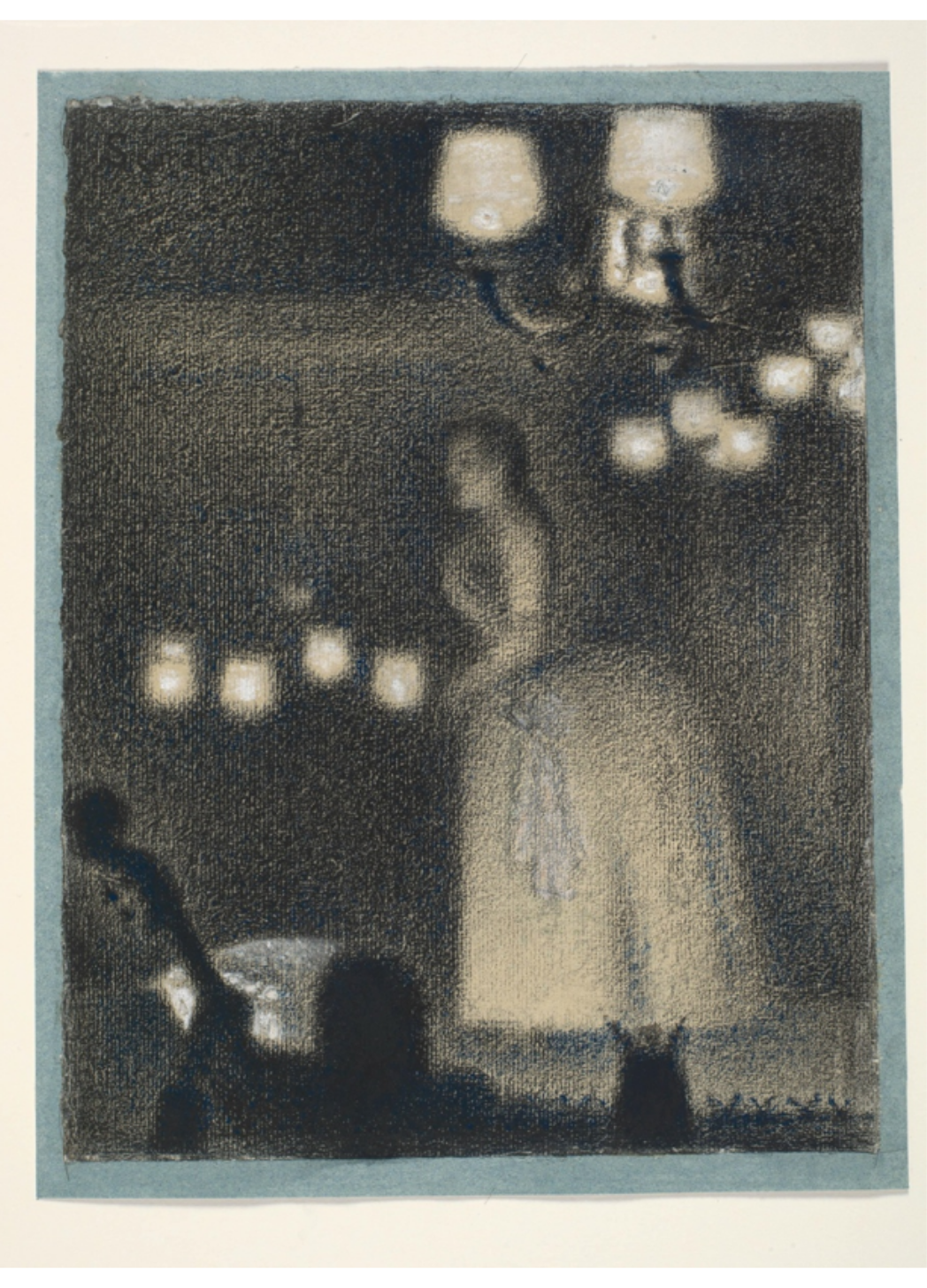
Theo was equally impressed. A few weeks after the visit, he bought Seurat’s Eden Concert.
6. Variation IV: A Letter
Apart from these brief mentions, no records of their friendship survived. Both artists destroyed most of their personal items before they died.
Recently, a letter from Van Gogh to Seurat was discovered tucked behind his 1889 self-portrait. It was short but revealing, written in impeccable French.
Dear George,
Since our last meeting, I’ve been painting continuously in Arles. As I told you before, I want the Yellow House to be shared with painters I respect. Paul Gaugin has agreed to join. I hope you will, too. Painting together would benefit our art.
You are a master colourist. Your scientific approach is unrivaled. Our brushstrokes differ, but our goals are the same: to find a new language. I’ve finished my self-portrait and would like to exchange it for one of yours. Perhaps you could paint one when you come?
A cordial handshake,
Vincent
7. Interlude II: Borders
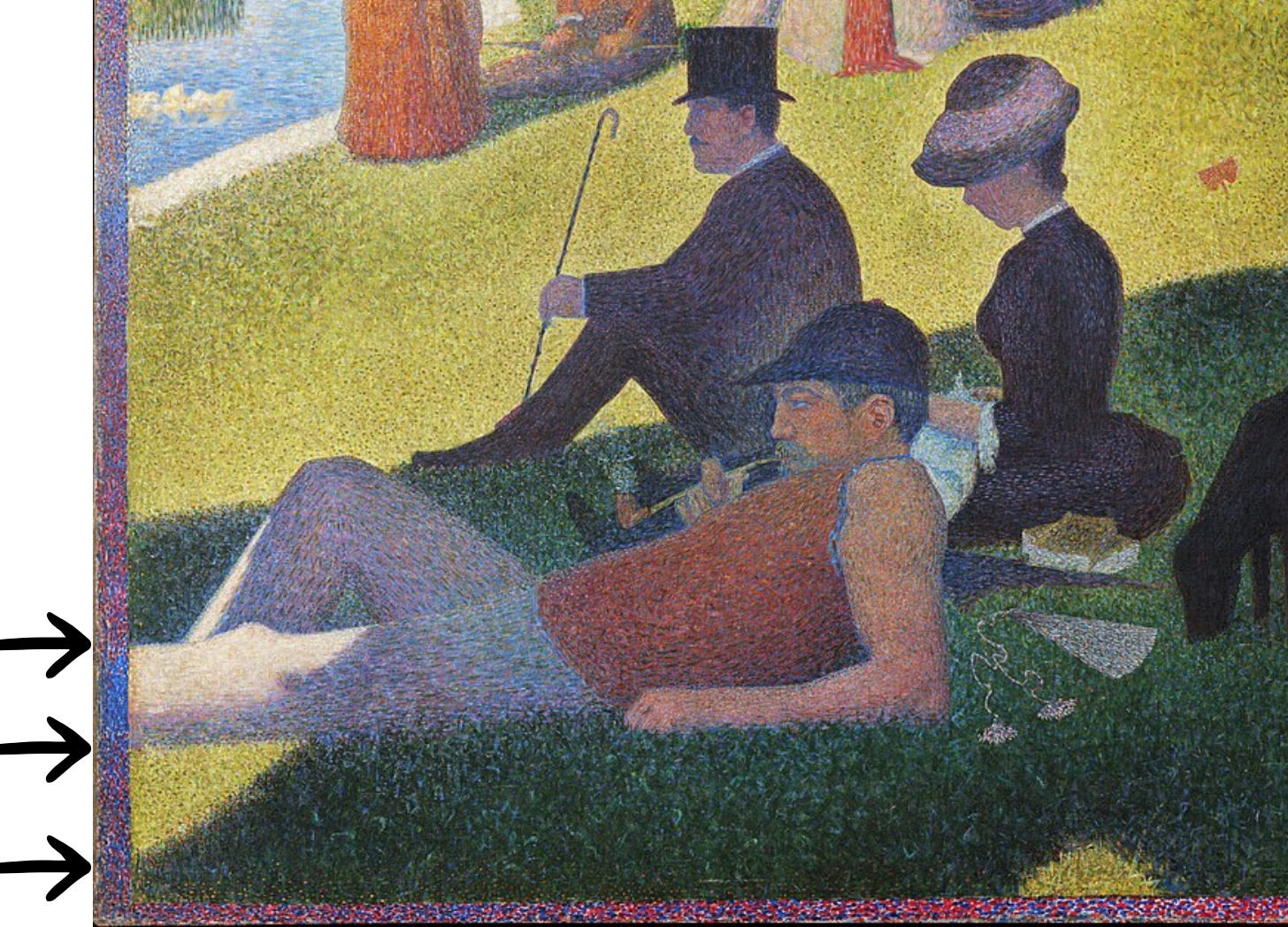
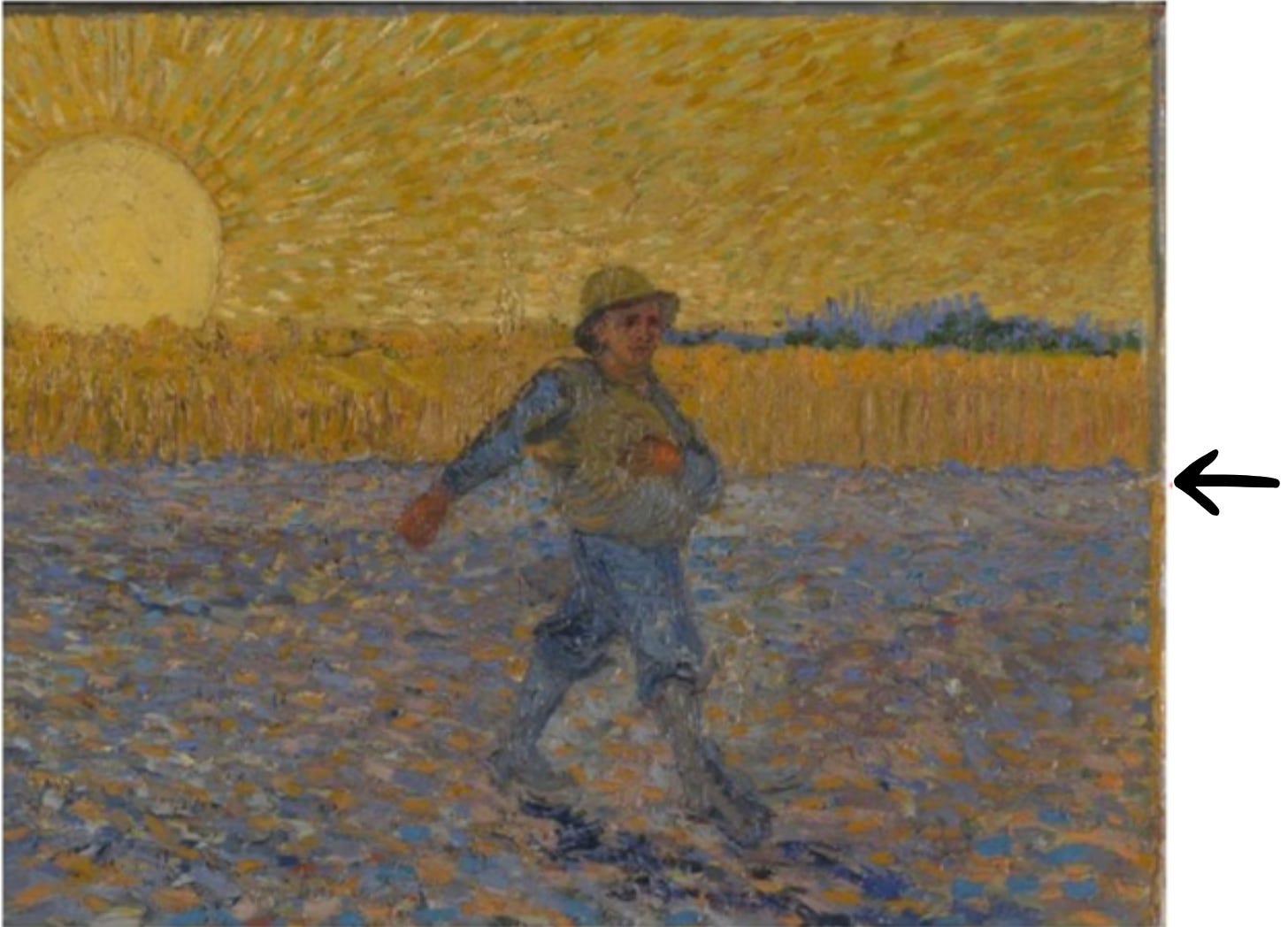
In a letter to Paul Signac, Seurat explained his need for borders: “I don’t want my subjects to leave the canvas. I’ve positioned them in the right order. I fear they’ll escape one by one, and my paintings will become empty landscapes.” He confessed to conversations with Van Gogh, who liked the idea of borders and painted them on some of his works, hoping to “curb the madness” that becomes so evident when he is in distress.
Seurat added, “I’ve been feeling a touch of slight spleen lately. I am afraid it will affect my work.” Order, both in life and in his work suited him, but occasionally, they couldn’t shield him from creeping chaos.
8. Variation V: La Grande Jatte
Seurat claimed inspiration from the Parthenon’s marble frieze, which shows the procession of the Panathenaic festival, the commemoration of the birthday of the goddess Athena. Also, while still a student, he assisted Pierre Puvis de Chavannes, whom Van Gogh described as “the master of all of us” while he was working on The Sacred Grove, Beloved of the Arts and Muses.
Seurat began La Grand Jatte in 1884 with vertical dashes for trees, horizontal for water. A year later, he added hundreds of thousands of dots, revising the positions of figures several times. In 1886, he re-stretched the canvas and added a border to complement the painting.
He was 25 when he finished it. The silence in the painting mirrors the silence of his family dinners, a frozen moment, a world held in perfect, tense equilibrium.
9. Coda: Asteroid
Devastated by Van Gogh’s death and that of his friend Albert Dubois-Pillet, Seurat threw himself into The Circus, the painting he had worked on all year, surviving on croissants and chocolate. On March 29, 1891, diphtheria claimed him. Critic Jules Kristoff wrote: “A sudden, stupid sickness carried him off in a few hours, just as he was about to triumph. I curse providence and death.” Paul Signac mourned his friend stating: “Our poor friend killed himself by overwork.”
Within two months both his son and his father were gone. The Seurat line seemed extinguished. Until years later, when an asteroid was named in his honour. Seurat, a mid-sized asteroid, 7.3 kilometers in diameter, orbiting between Mars and Jupiter, traces a precise path: 1,650 days per orbit, 2.65 to 2.83 AU from the sun.
He would have loved the precise measures, the predictable rhythm, and the silent dance through the void.


This gathering was made possible by the generosity and imagination of every writer who brought something to share. Each recipe, drink, story, song and playful contribution added its own character to the afternoon and helped turn an imagined picnic into something wonderfully vivid.
Our heartfelt thanks to all who joined us on La Grande Jatte, opened their kitchens and shared their work with such warmth. Like Seurat’s individual points of colour, every contribution remained distinct, yet together they created a far richer picture.
We hope you enjoy exploring their recipes and publications, and that this gathering leads you towards many new kitchens, stories and friendships.
And finally, a huge thank you to Lisa for her stellar work on this epic picnic post!
Comments
Nothing yet. Say the first thing.
Sign in to join the conversation.