
What defines a power suit?
In the legal drama Suits, Harvey Specter, a successful corporate lawyer in NYC, hires Mike Ross, a naive but brilliant kid who didn’t graduate law school. One of the ways the show attempts to convey their social standings is through how Harvey and Mike are suited.
Material-wise, Mike’s is likely a polyester-wool blend while Harvey’s is probably pure wool or a silk-wool blend.
There are also stylistic differences that illuminate the contrasts between them that I have annotated.
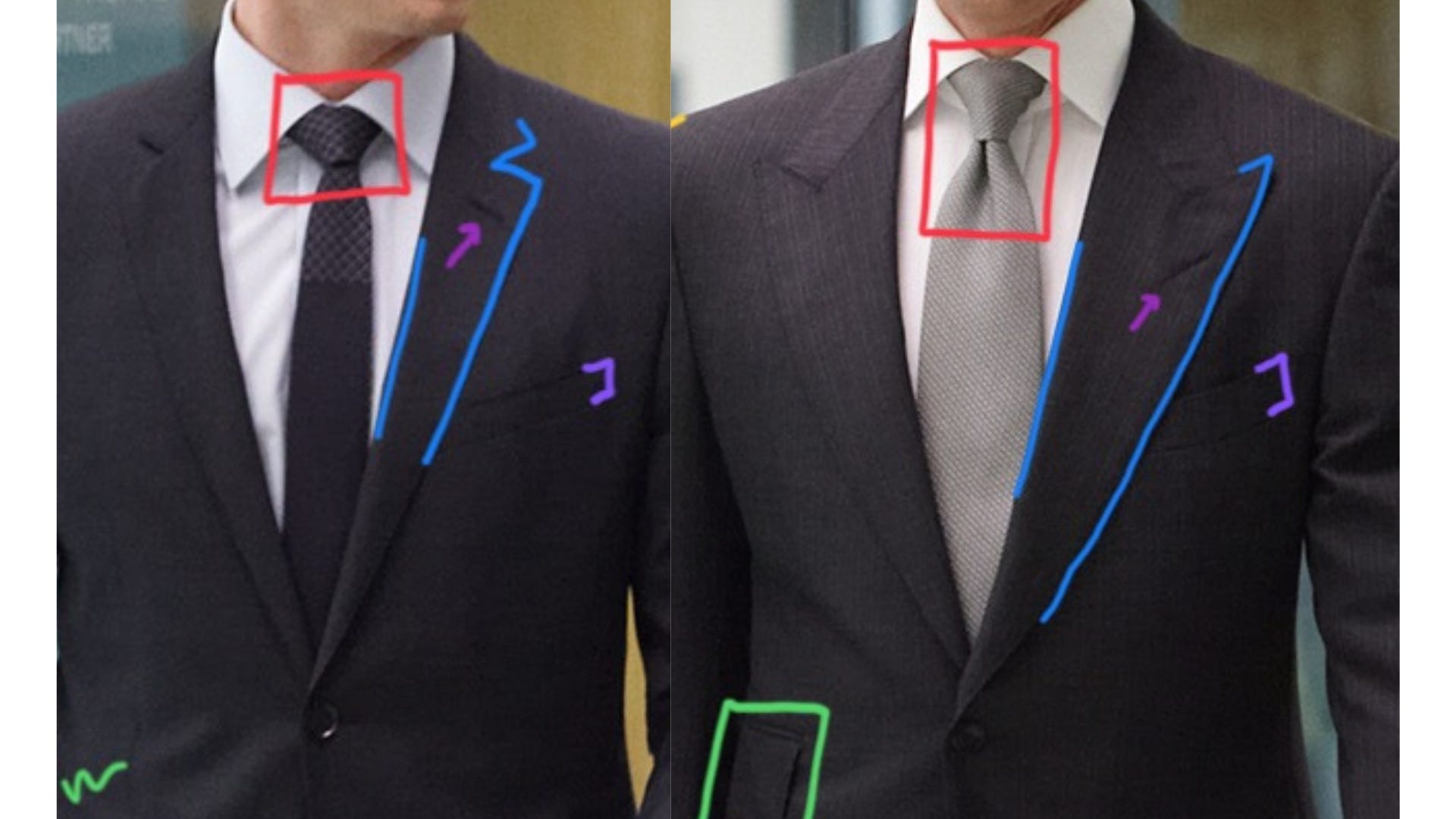
Harvey’s jacket is adorned by a wide peak lapel, in opposition to Mike’s very narrow (“skinny”, if we’re being brusque) notch lapel.
Peak lapels are considered more formal and sophisticated, while notch lapels are common and versatile. Traditionally reserved for double-breasted suits, peak lapels rarely appeared on their single-breasted counterparts until modern suiting, and are usually chosen to express flair, subliminally signaling power.
Narrow lapels, as seen on Mike’s suit, are most commonly found today on ready-to-wear (RTW) suits and probably originated in parallel with skinny/slim fit suit trends. Some might even say that the skinny lapels are a product of mass manufacturers looking to cut “superfluous” use of material. The proportions look can be especially jarring if the wearer has a broad torso.
Wider lapels are classic and also generally create the impression of a wider chest and shoulders, making them more aesthetically pleasing. For example, see this side-by-side comparison between an RTW suit from yd. and a bespoke piece from Common Suits (some may contend the lapel on the right is too wide, but I love it):
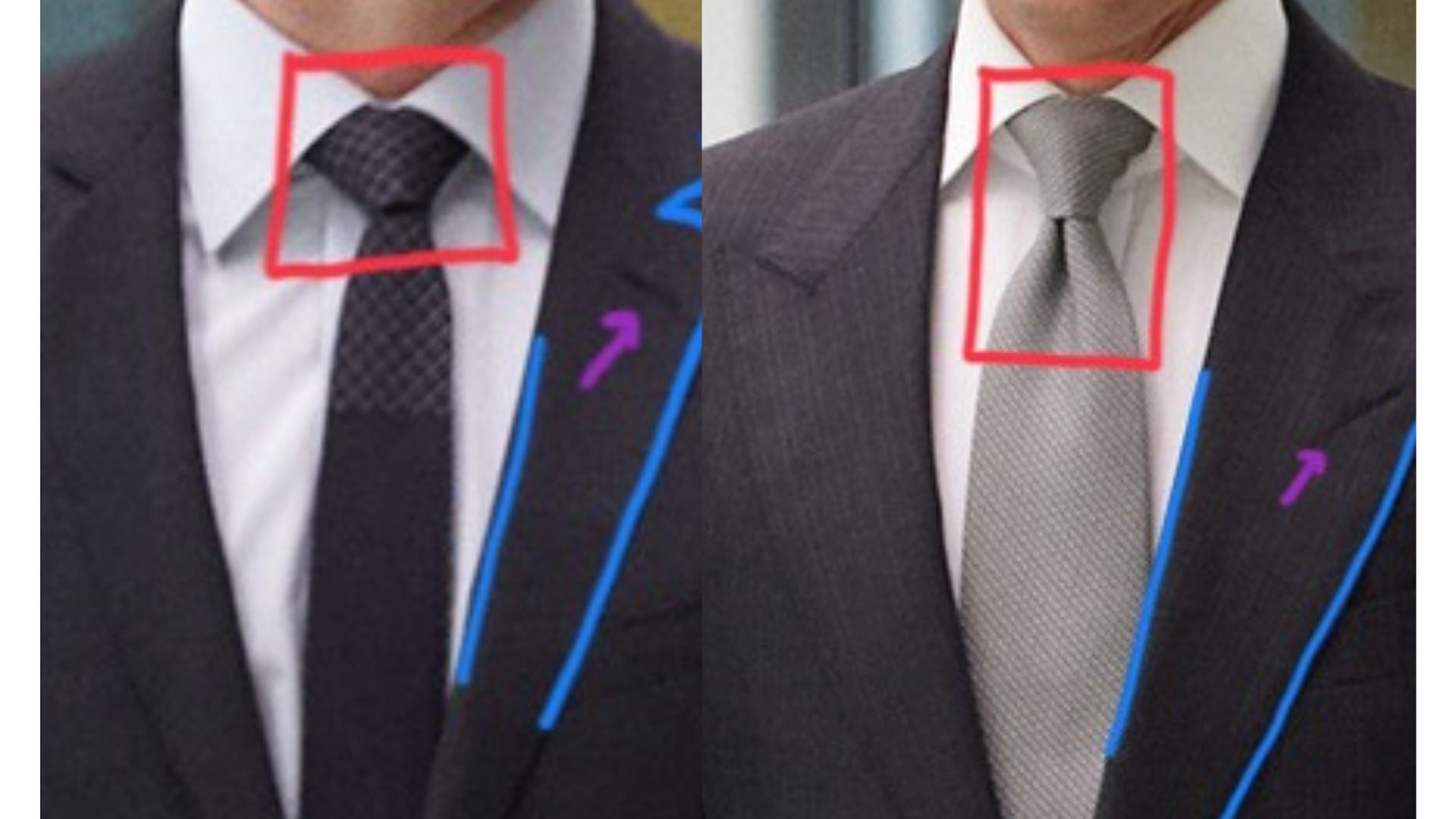
Harvey wears a wider tie with a full, fat, symmetrical Windsor knot that is complemented by a corresponding symmetrical dimple. Mike is wearing a much narrower tie with either a half or full Windsor knot.
The dimple makes a material difference. A good dimple creates visual depth and evokes interest. It takes skill and effort to produce, especially when most today aren’t even able to tie a dimple-less knot well.
Apart from the technique, Harvey’s tie dimples well because it’s wide and probably made of a multi-ply, high-quality silk that gives it heft, whereas Mike’s is too thin and narrow for a proper dimple to form.
That said, the Windsor in its full, fat form is not always favoured as some criticise it as being too ostentatiously bulky, although others (including Harvey) view it as a bold, symmetrical choice. Others actually prefer the asymmetry of a half Windsor or “four in hand” because it espouses sprezzatura, an Italian term vaguely translating to “studied carelesness” or “effortless grace”.
There’s also this wonderfully insightful X thread by Derek Guy on the history of the Windsor knot (vs the four in hand) if you’re interested.
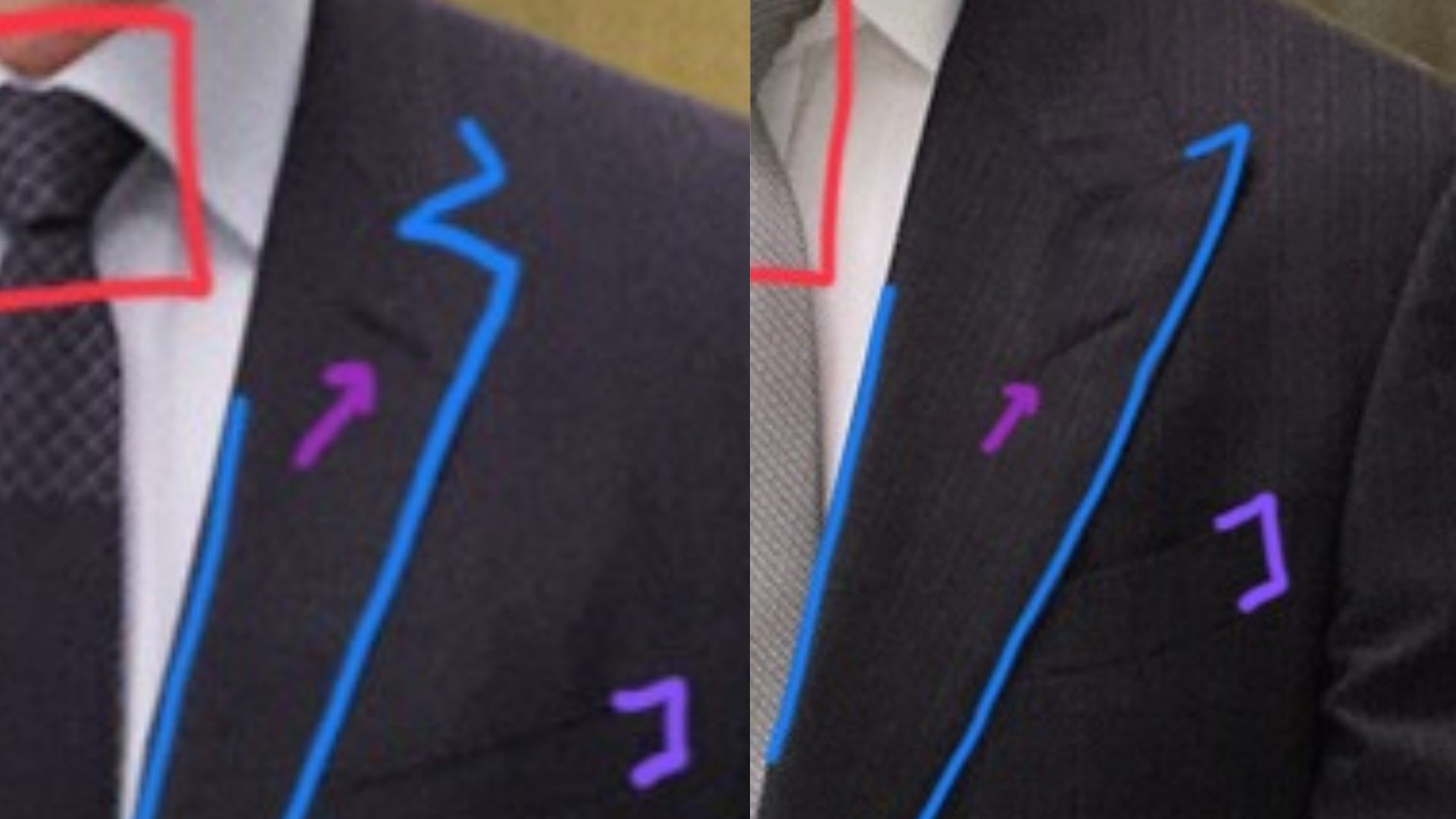
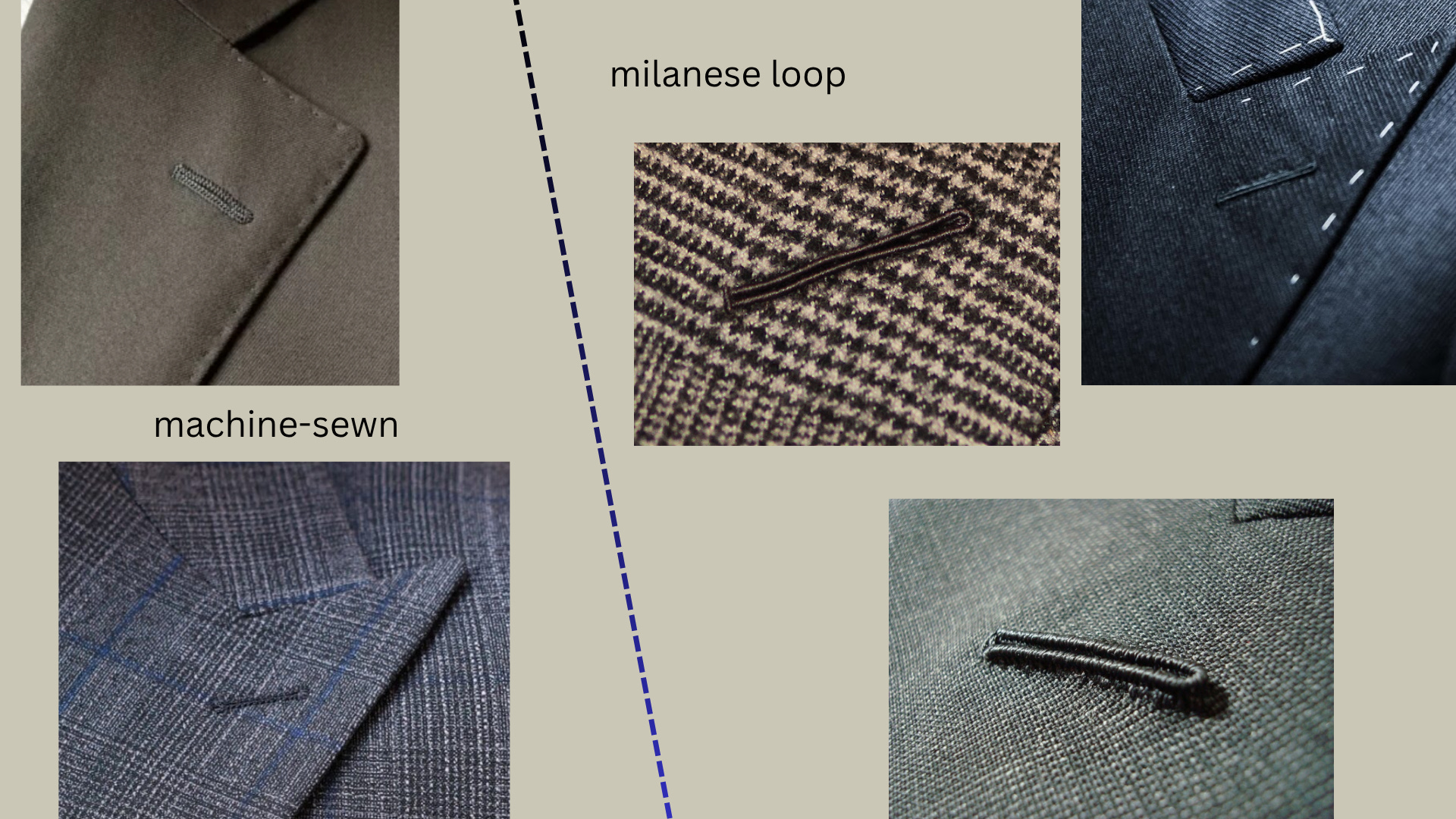
Although difficult to be certain with this picture, Mike’s lapel buttonhole is likely flat and machine-sewn, whereas Harvey’s is a hand-stitched “Milanese” buttonhole, a feature that never appears on RTW jackets, because it apparently takes 45 minutes to sew one in by hand.
If used functionally (though rarely today), the lapel buttonhole is meant to hold a boutonniere (flowers) or a lapel pin.
A “Milanese” buttonhole is a feature in some made-to-measure/bespoke suits where the buttonhole is hand stitched, giving it a slightly-raised, textured appearance when inspected closely, in contrast to the flat appearance of most machine-sewn buttonholes.
Deep-pocketed dandies may also choose to commission a “stem keeper”, a loop on the back of the lapel that holds the flower’s stem or attached loop in place:
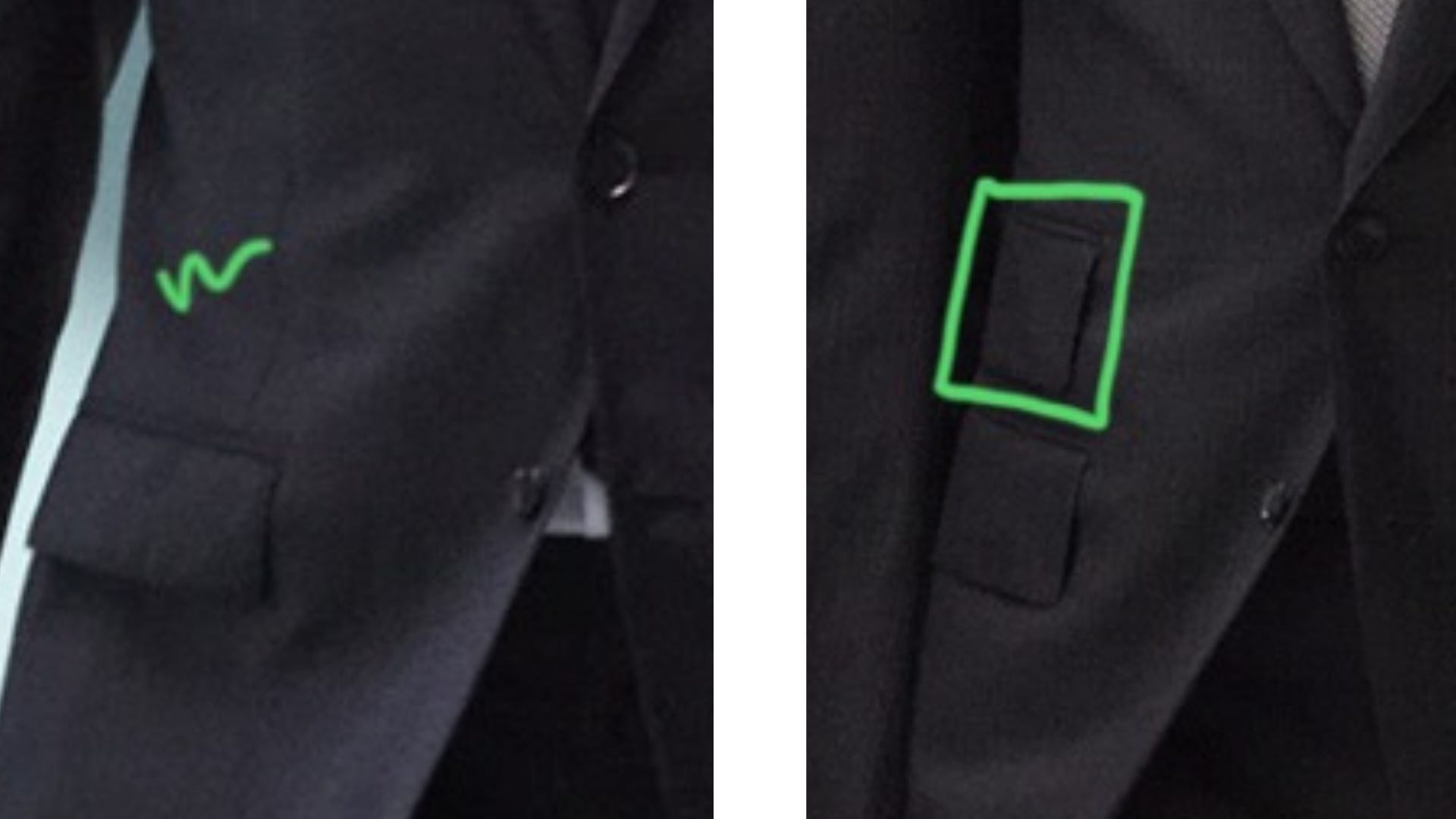
Mike’s suit does not feature a “ticket pocket”/“cash pocket”, whereas Harvey’s does. A ticket pocket is usually placed above the right hip pocket (for right-handed wearers), and usually found on custom-made suits. Apparently emerging in the late 1850s, it was used to store train tickets during its genesis, and was made popular by movie stars like Fred Astaire who wore suits featuring these pockets in films.1
Below are examples of ticket pockets in various styles like the “patch” pocket on the left, angled flap on the top right, “jetted” on the bottom left and a standard flap on the bottom right. They also vary in size, sometimes being around half the size of the adjacent bottom pocket, as seen on the left, but can also be as long as the bottom pocket, as shown on the right. The beauty of bespoke is you (technically) can design it whichever way you want.
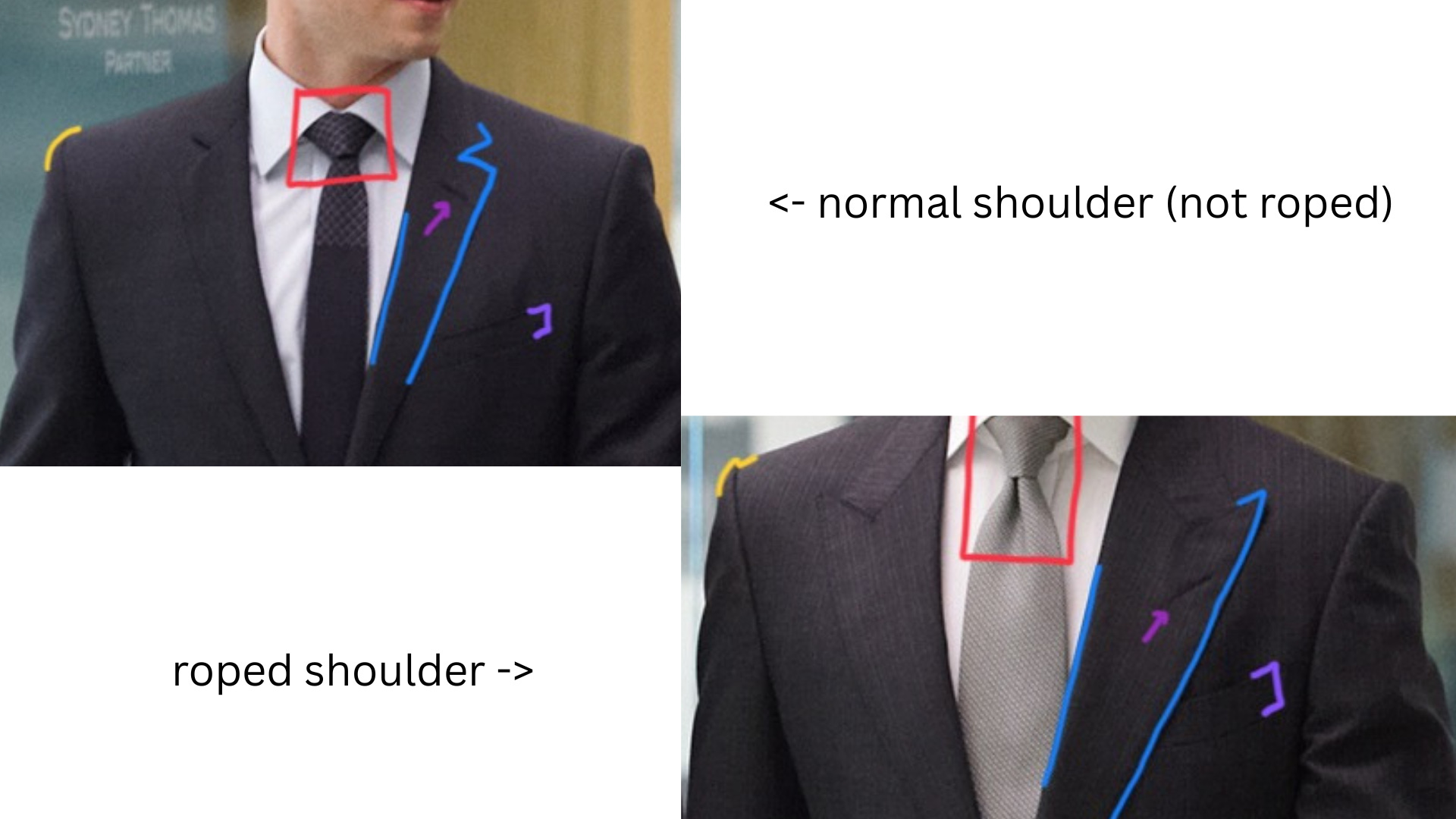
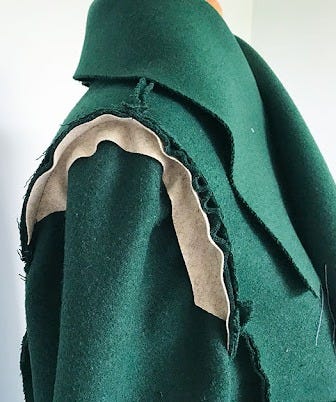
Mike’s suit likely has a normal/natural shoulder that creates a smooth, sloped transition into the sleeves. In contrast, Harvey’s “roped” shoulder creates a slight ridge because the sleeve is set slightly higher than the shoulder (which can be done with more padding in the jacket’s sleeve head), giving it a more structured, formal silhouette.
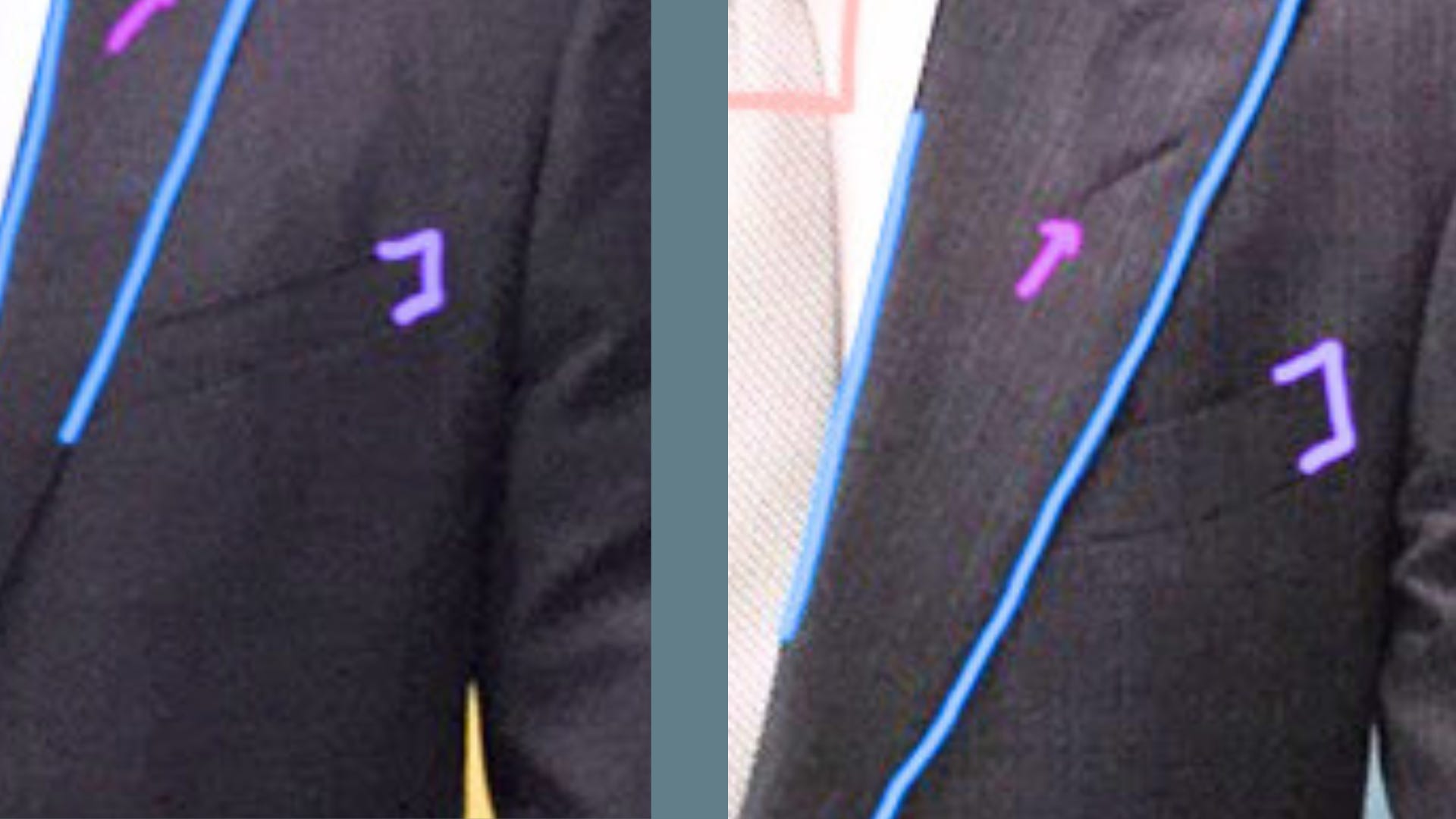
Mike’s breast pocket is straighter and sits flat against the chest while Harvey’s slightly curves outwards. The curved pocket has Neapolitan origins, and is termed a “barchetta” pocket, which means “little boat”, because the curvature is reminiscent of a hull. It is meant to give a softer, hand-finished appearance.
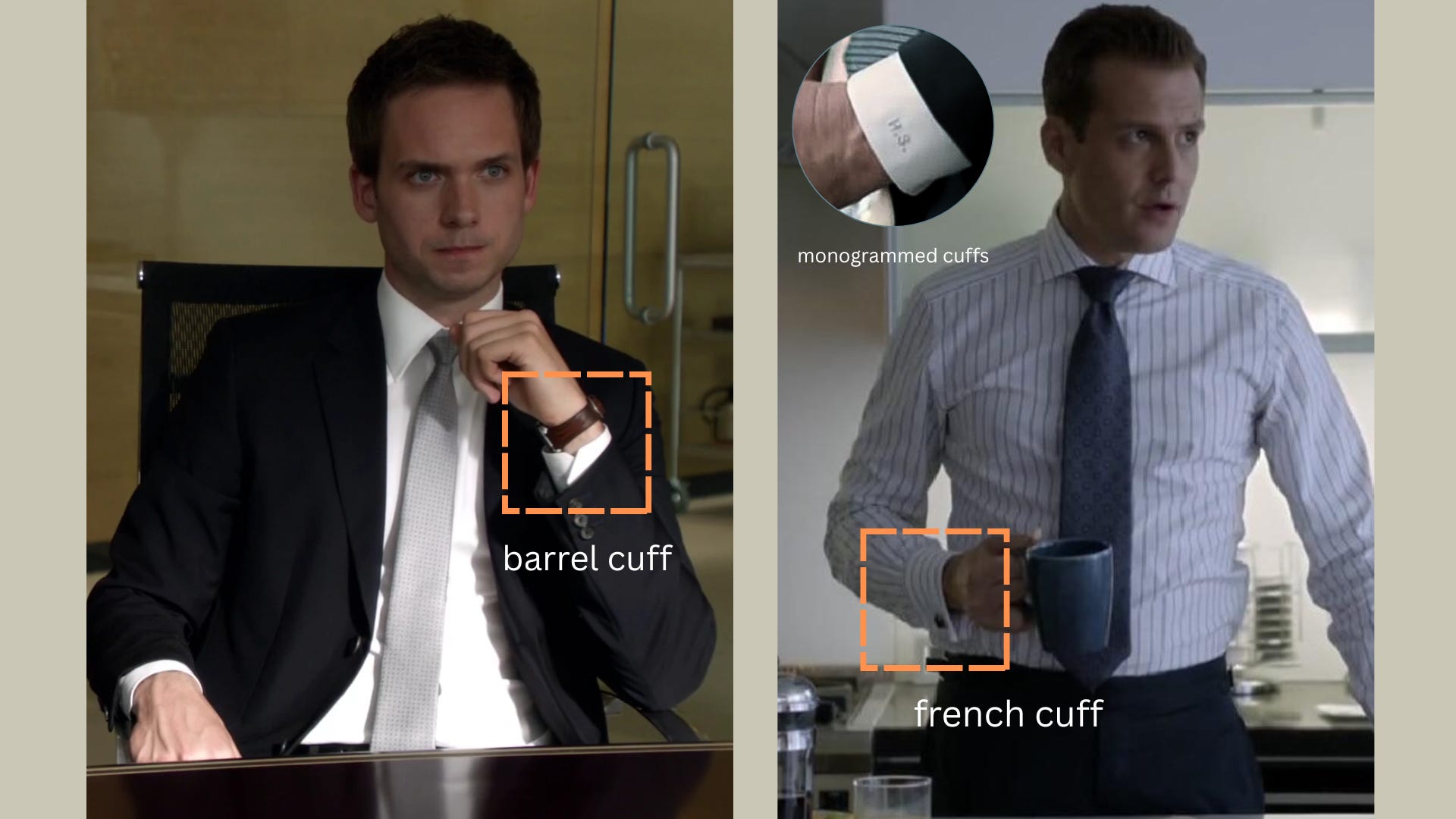
Especially in season 1, Harvey tended to wear French cuffs (or “double cuffs”) while Mike wore barrel cuffs. Barrel cuffs are standard on most dress shirts and are fastened with buttons. Conversely, French cuffs fold back onto themselves and are fastened with cufflinks. French cuffs are traditionally formal and purists consider it to be a sartorial sin to wear them without a jacket, or even at the office outside of formal settings. I disagree; dress shirts are made better with cufflinks in any circumstance.
Harvey also has his initials monogrammed on his cuffs (“H.S.”).
To finish this article, I’d like to note that Harvey’s suit style isn’t unequivocally the power suit. It is one permutation on a spectrum that ranges from boardroom to dinner party. For example, check out this exquisite Chittleborough & Morgan double-breasted, seersucker piece by Michael Browne:
P.S. To eagle-eyed critics, I’ll let Mike’s left collar gap slide in this one because he’s turning his head.
See you in the next one!
Need help with designing your suit or wardrobe? Shoot me an email at arthurwongjh(at)gmail(dot)com.
Additionally, if you have used this as a guide for your suit purchase, I’d love to see the finished product!
Dressing the Man: Mastering the Art of Permanent Fashion – Alan Flusser, pages 86 and 302.
No posts
Comments
Nothing yet. Say the first thing.
Sign in to join the conversation.