
We returned home from the dry Southwest to green. Green lawns. Greening meadows. Trees and shrubs leafing out. Flowers: redbud, crab apple, dogwood, sassafras, witch alder, viburnum. On the ground: blue violets, creeping phlox and mustard.
We also arrived to weeds, this time of year dominated by dandelions and something I’m having trouble identifying. We spent several days yanking them from gravel paths and planting beds near the house. More work to come.
Spring makes one humble. It’s a time when ambition meets reality—when all the planting and planning of earlier years becomes work again. It’s also a time that shows off the remarkable resilience of nature—plants fighting back from what seemed like death.
Most of all, it reminds me of how little I know about what to do. We gardeners all come across as know-it-alls, but even a passing interrogation of what we preach results in doubt.
Take that unidentified weed. I’m sure there’s someone out there who can tell me what it is in a snap, but the apps are useless, giving contradictory information or calling it something I know it isn’t or that’s not present in these parts. For all I know, it is benign. Although it seems to be dominating sections of planting beds, it could be a native that’s just “out of place” (the definition of a weed) or something really bad. It could be a spring ephemeral that will soon disappear in any case or something that will torment us for months. It might even be a nitrogen fixer—which would be better off kept for the benefit of the plants around it. But we don’t know, so we pulled it.
Some sustainable gardening experts have begun to promote a new approach to weeding. Just don’t, they say. Pulling weeds wakes up the seed bank in the soil, just promoting more weeds. It’s hard to argue with that on its face, but doesn’t letting the weeds alone, which leaves them to flower, further contribute to the seed bank of undesirables?
A related problem: On balance it would be good for desirable plants to out-compete the weeds, but the very definition of invasive plants includes the fact that they are fierce competitors, difficult to crowd out. The most aggressive natives, such as Canada goldenrod, even if wanted in the meadow, can take over an entire planting bed in a season or two, in which case deploying a strict interpretation of native gardening becomes not gardening at all. At best, it leaves less variety in a context where a single species (or even a few) does not sustain an ecosystem. So doesn’t planting aggressive natives to fend off invasives begin to defeat the purpose?
Then there is the matter of spring cleaning. Time zones and flight considerations inevitably get us home at night when we return East. The sun rises the next morning, we look out on the garden, and my wife goes into a tizzy. It’s a mess! She’s out there tidying up before her morning coffee has brewed.
No contradictory advice from me is given quarter at these times. But if I’m being perfectly honest, my confidence in my own advice wavers. The latest guidance—again, from sustainable gardening experts—is “chop and drop.” That is, remove nothing (or very little). Cut the stalks down and leave them where they lie. Those stalks, however, numerous though they may be, are not enough to form an actual mulch layer. And we already left the leaves from last autumn where they fell in the beds, presumably enriching the soil and giving arthropods a chance. The remaining plant debris—the stems that remain erect—probably don’t contribute many nutrients, but they may harbor pathogens from last year. Isn’t spring about fresh starts?
So when I think about these new orthodoxies, I find myself conflicted. And it helps (or doesn’t help, depending on one’s point of view) to remember that gardening fads have come and gone as long as there have been gardeners. In the nineteenth century they thought earthworms were bad and endeavored to eliminate them. Then, of course, we learned they are essential for aerating soil and aiding decomposition. Now we are told that invasive earthworms from Asia and Europe disrupt the balance. What am I to do, examine every earthworm? Anyway, how does one go about eliminating invasive earthworms without killing everything?
We held off until very late on cutting down the meadows this year to protect native bees. One sees advice on waiting until there have been two weeks of temperatures over fifty degrees before mowing, to give the bees a chance to emerge from last year’s stalks. But the Xerces Society, the gold standard of advice on insect matters, suggests that might not be adequate. One should leave some areas unmowed for a year or two, perhaps mowing as little as one-third a year (Xerces suggests). But to do so is to give invasive plants so much purchase that they may never be defeated. Must I choose between the bees and the greater ecology? But aren’t the bees an essential part of the greater ecology? It’s a conundrum that could easily leave one in despair.
Then there are the birds. We have long been in the habit of feeding birds year round—in winter to sustain them, in warmer months to keep them close by for our selfish enjoyment. Now we are told by some that bird feeders are a threat to the very animals we thought we were helping. We are told to remove feeders to stanch the spread of avian influenza—and, if we must feed, to clean the feeders every couple weeks. But Audubon, which ought to know, says bird feeder are not a major spreader of flu, nor is flu a major threat to songbirds. Rather than giving in to all-out panic, they do advise removing feeders if local authorities report an outbreak.
For Mother Nature, spring seems like a struggle for equilibrium, hot days alongside frost warnings, too much rain or too little, all of it laboring under the greater effects of climate change. And we humans struggle for equilibrium in the same measure—on and off with the sweater, praying for rain except when we want to be outside, struggling to do the right thing with limited resources.
For backyard stewards, spring is also a reminder that the ground shifts. The most dedicated scientists know that human knowledge is ever subject to revision, including their own. And in a complex world, our solutions may require constant rebalancing.
So here at Puddock Hill we did clean up the beds near the house. We continue to feed the birds and, no, I do not sanitize the feeders as frequently as every other week. We mowed the meadow nearest the house because we don’t like the mess, but we mowed it high. We also high-mowed the slope by the wet woods, which had too many invasives last year. We will selectively string trim invasives out of the wet meadow. Not sure about the barn meadow. And I continue delaying the removal of some invasive shrubs until I can establish more native ones, because it’s important to have a shrub layer, even if it consists of the wrong plants.
But, let’s face it, the conundrums remain. I don’t know whether any of this is sufficient. I don’t know whether the latest advice is the best advice.
The famous English garden at Great Dixter does not strictly promote native plants, but it does use practices that respect nature and natural rhythms, and surveys have shown a great deal of biodiversity there.
Mt. Cuba Center, much closer to home, takes a purer approach—and their gardens are spectacular right now, by the way. Drop your computer or iPad and go visit. And as a bonus, when it’s someone else’s garden we don’t look too hard or fret nearly so much. Then, just for a while, we can keep the contradictions of spring at bay.
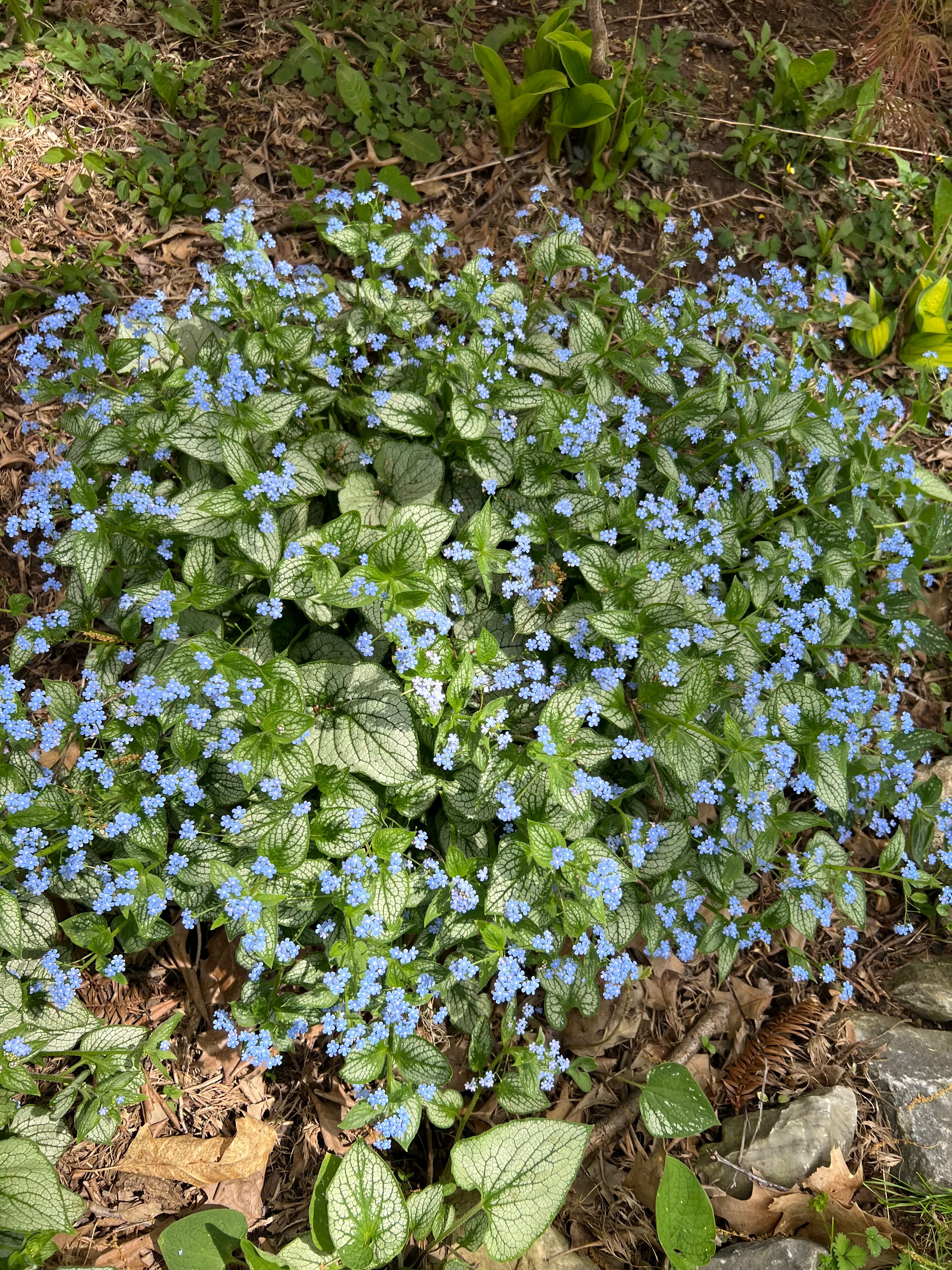
Non-native Siberian bugloss (Brunnera macrophylla) flowers by the house:
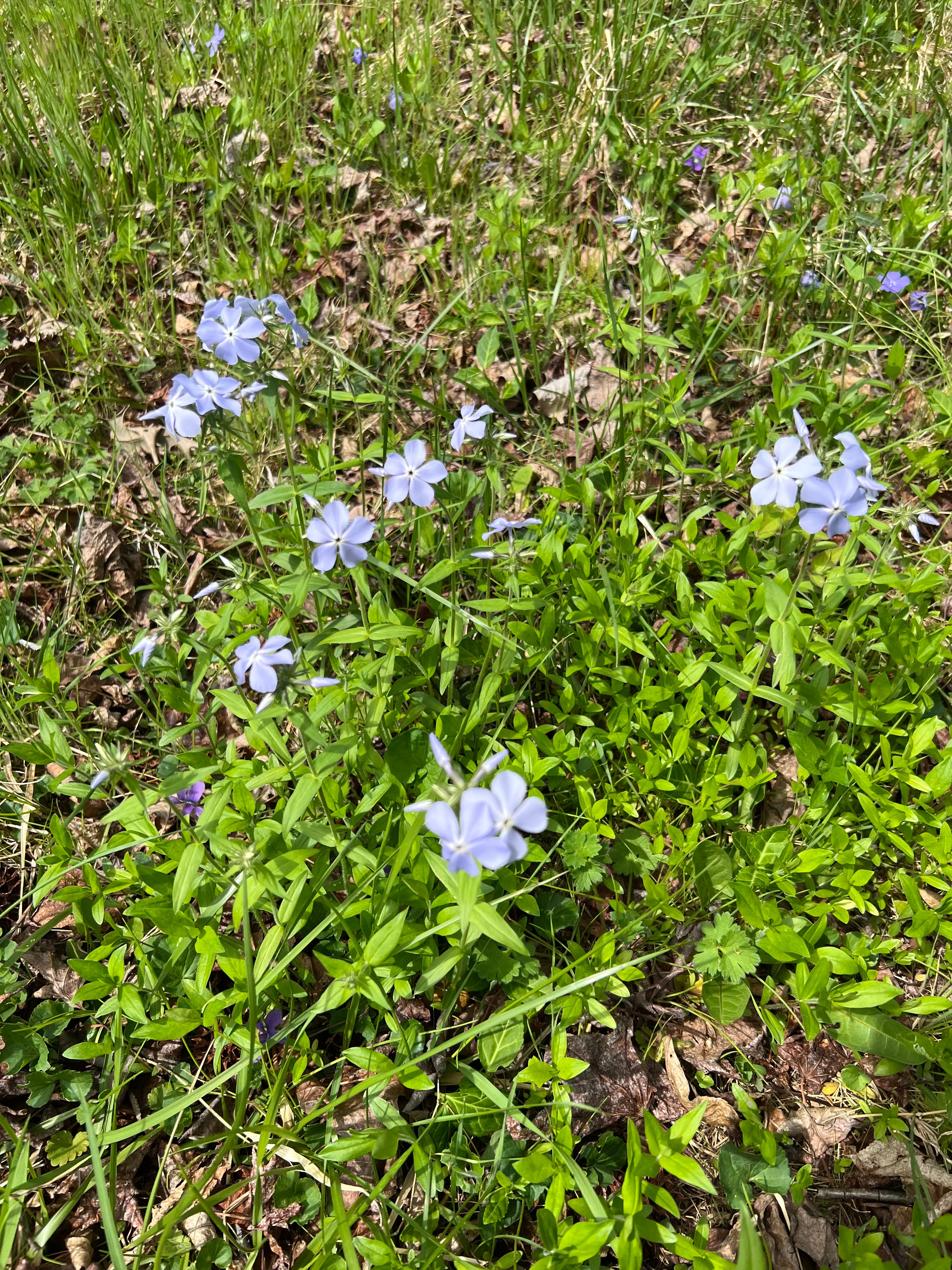
I’m not sure whether this native wild blue phlox (Phlox divaricata) survived the necessary meadow cut a few days after I snapped the photo:
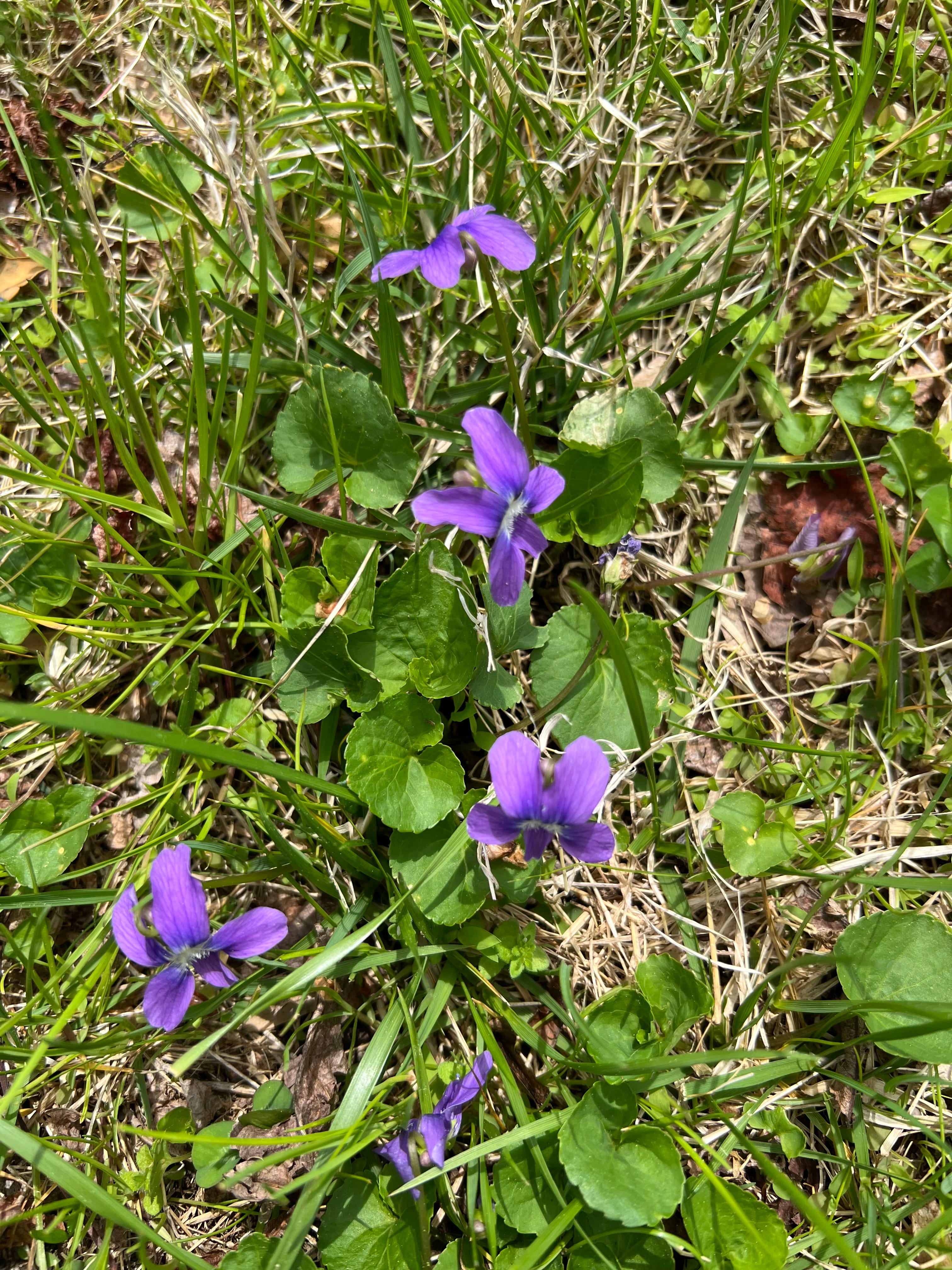
Native wild violets (Viola soraria) flower in the lawn:
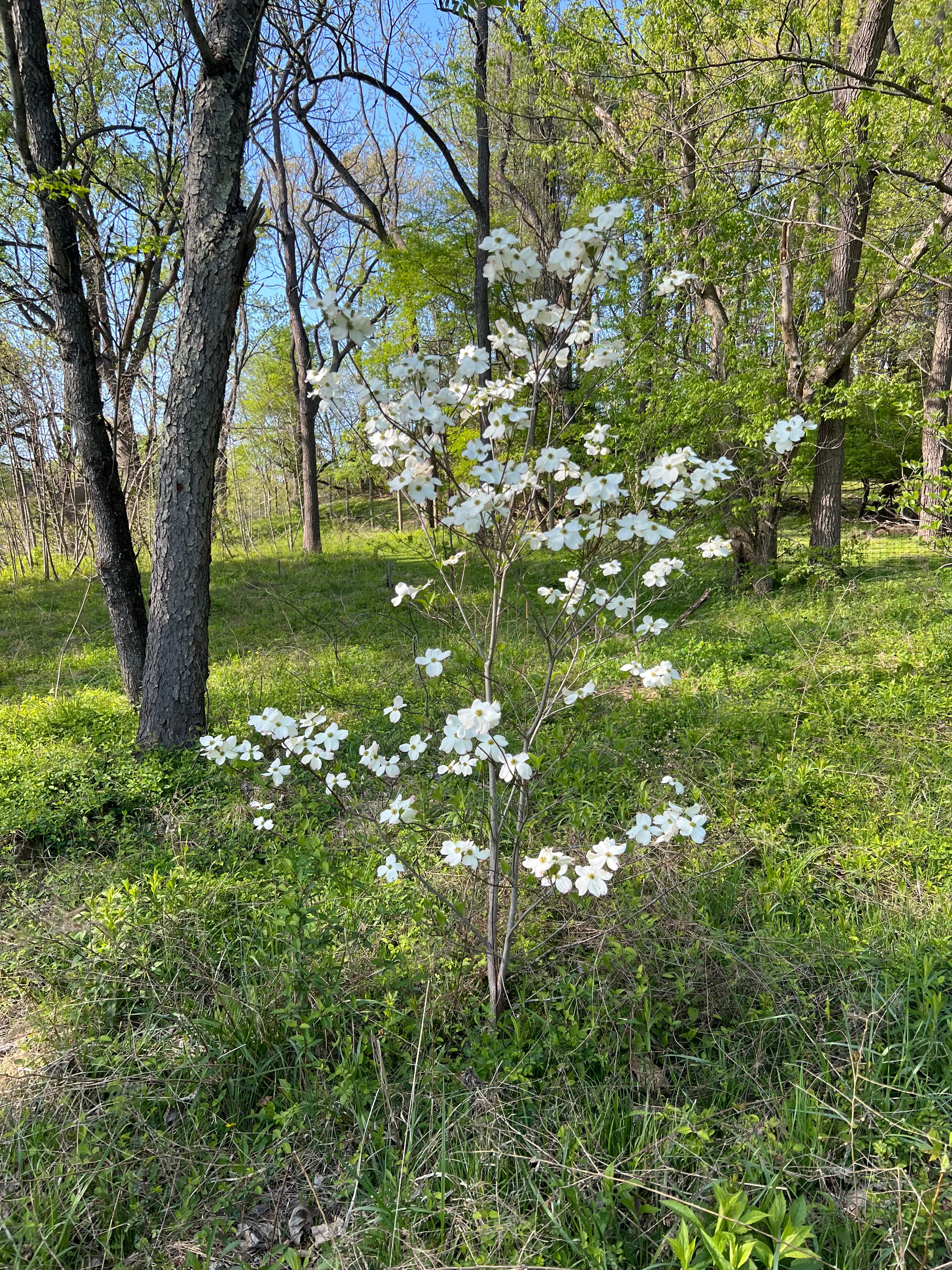
We planted this young native flowering dogwood (Cornus florida) a few years ago in the east woods, and it seems happy:
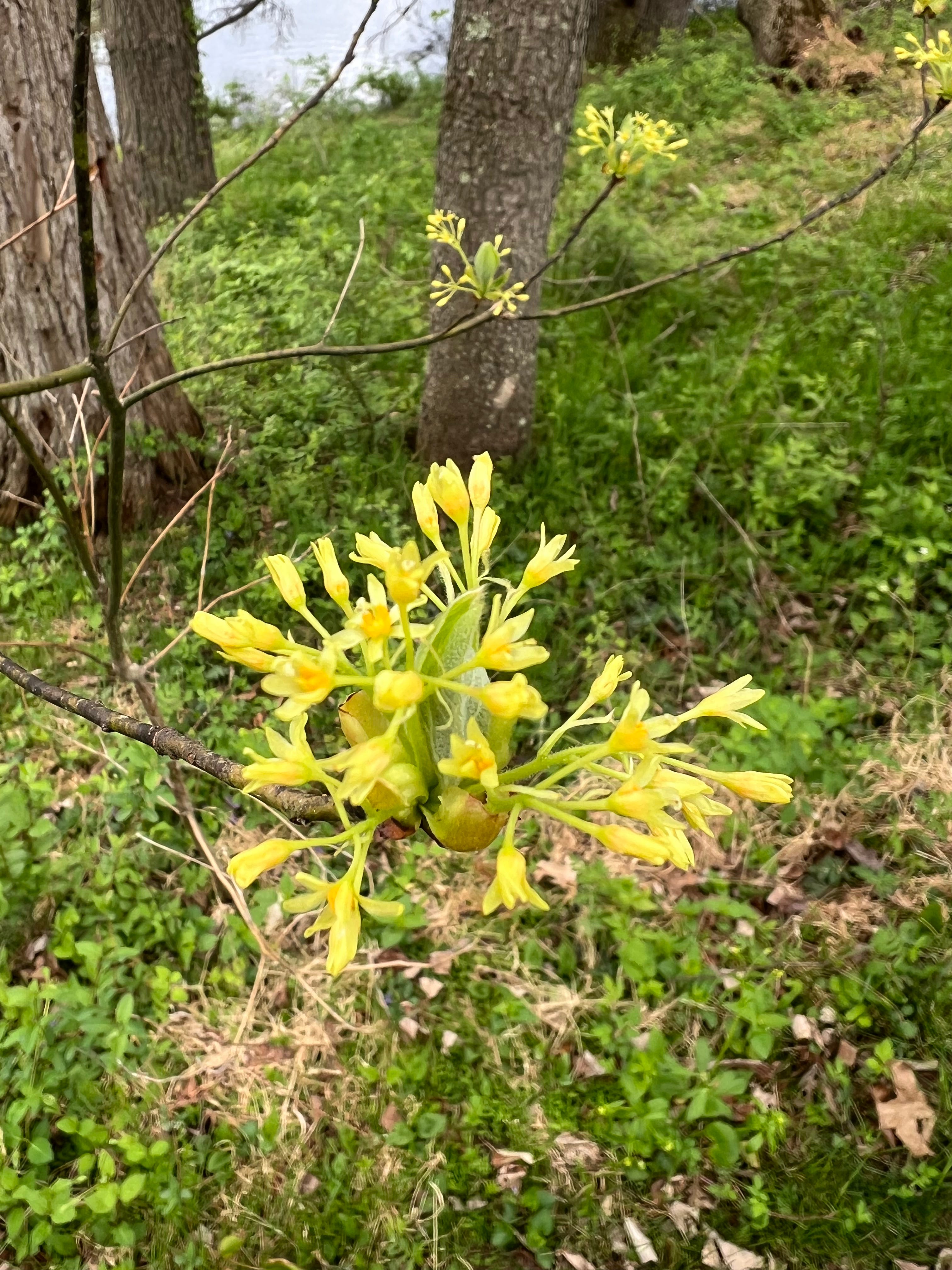
A native sassafras flowers above the big pond:
Comments
Nothing yet. Say the first thing.
Sign in to join the conversation.