
I was sorting through some of my old clips from my days as a reporter for the Portland Press Herald and looking at stories I had written about the Maine city’s police department. They were mixed and varied. But what struck me was that among these yellowing pieces of newsprint were several stories I had written about police misconduct. One officer has been stopped by a police officer in nearby South Portland, was tested for drunk driving and apparently failed. But he wasn’t arrested.
Another officer was involuntarily committed by his superiors to a mental health facility because he was accused of planning a “death squad,” a hit list that included people the officer had tangled with in the line of duty.
Many of the accusations were aired publicly because of open-to-the-public hearings held by a police review commission. There were also lawsuits filed by the officers, court hearings, criminal prosecution of the officer involved in the death squad allegations, and other public forums where the matters were discussed. The newspaper, radio and local television stations covered them all. The death squad officer was fired; eventually convicted of solicitation to murder; and served a prison sentence. The drunk driving matter was handled with a multi-month suspension of the officer who had been stopped and let go, despite failing the sobriety test. All on the public record.
Now, with the precipitous – and dangerous - decline of local news around the country, the watchdogs are gone. Or they are overworked, understaffed and underpaid. Police misconduct is often officially discussed behind closed doors. All of this secrecy has limited the opportunities for members of the public to learn about troubled officers. Even as the Internet has made more information available, when it comes to bad actors in law enforcement, data and documents are often scarce.
The Invisible Institute, a muck-raking non-profit news organization based in Chicago, has set about to change that. Several years ago, and after a long legal battle with the city, Invisible Institute developed a detailed database about every Chicago police officer by name. The database listed misconduct complaints and outcomes; incidents of use of force; awards that the officers received; and salary information.
It was after the work of developing this detailed database about Chicago law enforcement that the Invisible Institute began to think about other places where it could start to develop data about police officers. “We realized every state is tracking some information about officers,” said Sam Stecklow, a journalist at the Invisible Institute who has been laboring over this project for several years with several collaborators.
“We were also seeing that just because an officer shows up in the Chicago database as discharged, they could be somewhere else in the state or across the border,” Sam told me. This eventually led to “Tarnished Brass,” published in conjunction with USAToday.
That project included a database of 30,000 police officers across the country who had been decertified. In some cases, they were investigated for assault, perjury, and felony convictions, and allowed to resign.
The reporting also sparked subsequent work by the Invisible Institute and several partners to build what may turn out to be an even more significant database – about “wandering officers.”
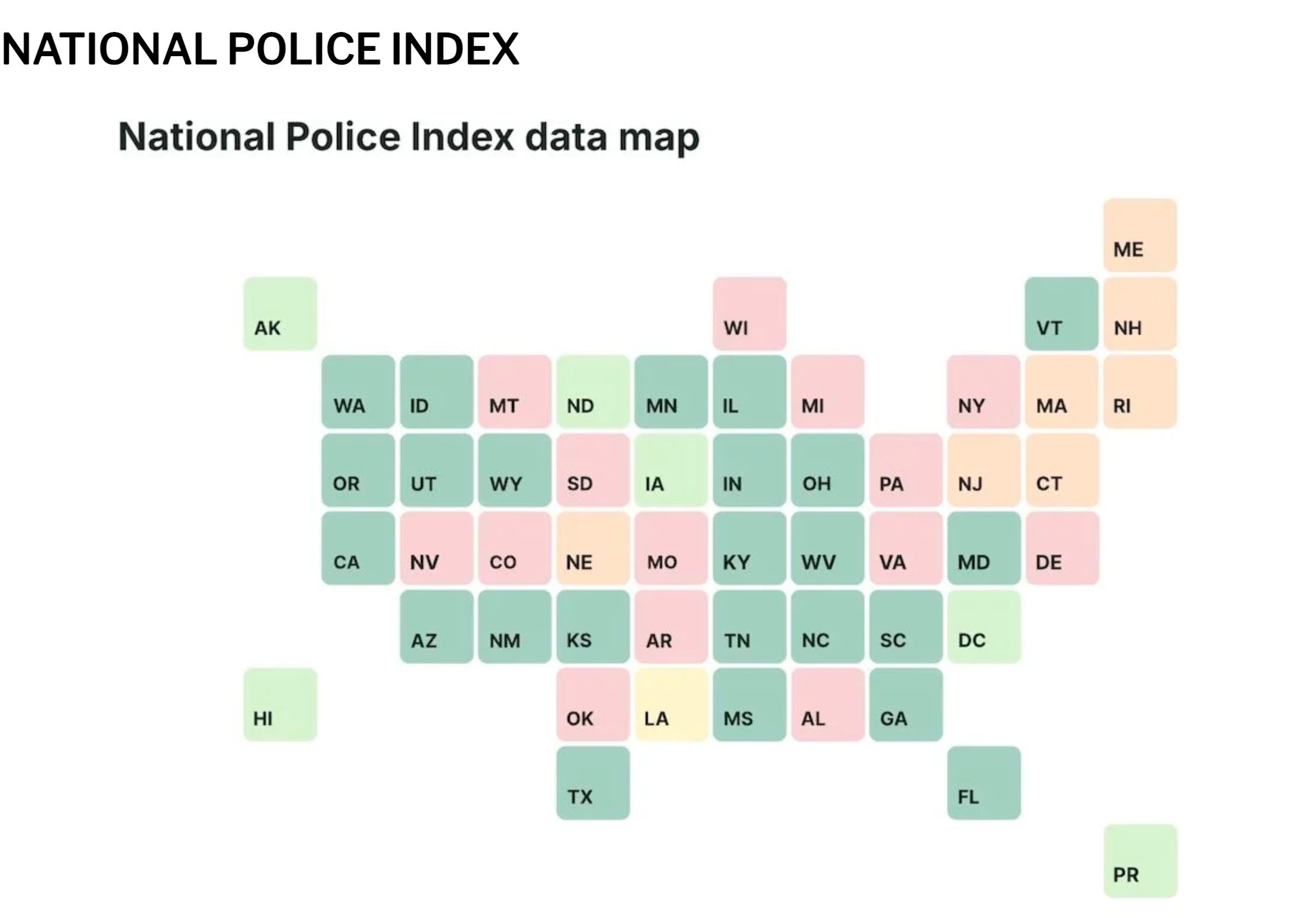
That collection of data is all about officers who have not lost their certification but were fired or resigned and yet were able to get hired at another law enforcement agency. So far, the database includes information about officers from 24 states and is likely to total 27 by year’s end, Sam said.

You can look at the database here.
Some states have resisted providing the data to Sam and his many colleagues – and that has led to several lawsuits. Among the states resisting are Alabama, New York, Oklahoma, and Pennsylvania. The Colorado Supreme Court has decided that the state does not have to provide the data. If you click on the database, state-by-state, you can get more details about who is supplying the data and who is not.
So why is this information being kept secret?
Some states have expressed concern that revealing names of officers, their employment records, and their complaint history could expose the names of undercover officers. But since undercover officers usually work under pseudonyms, that argument is weak.
Others have said that police officers are often the victim of unfair complaints filed by angry residents whom they had encountered, and that listing all those complaints could unfairly tarnish an officer.
Chris Burbank, who spent his entire career with the Salt Lake City Police Department, and retired 10 years ago after serving as police chief, said the issue of wandering officers is a widespread and national problem. “This is a big deal,” he told me. When he was hiring officers, he would ask them to sign a waiver to give him access to their work history if they were coming from states that were unwilling to provide it. And if the prospective officer refused, Chris would not proceed with the job interview.
Another way to address the issue of tracking wandering officers is to establish national standards for policing, such as a uniform agreement on when deadly force is acceptable – and when it is not, Chris said. That would mean that if you were accused of misusing deadly force in one state, and found to have done so incorrectly, the next possible employer would know exactly what that means. And as for anyone who has been shown to have been lying on the job, that’s a no-brainer.
Officers who aren’t truthful should not be allowed to stay on the police force, Chris said.
“I believe police should be held to a higher standard. It is an unfair standard, and I am going to stand by that.”
If you want to read more about state and local secrecy and the harm it inflicts on communities, my publisher The New Press is offering a 30 percent discount on my book Backroom Deals in Our Backyards: How Government Secrecy Harms Our Communities and the Local Heroes Fighting Back. You can order it here and use coupon code Backroom30.
No posts
Comments
Nothing yet. Say the first thing.
Sign in to join the conversation.