
Mountains or beaches? It’s a question I wrestle with every time travel comes up. Social media has only sharpened the debate. I still don’t have an answer and perhaps I never will. But somewhere between scrolling and deliberating, a thought crept in my mind - why not give a third natural wonder a chance? The desert is not as immediately seductive as the other two. But it was time to clear the myths and step into the mystery.
The Thar Desert, also known as the Great Indian Desert, became the door that led me to Jaisalmer. As I sat researching, the Golden City pulled me in. History, architecture, food, adventure - it ticked every box I had. I like to grow a little with every new place I visit.
The internet gave me enough to piece together an itinerary. The rest, I left to chance - that’s where the memorable moments usually live. Jaisalmer truly comes alive in winter. I skipped the December peak, when the city turns into a swarm of tourists buzzing around every monument, and chose mid-January instead. The weather had settled. The crowd had thinned. This was it. Khamma Ghani, Jaisalmer!
The golden tinge begins the moment I land at Jaisalmer Airport - in the light, the stone, the dust in the air.
The airport operates a taxi union, and unlike most cities, cabs here can only be booked through them. It feels like arm-twisting at first, until you realise the flip side: fixed fares, no haggling, no inflated rates for out-of-towners.
That said, INR 840/- for a 10–15 km ride to the city is a stretch. I could walk to the main road and find other options, but I eventually cave in.
Mukesh, my driver, tells me it is a thirty-minute ride to the hotel. The temperature is unusually warm - nothing like the biting Delhi cold I’d left behind just a couple of hours ago, as if someone has quietly flipped a weather switch. We get talking and Mukesh turns out to be as happy for the conversation as I am.
Tourism, he explains, is the backbone of Jaisalmer’s economy. And tourism here is at the mercy of the weather. A 4–5 month window is all they get before the sun and the heatwaves reclaim the city. Every rupee earned in that narrow season has to count.
It is a useful thing to hear early.
I check in, drop my bags, and head straight to Jaisalmer Fort.
I had planned to hire a scooty for local travel, but the hotel owner talks me out of it. His advise is that most places are walkable, and for anything farther, a three-wheeler would do just fine. The fort is a fifteen-minute walk away from my hotel.
Jaisalmer Fort is India’s only living fort. It doesn’t just stand there as a monument to the past - it breathes. Shops, hotels, homes, and temples all coexist within its ancient walls. It never fully closes, except for the Palace Museum.
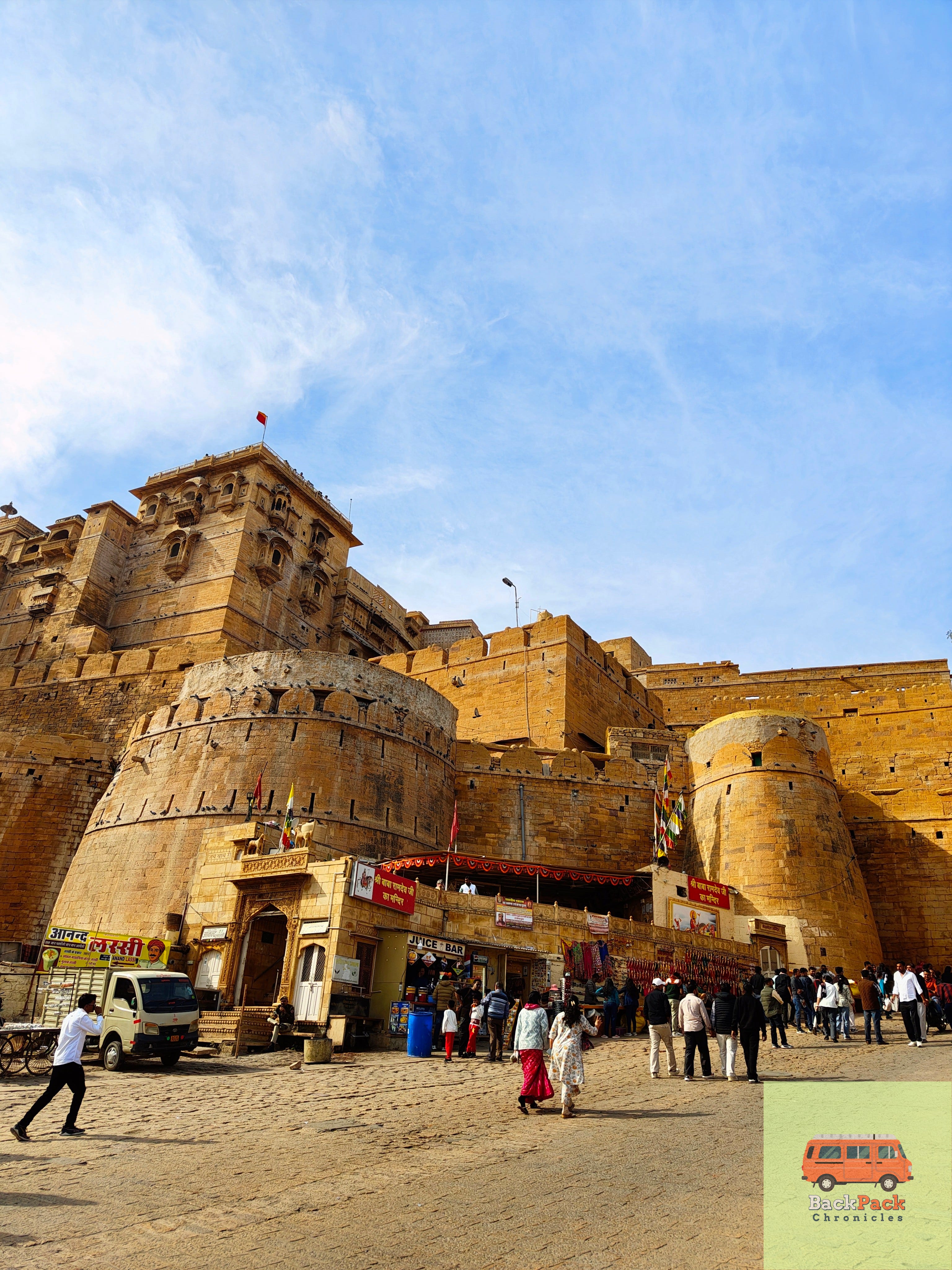
The sheer scale of it stops you in your tracks. Even before you know its story, the fort draws you in on its own terms - its golden walls rising against the blue sky, the narrow lanes folding into one another, the air thick with something older than anything you can name.
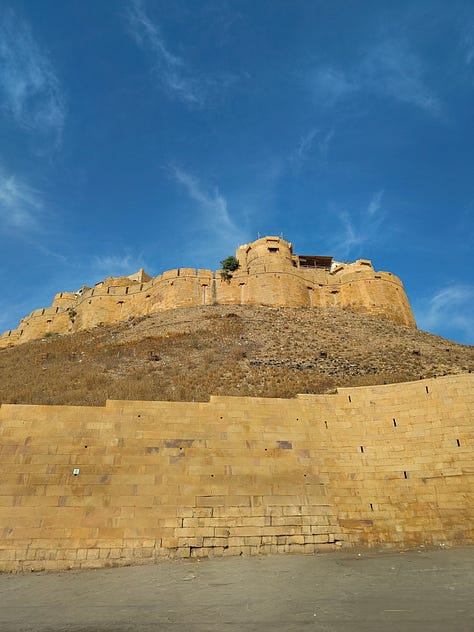
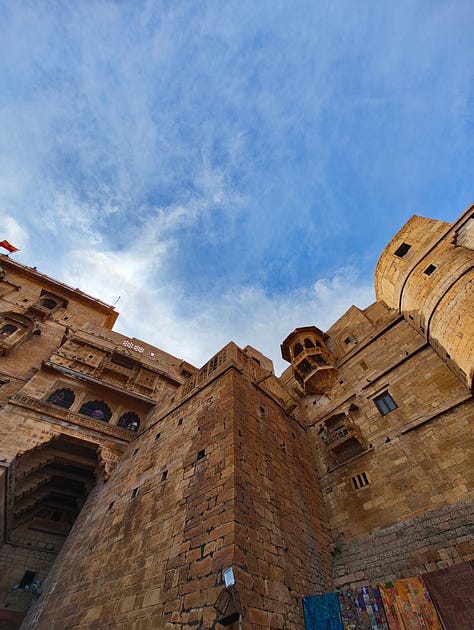
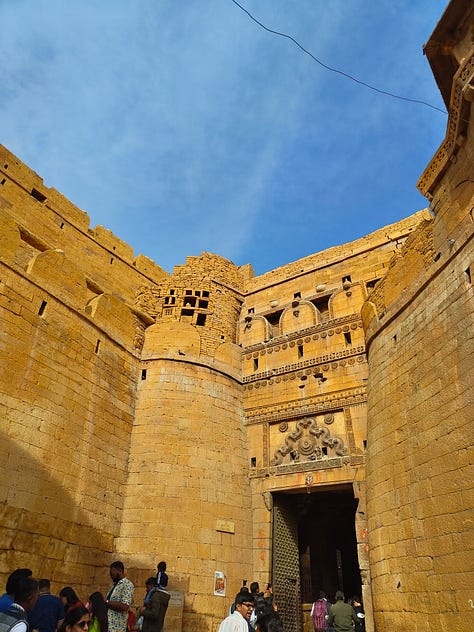
The Fort has four gates: Akhai Pol, Suraj Pol, Ganesh Pol, and Hawa Pol. Each was designed with a specific purpose. Hawa Pol, for instance, was built to channel the wind and it works, offering a rare and welcome coolness even on warm days.
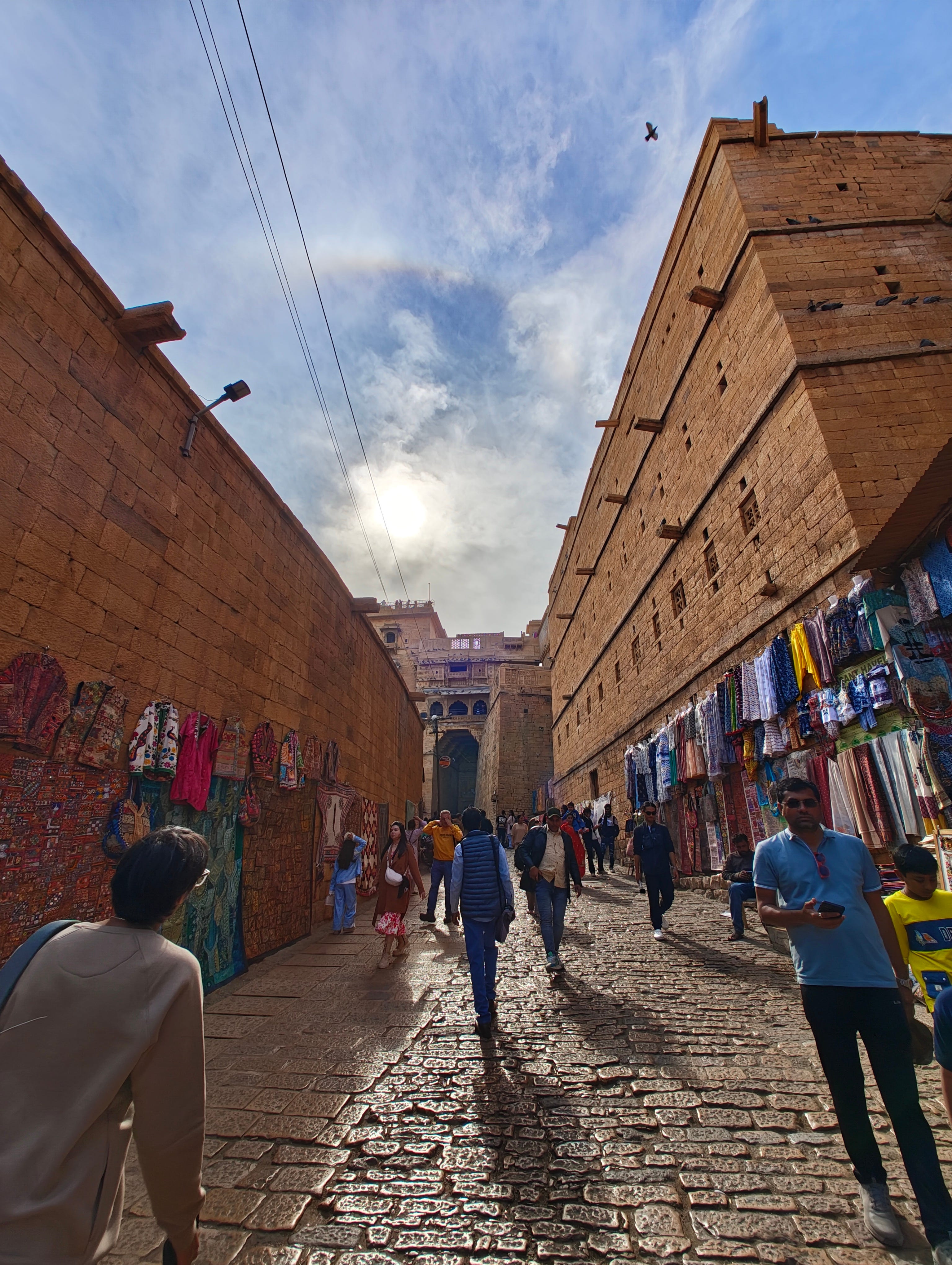
The entrance to Fort, labelled as Akhai Pol, is lively, lined with souvenir stalls and filled with the sound of Rajasthani folk singers. Their raw, unhurried music sets the tone before you’ve even stepped inside. Threading through narrow lanes and dodging the occasional motorbike, I make my way to the ticket counter for the Palace Museum - INR 200 for Indian nationals, and well worth it.
Having a guide is helpful here. History doesn’t announce itself; it needs someone to coax it out of the stonework. I make my way through low corridors and uneven stairs, catching glimpses of an era that feels both distant and oddly close. The highest point of the fort opens up to a sprawling view of the city - blue sky, strong wind and rooftops stretching out in every direction. The crowd is thick, and I find myself wishing, at moments, for just a sliver of silence.
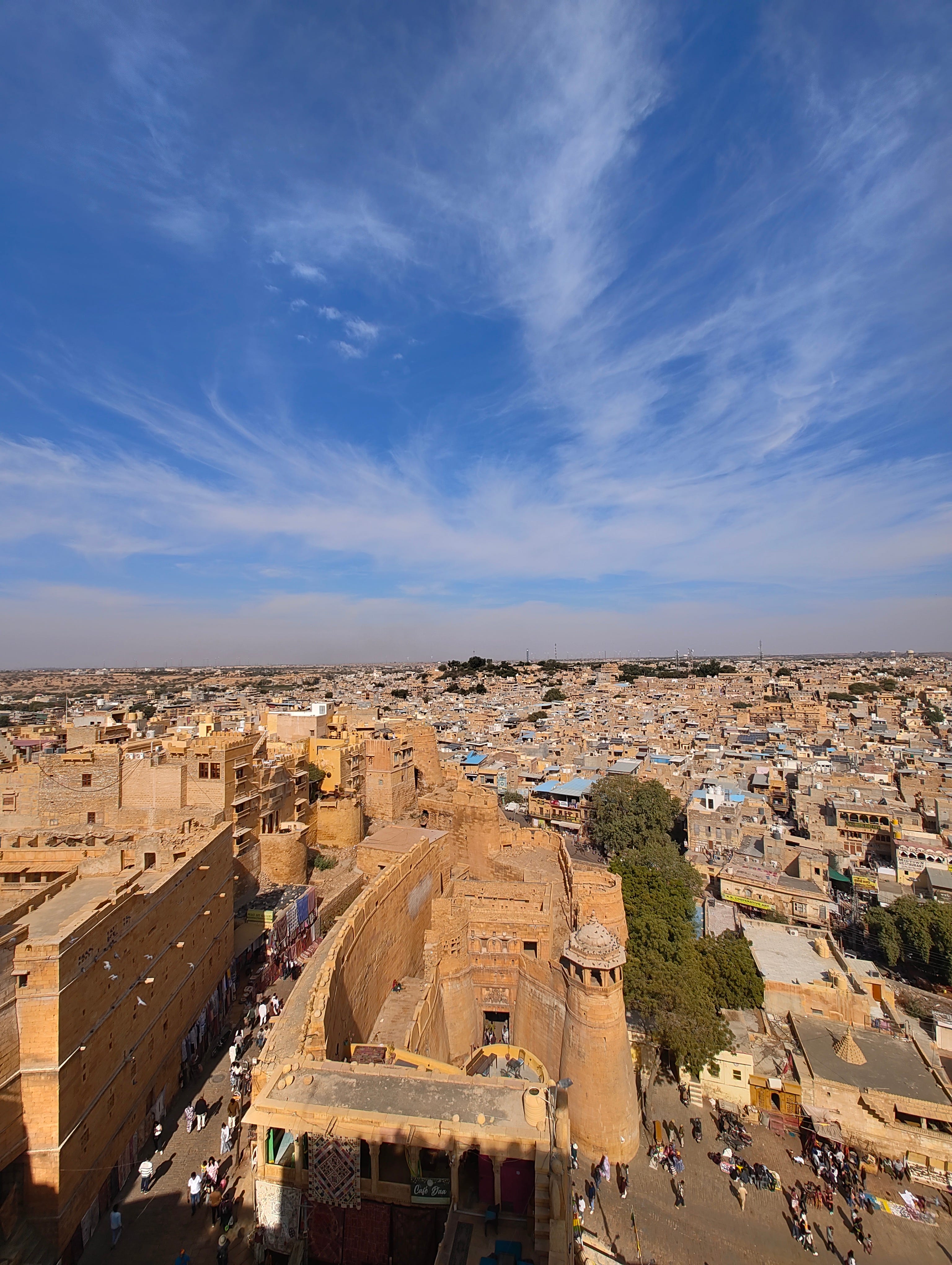
There is no exact time that is sufficient to explore the Fort properly. I decide to take a break and come back later to visit the Jain Temples situated within the Fort Complex.
By the time I finish at the fort, I realize I haven’t eaten all day.
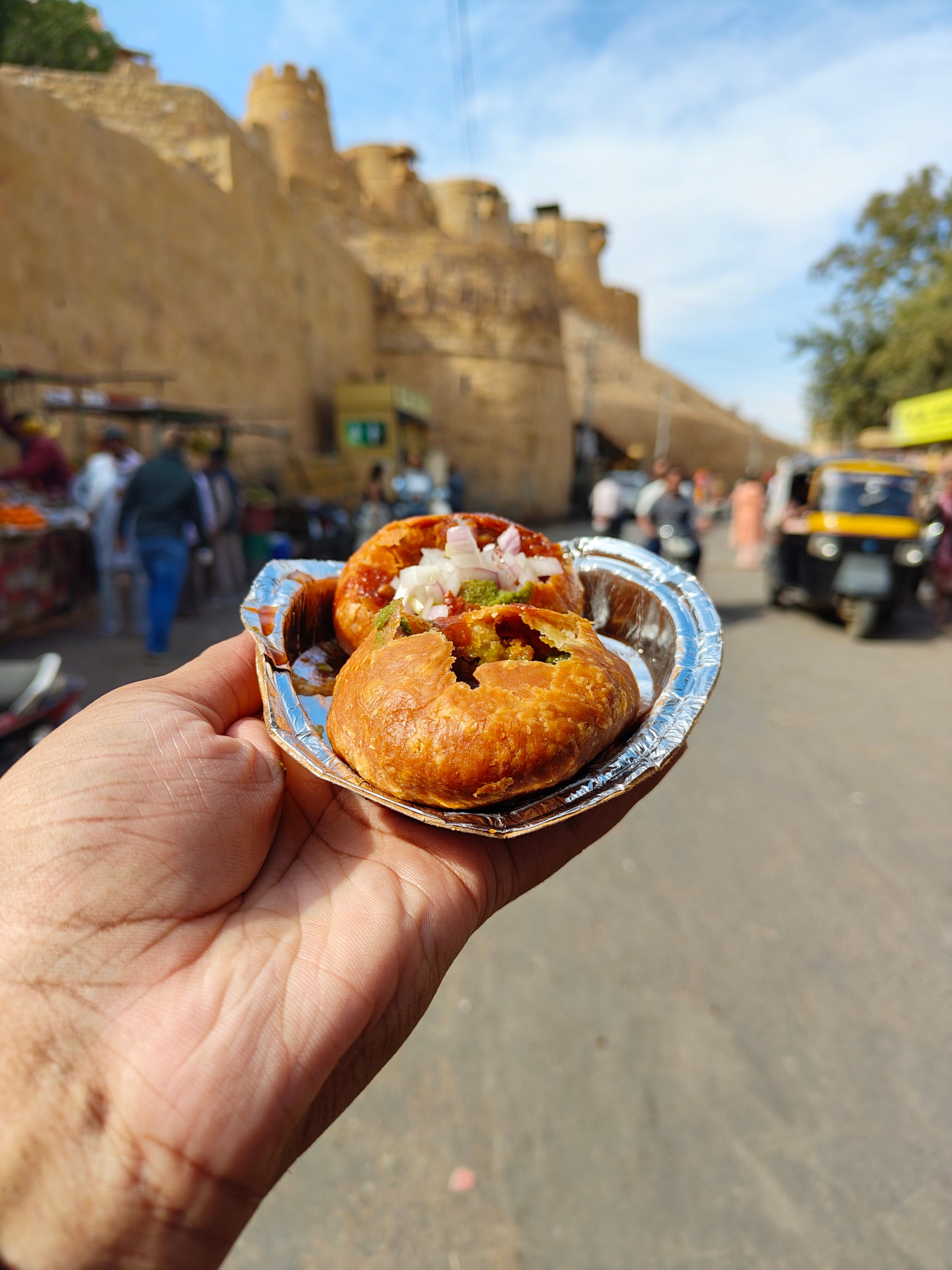
I know exactly where I want to go. I go looking for Fateh Kachori - tucked into a corner of a lane near the fort, easy to miss if you don’t know to look for it. A small cart sits beside the Dr. Bhang shop, and on most days, there’s a 30–40 minute queue. I was lucky; I got mine in reasonable quick time.
The kachoris have a distinctly Rajasthani character - not bland, not aggressive, but layered. The tangy note is what sets them apart. Served with red and green chutney and a few green chillies, they are among the best I’ve had anywhere. A plate of two cost thirty-five rupees, a bargain in today’s time. The owner tells me I can pay only if I like them. It isn’t a marketing tactic. It is quiet confidence in something they had been making for years.
I wash it all down with a lassi from the Dr. Bhang shop. The non-adulterated version, as they call it, is cool and thick and exactly what the afternoon calls for. Street food in Jaisalmer, I am quickly learning, is not just delicious but also generous.
The sun is relentless, though, and my feet are beginning to remind me they exist. I head back to the hotel for a few hours of rest.
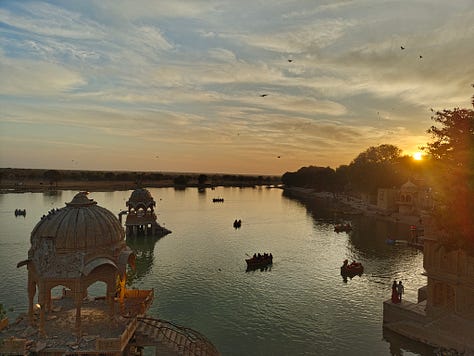
The evening arrives cooler and calmer. I walk over to Gadisar Lake, barely a kilometre from the fort. There’s no entry fee, though boating is paid. The Indira Gandhi Canal feeds the lake year-round, keeping it full even as the desert stretches out around it.
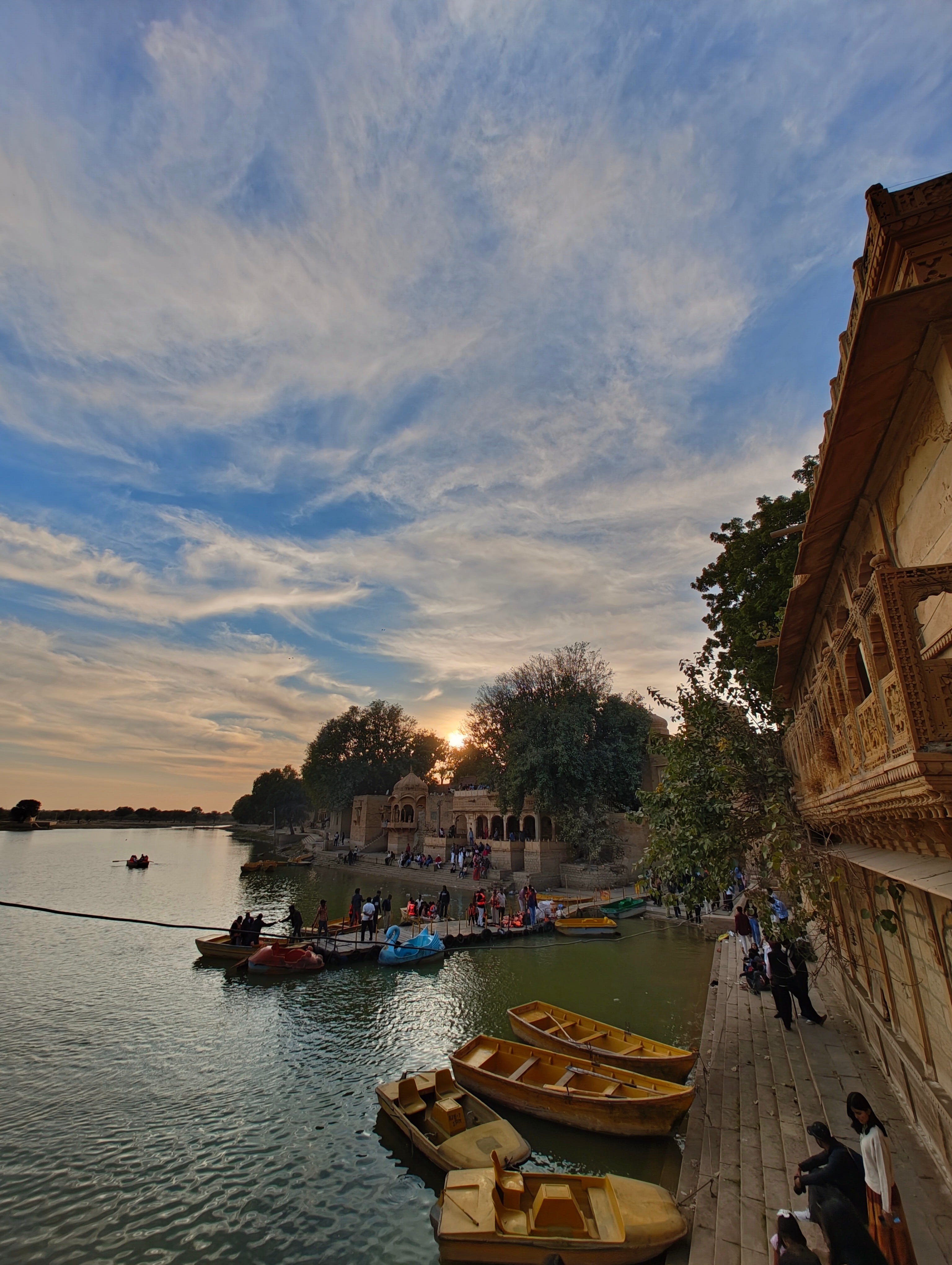
The road leading up to the lake is lined with food stalls and carts, giving it the feel of a noisy picnic spot. The edges of the lake are a little untidy. I skip the boat ride and settle instead for the sunset.
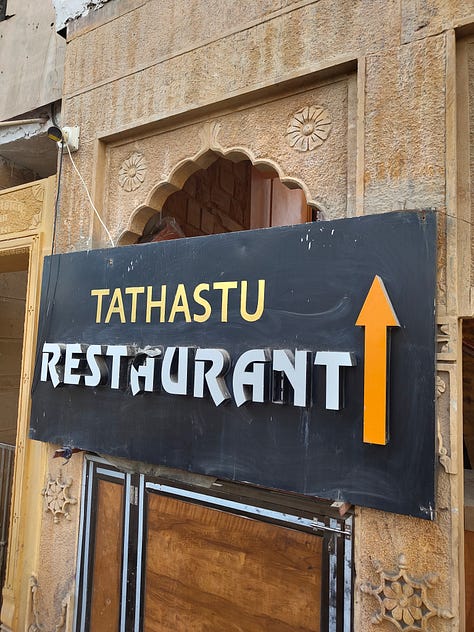
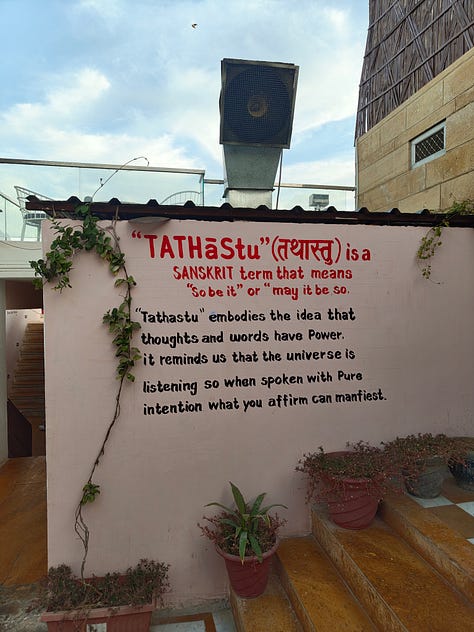
The view is extraordinary. To top it further, I go to Tathastu Cafe - which sits above the lake with sweeping views and a relaxed, unhurried atmosphere. The food is nice but slightly on the pricier side. But with the sky turning orange and the lake catching the last of the light, I am not thinking about either.
I stay until dark, hoping to catch a musical performance at the lakeside. But on my way, I am told it has been cancelled today due to technical difficulties. Just one of those things. I have my dinner planned at Kaku the Cafe and instead decide to head there.
Kaku the Café is about twenty minutes from the lake, on the edge of the city rather than within it. I have to admit that despite being popular, it is not the most easiest place to find. And not the most vibrantly situated as well.
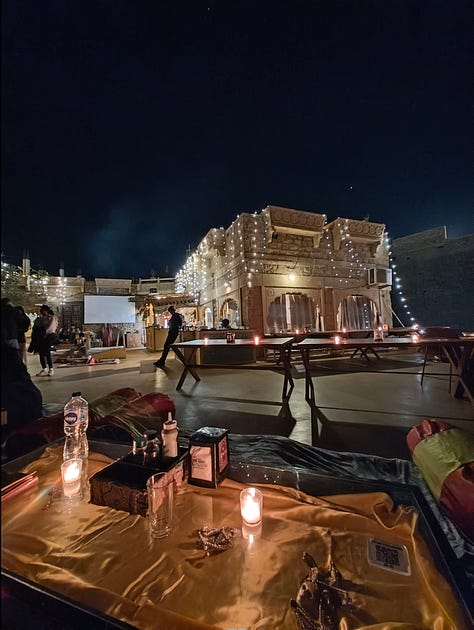
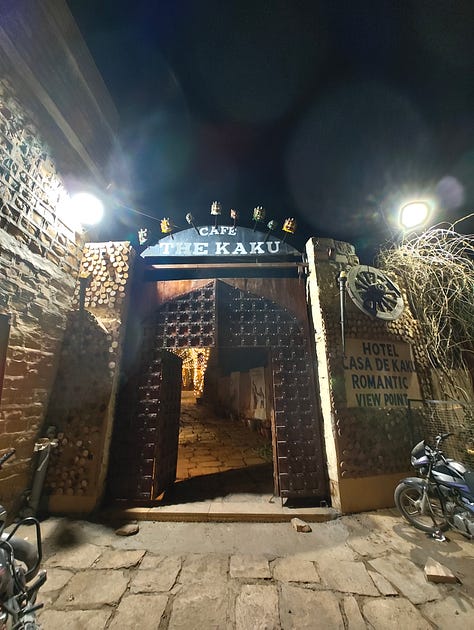
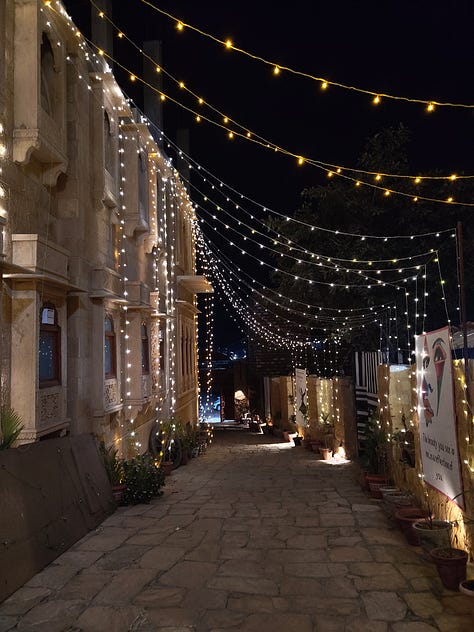
But once you arrive, the setting does all the talking. The Jaisalmer Fort glows across the skyline, illuminated and immense, and it becomes the most extraordinary backdrop for a meal. The food is wonderful and I particularly enjoy the Lassi, which I have been gulping down at an alarming pace since the morning. The Rajasthani Thali here is good if you wish to give the cuisine a try.
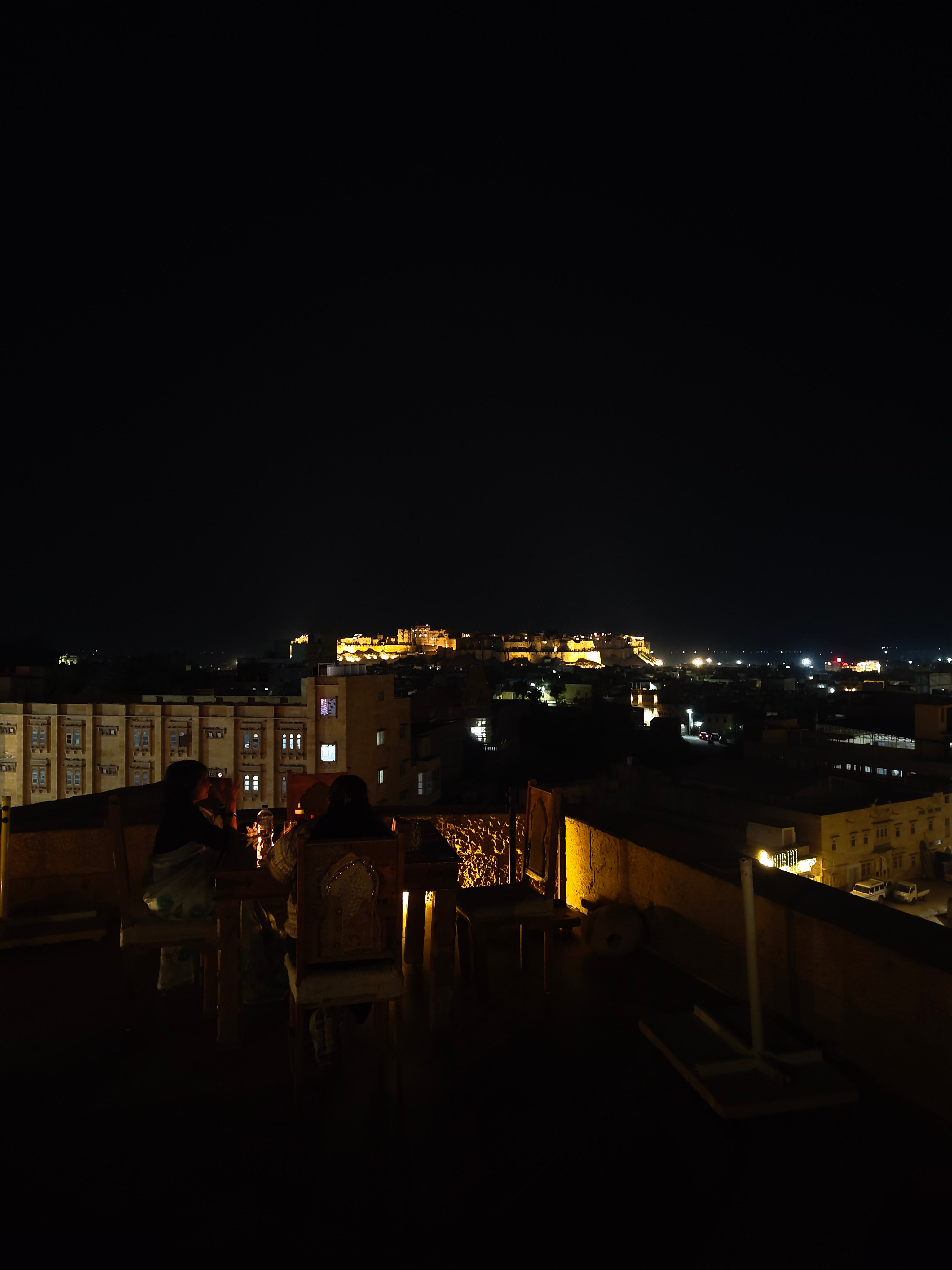
Back at the hotel, lying on the bed in the dark, I found myself replaying the day. A fort that made history feel immediate. A cart tucked in a lane serving kachoris with quiet pride. A lake turning gold at dusk. Conversations with strangers who had no reason to be warm but were. A dinner with a glowing fort for company.
In a single day, I had eaten well, listened to folk music in a medieval lane, watched the sun set over a desert lake, and learned a little more about a city - and, in some small way, about myself.
I go to sleep satisfied.
I had no idea what the next day was about to do to that feeling.
In this blog, I introduce you to amazing places and extraordinary people and through stories and photos.
If you enjoy reading and find these stories, itineraries and guides helpful, consider sharing them or subscribing to the blog.
If you enjoyed reading this essay and are keen on reading about travel, food and places, you might also enjoy:
Comments
Nothing yet. Say the first thing.
Sign in to join the conversation.