
I don’t know why I’m publishing such a personal post. Perhaps it’s ill-advised. I was going to use this Substack as a place to just discuss academia, the social sciences, and culture from a more intellectual, less personal perspective—but this post won’t be that. And anyway, I guess I already violated that intention with my couple of posts on hunting and my mental health. But I also wanted to use these photos in an essay at some point.
Still, maybe I’ll delete this later.
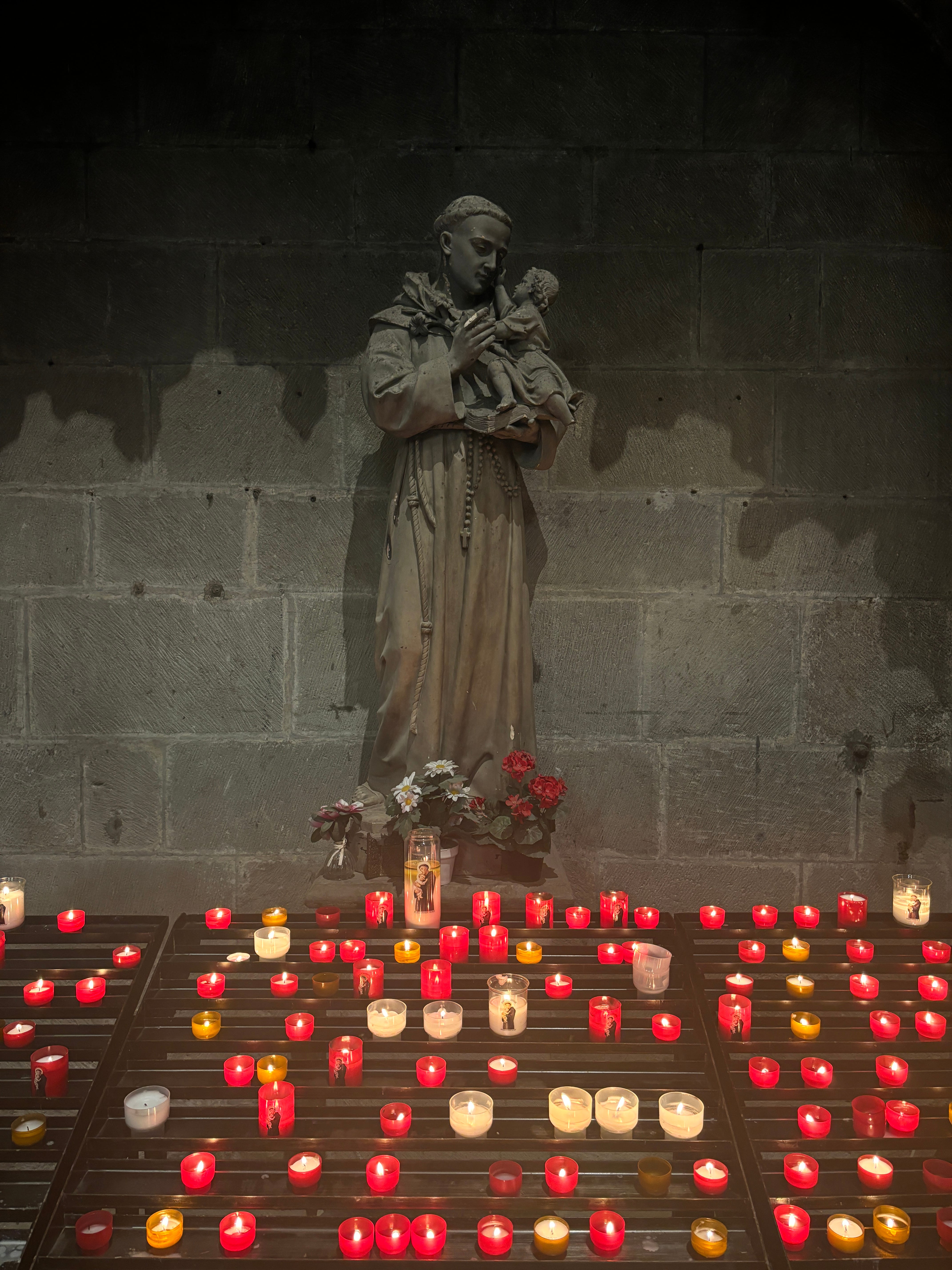
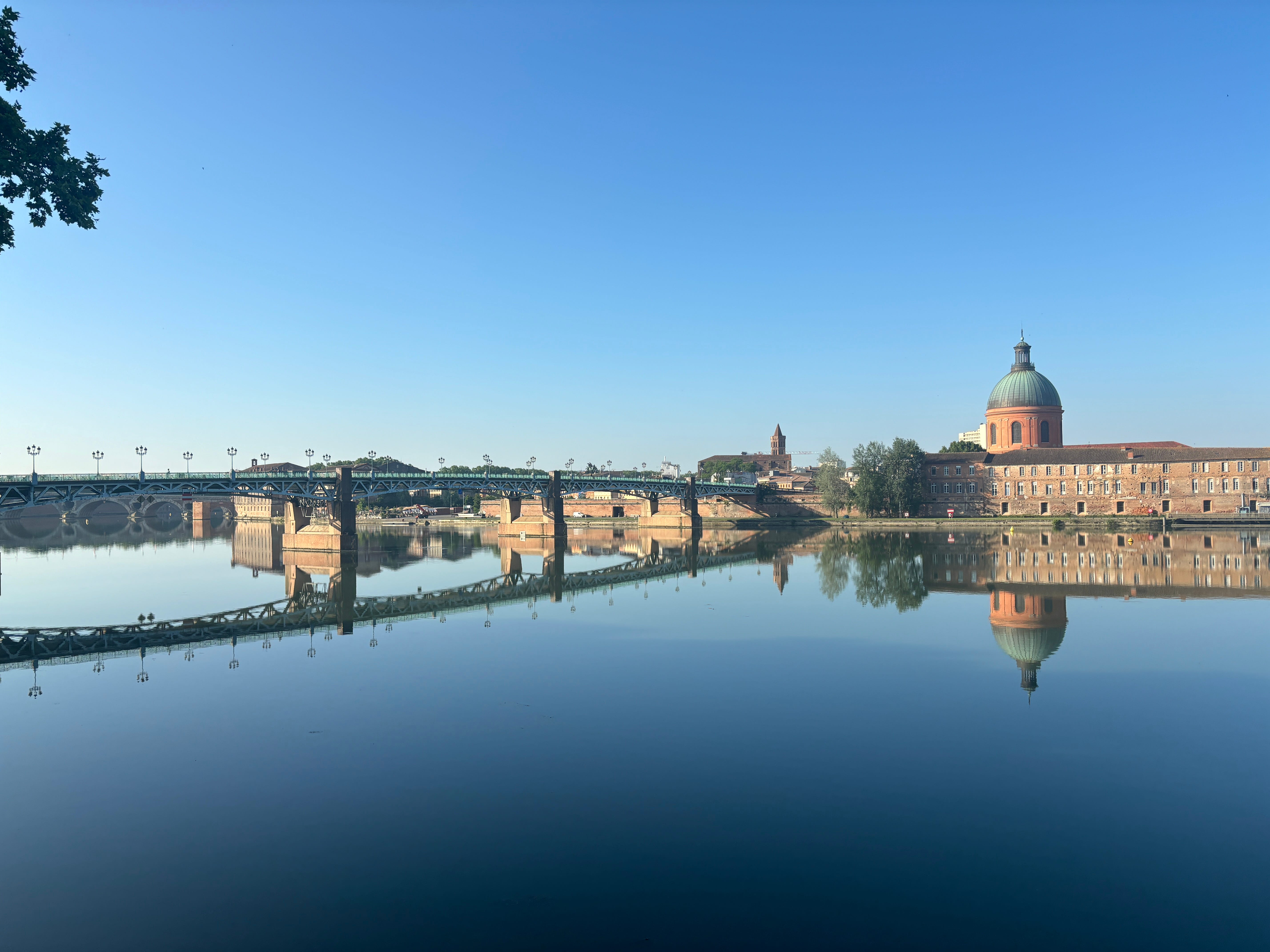
Last year, on the back of a pretty bad depressive episode, I flew to Toulouse, France, to attend a summer school for PhD candidates in the quantitative social sciences. By the time I landed in Paris I had already been moping (to put it lightly) for probably 6 weeks, and this depression—which has been with me, intermittently, for as long as I can remember—had followed me to France.
The summer school was at the Institute for Advanced Study in Toulouse (the IAST), and was quite rigorous. They even had us simple social psychologists and anthropologists doing complex algebra, which went about as well as you’d think. The program had, perhaps, slightly less political-ideological bias than was typical for such programs in the social sciences (perhaps attributable to its quantitative focus)—though there were a few extremely woke students there. They tended to dominate most conversations, making sweeping and intuitively satisfying claims and moral proclamations with little empirical backing (unless you consider a few qualitative studies on, say, ‘restorative justice’ with n = 21 convincing).
The other less vociferous students either agreed with these claims, or they (like me) had major issues with the claims and the validity of the underlying arguments, but they were not willing to stick their necks out. In these settings it’s not worth starting a whole debate and probably spending the rest of the program branded with some scarlet word ending with an “ist”. (In fairness, there were a handful of people there with whom I did become good friends, and who are genuinely great and intellectually honest people, regardless of disagreements we may have).
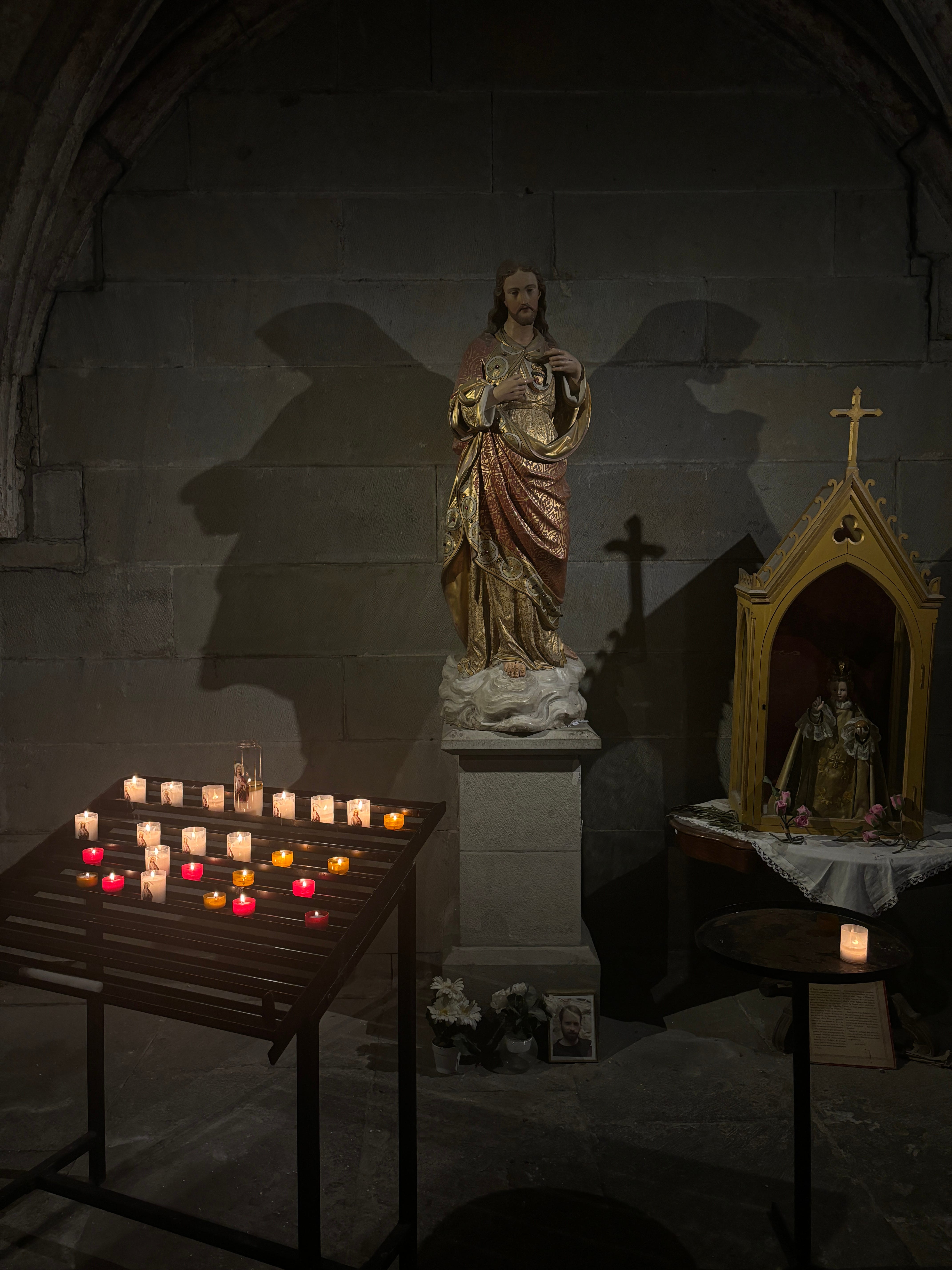
Anyway, I arrived in Toulouse about a week before the program started, and for some reason I felt compelled to spend most of my ‘tourist’ time visiting the many ancient churches peppered throughout the city. I was still depressed. I spent many hours wandering the cracked and flaky pews, staring sadly up into the face of some saint, lighting candles at alters. My original partition from ‘The Church’ (losing my religion in my early teens) was an incredibly painful process that I’m not sure I ever recovered from, and I have a residual affinity for Christian imagery.
One warm evening, while crowds of locals gathered for the nightly summer tradition of drinks and socialization along the banks of the Garonne, I went to see the Orchestre Philharmonia Tolosa and the Choeur Symphonique de Toulouse play Mozart’s Requiem in the Basilique Notre Dame la Daurade. The Basilique is a catholic church with roots in the 5th century as a Roman temple, but which was completed in its modern iteration in the late 19th century. It’s a beautiful, grand, ornate church.
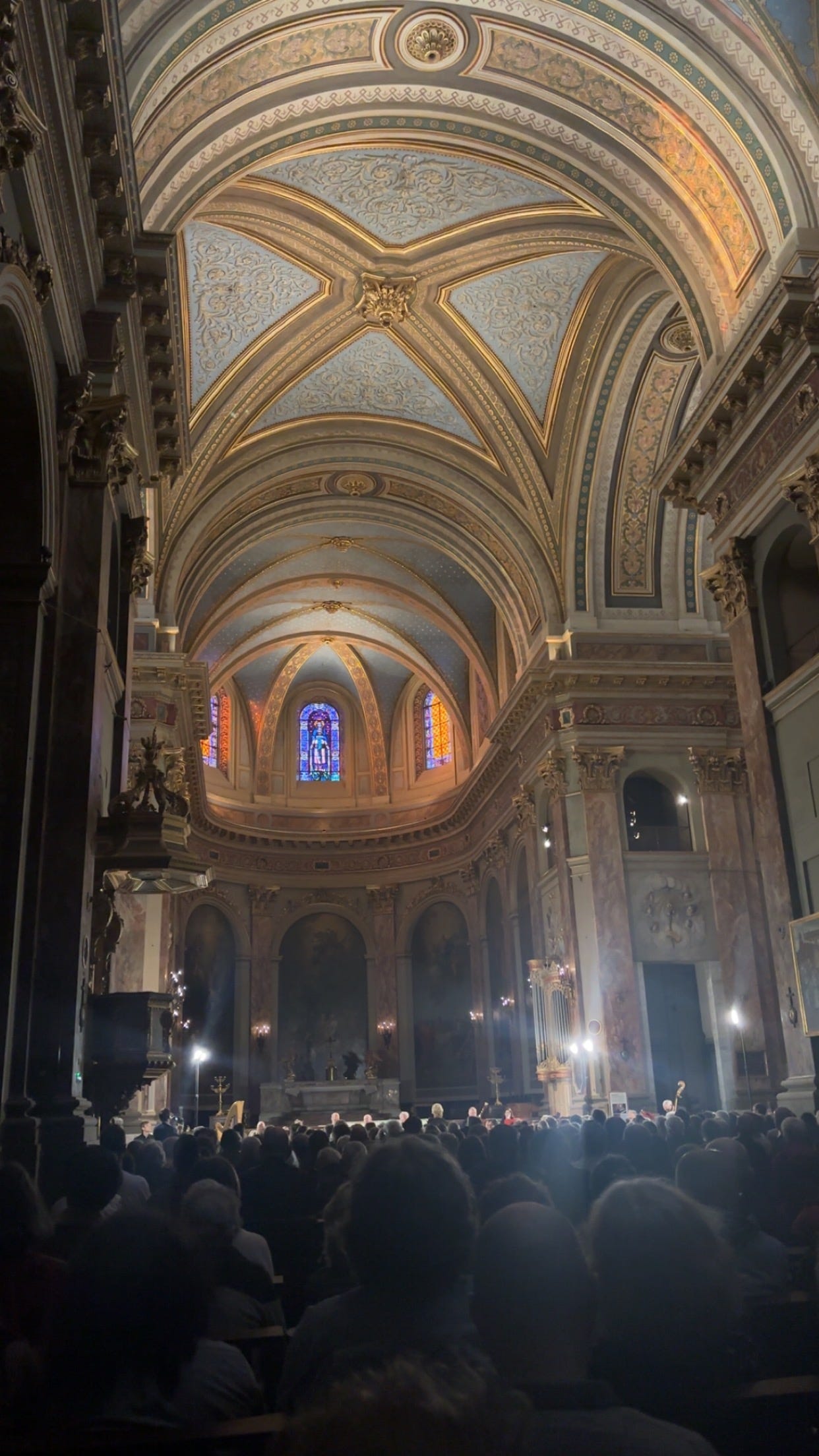
I attended the concert partly in the hopes that I would feel something uplifting and profound. My depressive episode had me feeling vacant and lost and hopeless, and I was hoping that some empty part of me would be touched by the music and the church. The concert was beautiful. The Requiem is a haunting piece, written to accompany a Requiem Mass (a Funeral Mass). It’s a prayer for the repose of the dead.
But about halfway through the concert I was overcome by a sudden, acute sorrow—a nostalgia for something—and my eyes began to run. It was a feeling of phantom limb, a sense of loss, for something I maybe never had and now probably never will.
I felt a strange sadness for all of us in that church. I imagined everyone there felt as I did, that we were hopelessly trying to grasp for something that was long gone… But I was probably just projecting.
I was reminded of a trope from some zombie movies, in which the zombies eventually return to their places of work, standing sadly at their former supermarket counters or at their desks, as if some small part of them remembers that there was something they were supposed to be doing, a role they played. Sitting in the Basilique, this is how I felt. It was as if we were spiritual zombies who had been called there by a vestigial instinct, implicitly knowing there was something we were supposed to be doing, but were not exactly sure what, or how to do it.
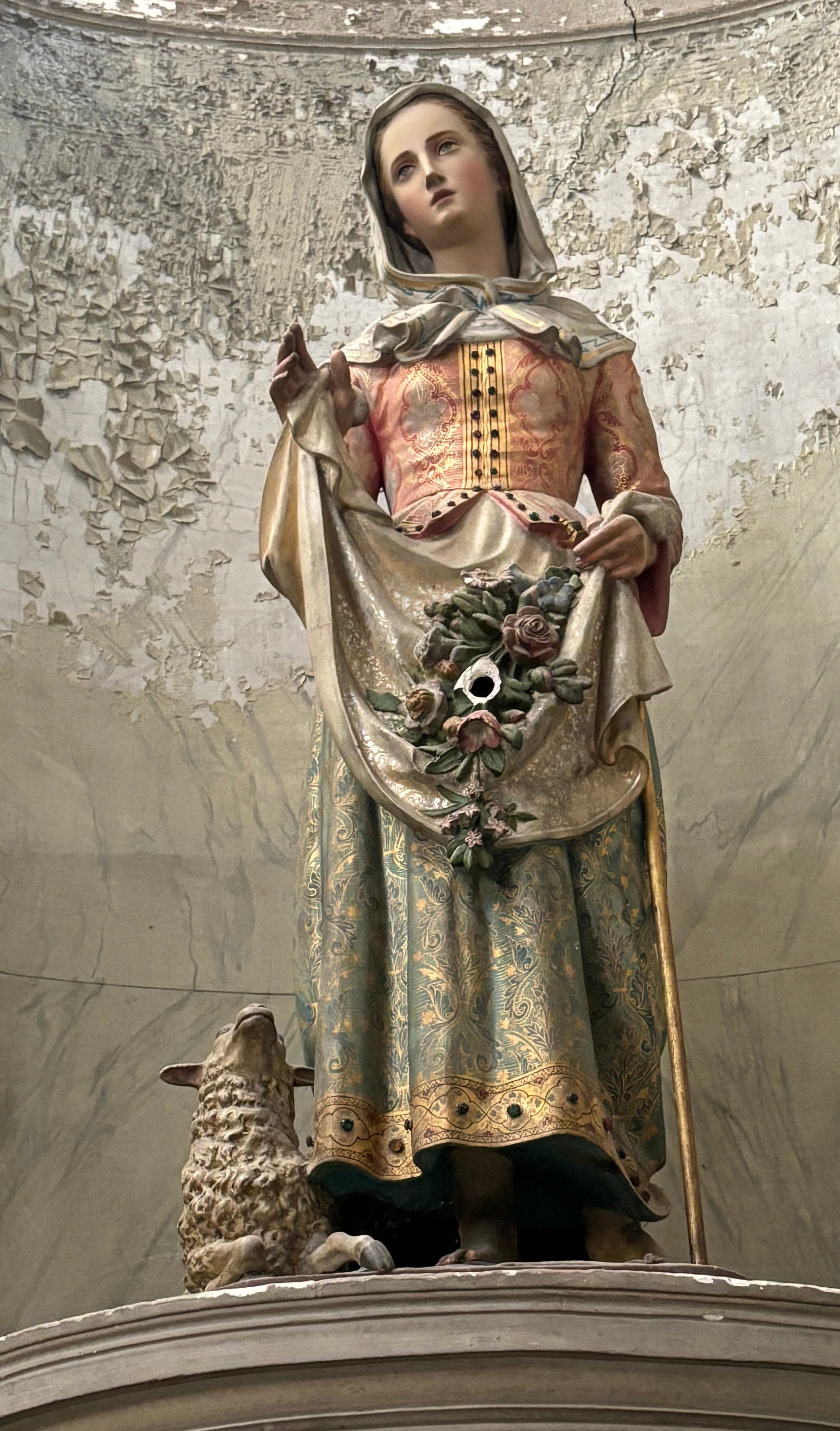
Or I imagined a world where the adults and adolescents had suddenly died or had been raptured away, leaving only the children. I pictured these leftover children, with no other ideas, returning to school and sitting at their desks expectantly, knowing there was something they should be doing, some function or role they were supposed to be performing there, but unsure what it was or why it was so important before.
I sat there in that beautiful church and listened to the concert, quietly half-crying. Realising I was a one-man cargo-cult, showing my airplane to the sky in the hope of some incoming manna. Realising that the music and the setting may never touch me in the way that I hoped it would. Too much had changed.
We in that church were the survivors of some slow meaning-apocalypse, the leftovers, wandering the ruins of a higher culture. Born years too late to truly connect to it, to appreciate it, or to preserve it.
Or maybe I was just projecting.
And maybe it’s not too late.
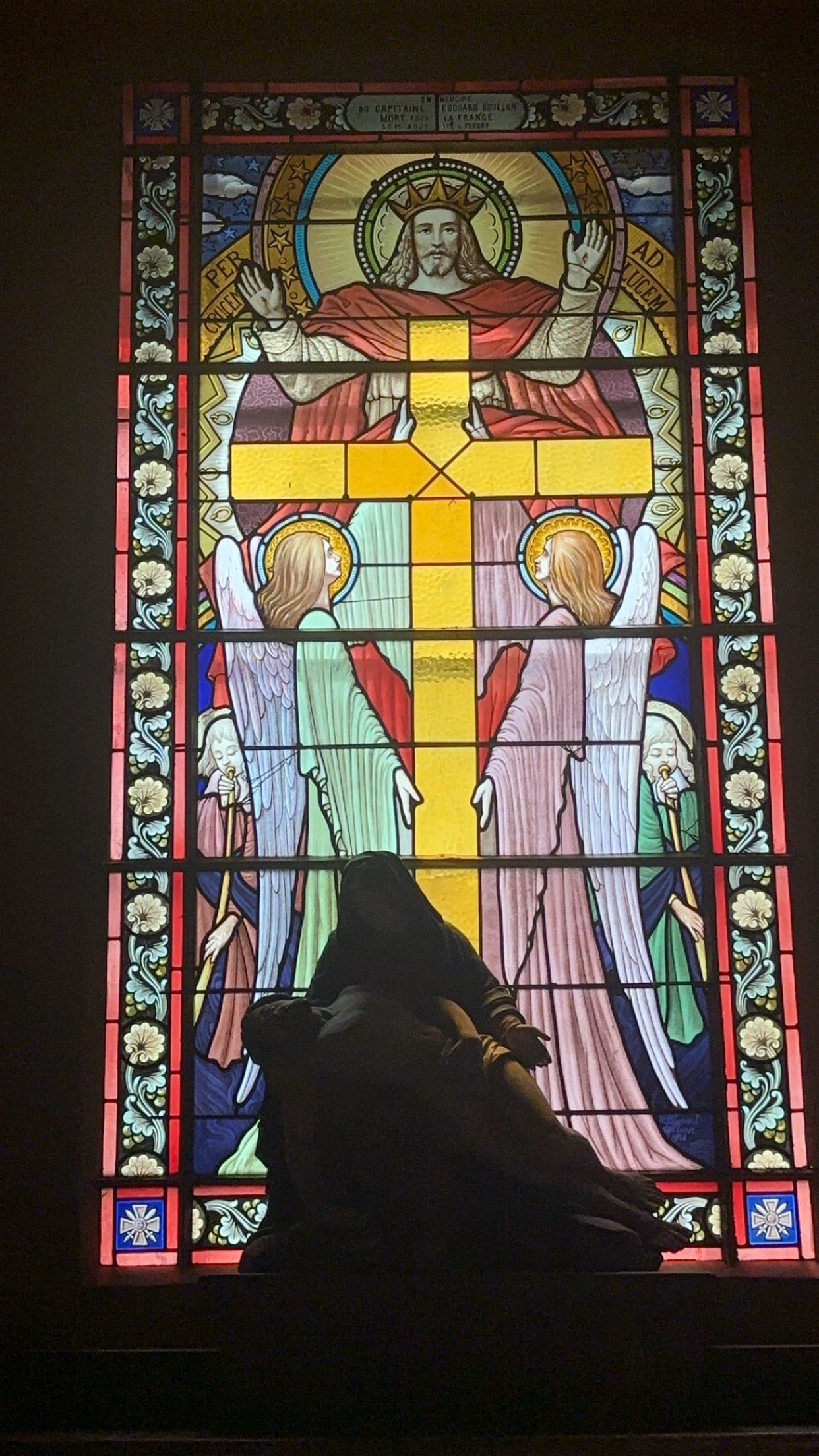
Happy Easter!
Apologies for this too-personal post. However, if you liked it, please “like” it! And subscribe and support my work!
Alternatively, you could always buy me a coffee. Or read further:
Here’s a good old hunting story with some nice photos, to cheer you up:
No posts
Comments
Nothing yet. Say the first thing.
Sign in to join the conversation.