
This is a brief follow up to my last essay:
If you enjoy my writing and are inclined to do so, please subscribe or buy me a coffee!
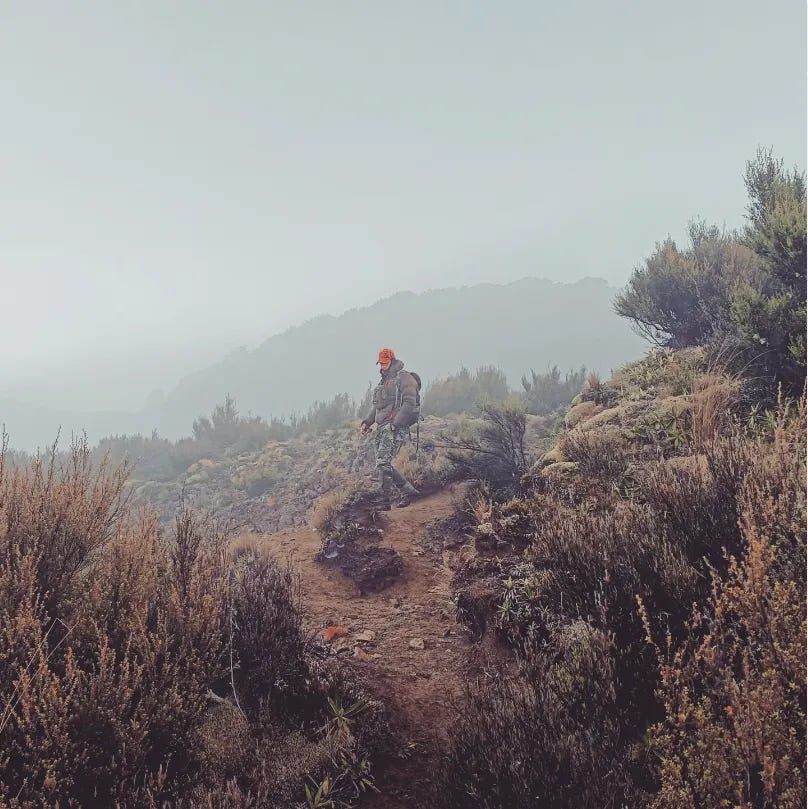
As an outdoorsman and hunter who spends an inordinate amount of time out in nature, actually living in it—watching the animals, eating the animals, drinking from the same streams as the animals, sleeping under the same stars, sleeping on the same earth, and battling the same elements—it’s always strange to see urban and too-online utilitarian philosophers pontificating on the nature of nature.
Bentham’s Bulldog is one of those. He was recently “dunked” on (his words) by another blogger, based on his looks and his apparent physical frailty. While I do think such aesthetic critiques are somewhat silly, there is a point to be made here.
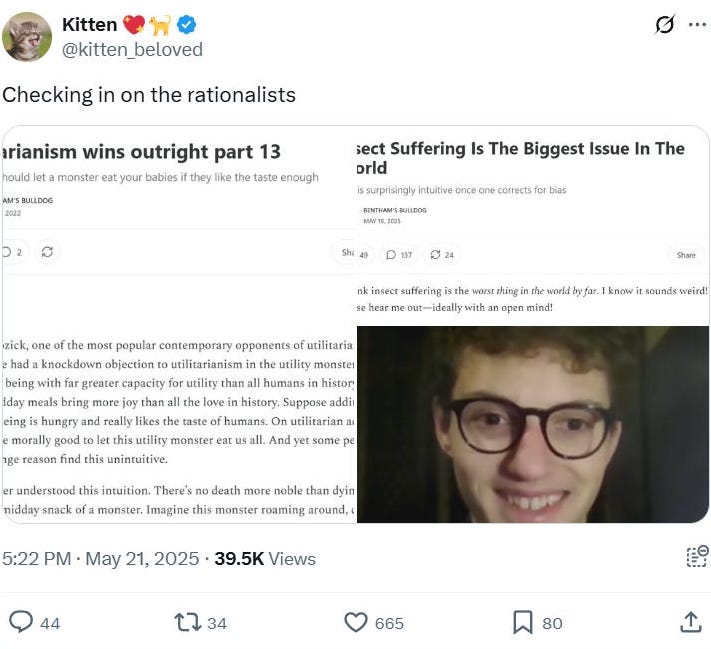
It is not clear to me that assertions about nature from people like Bentham’s Bulldog—that life in nature is “hellish” and that there is a perpetual unheard chorus of animals and insects screaming in pain—is not at least partly based on his apparent lack of experiences of true immersion in nature, and his likely physical inability to have such experiences. Again, I am, perhaps unfairly inferring this simply from his physique. But stereotypes have some basis in reality.
So let me tell these urban city folk about nature.
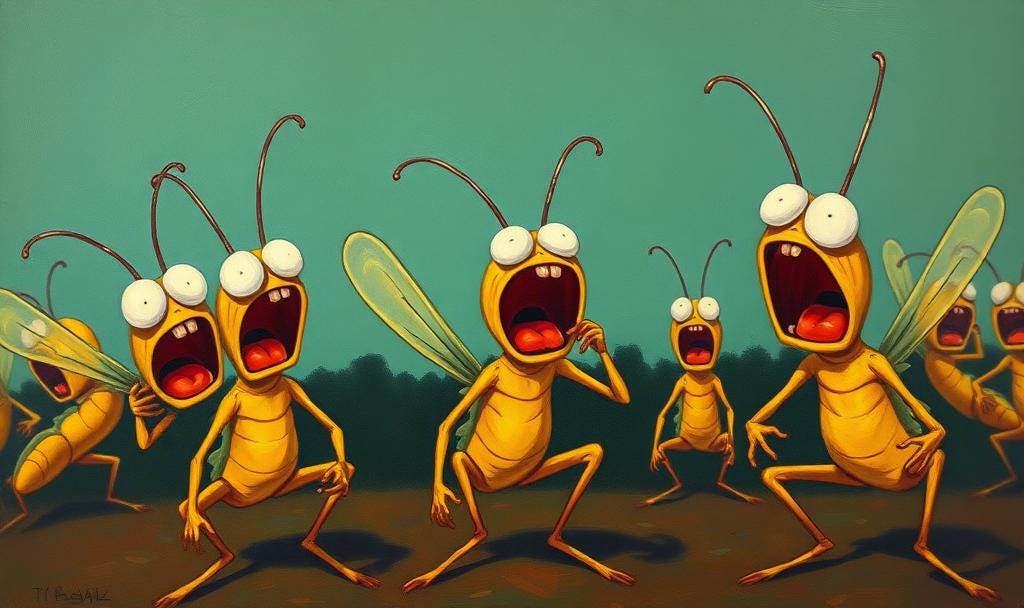
For most animals, most of the time, I would suggest that life is not hell—life is good (or worst-case hedonically neutral), even for the short-lived insects that Bentham’s Bulldog seems so concerned about.
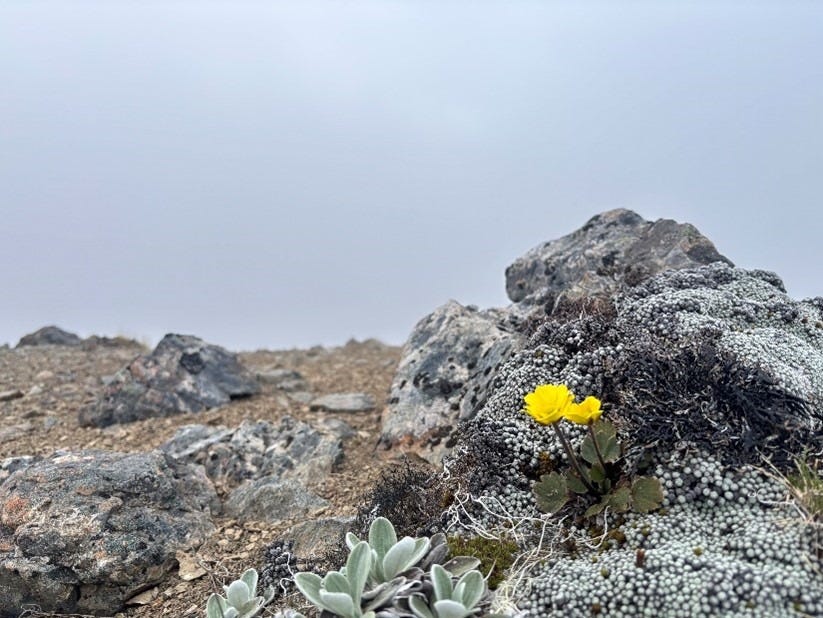
I have spent many weeks in the wild, watching prey animals of various species, who don’t know that they are being watched. They do indeed display a reasonable vigilance, aware that they might be preyed upon at any time, but a simple observation of their body language and behavior does not suggest that these wild animals are in a constant state of PTSD—an absurd claim. They do indeed sometimes get hurt, in a fight, by falling, by getting ill.
But more often than not—like 99% of the time—all I see are deer, goats, chamois, sheep, etc., sitting on sunward facing slopes, squinting into the sun in a state of half sleep, periodically getting up to nibble on some supplejack or broadleaf. They may occasionally look around suddenly, hyper-alert, before resuming their feeding and snoozing. I frequently see ungulates—young and old—running around, kicking their feet, play-fighting, and so on, apparently without a care in the world.
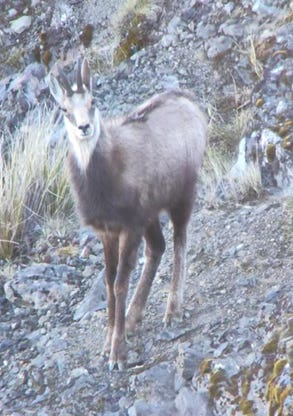
I have also seen deer run 100 yards after one of their neighbors has been shot by a hunter, only to look back confused for a few minutes, before continuing to feed and wander aimlessly over the next ridgeline, with absolutely no sign of stress.
Indeed, this rapid return to a baseline relaxed state reflects the premise of Robert Sapolsky’s book Why zebras don’t get ulcers. It asserts that, while animals can and do experience a certain panic and stress in response to threats and physical pain, they don’t experience the same kind of continued mental strain associated with a higher cognitive awareness of past and future suffering. And if they survive a ‘traumatic’ event, unlike humans they usually quickly revert to baseline.
Likewise, in all my time sitting still in nature, watching the environment come alive around me, I have never gotten the impression that it’s an orgy of constant suffering. As the sun warms grassy hillsides the crickets and other insects do indeed raise their voices in chorus. Even with the knowledge that many of these insects will die that very day, it takes a certain kind of pathological, neurotic sensitivity to hear the sound of bug-song as the screaming of tortured souls.
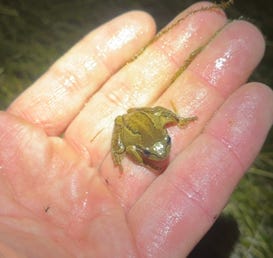
Small frogs which literally freeze solid over night and thaw out in the morning, still croak to the stars as they freeze. When they thaw, they return to hopping, basking in the sun, and just generally lazing around. Sure, eventually something might eat them, or the cold will eventually kill them, but *newsflash* life ends.
And now on to the poor, dreaded r-strategists (Bentham’s Bulldog and others believe these species should be eradicated because of their effect on the “net suffering” calculus).
Who’s to say that the flood of baby turtles dashing for the ocean, don’t feel a certain pleasure and joy in the rush to fulfill their instincts? If indeed they are capable of such feelings, who’s to say they don’t feel elation as they drive their little flippers into the sand, smelling the salt and seeing the ocean come ever closer. Even if they get quickly snapped up by a hungry bird before reaching the ocean, who’s to say the few minutes of instinctive striving and experience didn’t outweigh or at least balance the pain of their death? And how do you quantify the pain of the turtle against the pleasure of the hungry bird?
And what about all the little turtles that do make it? Plunging from the hot sand over which they floundered, into the cool ocean through which they can now effortlessly glide, must be glorious. Surely the goodness and pleasure of their success should be factored into the utilitairan equation too?
The assertion that this whole, cumulative existence is inherently hellish and should be prevented from ever occurring arises, in my opinion, form a very neurotic and human-biased perception that something about it is unfair. It’s an inability to come to terms with reality.
Nature can be emotionally disturbing to certain meek people—especially those who spend all their time online debating about ideas and concepts and theories, and who never actually interact with the natural world. From the safety of their room and the warm glow of their computer, nature scares them. Acts of nature strike them as an injustice. They extrapolate their personal aversion into a universal value judgement which they impose on nature and reality. And it drives them to totalitarian and misaligned goals.
Don’t get me wrong, when I see a little turtle get eaten before it can reach the ocean, it makes me sad too. I imagine not reaching my goal, and my life ending seemingly just as it begun. There is something sad in this. But that’s nature; that’s part of the striving to exist and to live and to succeed in a universe of entropy. Sometimes it doesn’t work out. Should we take vengeance on reality and destroy nature—preventing all success and pleasure, just to prevent all failure and suffering? It’s such a weak, resentful, nihilistic take.
Again, don’t get me wrong. I’ve seen the horror of nature. Indeed I have inflicted pain of my own in hunting wild animals for my food, and I personally feel the sadness and aversion to this aspect of reality. I’ve seen the videos of lions pulling a half-born calf out of a mother and eating it. Nature can be horrific. Does that mean we should end it?
Bentham’s Bulldog thinks so:
Preserving the natural mechanism that keeps bringing animals into existence, only to kill them shortly thereafter, isn’t compassionate.
…
For a similar reason, I think that we should seek to reduce the extent of nature and the horrifying suffering it causes. If we in the future have the ability to reduce or mostly eliminate natural suffering, we should not hesitate to do so.
…
Imagine that humans had all left earth and we could destroy the world, killing every living thing painlessly. I would, in an instant, support doing so.
These people want the world to be one giant cement parking lot, because cement is not conducive to natural life:
“If you’re concerned about wild animals, therefore, you should support paving over ecosystems.”
(That quote and its insane nihilism never ceases to blow my mind.)
But children get cancer. People kill each other. People die in house fires. All manner of suffering occurs to humans, too. What to do about that?
It seems that, based on their willingness to erase nature and wild animals, Bentham’s Bulldog and other utilitarians are one small step away from some veeeeery dark conclusions about what to do with humanity.
People like Bentham’s Bulldog need to go and suffer in the way animals do.
Live in the mountains, watch the animals first hand, fall off a cliff yourself. Damn near freeze to death, go hungry. You’ll see it’s not that bad, and its worth the paradoxical pleasure and endorphins you get from natural suffering and the struggle to survive. It’s worth the moments of warmth, the moments of calm, the moments of a full belly, the joy of a near-miss. My guess is that the animals would agree.
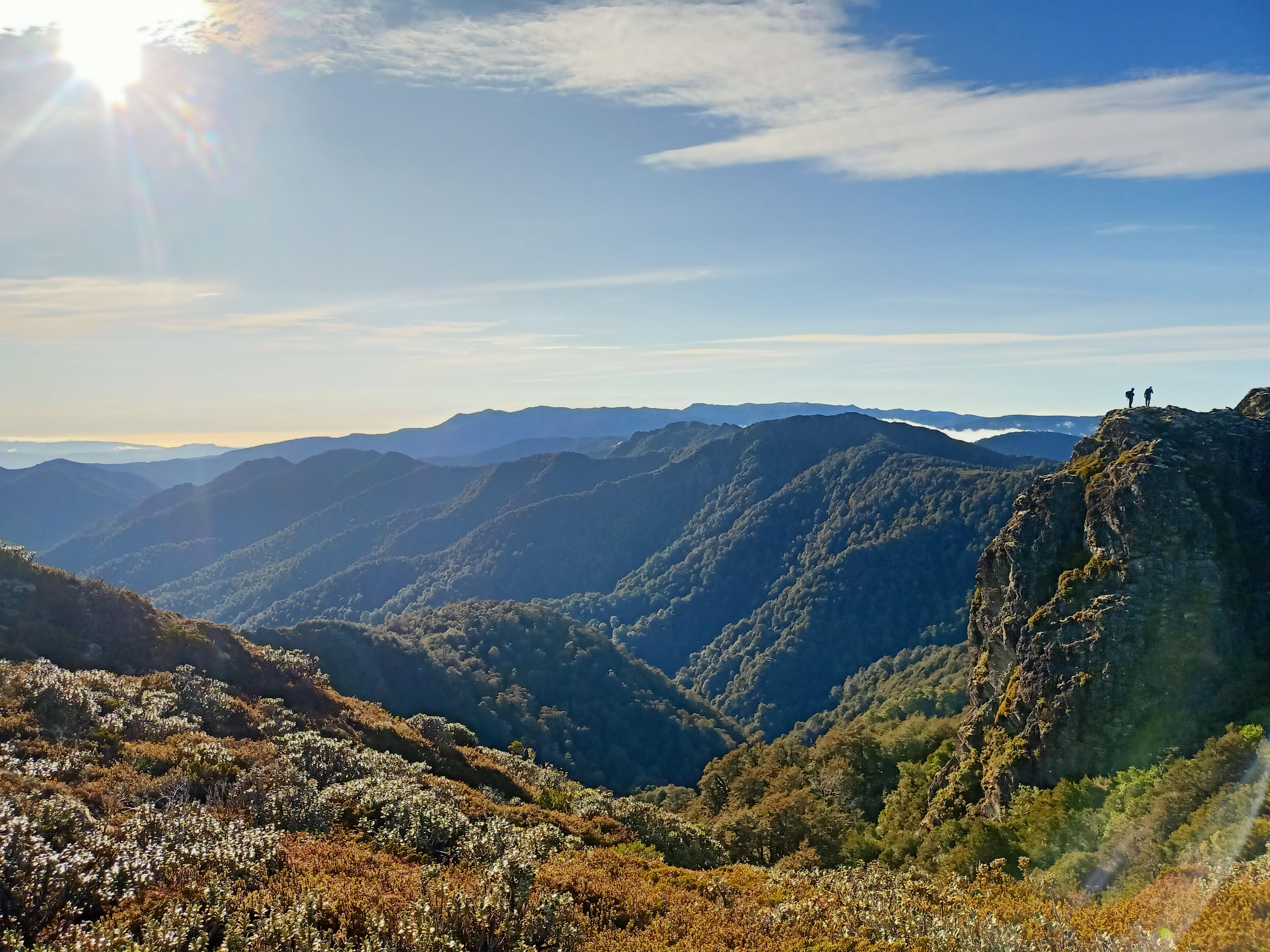
When you go out into the mountains, you have that familiar yet weird realization that they have been just sitting there the whole time you were away from them—the mountains and their ecosystems don’t render as you approach, like a video game, they continue to exist completely separate from our human drama. They just continue on, largely in peace.
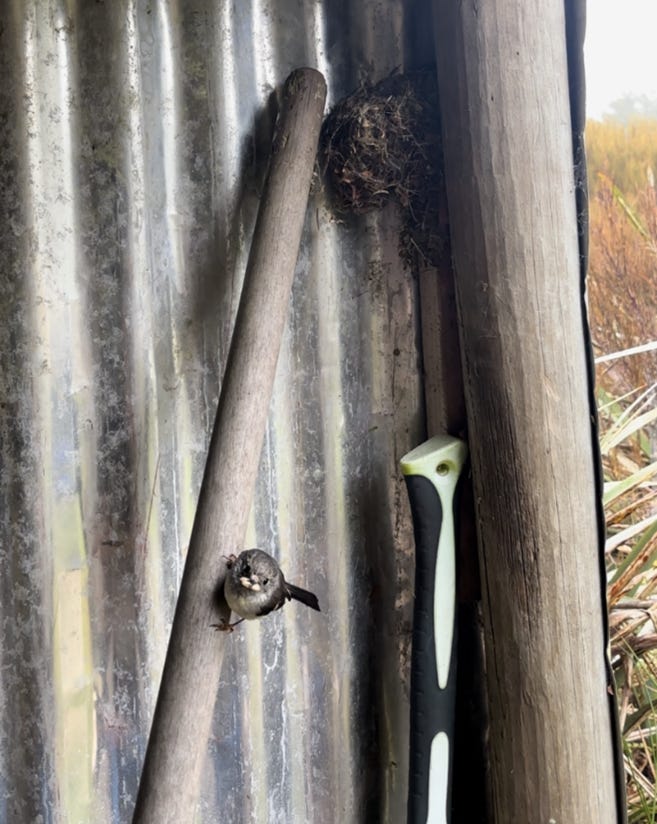
You could sit for days on end and not see anything horrific. A bird flitters by. A deer grazes and sunbathes, a falcon soars on a thermal. Crickets tick and sing in the grass. To actually observe the environment first hand over a long period of time—not just some highlights from a nature documentary which necessarily focus on the action-packed drama of predation and struggle and death—would disabuse you of any notion of nature being “hell”.
I’m not saying suffering is nothing. But it’s not everything.
It’s hard not to think that these philosophies which hyper fixate on and exaggerate suffering, while downplaying the value of life and of striving, say something about their proponents.
As Nietzsche said, philosophy is:
“the confession of its originator, and a kind of involuntary and unconscious memoir.”
The anti-nature philosophy is the reflection a specific psychological type. One prone to neuroticism and self-awareness; a resentment of nature and reality, arising from a personal weakness; a reluctance to engage life and bear it’s pain for it’s pleasure.
Perhaps it arises from the knowledge that, in all likelihood, they themselves would likely be the little turtle that wouldn’t make it. That knowledge is then externalized onto nature. Once nature stands as a symbol of all the suffering and “injustice” that one cannot bear to face, one begins to wish for its destruction out of a supposed empathy.
To erase nature is not mercy, it’s vengeance.
I am going to dedicate one more short post—one slightly more substantive and philosophical—to this topic soon, pointing out the silly flaw at the center of the utilitarian attempt to calculate and compare “total suffering”. This idea leads to all sorts of silliness, like the idea that it would be morally better to torture one man for 50 years, than let a trillion people get a mildly annoying speck of dust in their eye, because… something something, total suffering.
But suffering is not experienced cumulatively, individual experience in non-aggregative. There is no “total pain”. The idea makes absolutely no sense. So look out for that in the coming weeks.
If you enjoy my writing and are inclined to do so, please consider giving me a tip!
No posts
Comments
Nothing yet. Say the first thing.
Sign in to join the conversation.