
If you enjoy my writing and are inclined to do so, please buy me a a coffee!
For around five years, my brother Dan and our friend Matt had been trying to properly time the Sika roar (rutting period) around Boyd Hut in the Kaimanawa mountain range of New Zealand. Dan and Matt had been shifting their trip around each year: a week earlier this year, a week later the next—trying to time the roar, and to catch some exciting rutting behavior up close. However, no matter what, the mountains were eerily quiet and strangely absent of deer.
In 2021, their trip had to be brought forward to account for other life obligations, so they went in just over a month before the ‘typical’ roar dates.
What they found was a shock. Deer by the dozens were out on the scrubby faces and tussock flats surrounding the Ngaruroro river, feeding and sunning themselves, seemingly at all hours of the day. There were sika stags in mobs1, out in the sun late into the morning, fattening themselves up for the roar.
In a couple of weeks these stag mobs would break up, the stags would separate and retreat into the bush to strip the velvet off their antlers by rubbing and thrashing on trees, and they would also begin to round up their harems of females (female Sika are called hinds). Once the territories were marked, the velvet stripped, and the hinds corralled, the changing temperature and the shifting photoperiod of autumn’s onset would cause the females to cycle—and the roar would start. Every stag would be driven crazy by the pheromones filling the air, desperately trying to sire each one of his hinds while being vigilant, day and night, for the intrusion of other stags looking to pinch one of his ladies.
Dan and Matt decided that the yearly trip to Sika Country would now have to be a pre-roar trip, when the stags are still mobbed up but in hard velvet, and have not yet returned to the bush to carve out their separate territories.
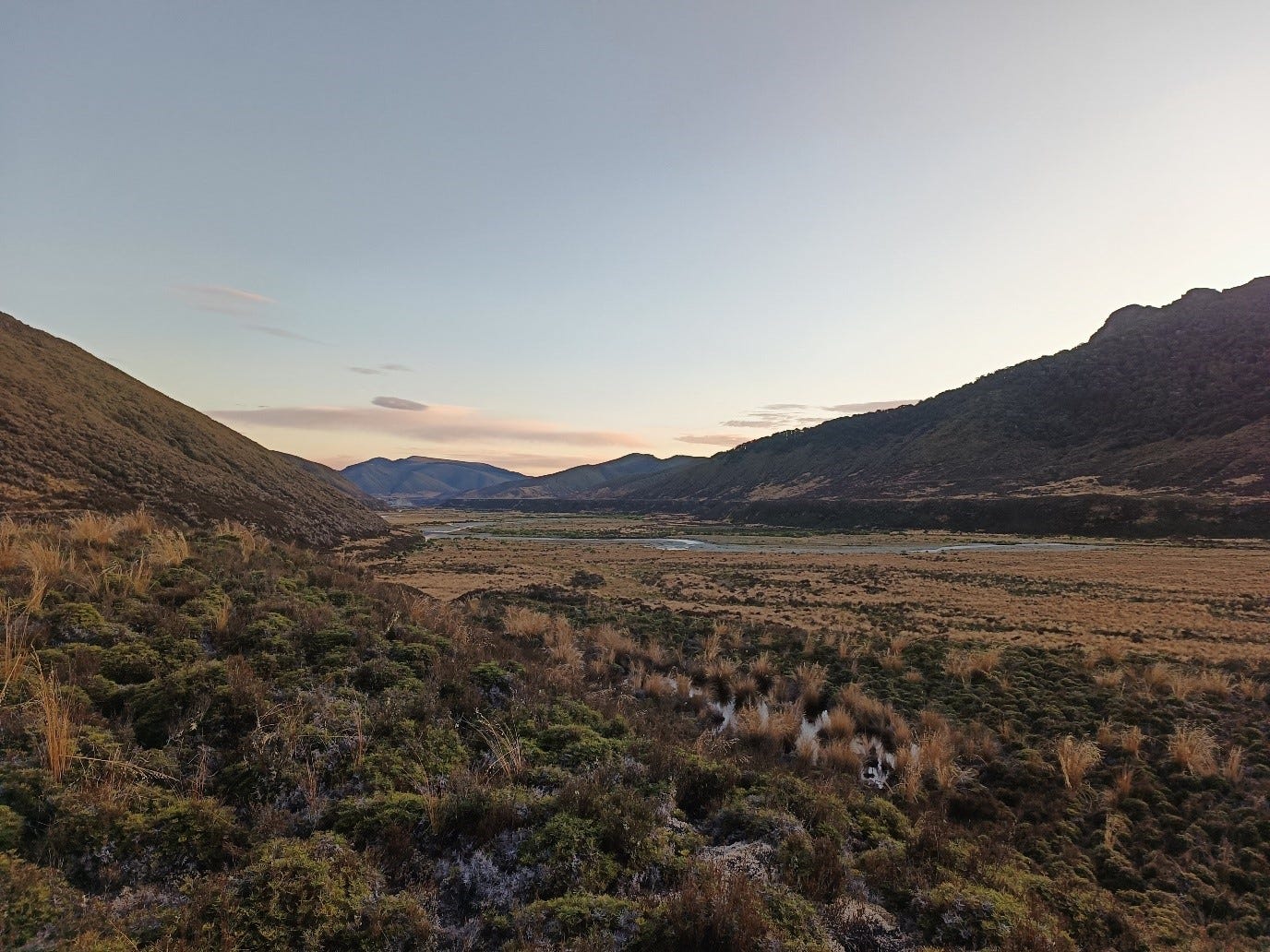
The Sika are an East Asian deer, introduced to the central North Island in 1904, when 6 adults were donated to the NZ government by the Duke of Bedford. It’s claimed that we have two types—the Manchurian and the Japanese sika—but there has been over 100 years of interbreeding, and thus they are classified generically as Sika. They are smaller in size than the more numerous Red deer, and they only typically achieve an antler size of 8 points (though rarely they throw 10 or, even more rarely, up to 12).
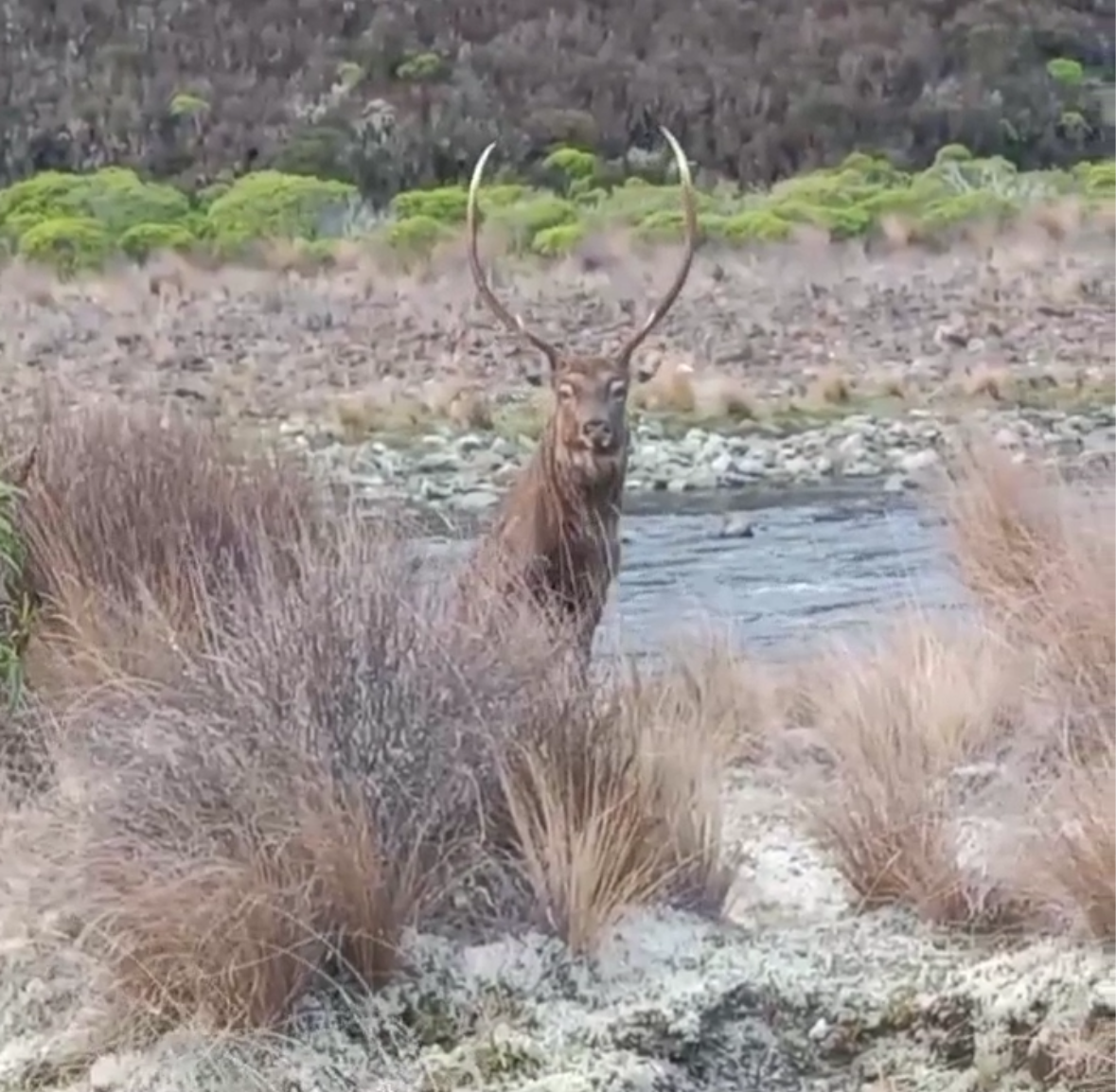
Sika are incredibly aggressive during the roar and are said to bully the larger Red deer out of their territory so that, for the most part, Reds and Sika have separate distributions. Reds and Sika apparently have a love-hate relationship, however, as where the two populations do mingle they frequently interbreed, and populations of Sika-Red hybrids are often found.
In March of 2022, Dan and Matt invited me to join them on their yearly trip to the Kaimanawa mountains for some good old hunting and fishing.
The only problem was that, beginning 6 months or so previous, I had experienced my first ever period of ill-health, after a fortunate lifelong salubriousness. This scared the crap out of me, and I eventually developed severe health anxiety, thinking I was going to kick the bucket at any moment. I'll spare you the full story, but I spiraled, and it’s safe to say I was in very poor condition. Eventually my physical health issues resolved, but the anxiety remained—I had inadvertently developed an anxiety disorder.
I was left having multiple panic attacks a day. My body had started having full-blown, involuntary fight or flight responses to essentially nothing, and the racing heart that arises as part of those panic attacks caused me to develop a cardiophobia. What results is a horrible loop of panic attacks that trigger physical sensations which trigger further panic attacks. It becomes impossible to break the feedback loop, and any attempt to do so by actively trying to control your breath and heart rate only tends to exacerbate the sensations.
I had been seeing my doctor for help, tried some medications, but so far I was not improving at all.
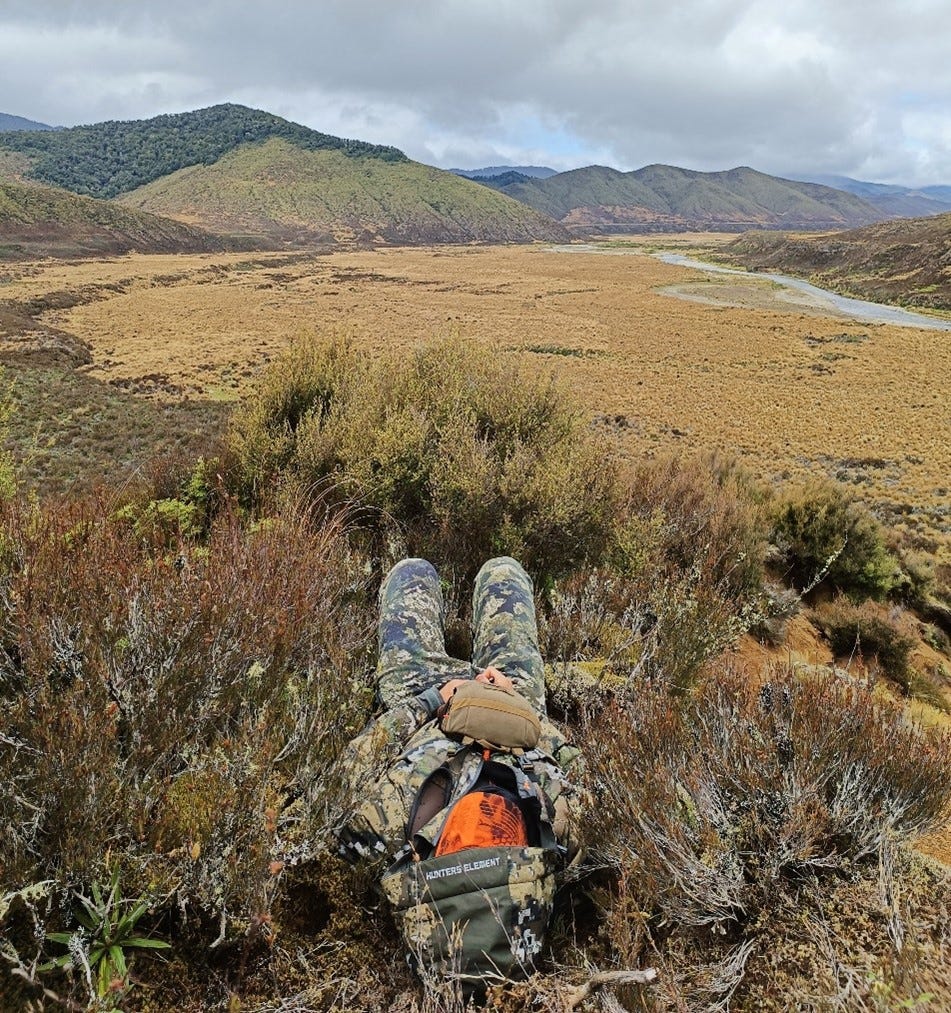
For this reason, when Dan and Matt invited me on the trip, I was hesitant. I told Dan what was going on. It only made him more certain that I should join them. "We can take it easy—the country isn't too rough. It will be mostly chill days glassing for deer and catching trout" he told me, forgetting that I had been there before and knew all to well that “chill” isn’t a word I would use to describe much of that area (or any other New Zealand back country).
But at the urging of my doctor, I agreed to go.
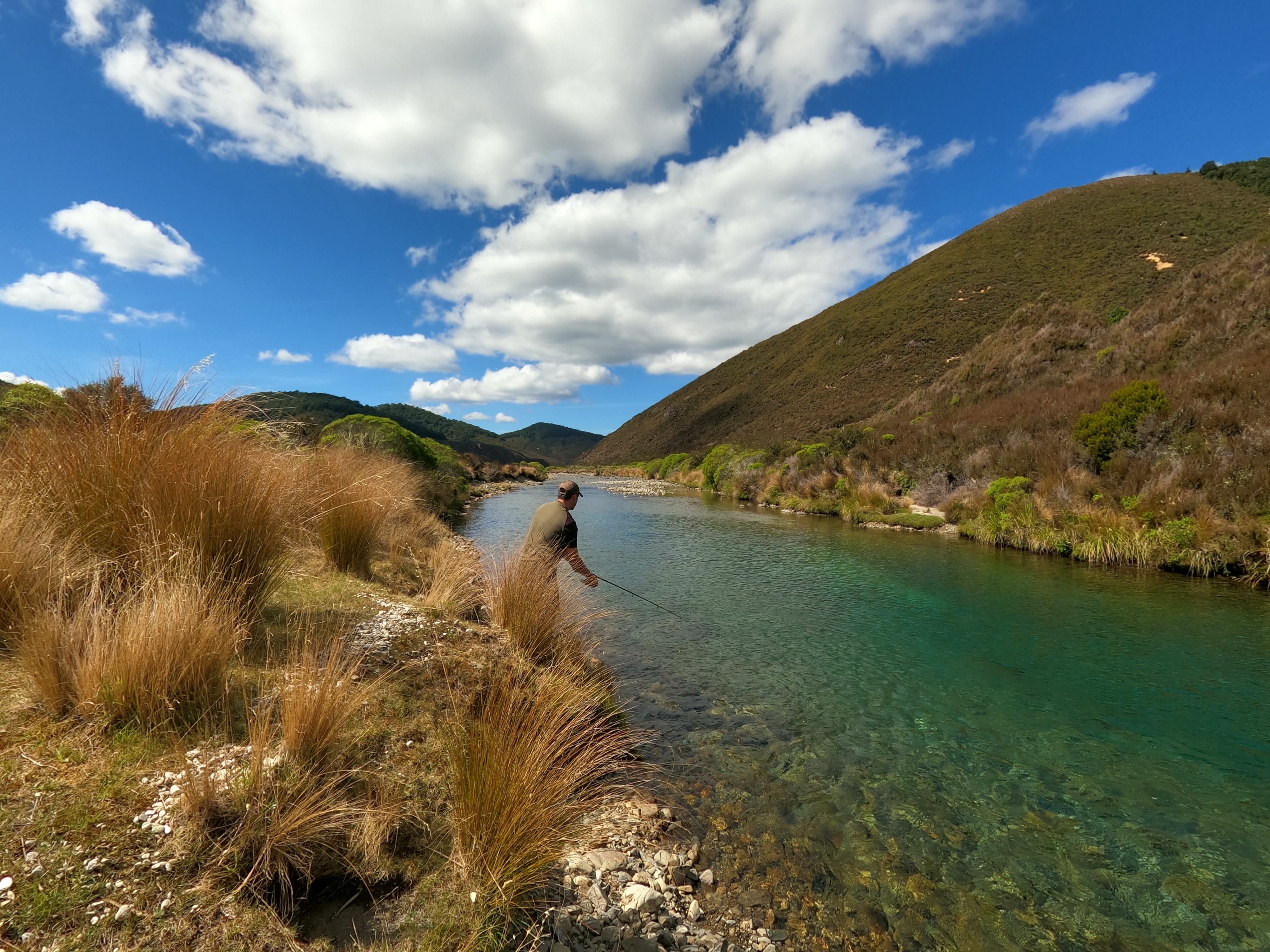
So it was that I found myself a few weeks later, setting up camp in our pozzy just inside the bush line, overlooking the Ngaruroro River. I was feeling shaky and anxious. I knew if my health did go south fast, or I had a full blown panic attack and completely lost my marbles, I was essentially on my own. We were literally hundreds of kilometers from civilization.
But I was also excited to be there. It is always great returning to an old pozzy2, snooping around for any signs another hunting party had discovered your site. And then finding the goodies you stashed for yourself last time—the crusty old camp pan, half a bottle of Whiskey, a bottle of your favourite venison BBQ-rub. After setting up camp, we set off on our first evening hunt.
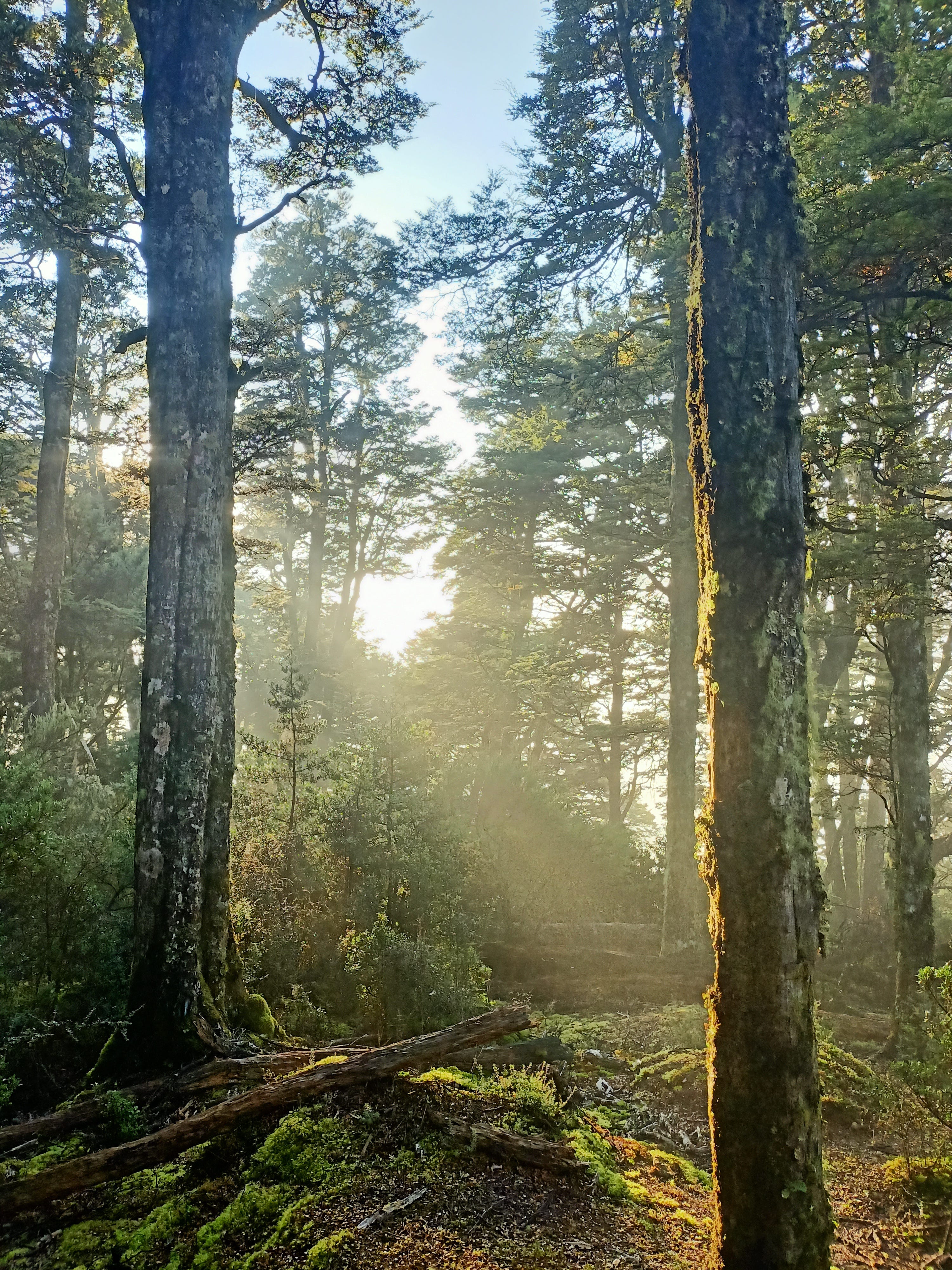
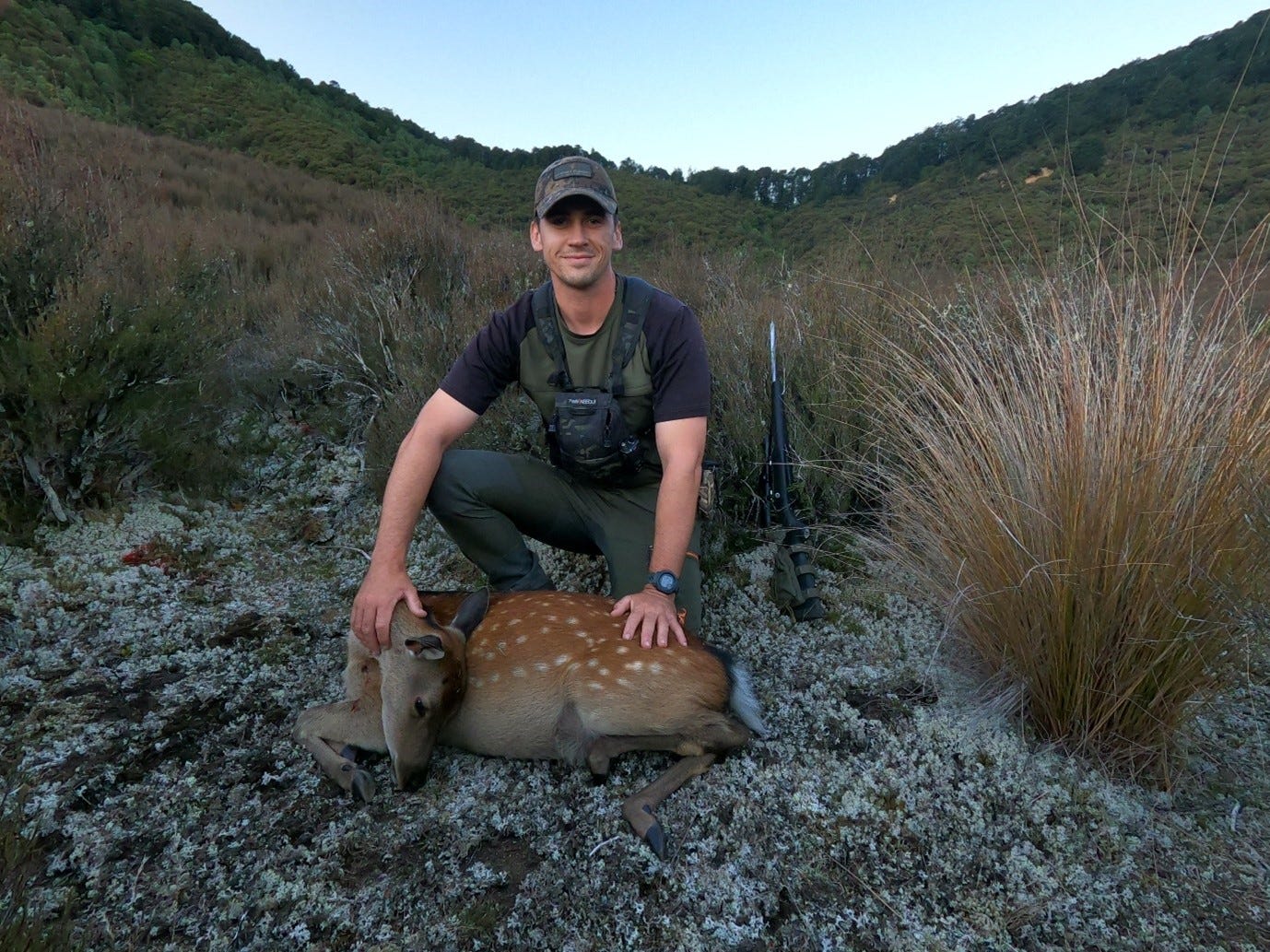
Dan and I headed up to his favourite lookout, and spent a quiet evening in the sun, glassing for deer and talking about life in whispers. About 45 minutes before sunset, we noticed a lone yearling3 emerge with a beautiful spotted coat, and Dan told me to take her.
In New Zealand, deer have no natural predators, and there are far too many of them, so there is no season or age limits on hunting them. We often shoot yearling hinds4 before they grow big and develop the voracious appetite that they turn on our defenseless native forest—and because they are the best eating.
We struggled to find a shooting post high enough to elevate my barrel above the beech trees and kanuka scrub, and in the process of messing around she caught on to us. She darted a few yards and then paused to look back and scan the scrubby face we were sitting on. She couldn't quite see us, but we could tell she was about to spook, so I ended up taking a bit of a snap-shot.
I struck it well, right in the hilar zone, and she dropped where she stood. A perfect shot to the hilar zone is not a heart shot, but a shot to what’s called the “junction box”. With a heart shot, the deer still tend to do have enough gas in the tank for what’s called a “dead run”. They don’t make it far, but they do have one last burst of energy and consciousness. With a perfect shot in the junction box, you hit the pulmonary arteries and the central nervous system all at once. The deer drop right where they stand. Aside from ensuring the deer die essentially instantly, a bonus of a good hilar shot is that it leaves the heart intact, which is good because it’s the most underrated piece of meat ever—an absolute delicacy. (For a better explanation of this “junction box” theory, see here, though of you’re squeamish, be warned there are a few anatomical pics down the page).
It was a frustrating push down through some dense Kanuka followed by a few tricky crevasse crossings; the streams which run down from the mountains and into the river have worn deep guts into the soft pumice terraces.
Because of the small size of Sika, it is often surprisingly hard to find them after having shot one—they simply vanish into the scrub. I have spent an entire afternoon searching a smallish area in which I saw the deer drop. I only found it after hours of searching, and I had walked right by it many times. We found this one soon enough however, and set to work skinning and butchering the beautiful little yearling. While I (and friends and family) have long since eaten the meat, her little spotty skin adorns my office room floor—I can see it now as I write this.
Outdoors
Is hunting wrong?
·
July 23, 2024
I’m a bit of a softy. I always have been. And I’m an animal lover, the kind of guy who smooches his cat way too much. As a kid, I would rescue the juvenile birds blown from their nests in spring, and for weeks I would hand-feed them jelly-meat cat food until they could fly. So, it’s no surprise that I have always struggled to process how I feel about my…
That night we sat around camp and told stories, reminisced about past trips together, talked about life, had a warming nip of whiskey, and discussed plans for the morning.
For the first time in 6 months I was feeling good, and it wasn’t from the whiskey. It was the smell of the beech forest, dry blood on my forearms, the sweat drying in my shirt, the fresh venison. It was being away from civilization and technology, on a goal-oriented task with a small tribe of friends, using ancient neural pathways and reward systems which atrophy in the course of post-modern life.
It was, specifically, getting out of my head, which was helping me. This entailed not trying to control my symptoms, but also only talking about them sparingly. With a few exceptional circumstances, you can’t really talk your way out of mental health issues—and sometimes, too much talking only entrenches it all in your head and actually makes you worse.
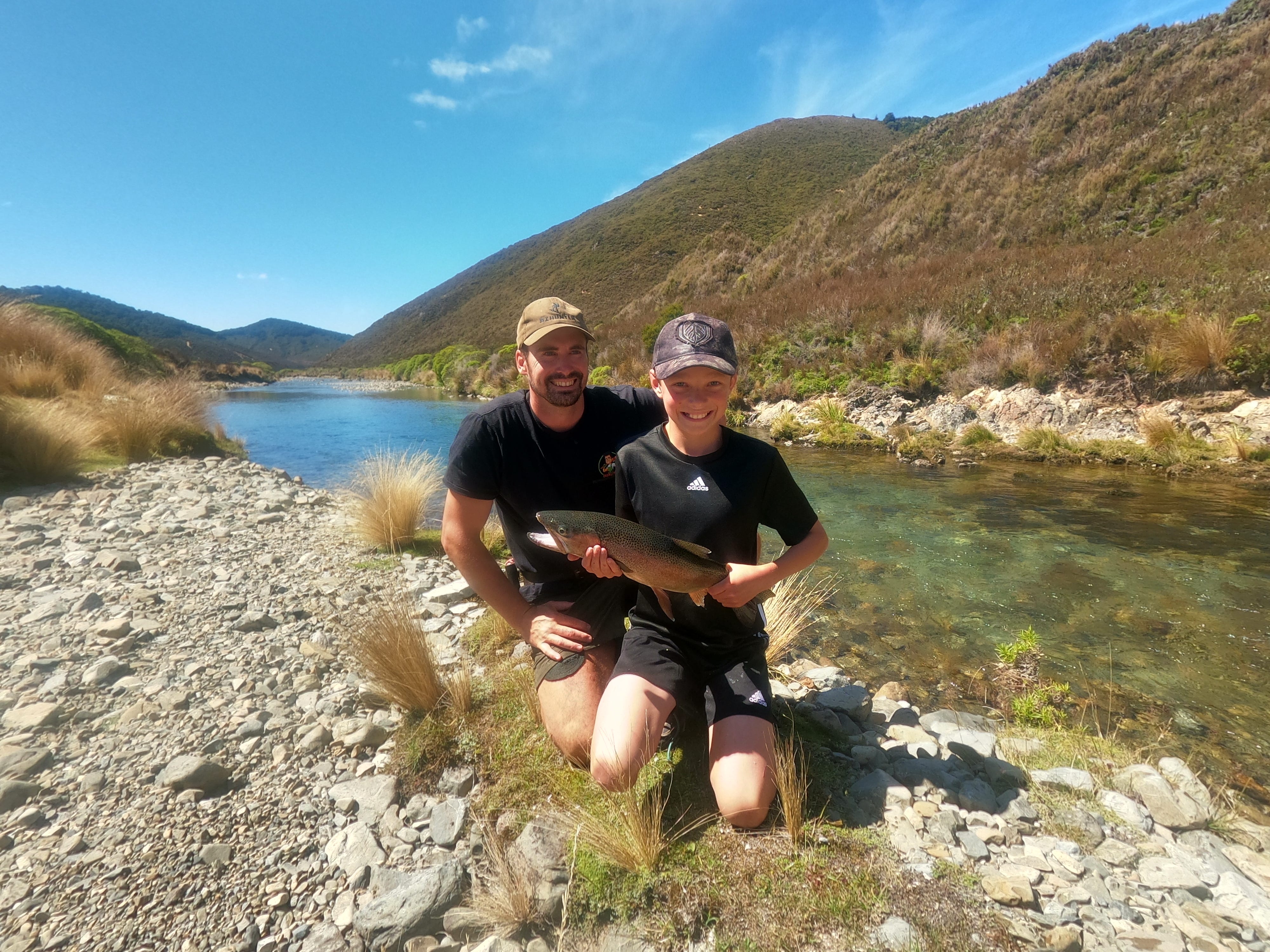
The next two mornings were ruined by fog and low visibility. We spotted a few deer heading into the bush just as the fog lifted at morning smoko5, but it was too late, and they vanished quickly. We caught a few trout during the day, and mostly just relaxed in camp.
On the third morning, again ruined by clag, Dan decided him and I should push through the fog down-river to a valley in which he previously had good success, and hope we can catch a straggler out when the fog lifts. “On the way, we might spook any deer that are out in the fog, but we don’t have much of a choice” he said.
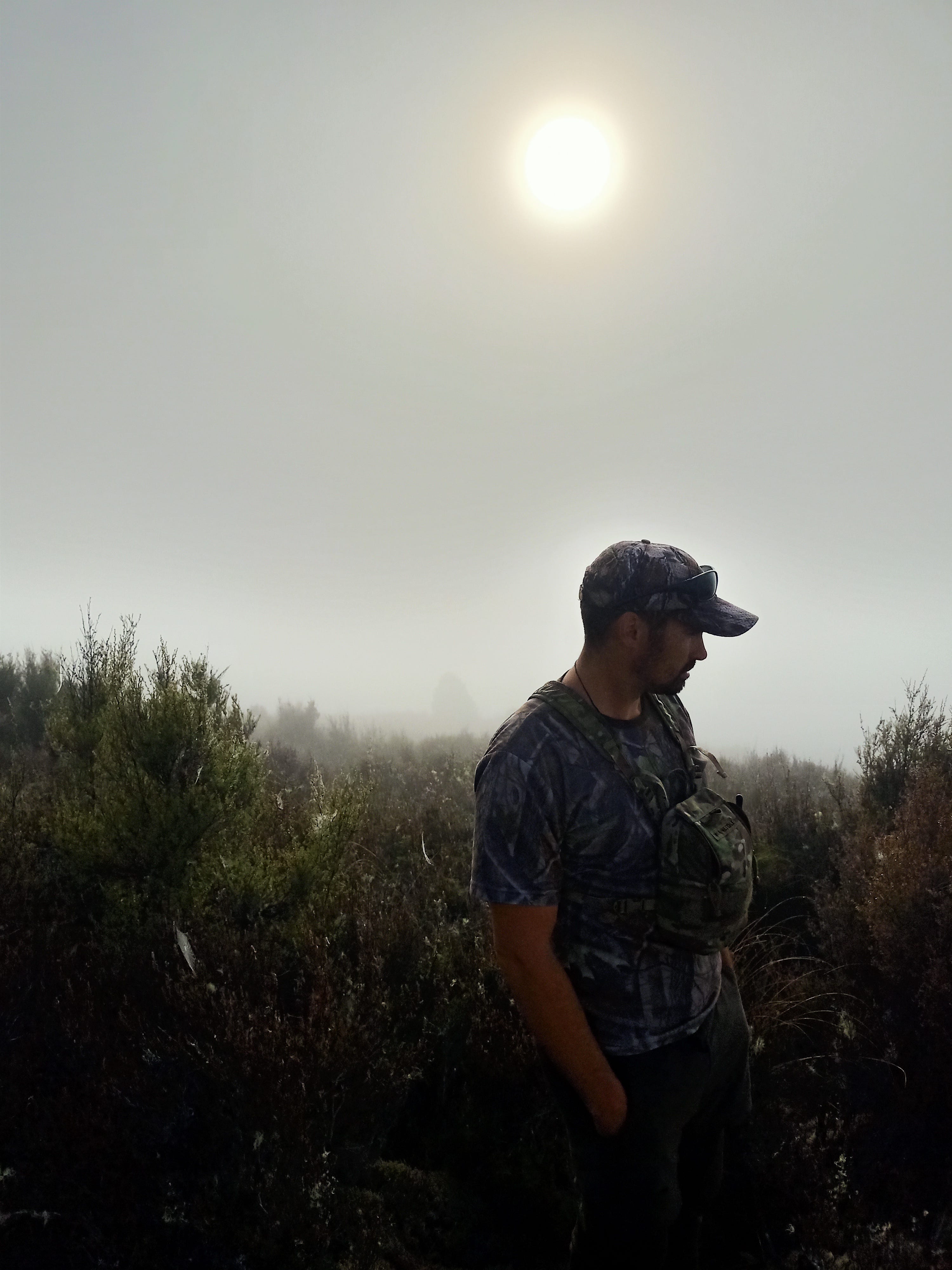
So we set off through the fog, scrambled down the terrace and on to the river flats. We moved quietly down river, hugging the terraces for cover. Visibility was a little better down in the shadow of the terraces, and the fog was getting a little lighter.
Before we got even halfway to our pozzy, we spooked a mob of 6 or 7 stags. They were bedded down in the shelter of the terrace about 30 yards from us, and both us and the deer were caught completely off guard. They sprang up and bolted down river, running parallel with the terrace that we were following. I stood dumbstruck, watching the deer springing off through the tussock, thinking I'd never get a shot and that we'd bungled it. But Dan turned to me and hissed "let's go!" and took off after the deer.
We made no attempt to be sneaky or to stalk, it was an all-out run. I sprinted after Dan, my day bag slamming up and down on my back, making a hell of a racket. Years of watching deer from a distance and stalking them quietly made it feel so odd to be openly chasing them at close range, and I felt like it would have been more appropriate with a spear in my hand. I could see them bounding down the flats ahead of me. One of the stags had somehow lost an antler, bearing only a single four-point antler on one side.
The stags spotted an open spur that they could climb, so they turned hard left and shot up the terrace above us. This raised them up above the scrub and gave us a perfect line of sight. They were quick though, making it over the spur and out of sight in an instant, all except one, which had paused on a little knoll nearer the bottom of the spur - but he was about to vanish too. I dropped to a knee, actioned my rifle (no I was not running around with a loaded rifle), and shot the deer from about 70 yards. He went down instantly.
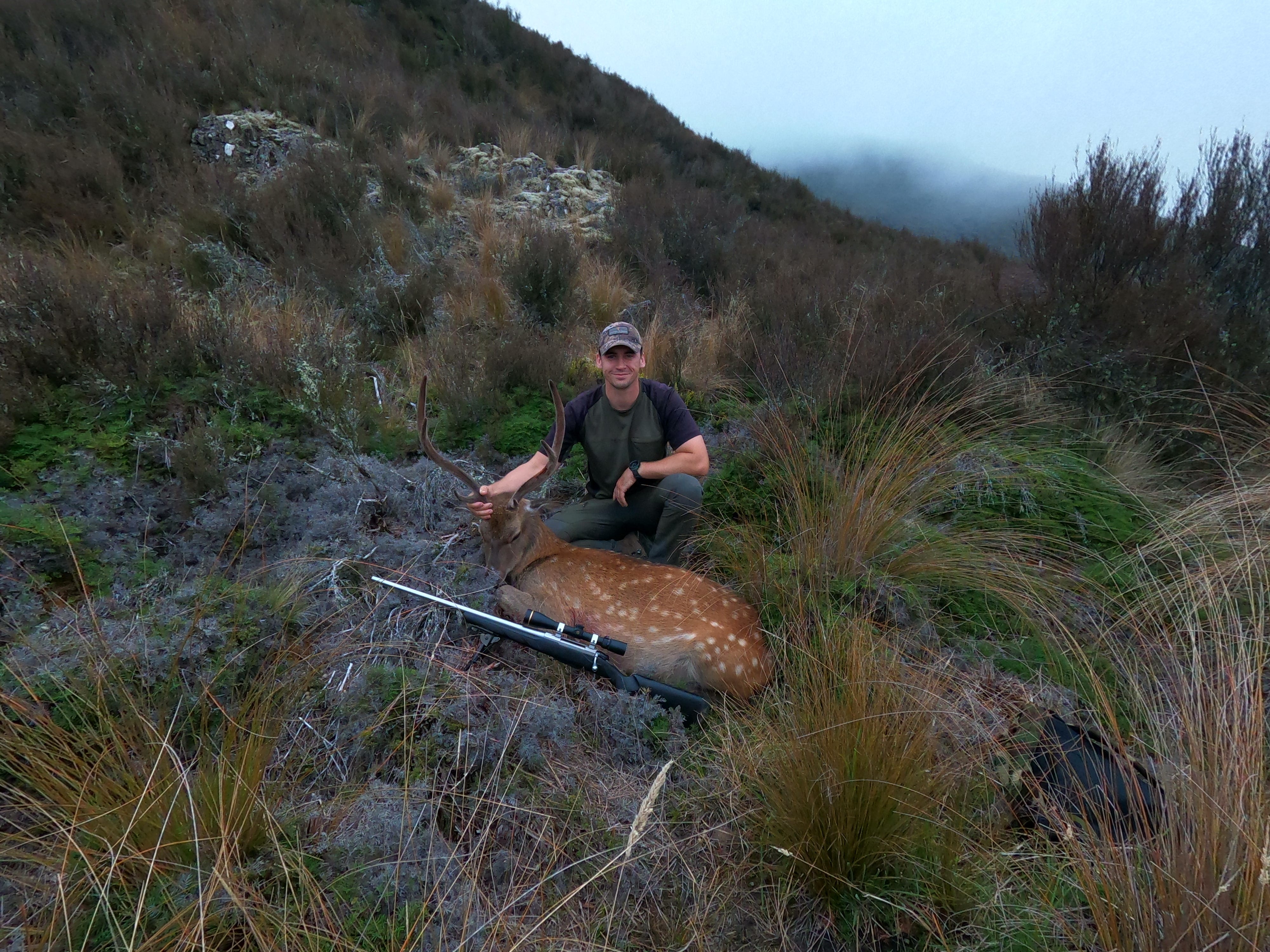
He was a beautiful 6 pointer, in hard velvet, and my first ever Sika stag. We were stoked, Dan was especially happy on my behalf. He told me to keep his antlers for memory’s sake. We would strip the velvet and coat the antlers with a little potassium permanganate, and they would look awesome. The antlers are a great memento of a meaningful hunt with my oldest brother, in the midst of one of the toughest times of my life. As we dressed the deer, we were blown away by his condition; he was carrying an inch-thick layer of fat on his brisket.
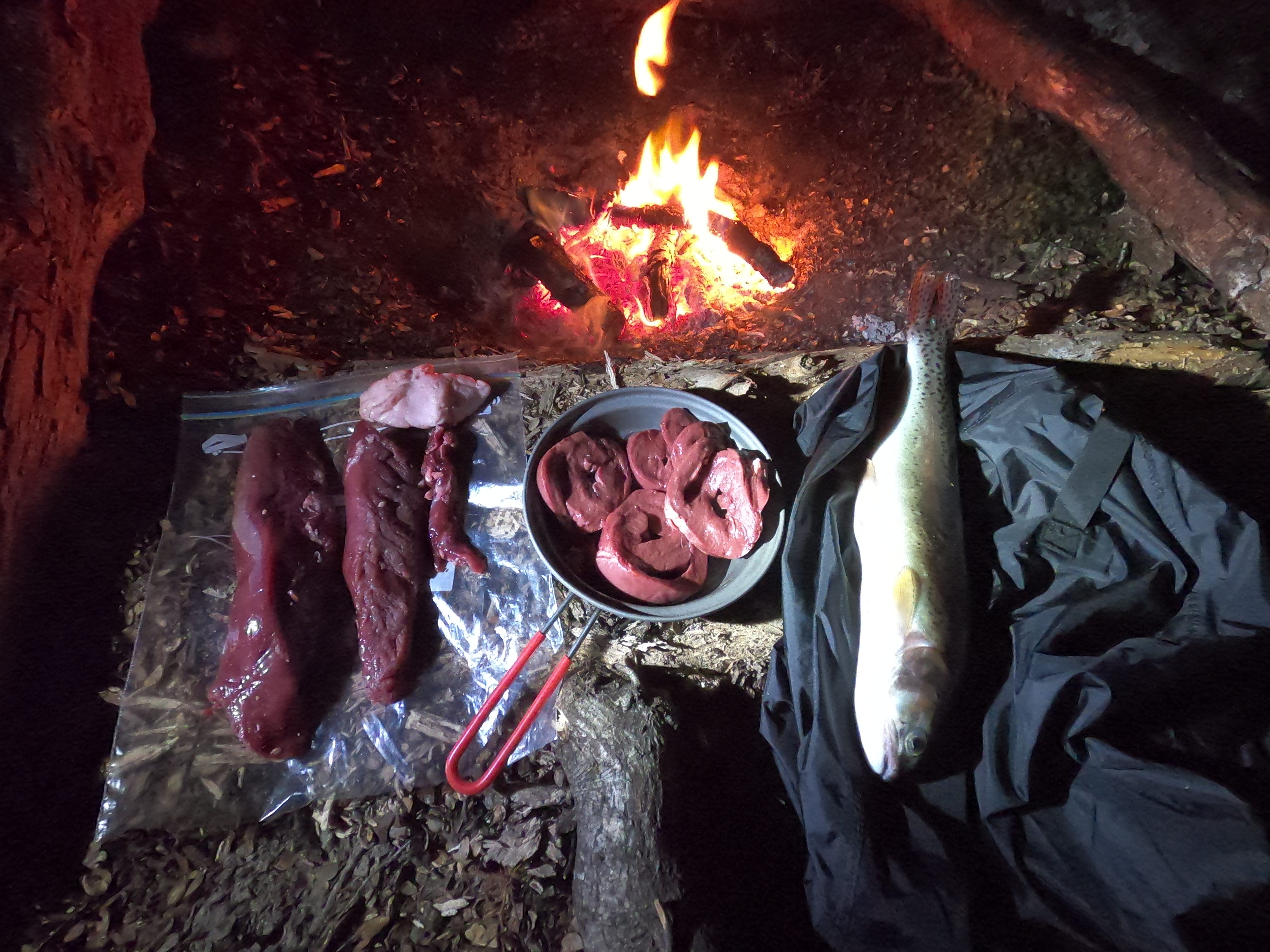
We had heart, eye-fillets (tenderloin), and trout for dinner that night. Afterwards we sat out on the terrace and had a mug of port while we looked over the valley, with the Ngaruroro River glowing in the moonlight. I wasn't immediately cured of my anxiety, obviously. But the trip did lead me to a realization, and in the following months I used hunting (solo and with company) as a sort of therapeutic treatment to build resilience. Hunting became the vital ingredient for improving and maintaining my mental health.
It was, however, a very difficult and stressful form off therapy. The wilderness is no Xanax.
As I said, I was having multiple vicious panic attacks a day. And I was failing at trying to talk, think, breathe, “mindfulness” my way through them. All of this stuff only turns your attention onto your symptoms and increases your pathological inward focus. I was at my limit.
After my trip with Dan and Matt, I realized the only way out was through. I needed to intentionally make my heart race, put myself under stress, and prove to myself and my limbic system that nothing bad was happening. I needed to build resilience and confidence again, and the only way to do that is to prove yourself to yourself.
So I would wake up at 4:00am, instantly in a state of high-anxiety, and drive into the mountains with my heart racing and my head spinning (a strange vertigo was one of my main symptoms). Driving alone into the mountains on a foggy morning isn’t very relaxing in this condition.
Sometimes I would have to pull over and throw up. Occasionally the anxiety would beat me—I would back down and go home, and this always just made the anxiety worse.
Then I would hike into the bush by torchlight, still nauseous and panicking.
I would arrive at my hunting spot—a valley I had been hunting for years—just in time for sunrise, and often find deer pretty quickly. And then a strange thing would happen. Almost as if a biological, predatory instinct took over me, my panic would subside (still there, but in the background), and I would be consumed by task of stalking the deer, placing my feet carefully, hearing every rustle and snap, smelling deer on the wind, keeping track of which way my own scent was blowing. (In the video below, at about 16 seconds you can hear the deer “bark” at me if you have the volume way up. There is no shooting or animal harm in the video).
After successfully taking a deer, the adrenaline of the hunt coupled with my anxiety would cause me to shake, and the anxiety would quickly return in force. But it was tempered by something.
The fact that my physical sensations and panic could be assuaged by a consuming task proved it wasn’t based in reality, and the fact that I had hiked into the mountains proved that my heart and body was fine, I wasn’t about to explode. So I would be able to focus long enough to field dress the deer, load up my pack, and start the hike home.
Avoidance, mindfulness, and talk-therapy had all only made my anxiety worse.6 But with each hunt, with each cold, dark hike into the mountains alone, and each hard journey back to my car with an entire red deer’s worth of meat on my back, my anxiety lessened—or, more specifically, my resilience and self-efficacy grew.
And now I can just enjoy these trips into the hills like I used to.
Here is a time-lapse of me and my old man on a fine morning, quartering a deer. Dad is about 65 in this video, still climbing mountains, harvesting and carrying deer.
There is an increasingly popular idea among evolutionary psychologists called the evolutionary mismatch hypothesis. It posits that there is a mismatch between the ancestral environment in which humans evolved, and the modern environments in which most humans currently live. This mismatch can result in a range of diseases and disorders, both mental and physical.
Human biology and neuropsychology evolved as adaptations to specific environmental inputs which produce a suite of adaptive behavioural outputs. However, in modern societies either the inputs are no longer present, or if they are, the behavioural outputs are no longer adaptive. Research is beginning to focus on the evolutionary mismatch hypothesis as an explanation for things like obesity and disordered eating, stomach ulcers, workplace dissatisfaction, and even depression and anxiety.
I think the evolutionary mismatch hypothesis may hold a clue as to why hunting was such a vital component to me in regaining my mental health. And it could explain why hunting is so meaningful and so vital to the wellbeing of those of us who love to hunt for our food.
If you enjoy my writing and are inclined to do so, please buy me a a coffee!
A group of sika are called a mob
NZ/aussie slang for a little campsite, hiding spot, or shooting spot. A little nook.
A deer in its first year is a fawn, a deer in its second year (i.e., after it’s first Bday) is a yearling.
A “hind” is a female deer for sika and reds. For whitetail and fallow deer they are called “does”.
NZ/aussie slang for morning break at work, usually at 10am
I do think talk therapy has value in some cases. I don’t mean to dismiss it entirely. One day soon I might write an essay on therapy and its value.
No posts
Comments
Nothing yet. Say the first thing.
Sign in to join the conversation.