
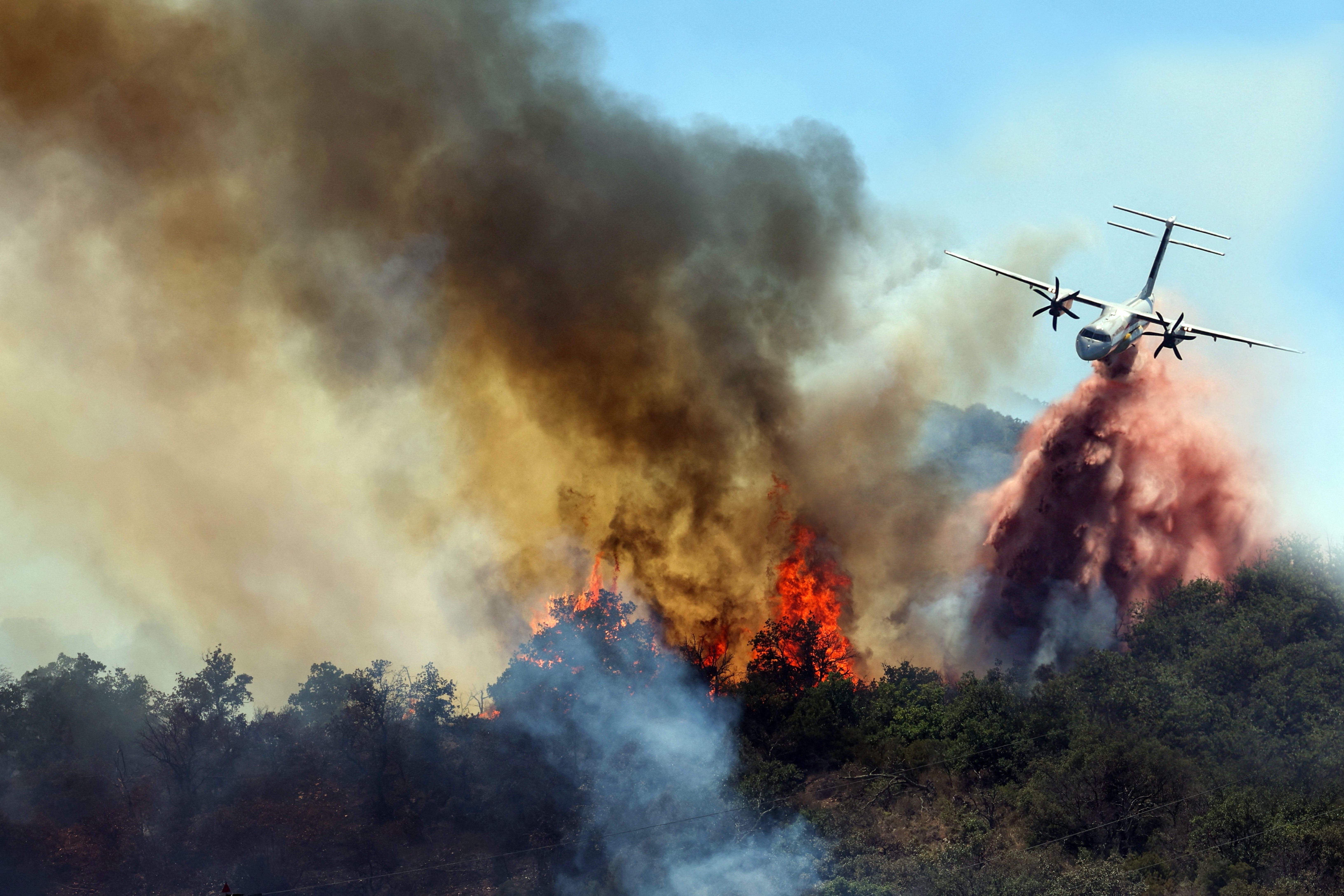
By Benoît Faraco, France’s Special Envoy for Climate Negotiations This year, France and Southern Europe experienced a fire season of historic severity. It began in June, when extreme heatwaves caused about
The cumulative impact of summer extremes, as well as massive floods in winter, lays the groundwork for deep economic damage. While crews are still working to contain residual hotspots, total losses are already projected between €10 billion and €15 billion. Across tourism, forestry, and municipal infrastructure, the toll is immense—directly threatening more than 40,000 local businesses and 200,000 jobs.
As emphasised in our recent joint statement with the United Kingdom, this summer’s devastation proves climate change is an immediate national security threat and a major drag on economic growth. What is true for France applies across Europe. Spain is battling mega-wildfires, while in Germany, the Rhine River—a vital industrial transport route—is reaching unprecedented lows.
The scientific evidence connecting these disasters to climate change and fossil fuel emissions is definitive. World Weather Attribution confirms that human-induced climate change made the extreme heat and drought fueling these blazes at least twice as likely, transforming exceptional weather into an increasingly frequent hazard.
France’s roadmap to transition away from fossil fuels
To address this double vulnerability—to climate impacts and economic insecurity—we published a comprehensive fossil fuel transition roadmap at the Santa Marta Conference earlier this year. This public framework sets out how we will systematically phase fossil fuels out of every sector of our economy.
This roadmap aggregates France’s existing national policies. In this plan we have committed to cutting overall fossil fuel consumption by 40% by 2030 and we have set deadlines to phase out coal by 2030 (2027 in the power sector), oil by 2045, and fossil gas by 2050.
We combine regulation and support for the most vulnerable. In transport, which accounts for two-thirds of domestic oil demand, we use measures such as “social leasing“ to help low-income households access electric vehicles while boosting domestic manufacturing to reach one million electric vehicles per year. The strategy is working: last June, Renault announced it had reached 1 million electric vehicles produced in France.
In the building sector, we will halt new gas boiler installations and increase heat pump deployments to one million units annually to eliminate oil heating by 2035. These concrete timelines offer industries, investors, and local authorities the certainty needed for long-term planning.
Country-driven roadmaps as a global solution
Because France imports nearly 100 percent of its fossil fuels, global shocks register instantly at home. When conflict flared in the Middle East, natural gas spot prices jumped 66% in a single week, driving up electricity bills across the country. Temporary subsidies cannot replace structural resilience. True national sovereignty demands that we eliminate the root cause: our dependency on volatile foreign energy.
National policy, however ambitious, cannot insulate any country from a global crisis in isolation. Wildfire smoke and energy market shocks recognise no international borders. Climate impacts and energy security are global challenges that need countries to collaborate with one another.
At COP30 in Belém, over 80 countries committed to accelerating the move away from fossil fuels. Spearheaded by a coalition of ambitious nations, this initiative carried directly into the Santa Marta Conference in April 2026, where Colombia and the Netherlands led 57 countries in turning political commitments into concrete action.
Looking ahead to COP31, the incoming Presidencies Turkey and Australia, have a major opportunity and responsibility to build upon this momentum. Country-led transition roadmaps, including clean electrification targets—developed by nations according to their unique circumstances—must be positioned as a central mechanism for multilateral implementation.
Country-driven action remains the foundational pillar of the Paris Agreement architecture. Global climate goals derive their authority from tangible domestic execution. By establishing clear, sector-by-sector transition roadmaps, countries can protect their residents from global energy price shocks while keeping the critical climate goals within reach. France will continue to drive its own transition forward, support other countries who want to transition, and advocate for the collective ambition that this defining geopolitical moment demands.
No posts
Comments
Nothing yet. Say the first thing.
Sign in to join the conversation.