
There are few public programs more difficult to oppose out loud than Dolly Parton’s Imagination Library.
It is disarmingly wholesome. A child is born. A family signs up. Once a month, a book arrives in the mail with the child’s name on it. Not a worksheet. Not an app login. Not a reminder that childhood is now another arena for measurement and performance. A book.
A real one.
A thing with pages, pictures, and words that everyone hopes the child can read on their own someday. A thing a toddler can drag to a parent’s lap. A thing a baby can chew before they can understand it. A thing that says, quietly and without bureaucratic fanfare, “This belongs to you.”
The Imagination Library began in Tennessee in 1995, inspired by Dolly Parton’s father, who never learned to read. It has since become one of the most recognizable early literacy efforts in the world, sending books to children from birth to age five at no cost to families. The program is simple on the family side, which is part of its magic. But behind that simplicity is a funding structure that depends on partners. Dolly’s foundation provides the infrastructure, book selection, purchasing, administrative support, and mailing coordination, while local affiliates and state partners help cover the cost of books and shipping.
That distinction matters right now, because in several places, the book in the mail is becoming vulnerable.
In Missouri, lawmakers cut funding for the program from about $6 million to $2 million. The state’s education department has said that, with the reduced funding, it will not have enough money to enroll new children after the next enrollment cutoff. Children already enrolled may continue receiving books as funding allows, but the door is closing for new babies, new toddlers, new families who arrive just a little too late.
In Indiana, state funding was cut entirely in 2025, leaving the program dependent on private fundraising to keep it alive statewide. In Kentucky, a proposed change would have reduced the state’s share of book costs and pushed more of the burden onto local programs, though that funding was ultimately restored in the final budget process. In California, the issue was not a straightforward funding cut. Instead, lawmakers questioned how state money was handled after a state-created nonprofit spent more than $1 million without directly delivering books to children. It is a reminder that even a good idea can be slowed down by administrative confusion.
The details differ by state, but the pattern is familiar. We praise early childhood until it requires sustained investment. We celebrate children’s literacy until it becomes an invoice.
We are very good at applauding the idea of children reading. We are less good at paying for the boring, necessary systems that help make reading part of ordinary family life. We like press releases, smiling photos, and the morally righteous glow of “supporting children.” We are less enthusiastic about postage, database management, book orders, local coordinators, and recurring budget commitments.
But those are the things that get new books into tiny hands.
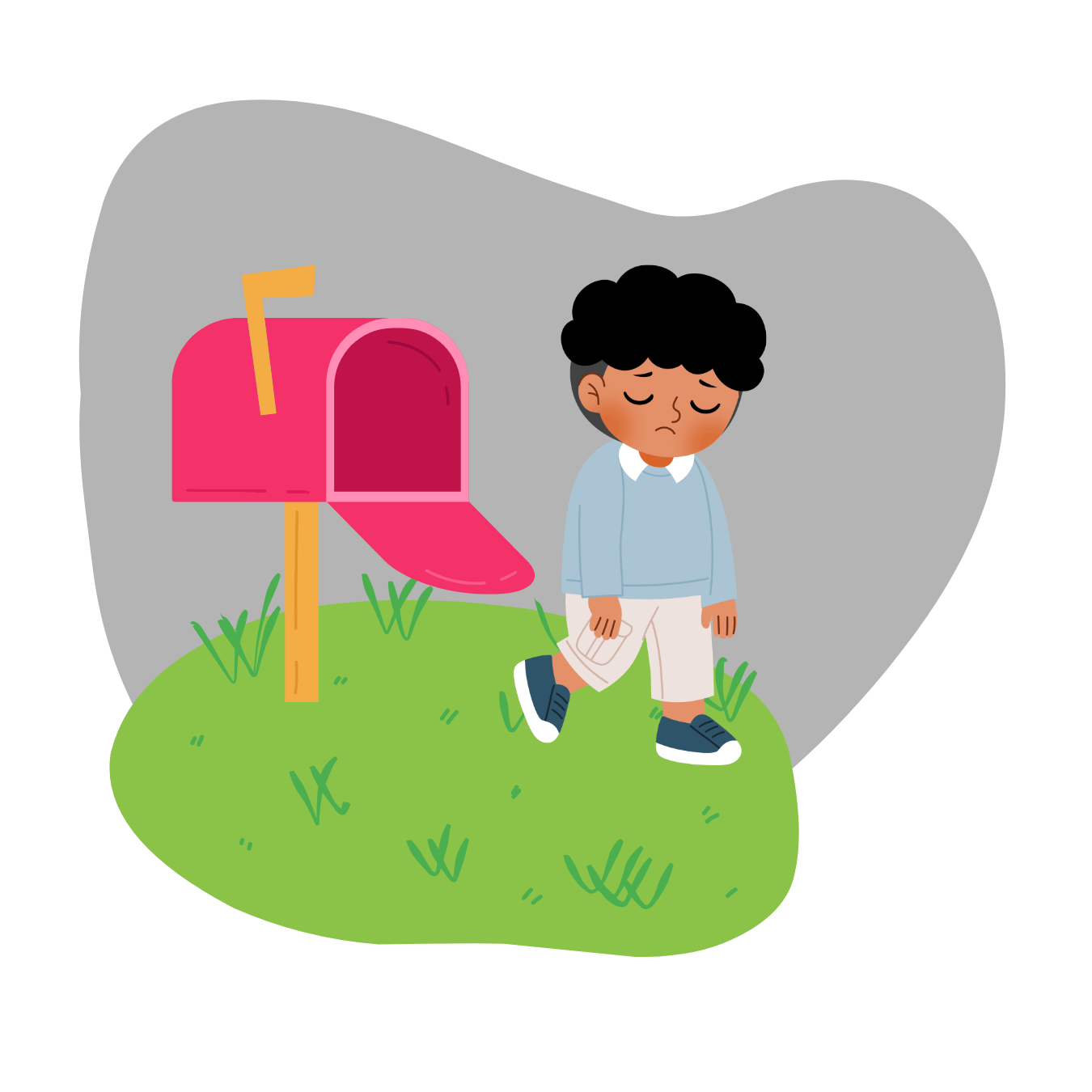
No toddler knows whether a state budget line survived committee. No preschooler understands a matching donation. No baby waiting at the mailbox can parse the difference between philanthropic structure and local affiliate funding. They only know whether the book comes.
And that is why these cuts matter.
The Imagination Library is not a complete literacy solution. No single program is. A book in the mail does not replace school libraries, public libraries, well-funded classrooms, speech services, stable housing, paid parental leave, or adults with enough time and margin to read aloud at bedtime. It does not solve poverty. It does not repair every gap.
But it does something beautifully concrete. It puts books in homes so children can become readers before anyone starts measuring them as readers.
That timing matters. We often treat literacy intervention as something that begins after a child is already behind. We wait for the assessment, the score, the flag, the remediation plan. Then we act as if the problem appeared out of nowhere in second or third grade.
It did not.
A child’s relationship with language begins long before formal reading instruction. It begins in laps, grocery carts, waiting rooms, back seats, bedrooms, church nurseries, and library storytimes. It begins when a grown-up points to a picture and says, “Where is the dog?” It begins when a child learns that pages turn in a certain direction, that stories have rhythm, that pictures hold meaning, that words can be memorized before they can be decoded.
Those moments are small. They are also foundational.
The great strength of the Imagination Library is that it understands access in a very ordinary way. Not every family can get to the library regularly. Not every town has easy transportation. Not every parent knows which books are developmentally appropriate. Not every caregiver has the money to build a home library. Not every child has someone in their life who can casually order a stack of board books.
A mailed book removes several barriers at once.
It does not ask whether a parent has gas money. It does not require a library card. It does not depend on a caregiver already knowing what to choose. It arrives. Month after month, it arrives.
And yes, public libraries already provide free books. I believe in public libraries with my whole professional soul. But anyone who works with families knows that “free” does not always mean accessible. A public library is free once you can get there, once you understand how it works, once the schedule fits, once the child is well enough, once the parent is not working, once the car starts, once the overdue fear has been soothed, once the building feels like it belongs to you.
A book in the mailbox is different.
It is a tiny act of trust delivered directly to the home.

That is also why the “Dolly will take care of it” assumption is so dangerous. The celebrity name makes the program feel fully funded. It is easy to imagine that Dolly Parton, beloved and wealthy and seemingly made of rhinestones and goodness, simply pays for all of it herself. But the program has always depended on partnership. The whole model requires communities, nonprofits, school districts, local donors, and in many cases state governments to decide that early literacy is worth sustaining.
When states pull back, they are not merely trimming a luxury. They are shifting the burden downward. They are asking local affiliates to fundraise harder, private donors to fill gaps, and families to hope their child’s county or zip code remains lucky.
That is the cruelty of these cuts. They do not always announce themselves as a child losing something. They arrive as “reduced match.” “No new enrollments.” “Local partners may continue if they secure funding.” “Existing participants may receive books as funds allow.”
The language is administrative. The loss is intimate.
A child who would have received sixty books before kindergarten may receive fewer. A newborn may age into eligibility at precisely the wrong time. A family may hear about the program from a neighbor only to discover that the door has closed. A local affiliate may spend more time chasing checks than reaching families.
And then, later, we will sit in meetings and wonder why kindergarten readiness is uneven.
We will ask why some children arrive at school with deep familiarity with books and others do not. We will ask why vocabulary gaps persist. We will ask why families do not read more at home. We will ask why public libraries and teachers are carrying so much.
Some of the answer will be that we keep cutting the tiny things that help. The small things that are not flashy, but are necessary. A book every month. A child’s name on the label. A parent with one more tool. A bedtime that includes a story because the story was there.
The fight over Imagination Library funding is not about celebrity goodwill. It is about whether we believe early literacy deserves stable public investment, or whether we are content to treat it as decorative charity.
If it is charity, then it can be praised warmly, funded unevenly, and cut quietly when budgets get tight. If we believe it is charity, then cuts are regrettable but understandable. Nice while they lasted. Lovely if someone else can pay.
But if we believe early literacy is infrastructure, then these cuts should trouble us deeply. Because infrastructure is what makes opportunity less dependent on luck. It is what turns a good idea into a reliable public good. It is what says a child should not need to be born in the right county, under the right budget cycle, with the right local donors, to receive books before kindergarten.
Dolly Parton gave the country a beautiful model. The question now is whether states and communities have the discipline to keep funding the unglamorous parts of beauty. Because children do not become readers because adults praised reading in theory.
They become readers because someone kept putting books in their hands.
https://donate.imaginationlibrary.com/
Dolly Parton’s Imagination Library — United States
Dolly Parton’s Imagination Library nears 90% of goal after state cuts — WFYI
No posts
Comments
Nothing yet. Say the first thing.
Sign in to join the conversation.