
Welcome to our 5th event editorial, written with 🖤 by Sarah Luna Mongin, edited by Annika Bautista and Aris Sevastianos.
At VivaTech’s 10th anniversary, there is one thing on Europe’s minds: sovereignty. But how it translates? Well, those who build the tech and those who write the rules are moving at two different speeds. 👀
In this edition, Sarah Luna reflects on the major insights, tensions, and discussions she spotted at VivaTech.
In May 2026, Arthur Mensch, Co-founder and CEO of Mistral AI, sat down in front of the French National Assembly’s commission on digital dependencies.
He told them: Europe has about two years before it becomes a vassal state of American AI infrastructure.
Two MPs showed up to hear it.
Not two per party. Two in total. 🫥
The underlying point of Mensch’s statement is that AI actually isn’t a software category but an energy category. Electrons in, tokens out.
So whoever controls the electricity controls who gets to build the next decade of this industry.
A few weeks later, at VivaTech, that same, resounding argument was made on every stage in the building.
Porte de Versailles in late June is its own kind of chaos.
Hall 7, three floors deep, 200,000 people.
For the first time in a decade the word on every panel, every booth, every hallway conversation wasn’t “growth” or “disruption.”
It was sovereignty. And people had receipts. 🧾
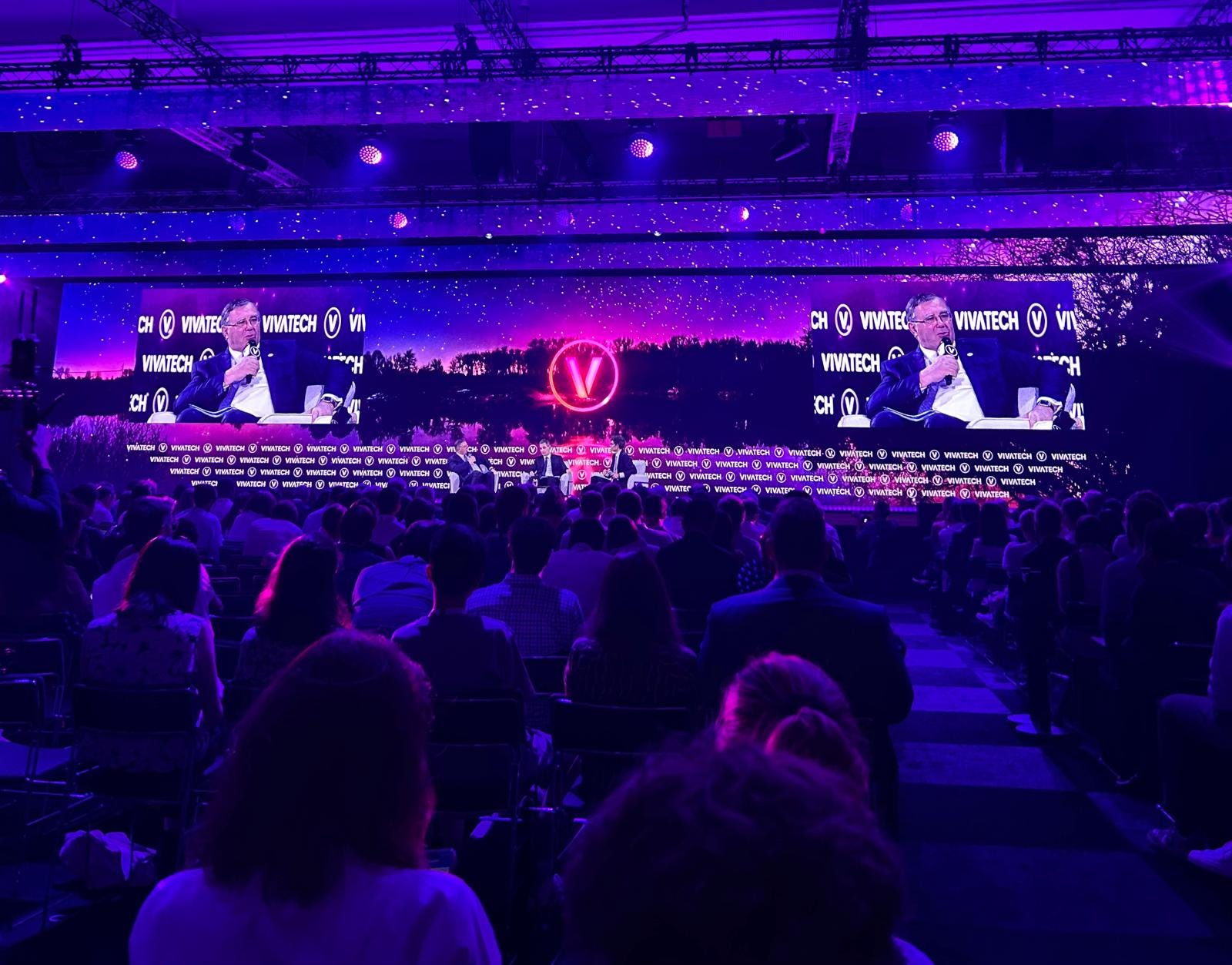
Patrick Pouyanné didn’t dress it up.
Standing on the main stage, the CEO of TotalEnergies, one of Europe’s largest energy companies made the argument that France has cheap, stable, low-carbon power thanks to nuclear energy.
Nuclear is exactly what data centers need to run at the scale AI now demands.
Build the compute where the electrons are cheap. 💸
The argument isn’t new. What’s new is the receipt.
Mistral raised €830 million in debt financing back in March, seven banks underwriting the bet, to fill a facility south of Paris, with 13,800 Nvidia GB300 GPUs and 44 megawatts of capacity.
The target was to have it running by the end of June aiming to have 200 megawatts of capacity across Europe by the end of 2027.
Later that day, Peter Steinberger, the Austrian builder behind OpenClaw, put the room’s mood into four words: we need more Mistral.
Not as a pat on the back to the French team, but as a statement about what’s missing everywhere else.
Europe has exactly one AI lab that gets mentioned in the same breath as the American labs.
The sharpest version of the sovereignty argument came from the defense talk, where Antoine Bordes, Chief Scientist at Helsing and Jeannette zu Fürstenberg, Managing Director at General Catalyst laid out something closer to a doctrine than a pitch.
Autonomous mass isn’t the hard part anymore. Drones are cheap. Hardware is solvable.
What actually determines who wins is the software running inside that hardware. That software has to be European, trained on data the company collects itself, with its own platform, because data scraped from someone else’s system never transfers the way you need it to.
Ukraine is the proof of concept nobody asked for: an entire military rebuilding its doctrine in real time, adapting new systems and retraining troops faster than any peacetime procurement cycle would ever allow.
The paper Helsing’s people kept gesturing back to laid out what strategic autonomy actually requires in numbers: something in the order of half a trillion euros for Europe to stand fully on its own. 💰
That’s definitely a generational bet. But, right now, no government has fully taken that risk.
This was underlying tension in every panel, even the optimistic ones.
Germany came in as Country of the Year, the largest delegation VivaTech has ever hosted, and Airbus got wheeled out (again) as the proof that Franco-German cooperation can build something neither country could build alone. 🤝
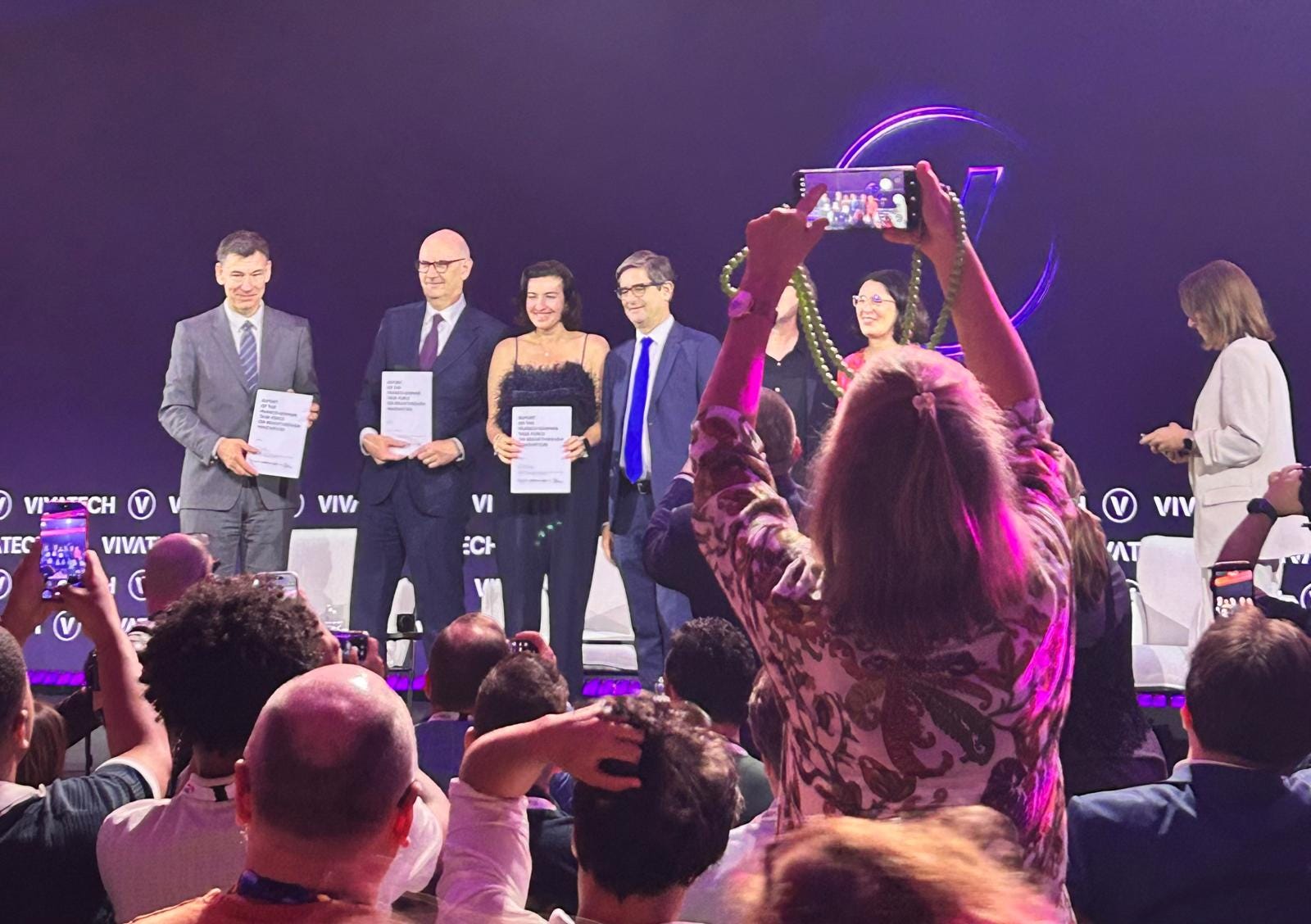
It’s a good story.
It’s also thirty years old.
The newer story, the one nobody puts on a slide, is that European governments still default to buying American before they buy from a neighbouring European company.
There’s a version of this story that’s genuinely encouraging, and it’s easy to miss if you only read the funding headlines.
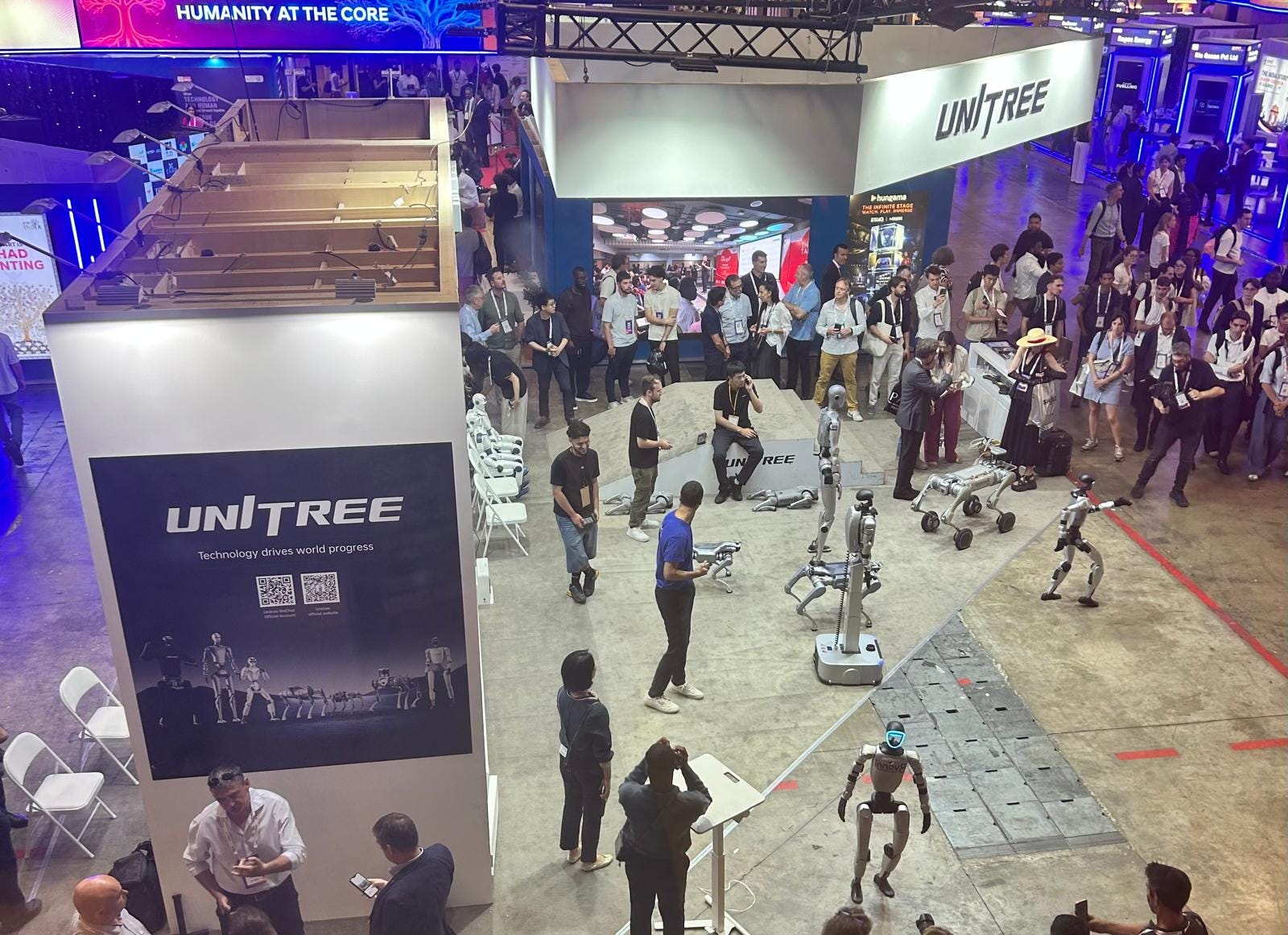
Robotics, supposedly the category Europe lost, might not be lost at all.
Google has spent fifteen years and an enormous amount of capital trying to crack physical AI and hasn’t gotten there yet.
Some of the actual godfathers of robotics, the people whose research the whole field still cites, have been quietly working in Europe the entire time.
Layer that against Germany’s automotive component stack, the deepest and most mature precision-manufacturing supply chain on the continent. You get something that looks like a moat nobody’s finished digging yet.
Embedding AI models into physical systems is hard in a way that pure software isn’t. Europe’s industrial base might be its actual unfair advantage that paves the way for its fighting chance.
The quieter thread running through all of this: the people.
As these systems get more autonomous and more complex, the open question stopped being “can the technology do this” and became “how do you put a human in a position to actually understand what the technology is doing?”
Mass-produced drones and embedded AI models don’t remove the human from the loop. They just make the loop a lot harder to follow.
On the infrastructure side, genuinely, yes, measurably, with steel in the ground and chips already running.
On the politics side…not quite. We’re still not at the speed the infrastructure demands.
So yes, Europe has the talent and, increasingly, the hardware.
But the buyers and political will? Not quite.
Will politics catch up in time for Europe to shine? The jury’s still out.
No posts
Comments
Nothing yet. Say the first thing.
Sign in to join the conversation.