
Hello hello! This is the conversation I promised to deliver with the one and only Vanya Bagaev – a fiction writer who defies not just genre but also language barriers. We talked about writing in a second language, the weirdness of translation, and more. You can find most of Vanya’s fiction here, and you’ll find his musings on Substack as well. I would recommend starting from Lingus Venus, not only because it’s a story revolving around (not always human) language, but also because it’s one of the best short stories I’ve read this year. Enjoy!
By the way, this is the first in a series of posts called “Babbling about language(s)”, so if you or anyone you know has an interesting perspective or experience when it comes to learning languages, approaching language, or anything similar (we’re a broad church here), just say so in the comments section and we can arrange a chat.
Oleg
Okay, so where do you want to start mate? [notice how the interviewer is opening with an open question].
Vanya
So I thought we could talk about how you and I write in different languages. To me, the most intriguing aspect is how writing in one language affects your writing in another language. In my case, I wasn’t really writing in Russian for many years. And then three years ago, I started writing about my work, mostly professional stuff, data analytics, and such. With a lot of English terminology, because in the field of IT all the terms are still English, at least in Russia.
Oleg
Like “biznis” and “menedzhment”.
Vanya
Exactly. So I started writing in English during the COVID lockdown, when I also started reading books in English. This was new for me, as I only watched movies with subtitles and whatnot. Interestingly, it felt more normal for me to write in English. Writing in Russian was more of a thing to try for a long time.
I tried writing a few essays in Russian and then translating them into English. Because when I write in English, well… I wouldn’t call my writing “all over the place” but it’s definitely more unhinged. Because I never know 100% how things should sound in real life. Dialogue is easier because I’ve watched plenty of films, and I can imitate things I heard. Films teach you how people speak. But prose in general is a whole different matter. People say “your prose is unique” and I’ll take that as a compliment. When I write in Russian, there’s no such thing. It’s more restrained. When I translate it, you can still feel it’s a bit unusual but it’s nowhere as weird as the things that come out in English first.
Oleg
Do you feel that you play by the rules more when writing in Russian? That you try to stick to a more formal register? You're more mindful of syntax, punctuation, and other things, right?
Vanya
I think the main difference is vocabulary. When I write in Russian, I don’t mull over every word. I don’t rewrite each sentence multiple times. It’s difficult to just write a truly garbage draft. It has to at least appear more or less readable. In English, this takes more time, as I’m more careful with words, and I do have to look some words up constantly.
So I started just putting a Russian word when I couldn’t find a suitable English word, and translating it later during editing. I feel that because English is like half Latin half Germanic there are more words to choose from. Synonyms differ in tone and connotation. In Russian, I don’t feel you have that… Okay, you probably do but it’s different.
Oleg
Speaking a language at a native level, we instinctively know what word is suitable in which context. You wouldn’t use the word плут [a super archaic word for liar] when you’re accusing someone of being a liar, right? But when you’re writing in a second language, you’re experimenting and creating these weird mash-ups. Like Nabokov did! When you read Nabokov, you can’t help but be amazed by how playful he is with English. He’s always looking for a way to plug in more alliterations, double entendres, innuendos, puns. People don’t speak English the way Nabokov wrote it. And I think he was aware of it, despite, or maybe because of the mastery he had achieved in his second language.
“My private tragedy,” Nabokov wrote, “which cannot, indeed should not, be anybody’s concern, is that I had to abandon my natural idiom, my untrammeled, rich, and infinitely docile Russian tongue for a second-rate brand of English.”
Vanya
I guess, when you start writing predominantly in English, you start to lose some intuition about more colloquial stuff in the first language but don’t yet have a full picture of what’s colloquial in the second language.
Oleg
And there are different shades of colloquialism. I’m way better at writing in English and Lithuanian, as I use both professionally, and have written things across different styles and genres. But if you asked me to write dialogue in Russian, it would sound closer to the variant of Russian spoken here. And when it comes to “mainland” Russian, I don’t get references that are past a certain cut-off point. I get the ones related to Soviet cinema, but modern Russian culture… I’m literally lost. I remember, when I went to pick strawberries in Finland in 2007 or 2008, there was a lot of folk from Petrozavodsk, Cheliabinsk, Ufa… I’d just sit there and nod, cause I knew the language but couldn’t relate to almost anything they were talking about.
Vanya
Well, when you work in IT in Russia, your language becomes part English (Ruglish), part prison slang, because the work environment is way more toxic than in Western Europe. And then you have a lot of references and colloquialisms. So that language would be impenetrable to a foreign student of Russian, for example.
Oleg
I remember watching this YouTube video on The Cut where participants had to guess the language the other people were talking. And so there was this Black guy from the States who spoke Russian. Not necessarily the most perfect Russian, but pretty good nevertheless. And for some reason he chose to just go super vile… Other people would go for stuff like “hi hello, do you understand me?” and the guy just went… “suck my dick passionately like a little whore”. Like the kind of language you’d hear in Counter-Strike chats.
Funny how a perception of a culture does that to you.
Oleg
There’s an interesting difference I notice between me writing in English and Lithuanian. In the latter it feels like you’re always aware of the difference between the “correct” and “incorrect” way. I mean, we have a language academy (like in France) that polices the speech in public. When a TV presenter uses a word in dialect or an informal variant, they’ll usually apologise for offending the language guardians. And a TV station can actually get fined if presenters make too many mistakes. There’s even an official list of grave mistakes! And when I worked as a translator, I was super aware of that stuff, and to this day I get PTSD when writing in the language, even if it’s just some silly fiction that no one will publish. In English I don’t really have that, but I have a feeling that I’m writing the wrong way, faking it basically. I couldn’t write a story set in Manchester, for example, as I can’t imitate the way Mancunians speak. So it’s easier to write speculative fiction or sci-fi.
Vanya
Since I live in the UK, a lot of the content I consume in terms of films and shows, is in English, mostly British English. So when I’m writing dialogue it’s easier for me to draw from that pool than use an American or international version of an expression. Of course, I can also verify if this is the way people talk. Funnily enough, I don’t interact much with native Brits in real life, as many of my colleagues are expats, too. I can also ask ChatGPT to help me make a sentence sound like it would be said by someone from Yorkshire if I need that, and I even verified some with Craig (shout out!!!) as legit.
Oleg Volkov
That's, that's cool. Although I always fear that a language model, any language model, is still quite limited. I don’t know if the expressions I grew up with (like “if you swear, you pee out tomato juice” – sounds better in Russian, cause it rhymes) are mentioned anywhere on the internet. Or weird Lithuanian prison slang. Some registers might be invisible to AI, and maybe that’s a good thing.
But enough about my musing. Let’s get down to biznis. How do you write? Is it writing first in one language, and then translating it to a different language?
Vanya
So what I was used to doing before was mostly writing in English, sometimes only in English, and then just editing it. And at the same time, I was drafting some of the parts in Russian, sometimes you just don't feel like it sounds right in English, or in a wrong mood. For example, if I read mostly Russian books, I often tend to write in Russia too, and vice versa. Then, recently, I think I started just writing in Russian first, and then translating and editing. This is what I did with my last story [note to readers – owing to Vanya’s prolific output, we’re probably talking about a story posted 5 stories ago]. It’s faster that way. But one thing I don't like is writing dialogue in Russian because they feel weird. And for some reason, I don't think they sound that natural, like when I translate them. It’s just not how people speak. Right? So I don't really, I don't really write them like they would speak in Russian right now. But when I translate in English, this kind of gets to some sort of register on vocabulary that I have from books or films.
Oleg
It's interesting how through imitating other art, you get a more natural sound than trying to imitate the natural sound.
In Lithuania, we have old-school editors, who will, you know, basically, you know, squeeze out all the joy or visual appeal a dialogue might have. You see it in some translated books, especially those translated haphazardly. The gig doesn’t pay well, so you have people translating several books simultaneously, working long hours, cutting corners.
I mean, the quality is increasing, we have like amazing translators, amazing editors, but sometimes, you know, like, especially if, like, you feel that it was rushed, like the translation itself, and we even had like, an award for like, the worst translation, then you would, like have nominees who for some reason, like somehow, in one year, I managed to translate seven books from free languages. I mean, good. doesn't really work that way.
Vanya
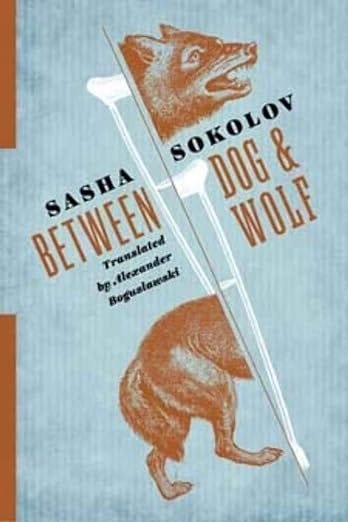
Sometimes translations are incredible, though. That’s when they spend like dozens of years. Like for Ulysses or Finnegans Wake. I don’t know how but somehow they managed to translate it. There was this recent translation of Finnegans Wake to Russian. And it’s like this amateur translation, from just a very enthusiastic anonymous guy with an anime avatar. I haven't read it, but some people say it's good. The opposite example would be the translation of Between Dog And Wolf by Sasha Sokolov to English. Its Russian original is full of slang, colloquialisms, and such, and even as a native speaker from quite a rural area, I don’t always understand every word. Yet they still managed to translate it.
Oleg
Back in the day, I worked as a translator. It was mostly movies and soap operas. Turkish soap operas. And well, Turkish doesn’t have grammatical gender the way Lithuanian does. So in one dizi I was translating there appeared a dog, and I called it something like “Wind” (which is masculine in Lithuanian). Well, at the end of the series, “Wind” gave birth to a whole litter of puppies…
ON THAT NOTE, WE’RE ENDING THIS BROADCAST. STAY TUNED, READ SOME OF VANYA’S FICTION AND SEE YOU SOON!
Comments
Nothing yet. Say the first thing.
Sign in to join the conversation.