
You Don’t Have to March to Make Noise
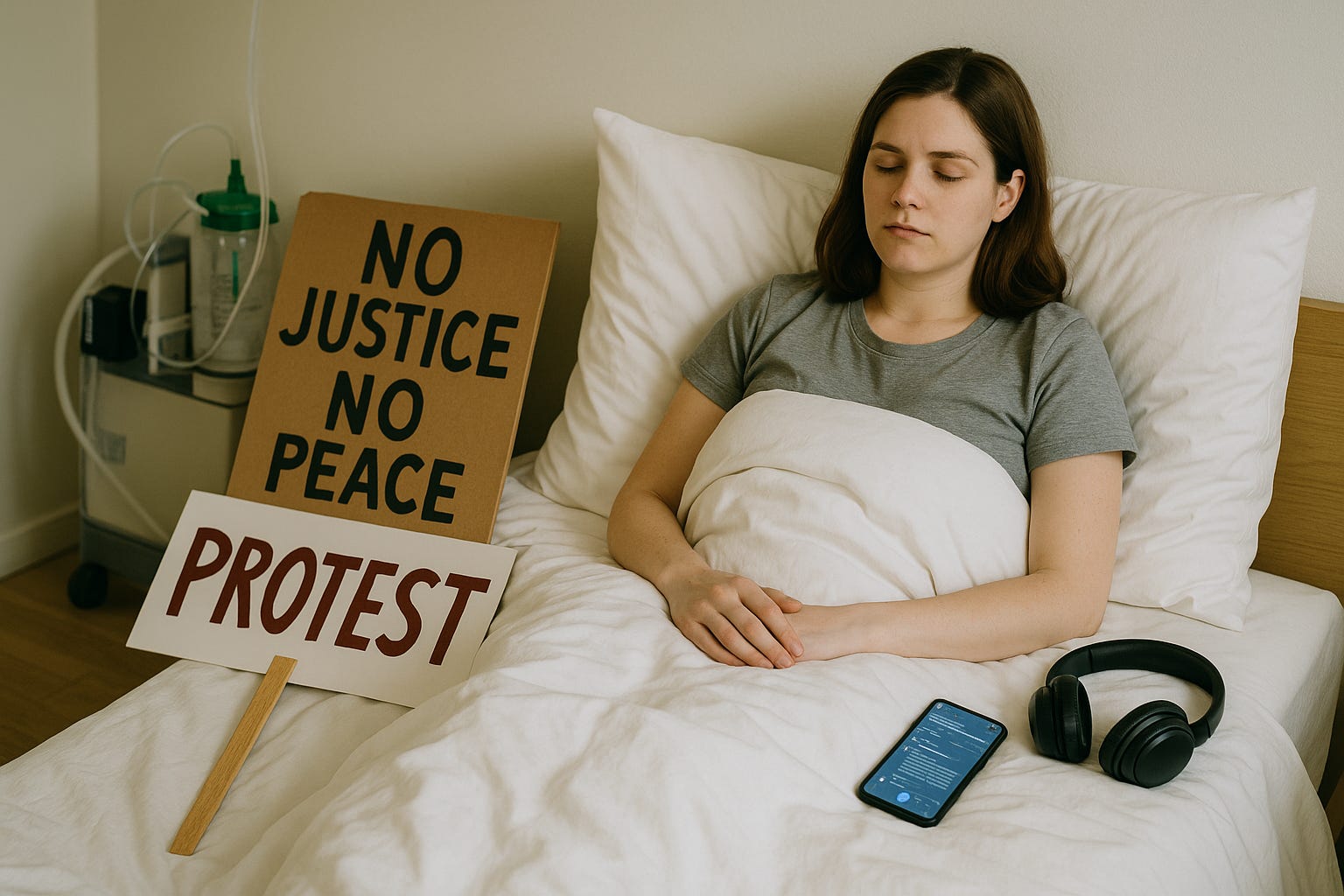
You see the crowds on your screen — chanting, marching, risking arrest, holding handmade signs in the air. And maybe your heart aches because you can’t be there. Maybe your legs can’t carry you, or your wallet won’t allow the travel. Maybe you’re a caregiver, an immunocompromised survivor, a worker on shift, or just trying to survive another day in a system that doesn’t care.
You are not alone.
And more importantly: you are not powerless.
The idea that “real” protest only happens in the streets is a lie — one often repeated by those who benefit from your silence. But movements are built from many hands in many places. Some write, some call, some code, some care, some disrupt systems quietly and precisely from within. Protest is not one thing. Resistance is not one shape.
This article is for you — the unseen, the unheard, the unable-to-be-there. It’s for the digital warriors, the broke-but-bold, the physically limited but morally limitless. Whether you’re bed-bound, budget-strapped, burnt out, or just scared — you can still be a part of this. You already are.
Let’s talk about how to fight back — from your couch, your kitchen, your hospital room, or wherever the hell life has put you.
Because you’re still in the fight. And we need you.
Want to Know Your Rights?
Download a free digital copy of the U.S. Constitution—the same document Trump is trying to bulldoze. Learn exactly what he's breaking… and how to fight back.
The Myth of the “Real” Protester
Somewhere along the way, we were taught that unless you’re in the street — megaphone in hand, marching in a crowd — you’re not really protesting. That lie serves the powerful. It turns resistance into performance and invisibility into shame. But history tells a very different story.
Movements have always been powered by people the cameras never see.
When the Montgomery Bus Boycott began, the backbone of that resistance was built by women in kitchens and church basements — printing flyers, organizing carpools, and feeding tired bodies. During the anti-apartheid struggle in South Africa, student activists in exile ran entire media operations from abroad. In Nazi-occupied Europe, women and elders smuggled information and food under the noses of soldiers. And in the fight for disability rights, homebound organizers like Hale Zukas and Judy Heumann helped launch an international movement from phones, typewriters, and hospital beds.
Today’s digital resisters are part of that same legacy.
Posting with purpose. Organizing quietly. Funding protests they can’t attend. Creating safety networks. Disrupting lies online. Supporting jailed protesters. Helping movements stay loud, even if they can’t shout themselves.
Not all resistance makes headlines.
But every movement has invisible heroes — and if you’ve ever felt sidelined because you couldn’t “show up,” understand this:
Being unable to march doesn’t mean you’re not marching.
It means you’re marching differently.
Protest takes many forms. And you’re allowed to choose the one that works for your body, your life, and your limits.
And one of the most powerful protest tools we have today?
The internet.
Digital Disruption: The Internet Is a Protest Weapon
Before we get into tactics, let’s be absolutely clear:
The internet is not just where we talk about protest — it’s where we stage it.
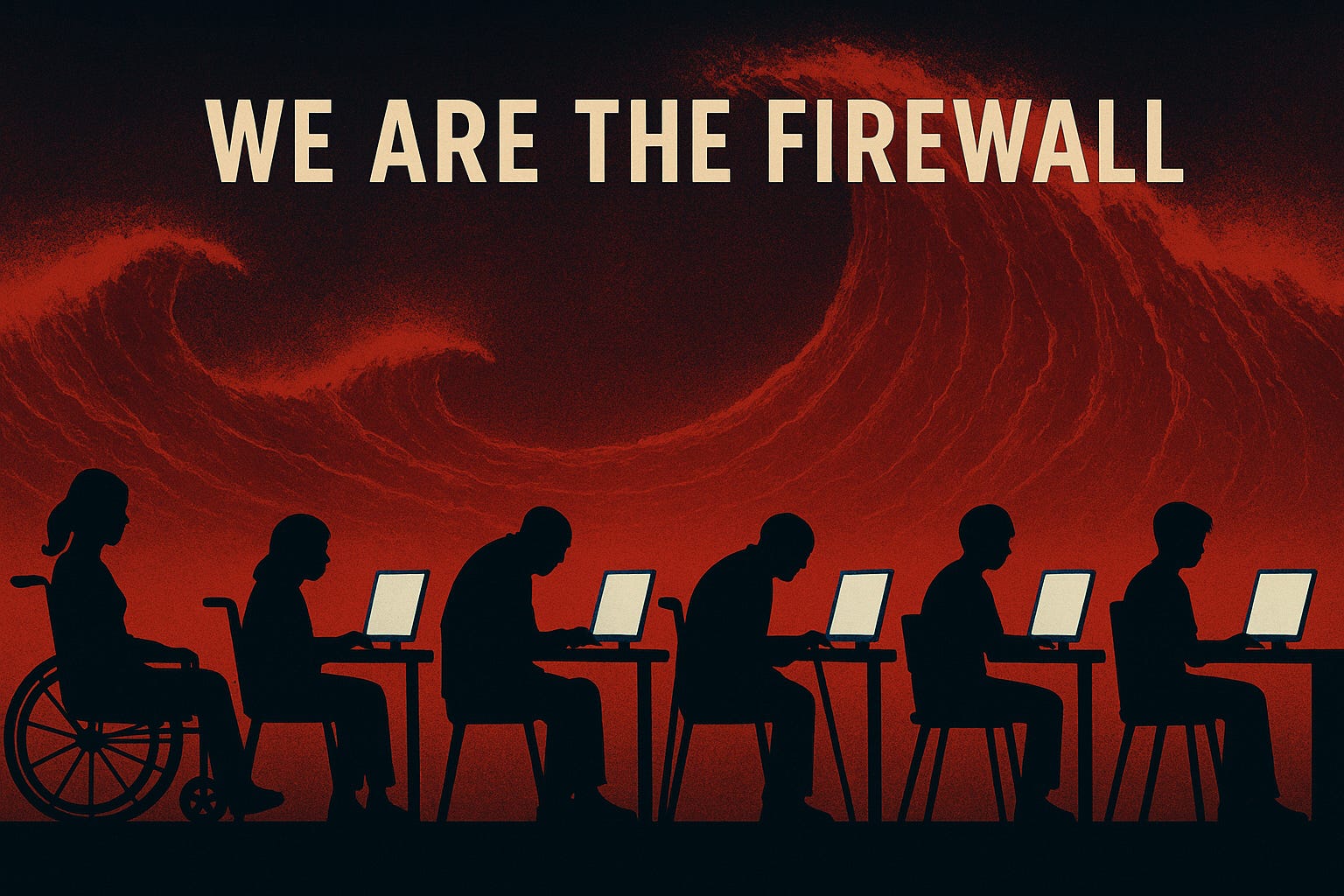
Social media, livestreams, email floods, encrypted chats, viral campaigns — these aren’t side effects of resistance. They’re tools of resistance. The modern protest movement runs on digital infrastructure, and if you’re plugged in, you’re already on the battlefield.
🌐 The Internet Has Changed Protest in Three Big Ways:
1. It Makes Movements Borderless
You don’t need to be in the same city — or even the same time zone — to fight back. The Arab Spring, #MeToo, #BlackLivesMatter, and the Women’s March all spread globally online. With a single post, a hospital-bound activist can organize more people than a street corner rally.
2. It Accelerates Outrage and Response
What once took months to coordinate now takes minutes. Videos of injustice go viral. Donor links get shared. Petitions and call-ins are launched before the sun sets. Speed is power — and digital resistance is fast.
3. It Forces Power to Watch Itself
Live footage, screenshots, and real-time updates have become shields and swords. You don’t have to be there in person to document brutality, to spread evidence, or to remind the world that someone is watching.
How to Protest Online Without Leaving Your Couch
Hashtag Storms & Trend Hijacking
Join mass-coordinated hashtags (#FreePalestine, #StopCopCity, #AbolishICE) at peak hours to trend topics and flood feeds. Tools like TweetDeck help you schedule blasts. Use threads, tag lawmakers, and reply to media outlets.
Mass Email & Call Flooding
Use tools like Resistbot, 5 Calls, or FaxZero to overwhelm lawmakers with coordinated messages. Even one click can generate hundreds of emails when done in sync with others.
Amplify Livestreams & Footage
When frontline protestors go live, boost their streams. Repost their footage. Comment, like, and share it across platforms. Visibility = safety.
Disrupt Misinformation
Use quote tweets, comment replies, and stitch/duet functions to correct disinfo and redirect people to credible sources. Even one well-placed response can undermine viral lies.
Join Digital Raids & Review Storms
Help target institutions enabling harm by swarming their digital presence:
Bomb Yelp or Google reviews of complicit companies.
Comment on sponsors’ posts.
Hijack hashtags or livestream chats used by bad actors.
Economic Resistance: Power in the Purse
You may not have money to spare. Most of us don’t. But you still have economic power — because even not spending is a political act.
Every movement in history has relied on economic resistance. The Montgomery Bus Boycott brought a transportation system to its knees. The United Farm Workers made grapes a symbol of dignity and exploitation. Corporations fear one thing more than bad press: lost profit.
And here’s the truth: You don’t have to leave home to hit them where it hurts.
Withhold Your Dollars
Refuse to buy from companies funding oppression — like those supporting ICE detention centers, union-busting, or climate destruction.
Check for active boycott lists from groups like Sleeping Giants, Grab Your Wallet, and Ethical Consumer.
Unsubscribe, unrenew, unfollow. It all adds up.
Support Where It Matters
Buy from protest-aligned mutual aid efforts, worker-owned co-ops, and community funds.
Redirect even tiny donations toward bail funds, activist stipends, and grassroots organizers. (A $5/month Patreon is protest.)
Stand in Solidarity with Strikes
Don’t cross digital picket lines. If a union asks you not to buy, click, or stream, honor that.
Boost their message online, even if you can’t donate.
Email or call companies with “I won’t support you until you meet your workers’ demands.”
Spend with purpose. And when you can’t spend, withhold with fire.
But resistance isn’t just about where your money goes — it’s about how you organize your energy. And that, too, can happen entirely from home.
Remote Organizing: Protest from Your Laptop
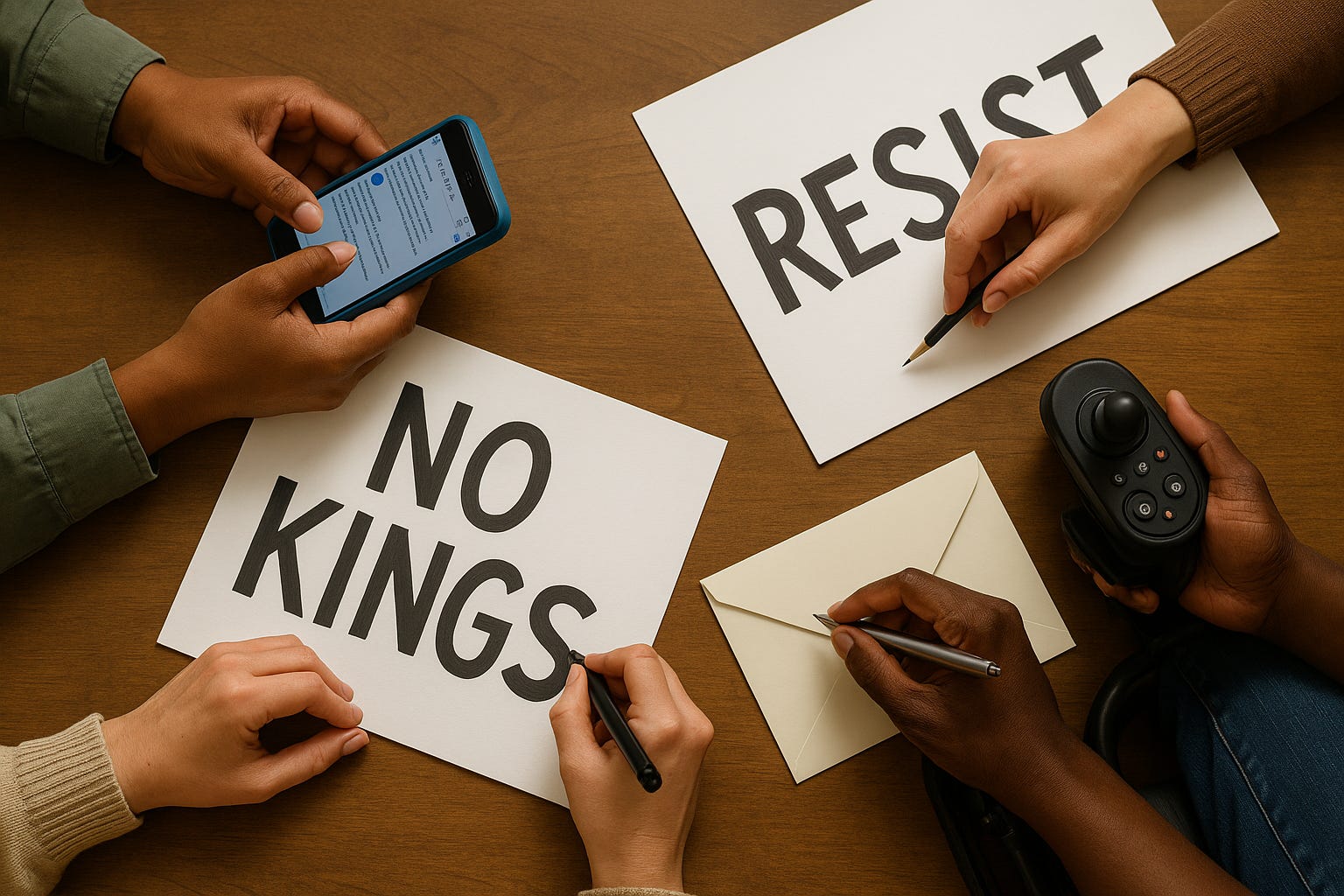
You don’t need a bullhorn or a gas mask to help organize a movement. You need wifi, willpower, and a little coordination.
Behind every successful protest is a web of people scheduling, moderating, emailing, designing, coaching, and making sure the entire thing doesn’t fall apart. And a huge number of those people? Are doing it from their living rooms, bedrooms, and hospital beds.
If you can send an email, run a Zoom call, or even just keep a spreadsheet updated — you’re already qualified to organize.
Ways to Plug In from Home
Phone and Text Banking
Campaigns for legislation, mutual aid, and candidates all need remote volunteers.
Tools like CallHub, Thrutalk, or Movement Labs let you join right from your device.
Scripts are usually provided — you don’t have to be an expert, just consistent.
Digital Volunteer Work
Graphic design, writing, social media captioning, newsletter formatting — all done remotely.
If you have Canva, you can help.
If you know Instagram or TikTok, you can help.
If you can proofread or make a flyer, you can help.
Admin and Strategy Roles
Help with internal calendars, meeting notes, group emails, or Discord moderation.
Organize reading groups, teach-ins, or healing circles from Zoom or Signal.
Keep morale high by coordinating check-ins or rest breaks for frontline teams.
Start or Join a Remote Collective
If local orgs aren’t accessible to you, start a digital cell. Even 3–5 people can coordinate effective action online.
Use Reddit, Mastodon, or secure tools like Signal to stay connected and tactical.
There is no protest without organizers.
And you don’t have to be in the room to run the room.
Creative Resistance: Culture Is a Weapon
Art has always been dangerous to power.
It sneaks under defenses, moves people emotionally, and spreads like wildfire — sometimes faster than policy ever could.
You don’t need to shout to fight.
Sometimes you just need to create something they can’t ignore.
From punk zines in basements to protest murals on burned-out walls, culture shapes the emotional narrative of a movement. And now, anyone with a phone, tablet, or laptop can be part of that storytelling revolution.
You just need to create — and let the message travel.
And sometimes, the most radical act isn’t to create, but to care. That’s where emotional labor becomes protest, too.
Ways to Use Creativity as Protest
Make Subversive Content
TikToks, memes, reels, carousels — format doesn’t matter as long as the message cuts deep.
Turn policy failures into satire. Turn statistics into rage. Turn silence into signal.
Remember: humor disarms, visuals spread, and emotion moves faster than logic.
Write to Disrupt
Essays, newsletters, poems, rants — whatever your voice, use it.
Platforms like Substack, Medium, Tumblr, even fanfiction forums can carry protest messages into new places.
Your story might be the one that breaks through someone’s apathy.
Create and Drop Guerilla Materials
Make printable flyers, QR code posters, stickers, zines.
Ask a friend to place them in public spaces if you can’t.
Want stealth? Use waterproof sticker paper and bathroom stalls.
Build and Share Counter-Narratives
Archive protest footage before it disappears.
Create digital libraries of banned books, zines, and testimonies.
Host public Google Docs or Dropbox folders with radical education tools.
Don’t Forget Music and Sound
Protest songs, remix culture, voice memos of chants — sound moves us.
A well-timed remix or playlist can set an emotional tone faster than a thousand tweets.
You don’t need permission to make meaning.
You don’t need an audience to speak truth.
You just need to create — and let the message travel.
Emotional Labor Is Activism
Not all protest looks like confrontation.
Sometimes it looks like care. Like showing up quietly, again and again, to hold people who are breaking. Like being the steady voice in a storm.
This kind of work often goes unseen — and undervalued. But make no mistake: movements collapse without emotional labor.
When frontline activists burn out, it’s the ones holding space, offering rest, and reminding people why they matter that keep the fire alive.
And if you’re someone who can’t march but can listen, can comfort, can support — you are vital.
I write this as someone who is disabled.
I can’t always show up in person. But this article — this Substack — is one of the ways I protest.
It's how I show up. It’s how I fight. And maybe your fight looks different, too. That doesn’t make it less. It makes it yours.
Ways to Be a Supportive Force
Offer Mental and Emotional Support
Reach out to activists you follow or know and ask: “How are you really?”
Be a judgment-free listener. Don’t give solutions unless asked. Just witness.
Normalize rest. Remind people they’re allowed to pause.
Host or Create Digital Healing Spaces
Hold Zoom “decompression rooms” after big protest days — music, breathing, quiet conversation.
Organize virtual grief circles, community care meetups, or art-as-therapy sessions.
Use platforms like Discord, Telegram, or Signal for safe peer support.
Send Messages to Protesters or Political Prisoners
Letters, emails, voice notes — even a sentence like “You are not forgotten” can change someone’s week.
Groups like Black and Pink, Prisoner Correspondence Project, and Write to Resist can match you with people to write.
Help Raise or Direct Funds
Coordinate donation drives, repost emergency mutual aid asks, or vet fundraisers for scams.
Use your network, not just your wallet. Sharing links is action.
Care is resistance.
Quiet support is a radical act.
And holding others up when you can’t be on the front line? That’s leadership.
Your Resistance Toolkit
You don’t have to invent the wheel. These tools are ready for you — now.
💻 Digital Protest Tools
Resistbot – Text “RESIST” to 50409 to send letters and emails to lawmakers.
5 Calls – Choose your issue, call your reps with auto scripts.
FaxZero – Send free faxes to Congress and governors.
🎨 Creative + Culture Resistance
Canva – Make protest flyers, quote cards, zines, and infographics.
ZLibrary – Access radical books and banned history (use a VPN).
QR Code Generator – Link petitions, videos, or donation sites.
🧠 Organizing and Volunteer Networks
Movement Labs – Join digital campaigns from anywhere.
Mutual Aid Hub – Find and support grassroots local aid groups.
Progressive Coders Network – Volunteer your skills remotely.
💌 Emotional Support and Solidarity
Black and Pink – Write to LGBTQ+ political prisoners.
Write to Resist / Prison Radio – Support and amplify incarcerated voices.
Prisoner Correspondence Project – Connect through penpal solidarity.
You Belong in the Movement
If you’ve ever looked at a protest and felt like you were watching from behind glass — this is your reminder: you are not outside the movement.
You are in it. Right now.
Whether you’re resisting from your phone, your bed, your desk, your low-wage job, or your caregiving shift — you are part of the struggle. You are shaping it in ways you may never fully see. But it counts.
There is no “real protester” uniform. No purity test. No requirement that you sacrifice your health or your stability to be worthy of fighting back.
This movement needs people at all fronts.
People who speak. People who plan. People who comfort. People who disrupt.
People who can’t leave home — but still refuse to be silent.
Whatever way you can show up — show up.
Whatever tool you can use — use it.
Whatever strength you have — give it. Even if it’s quiet.
Because power hopes you’ll feel helpless.
But you’re not. You’re part of this. You’re already doing the work.
And the truth is, revolution has always made room for people exactly like you.
Epilogue: From This Chair, I Rise!
I don’t march.
I don’t run.
I don’t shout through tear gas.
But I resist.
From this chair, with my words, with my witness, with whatever strength I have left that day — I protest.
Not in spite of my limits, but because of them.
Because the world is designed to leave people like me behind.
And that makes my voice necessary.
So if you’re reading this, wondering if your quiet effort matters — let me answer you clearly:
It does. You do. This is your fight too.
You don’t need to stand to rise.
You don’t need to scream to be heard.
And you don’t need to march to move the world.
Never Stop Fighting!!!
📚 Sources & Further Reading
Zinn Education Project. “The Women Behind the Montgomery Bus Boycott.”
https://www.zinnedproject.org/news/tdih/jo-ann-robinson-montgomery-boycott/NPR. “Judy Heumann, Disability Rights Activist, Dies at 75.”
https://www.npr.org/2023/03/04/1160950165/judy-heumann-obituaryThe Guardian. “Arab Spring: How Social Media Helped Spark a Revolution.”
https://www.theguardian.com/world/2011/feb/25/twitter-facebook-revolutionDisability Visibility Project. “In Memoriam: Hale Zukas.”
https://disabilityvisibilityproject.com/2020/10/30/in-memoriam-hale-zukas/Big Door Brigade. “Mutual Aid Explainer & Toolkit.”
https://bigdoorbrigade.comMovement Labs. “Remote Volunteer Opportunities.”
https://movementlabs.com
This Substack is reader-supported. To receive new posts and support my work, consider becoming a free or paid subscriber.
Comments
Nothing yet. Say the first thing.
Sign in to join the conversation.