
The first time I ever seriously engaged with a book1, I was 22 years old2. Ten years later, at the end of 2025, I’ve recorded a personal record. Some writers claim to read 100+ books per year. I didn’t come anywhere close to that. Years ago, if someone had told me they’d read 50-100+ books in a year, I’d have thought they were either lying or had skimmed through the bulk of them. In reading what was for me a noble amount, I realized both how difficult and easy a goal it was to accomplish. Difficult because modernity works entirely against the slowness, silence, and introspection required to read deeply and consistently. Easy because we completely underestimate the amount of time we spend staring at screens.
But of the 47 books I read in 2025, these are the ones that transformed me the most, and how they coincided with my personal life, in the order they were read. I make no claim to literary criticism here. Only to personal influence.
A Ballet of Lepers – Leonard Cohen (January)
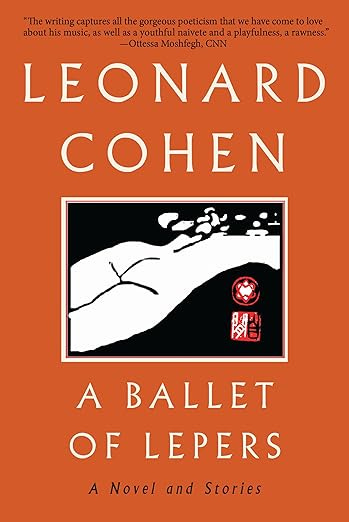
A posthumous novel + short stories by the late-great musician and writer Leonard Cohen. The titular work, which is more of a novella than it is a novel, is the main subject of focus here. I have not read the short stories in this collection.
At the beginning of the year, I was in a rut in terms of what to read. Turning to my evergreen companion in literary fiction, I decided to re-read this for the second time, remembering how bold I thought it’d been after reading the first time, in 2022.
A demoralized low-level clerk begins to stalk a physically inferior and grotesque looking man he meets at the train station, committing small acts of violence against him, which turn to obsession as he increasingly involves himself in his victim’s personal life. The protagonist frames this quest as a noble crusade against impurity, justified not only by the man’s ugly appearance, but by the patheticness of his private endeavors. An unusually cruel book. In hindsight, I interpret a symbolic layer of cruelty: that one chooses one’s enemies in trying to purge weakness from oneself — that the externalized form of one’s own repressions is what one battles against in others.
Waiting for Godot – Samuel Beckett (March)
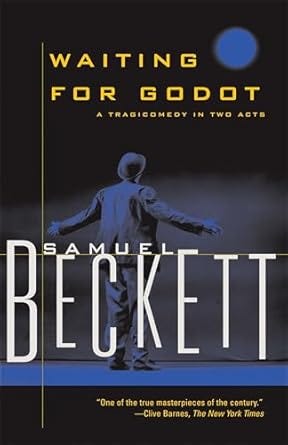
Literary fiction has always held primary rights over my attention as a reader. But early in the year, I began to develop a temporary boredom around it.
I found refreshment in the form of drama, which, stripped of all narrative ornament, allows for a more immediate tension to arise from the page, through dialogue.
In Beckett’s magnum opus, two companions wait beneath a tree for a man named Godot who never arrives. Day after day, they endure the same hapless position, waiting… waiting…
But nothing actually happens.
Beckett manages to transform this bleak existentialism into something absurd, witty, and comical, while retaining its tragedy.
Much of it seems to make little sense — or to seem arbitrary, but such is life, isn’t it?
The Florentines: From Dante to Galileo: The Transformation of Western Civilization – Paul Strathern (April)
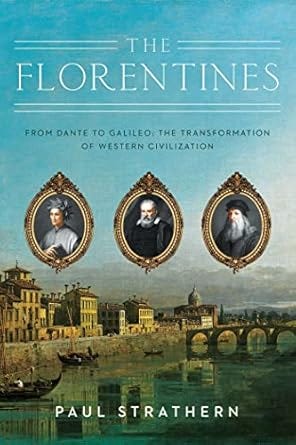
A general but thorough meditation on the great artistic and revolutionary minds of the Renaissance.
After spending some time in Italy the previous year, I developed a fascination with the city of Florence. Not just as an artistic capital, or the axis of the Renaissance, but as the nexus of modernity that saw the development of humanism, planted the seeds of early capitalism, and initiated the subordination of myth to reason.
It is hard to reconcile my romanticization of the cultural Florence with my fascination with its financial-political power structure. There is a visible pipeline here from the House of Medici to the billionaires of today, minus the art commissions and cultural obligations.
Tao Te Ching – Laozi (April)
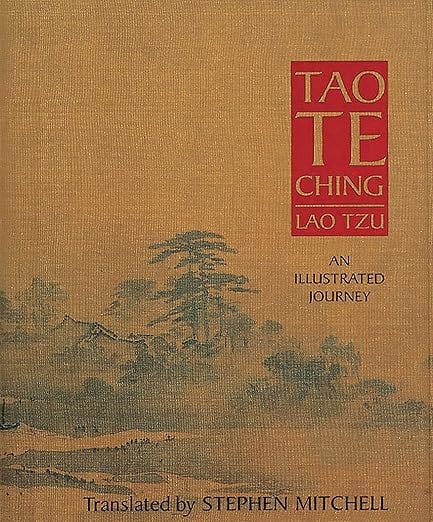
Waiting for Godot had awakened an ontological emptiness in me. And at the same time, I was becoming increasingly aware of my own spiritual corrosion, due to personal events.
Earlier in the year, I’d read a biography on Henry Miller, one of my favorite writers. I read that Miller was deeply inspired by Taoist thought, and that he often carried a copy of Tao Te Ching with him on his travels. I’d been attracted to Miller not entirely for his bravado and sexual frankness, but more for his spiritual vitality and metaphysical rambling. So, naturally, I gave this a try.
I felt, for the first time in a long time, after engaging earnestly and often with the text, that my interior began to slow down. On a good day, the result was total immersion in presence — stillness, faith, tranquility — without distraction or escapism.
Tao Te Ching, as something I’ve returned to again and again throughout the year, has been a dose of oxygen in a suffocating void.
The Gospel of Thomas – Unknown (May)
Taoism, as a philosophy, had reignited in me a deep interest in metaphysics, away from the concrete “objectivity” of the modern scientific world.
Logic and reason could offer explanations for a deteriorating interior state, but it could not offer a solution — aside from medication, which had acted more as a bandaid, only ever exacerbating my issues in the end, without resolve.
I grew up in a traditionally religious household. My stepfather was a Southern Baptist. My mother homeschooled me and my two sisters, in an attempt to separate us entirely from the influence of secular life. Because of this, I am fairly allergic to the dogma of any traditional religion, and so began my interest in esotericism and mysticism.
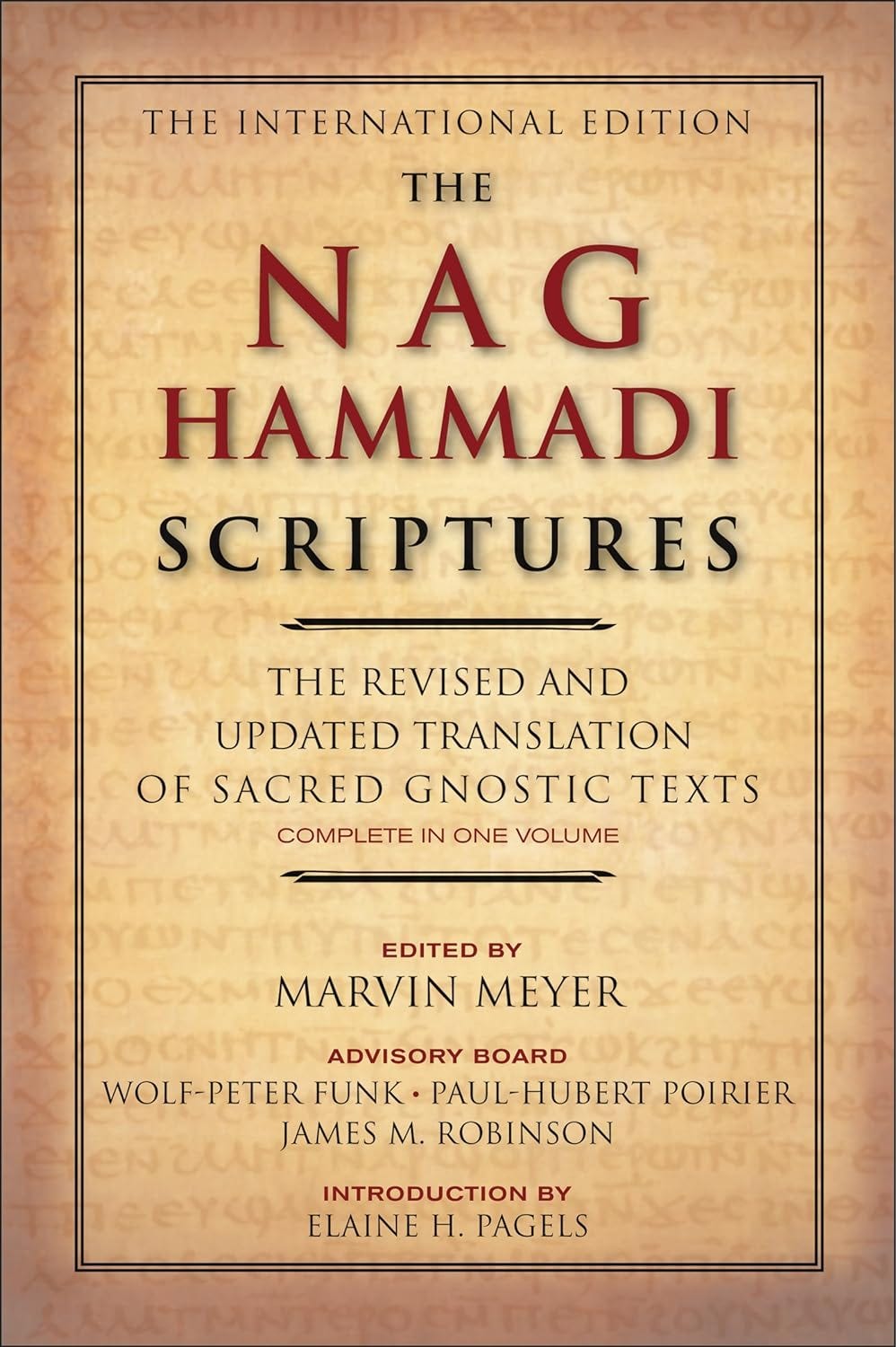
The Gospel of Thomas is a Gnostic text — one of several ancient texts discovered in Nag Hammadi, Egypt in a cave in 1945, by two farmers.
These texts paint an alternative picture of Christianity and its non-linear development.
Upon reading, it’s easy to see why these texts were banned by the Orthodox Church, which at the time was tightening its grip, forcing a narrative around which books would make up the canonical bible and which would not.
It is obvious that the nature of these texts threatened the power of the church, in offering gnosis (Greek for “inner knowledge”) as the solution to salvation, and challenging the now well-known narratives of the canonical bible, casting Judas not as a villain but a martyred disciple, and Mary Magdalene, a prostitute, as Jesus’ favored apostle.
The Gospel of Thomas is a book of 114 paradoxical and often confusing sayings by Jesus, to the apostle Thomas.
It is not something that can be read through the lens of logic. It is therefore difficult for me to explain its profundity using logical tools.
There are some obvious patterns between the gnostic texts and Tao Te Ching, in the way they both wield paradox in order to break the thread of logic and offer a more holistic view of truth.
I began to see the value in interpreting the symbolic truths of Christianity and not the literal “truths”. Not exclusively Christianity, but religion in general.
“The path to Heaven is narrow” took on an entirely new meaning for me. One that is both ironic and hidden.
The Red Book (Liber Novus) – Carl Jung (June)
I’d deviated at this point pretty far from my typical diet of literature, having given up on linear narratives and narratives in general. Later on, having introduced more esoteric books into my diet served me well as a reader and writer of literary fiction, deepening my experience with narrative and the awareness needed to read beyond the literalism or realism of a story to sense its metaphysical structure underneath. I’d come to realize that all fiction — all art — whether intentional or unintentional, served a symbolic undercurrent.
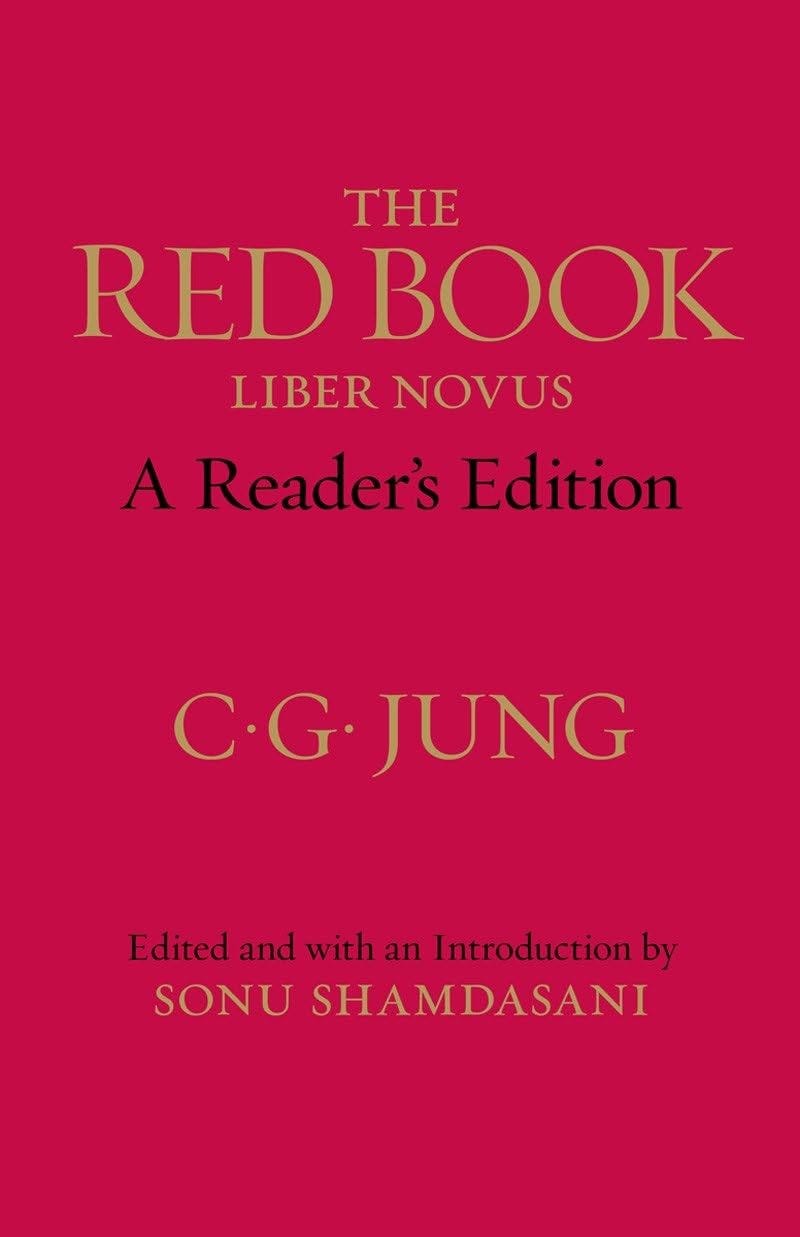
The Red Book is Jung’s personal journal, released posthumously, which he used while experimenting on himself, developing in real-time his theories of the unconscious and mapping the archetypes of the psyche.
This is not a book on theory. It’s hallucinatory. Symbolic, mythic, destabilizing, and prophetic in tone. Relating to the logic of the unconscious, not the conscious mind.
Again, I noticed the same patterns found in the ancient texts I’d read, which served as incredible precursors to this book.
It’s safe to say that, from an observer’s perspective, I had somewhat lost my “sanity,” having given myself over, perhaps too deeply, to symbolic thinking. And yet, in doing so, I began to notice patterns in both my subjective experience and objective reality that would have remained invisible to me otherwise — inaccessible through conscious logic alone.
The profundity of this book lies in its echo of the ancient texts I’d encountered earlier: that psychic and spiritual unity emerges from the marriage of opposing poles—conscious and unconscious, logic and illogic (non-derogatory), intellect and emotion.3 The modern world, however, is not structured to allow this threading of the narrow path, but only to choose the only obvious choice, or be cast away by “stable” society.
Scenes of Bohemian Life – Henri Murger (November)
Back in the real world, fast forward several months, I picked up “Bohemians: A Very Short Introduction”, from the Oxford academic series while traveling through The South back up to New York.
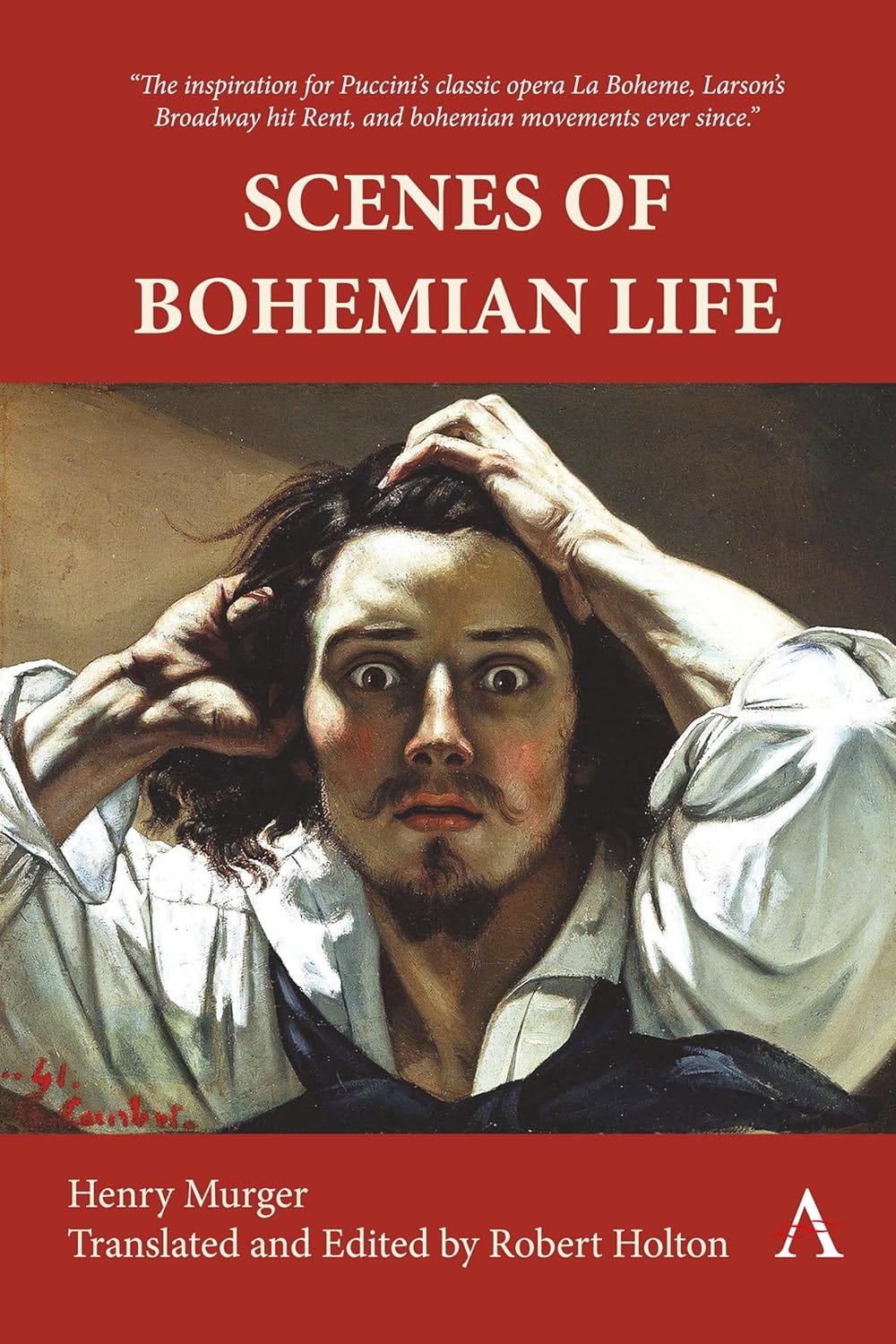
After reading, I delved further into the original source of bohemianism in Scenes of Bohemian Life by Henri Murger.
I’ve always been interested in the concept of Bohemians (artists living on the margins, impoverished, living nomadic lifestyles with anti-bourgeois values), both historically and socially. Most of my interest comes from the fact that, in my late-teens through mid-twenties, I lived this lifestyle, before having a name for it.
The book is made up of fragmented scenes following a troupe of Parisian bohemians as they write, paint, and compose while scrounging up anything they can for food, clothes, and shelter — often moving from place to place outrunning their debts.
Fun, witty, romantic, but with a tragic underbelly.
Society of the Spectacle – Guy Debord (November)
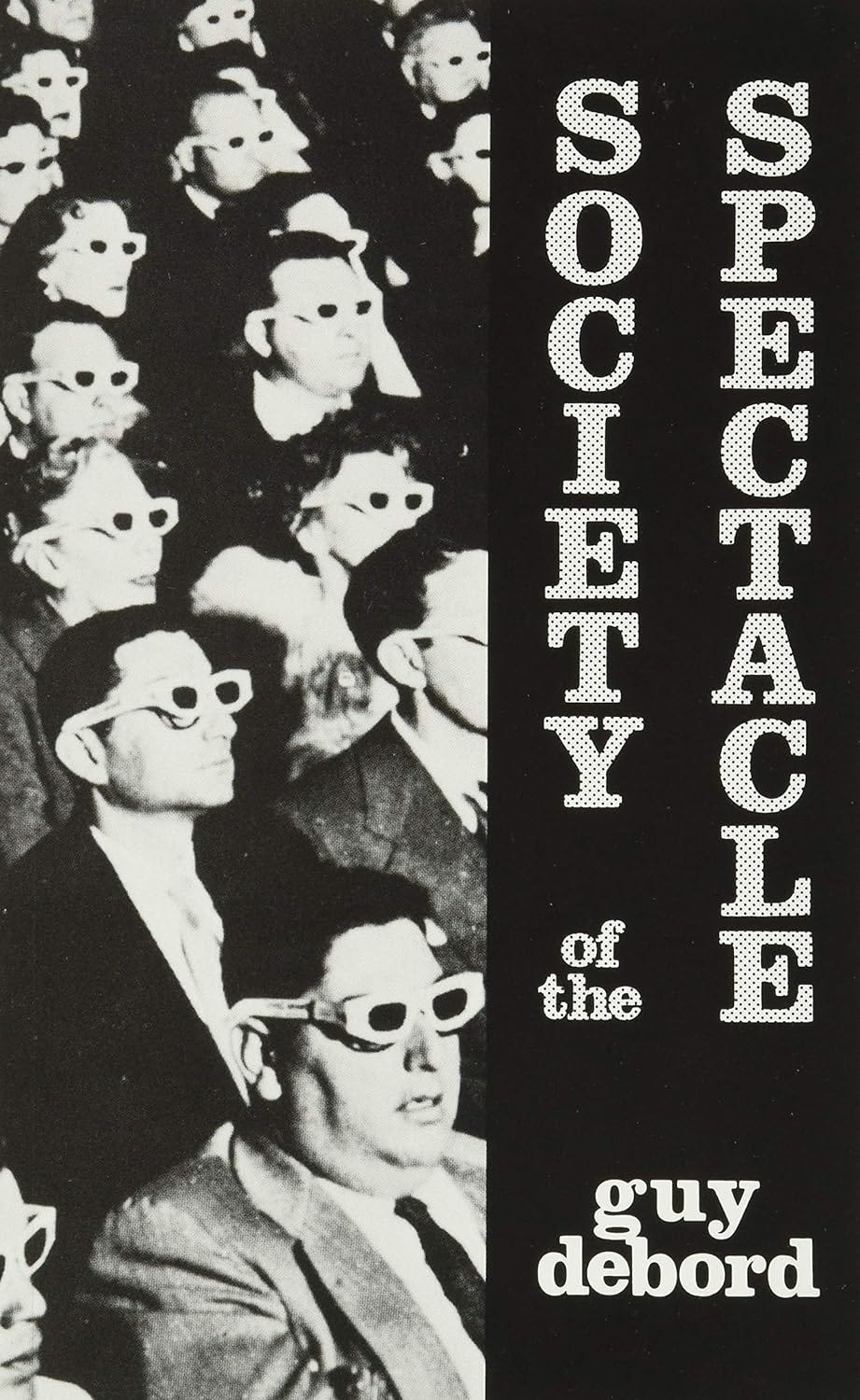
Society of the Spectacle: A highly prescient book, arguably more-relevant today than when it was written nearly sixty years ago.
“The spectacle”, the machine that dominates modern life, offers — under the condition of one’s subordination — an illusory form of existence in image-representations, lifestyles, and consumable commodities.
I was less interested in its Marxist framework, but found it an incredibly profound (though dense) reading otherwise.
Ride the Tiger – Julius Evola (December)
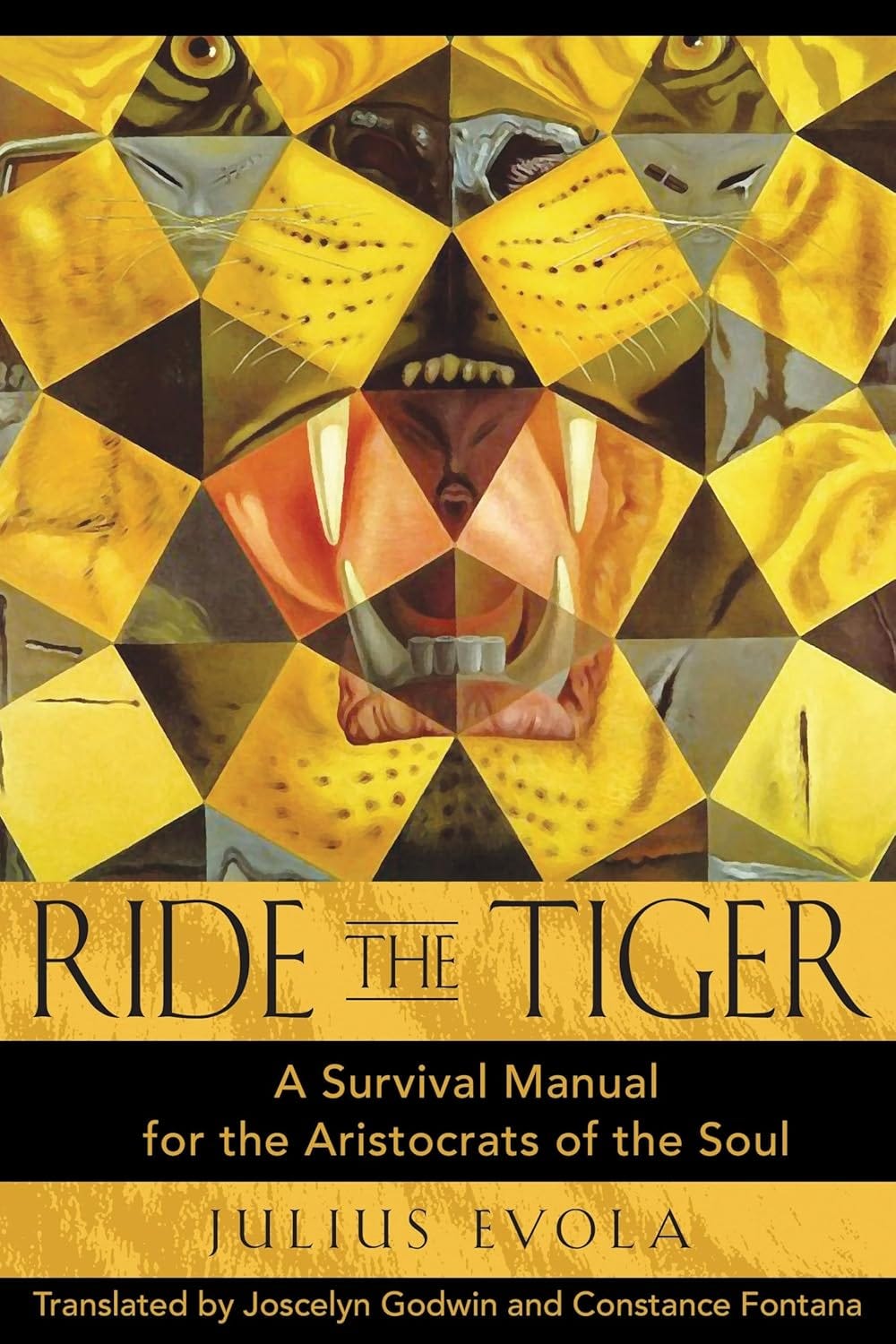
More philosophical abstraction and density. On the rootlessness and spiritual corrosion of modern society, Evola argues for the path of “Tradition” — which is stated as a transhistoric metaphysical order, grounded in transcendence, inner hierarchy, and spiritual sovereignty for what he calls “the differentiated man.”
A call not to rebel against the inevitable beast, but to move through it without resentment, preserving inner form amid external decay.
Against the Machine – Paul Kingsnorth (December)
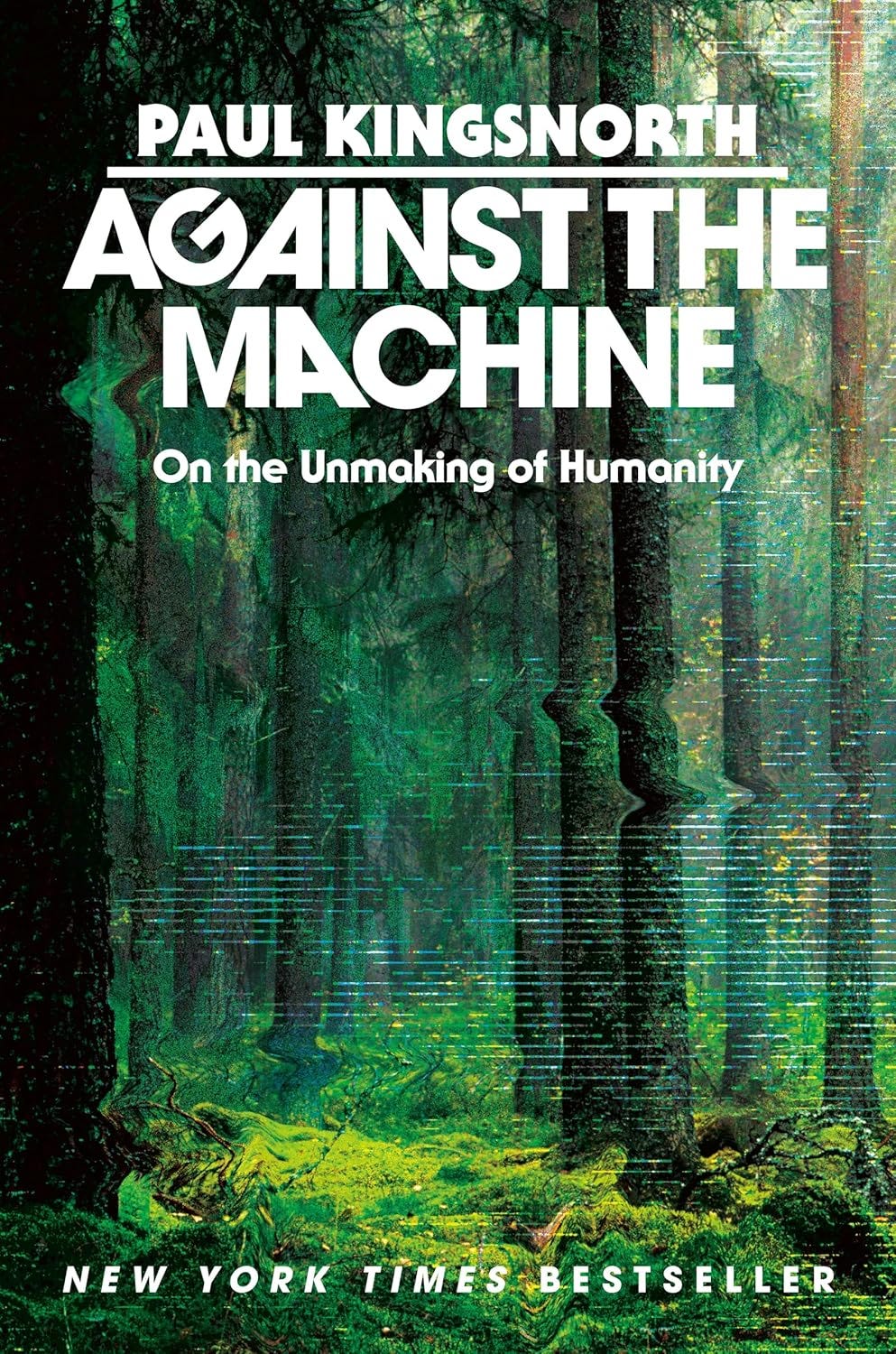
I was locked out of my apartment one afternoon and spent several hours in my tiny neighborhood bookstore with very limited options.
I’m not a big Penguin Publishing guy when it comes to contemporary literature. Big Five publishing rarely produces much literary merit these days, though occasionally something worth reading slips through the cracks.
I quite enjoyed this refreshed, contemporary engagement with the topics of modern society, technology, dislocation, and spiritual erosion. Less theoretical than the previous two books, but probably a better, more accessible entry point for most readers.
HONORABLE MENTIONS:
Collected Works – Arthur Rimbaud (February)
More interested in the symbol of Rimbaud than him as an actual poet, though Season in Hell is one of my all-time favorite poetic works.
Henry Miller: A Life – Robert Ferguson (March)
A comprehensive biography of one of my favorite writers.
1920’s Berlin – Rainer Metzger (March)
A Taschen art-history book on the fascinating and revolutionary artistic crucible that was Berlin during the Weimar Republic.
The Myth of American Idealism: How U.S. Foreign Policy Endangers the World – Noam Chomsky and Nathan J. Robinson (April)
Absolutely revelatory concerning the historical aspects, but not politically nuanced enough for my taste.
No Longer Human – Osamu Dazai (May)
A good, but very internal book. I’m trying to read more Japanese literature.
Liber Null and Psychonaut: An Introduction to Chaos Magic – Peter J. Carroll (July)
Only an honorable mention because I haven’t finished it yet. Requires patience and caution.
The Courage to Create – Rollo May (July)
A great American psychologist on the metaphysical aspects of the creative encounter. Recovering Overthinker influenced my reading this.
By Night in Chile – Roberto Bolaño (August)
A bit pretentious and elitist, but Bolaño is an undeniable craftsman.
The Sleepers – Matthew Gasda (September)
A good contemporary novel on the drama of modern relationships, set among the intellectual and artistic classes of New York City.
Serotonin – Michel Houellebecq (October)
Boring subject matter, good story telling. I suppose that is an accomplishment in itself.
Ararat – D.M. Thomas (November)
I discovered this at a used bookstore in Brooklyn. Thomas is an Incredible stylist, but a tad postmodern for me.
Looking ahead to 2026, I’ll be starting a small virtual book club for paid subscribers. We will meet online once per month, with ongoing discussion in between, reading twelve books together over the course of a year. If this sounds like something you’d like to be part of, you can join the paid subscription tier for $5/month. My aim is to gather a minimum of ten readers. If that threshold isn’t reached, I’ll instead send monthly handwritten letters to all paid subscribers, which will consist of very personal writing not published on Substack or anywhere else.
Walden, by Henry David Thoreau
I grew up in a very philistinic and religious working class environment. Literature and art was not at all a part of our culture. It therefore took me a while to discover it on my own.
Masculinity and femininity would be another good example. Not in the literal gendered sense, but as archetypal embodied energies. This is why, in every romantic relationship, regardless of sexuality, one partner embodies the masculine archetype and the other the feminine. The physical union of the two is an unconscious externalized attempt at individuation — of reconciliation of repressed energies. This is the tension of attraction.
Comments
Nothing yet. Say the first thing.
Sign in to join the conversation.