
I sat through six major infrastructure company keynotes in the past few days. Dell was at Dell Tech World in Las Vegas. Then, it was off to Taipei for NVIDIA, Qualcomm, Intel, Supermicro, and Marvell. I want to walk through what each company was really selling and how the audience reacted. The announcements themselves are well covered in Ryan Smith’s ServeTheHome live blogs, so I am not going to re-list every spec. Instead, I wanted to share some of my key themes, along with the immediate reactions of other press analysts sitting nearby.
NVIDIA opened the season the way it usually does, with Jensen Huang up there for the better part of two hours moving across the data center, the PC, and robotics. The piece everyone walked in expecting was RTX Spark.
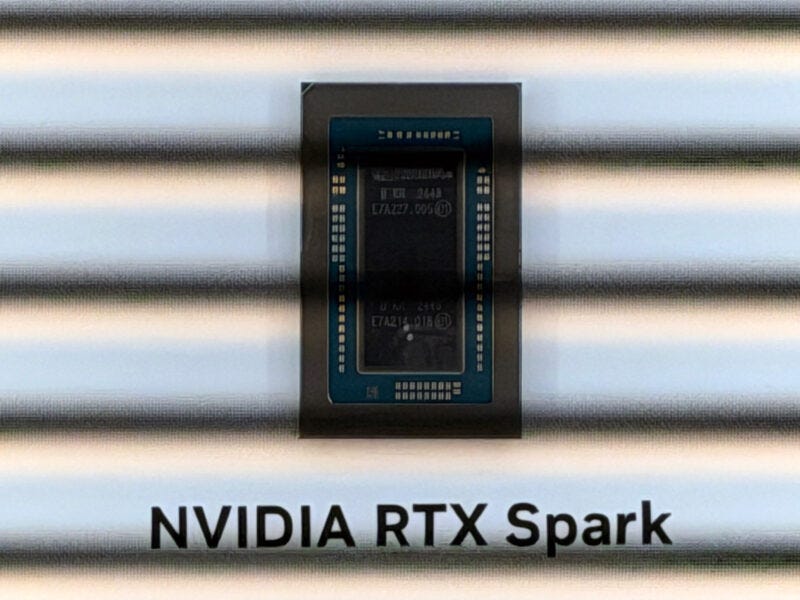
NVIDIA is bringing its agentic stack to the desktop and laptop with an Arm-based Windows platform, pitched as a machine you keep at home to run agentic AI locally instead of running up a cloud bill. There were RTX Spark laptops and desktops, a DGX Station for Windows, Adobe apps getting faster on it, and a roadmap out to Vera Rubin and Rosa Feynman Spark parts later in the decade.
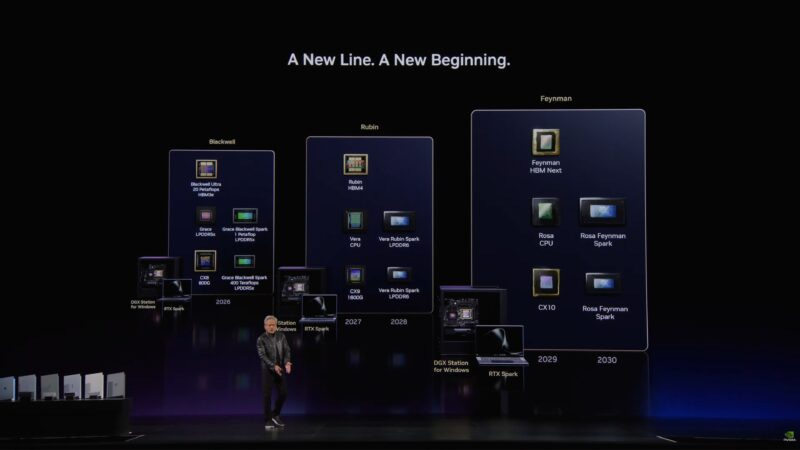
Indeed, there was a reason we included the NVIDIA GB10 in the recent Qualcomm Cloud AI 100 piece in this Substack.
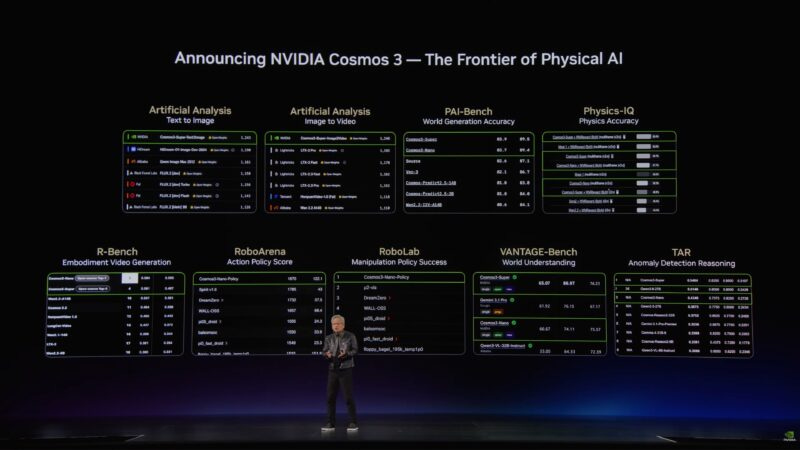
On the data center side, Jensen confirmed that Vera Rubin is in full production and kept calling Vera a CPU built for agents rather than people, claiming 1.8 times the agentic performance of x86. He closed on robotics with Cosmos 3 and the Isaac GROOT humanoid.
Here is what I think the talk was actually about, though, and it was not the product list. Jensen was selling the idea that AI is going to every device and that it will create whole new categories of devices. The part that stuck with me, and the part I keep coming back to when I think about who wins from here, is that it is genuinely hard to justify putting money into a silicon endpoint that does not leverage AI.
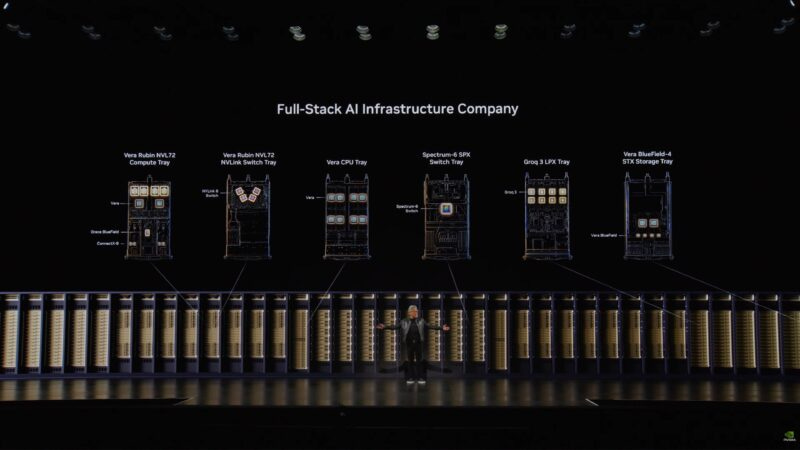
AI does not just eat compute. Instead, if you consider that we are in a DRAM and NAND-constrained world, then it is harder to justify buying DRAM and NAND for non-AI-enabled endpoints. Using the logic of constraints, it is hard to replace existing infrastructure that is still operating existing pre-AI workloads. Better put, if you are going to spend on DRAM and NAND in this environment, you want it attached to an AI node, not something that will give marginal performance gains on an existing workload. The implication is that the market from PC to data center bifurcates to either higher cost AI machines or the lowest cost nodes you can get. That is a really challenging takeaway for the next few years.
A quick run from the Taipei Music Hall to Nangang Hall 2, and it was time for the first keynote. Qualcomm delivered the official opening Computex 2026 keynote, with Cristiano Amon declaring 2026 the year of the agent and making the case that AI is coming to many segments at once.
Comments
Nothing yet. Say the first thing.
Sign in to join the conversation.