
Everyone tells you not to go to Rome in August. The Romans all leave. Half the city’s shutters are down, handwritten chiuso per ferie signs curl in the heat like they too have given up. It’s 34 degrees by ten in the morning and the cobbles hold the scorch of the day before, so the city never really cools.
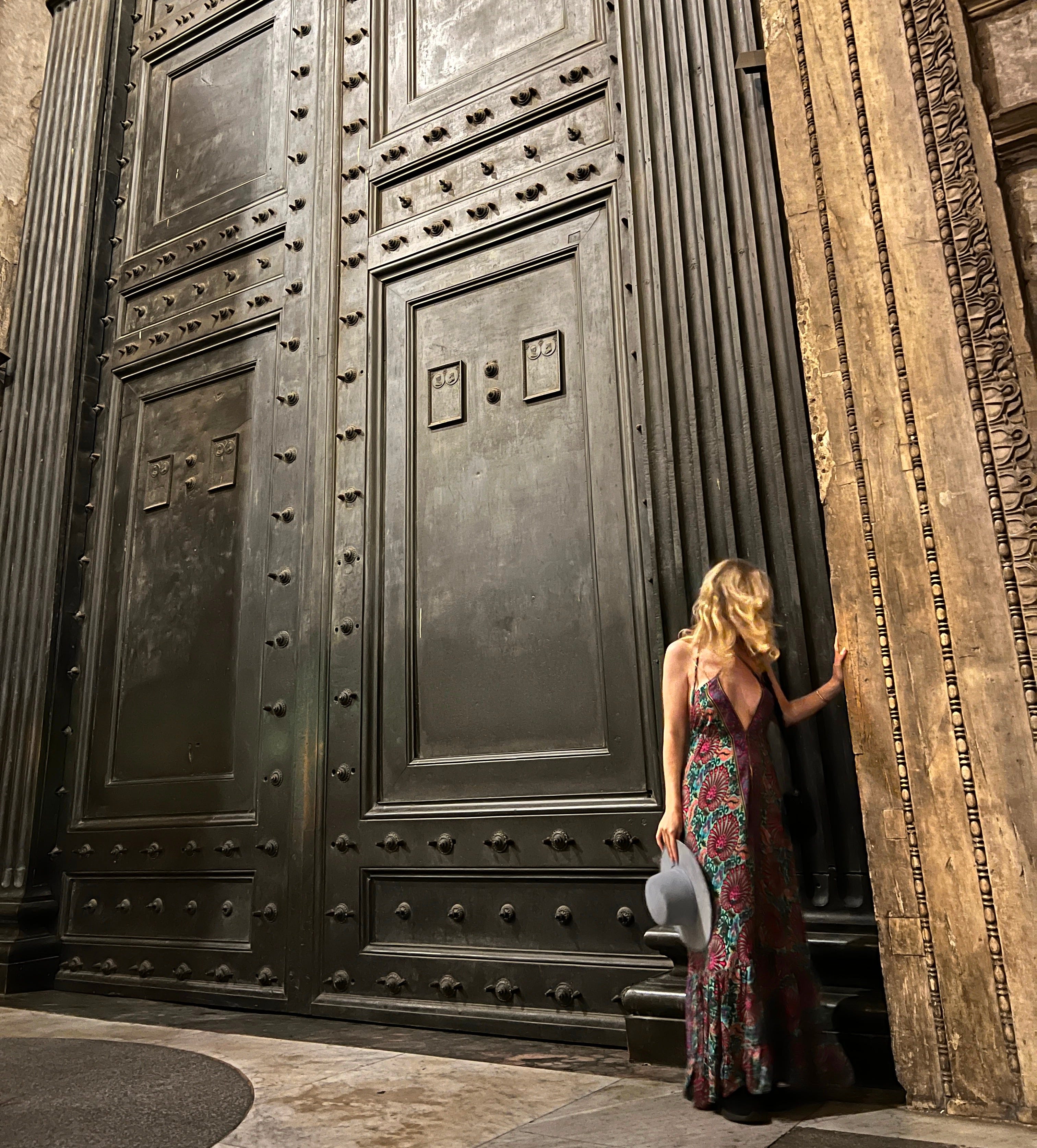
I go anyway, and have done for the last few years, in August. The city is quieter and the heat enforces a ritual, with mornings for wandering, afternoons for hiding, working and writing, and evenings for rooftops.
I don’t do the tourist spots anymore. Not out of superiority. I did them years ago. It’s that each time I come back to Rome now I stay a fortnight, sometimes a month, in Trastevere, Monteverde, or Monti. I also try to turn it into a creative residency. Here’s how you can too.
In a Roman heatwave you just have to know where to find the cold marble.
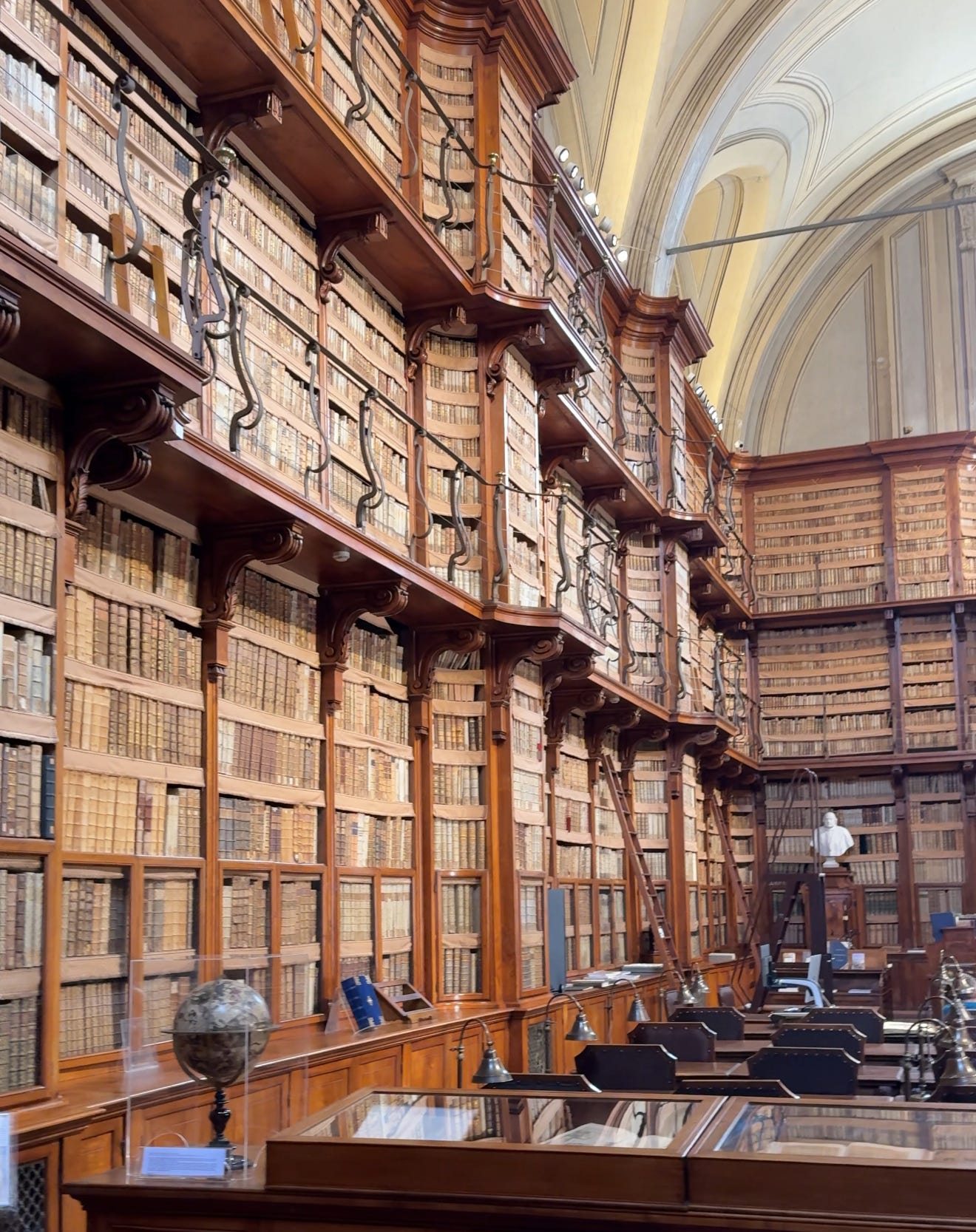
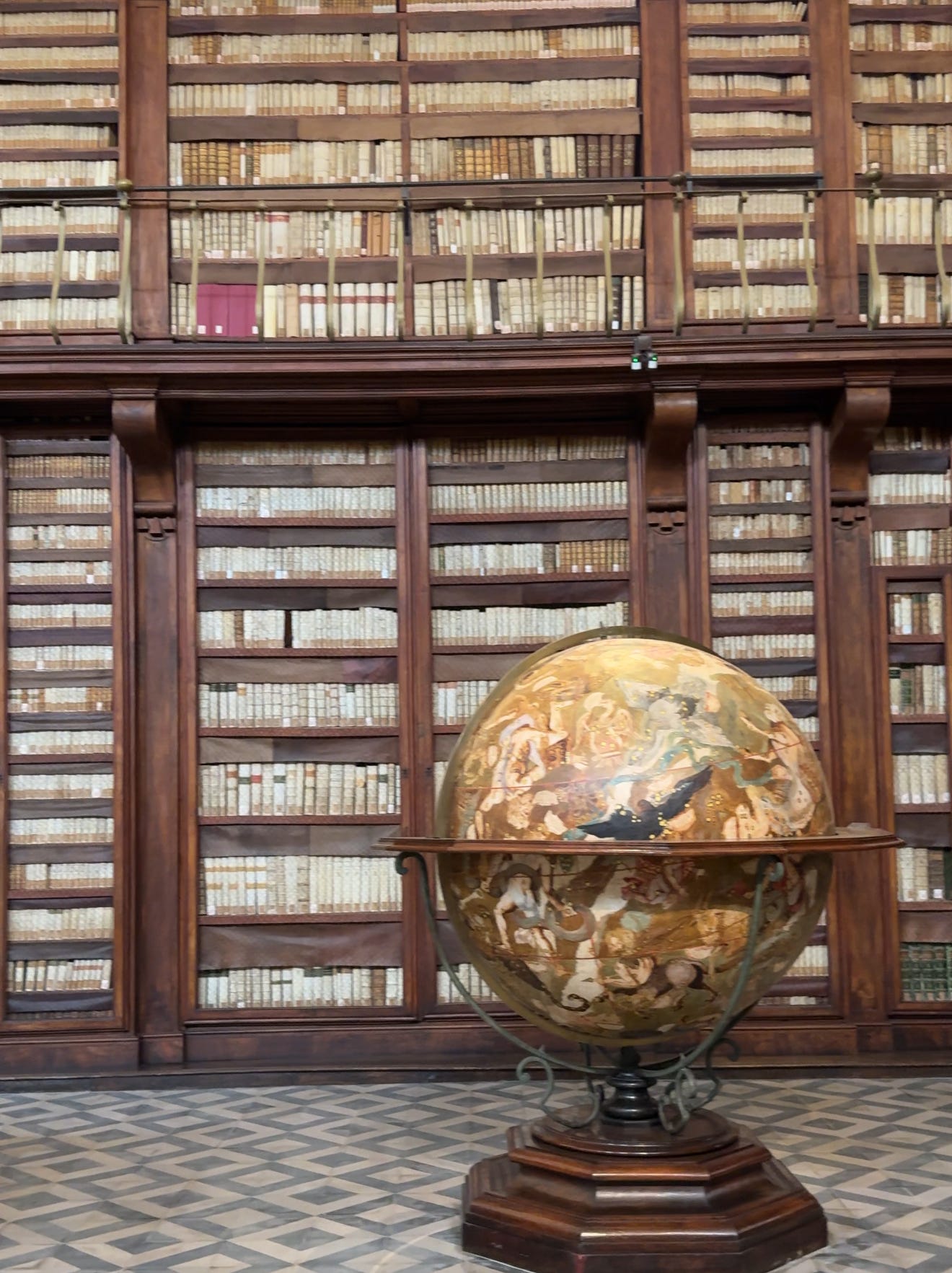
Start with libraries. The Biblioteca Angelica sits beside the church of Sant’Agostino, a few minutes north of the Pantheon, and it is the oldest public library, not just in Italy, but in Europe, with reading rooms open since 1604. You show your passport at the desk, they write your name in a ledger, and then you’re in. Inside, a long baroque hall of wooden shelves rises several storeys, with ladders leaning. There’s a copy of Dante’s The Divine Comedy and it’s not even behind glass.
Ten minutes away, behind the Pantheon on Via di Sant’Ignazio, is the Biblioteca Casanatense. Just try to resist the goosebumps as you walk in. It gets even fewer visitors than the Angelica. In August it can just be you and one archivist who can’t decide if you’re lost.
Art in a heatwave? Skip whatever has a queue. Villa Farnesina, across the river in Trastevere, is overlooked and underloved. Raphael painted the ceilings and hardly anyone knows.
And my favourite, Palazzo Altemps, a branch of the National Museum of Rome near Piazza Navona, has an entire collection of marble muses and Greek gods standing about in cool empty halls. I go there the way other people go to church. Something about being outnumbered by muses recalibrates you.
And then there’s the Keats-Shelley House, which sits at the foot of the Spanish Steps. This means thousands of people a day sit on its doorstep and none of them come in. This is where the poet Keats came to die, 25 years old, in a small room on the second floor. There’s a narrow bed, a little writing desk at the window, and the window looks straight down the Steps. You may love Keats poems, I love his letters. He writes lines such as "Oh for a life of sensations rather than of thoughts!" (Letter to Benjamin Bailey).
The shops? You want the ones with items that tell a story. Antiques and second hand. You will always be surprised at Humana Vintage Roma 2, on Corso Vittorio Emanuele II. For antique jewellery Ansuini 1860 is a Roman house that has been making things by hand since the date in the name and DLC Diamanti e Gioielli on Via del Pellegrino.
And for lunch on the go, Barretta Pesce e Porchetta, Via del Governo Vecchio. The best porchetta sandwich you will eat in your life. The portions are almost embarrassing. It sits right in the tourist hub, minutes from Piazza Navona, and somehow remains cheap. Take it to a fountain ledge and eat it while it’s warm.
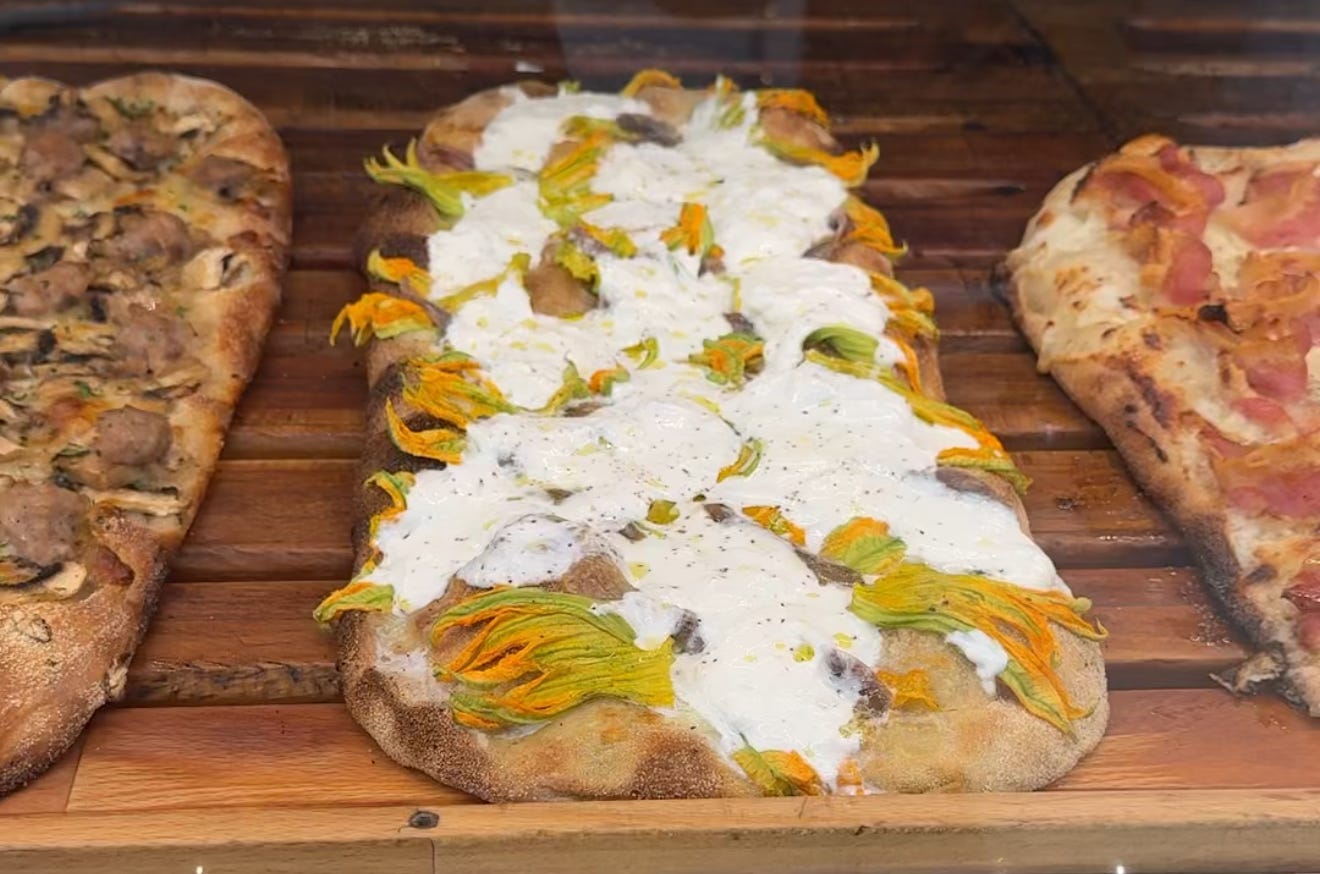
If you want to eat where Romans actually eat, cross to Testaccio and its big covered market hall. I’d beeline to Box 22, Casa Manco. The owner Andrea cuts pizza al taglio with scissors, weighs it and hands it over. Three stools are bolted to the bar. The dough cold-rises for 100 hours, which is longer than some people’s entire holiday, and you can taste the difference. It means the gluten is much easier to digest and it never leaves you bloated. Order the courgette blossoms with burrata and anchovies, the grilled peach and bacon, and the persimmon and sausage.
For a fancy lunch, book the Hotel de Russie, in the Secret Garden. It’s a tiered green amphitheatre, absurdly steep, with roses and orange trees and a small waterfall you hear before you find. In February 1917, Picasso stayed while working on a Cubist ballet and the story goes he would open his hotel window and pick oranges from the courtyard. We took our toddler and they handed her a stuffed frog called Gianlorenzo, which is the kind of detail that will have me return time and time again.
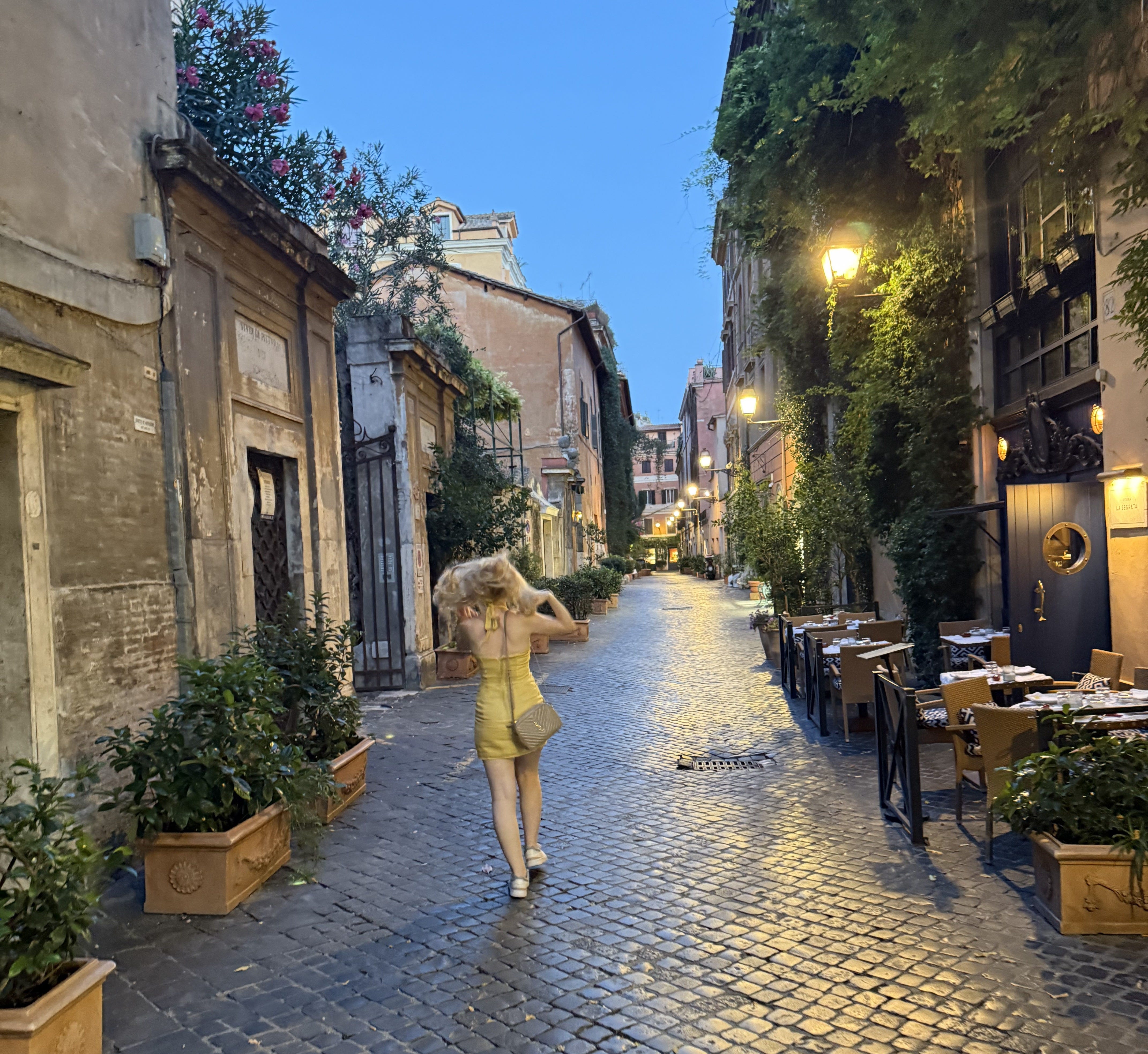
Walk to the hotel the back way, along Via Margutta: the narrow ivy-drowned street where Fellini lived and Roman Holiday was filmed. It’s a two-minute detour that is the epitome of romanticising your life.
On the longer stays I practise at RYOGA, on Via dei Fienaroli in Trastevere, one of the few proper yoga studios I’ve found in the centre. Go even if you’re only in Rome for a few days, because taking a class in Italian is a journey. I did not know the word for left and I discovered this mid-pose, facing the wrong wall. It’s humbling and forces new neurons to fire up, teaching you the language faster than Duolingo.
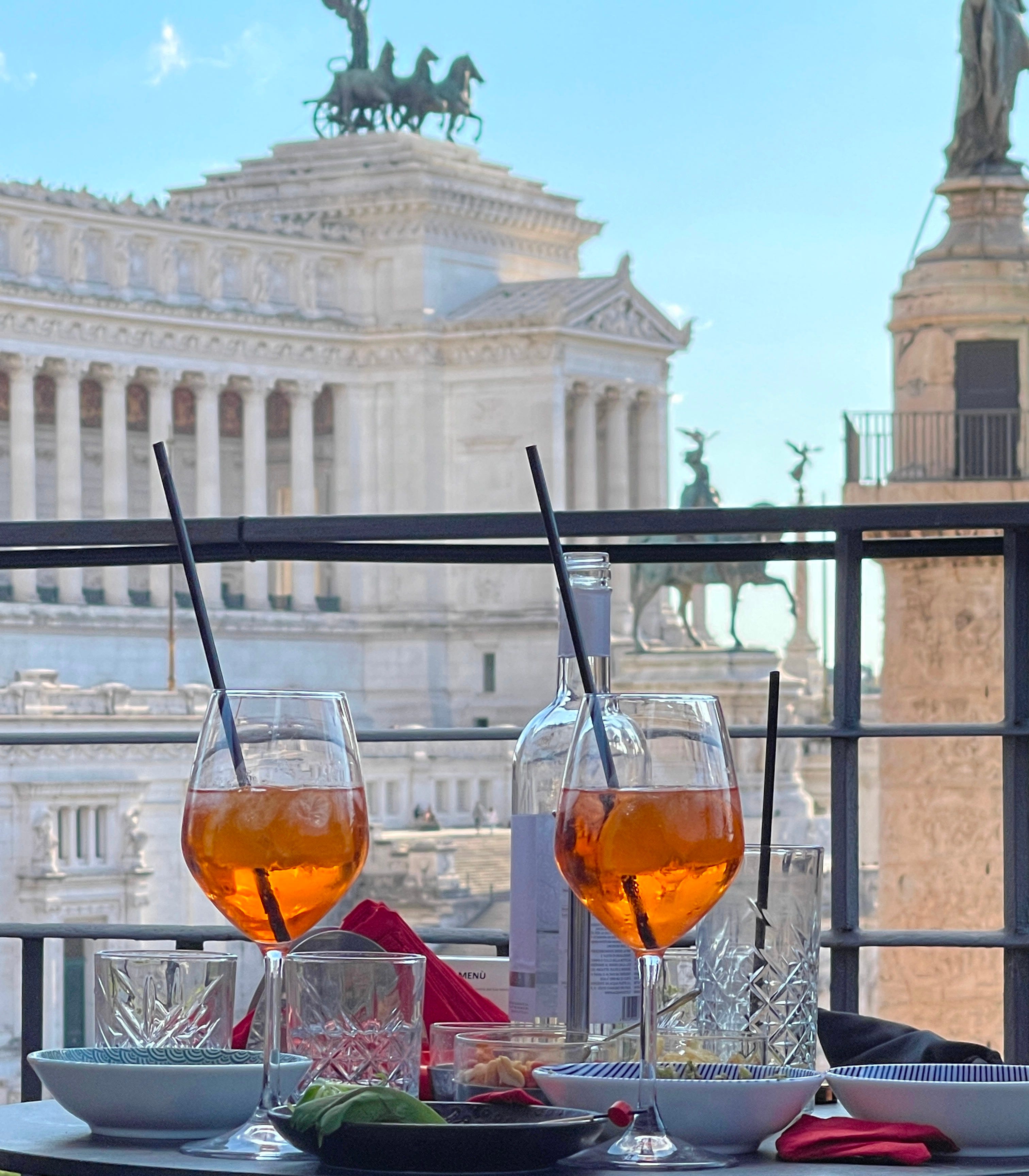
Cool air is served on rooftops at 6pm. My favourite is the terrace at Oro Bistrot, on Via di Santa Eufemia just off Piazza Venezia. Get there early, the good rail-side tables go fast. Order a bottle of wine and the aperitivo arrives unbidden: mini bruschetta, crisps, olives. If you want the grander version, the Notos rooftop at Six Senses Rome is five floors above the Corso, planted with lemon and pomegranate trees, and the hotel below it is a rare wellness space.
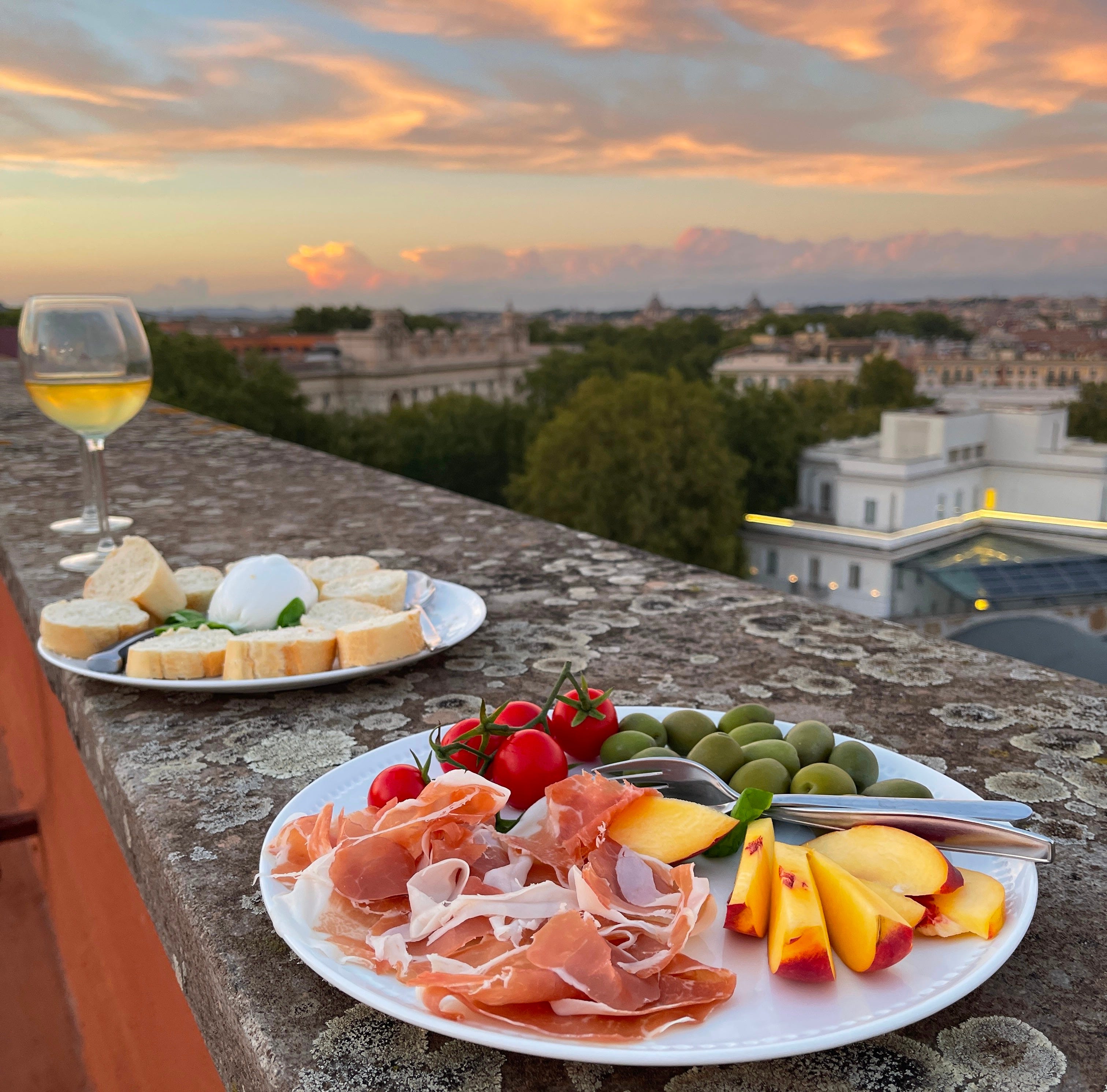
I adore Rome, and what I want from it is to walk, eat gelato, eat a pistachio cornetto, and soak it in. What I do not want is queues, stress or being funnelled past the Trevi with four thousand strangers. The heatwave doesn’t want anyone to do this.
By 8pm the heat finally breaks its grip. The swifts come out over the rooftops, hundreds of them, and the city takes a big exhale.
Would you go to Rome in August?
Send me any questions about your travels, I’d love to start answering one a month!
Tara x
No posts
Comments
Nothing yet. Say the first thing.
Sign in to join the conversation.