
“When a pharma company uses AI to bring a new therapy to market in one year instead of twelve… that’s when we’ll know the system is working.”
Welcome to The ‘Med AI’ Capsule Newsletter—your go-to source for exploring how AI and emerging technologies are transforming medicine! Whether you're a medical professional 👩⚕️, a tech enthusiast 💻, or simply curious 🧠, The 'Med AI' Capsule is for you! Stay ahead of the curve with the latest trends, insights, and updates in the rapidly evolving world of AI and emerging technologies in medicine. 🚀
5 Research Picks
4 Conceptual QnA
3 Learning Resources
2 Worth-Attending Events
1 Startup Spotlight, and more!
Time to Read: Around 10 minutes.
Exciting News! You can now enjoy this newsletter issue in a new, accessible format. Click below to listen to the podcast version and dive deeper into the latest insights and stories while on the move!
Listen to the Podcast Version Here
This paper systematically reviews how explainable AI techniques are being used to make speech-based dementia and mild cognitive impairment (MCI) detection models more transparent, clinically interpretable, and ready for real-world use.
Reviews 13 XAI-enabled speech studies (from 2,077 records) focused on Alzheimer’s and MCI detection using PRISMA methodology across six databases.
Finds that models reach strong performance (AUC roughly 0.76–0.94) using acoustic and linguistic speech markers such as pauses, speech rate, and vocabulary diversity.
Shows SHAP, LIME, attention, and interpretable models are the main XAI methods, with SHAP most widely used for both global and patient-level explanations.
Highlights that clinical readiness is low: few studies involve clinicians, formally evaluate explanations, or test integration into real workflows.
Concludes that XAI-enhanced speech tools are promising for screening and monitoring but still need larger, more diverse datasets, standardized XAI evaluation, and stakeholder-driven design before routine clinical deployment.
Why It Matters: This work matters because it shows that explainable speech-based AI could offer low-cost, scalable early dementia screening that clinicians can actually understand and trust, but also exposes how far current systems still are from being ready for routine real-world use.
Evaluation of an AI-Based Chatbot Providing Real-Time Feedback in Communication Training for Mental Health Care Professionals: Proof-of-Concept Observational Study | J Med Internet Res: AI chatbot giving real-time feedback was accurate, increased physicians’ use of key communication techniques, and was perceived as helpful for improving mental-health communication in clinical practice.
Artificial intelligence use and performance in detecting and predicting healthcare-associated infections: A systematic review | Int J Med Inform: AI models increasingly used since 2018 detect and predict healthcare-associated infections with sensitivity and specificity often comparable or superior to traditional methods, but evidence on real-world organisational and economic impact remains limited.
Blinded evaluation of GPT-4 and physician responses to patient inquiries across multiple specialties | DIGITAL HEALTH: Blinded specialist evaluators rated GPT-4’s answers to 100 real patient questions across five specialties as more accurate, useful, complete, and empathetic than those of both hospital specialists and general practitioners, suggesting LLMs can effectively support clinicians in patient communication.
Exploring Perspectives of Health Care Professionals on AI in Palliative Care: Qualitative Interview Study | JMIR Hum Factors: Palliative care professionals in this study were generally positive about AI’s potential to enhance care and efficiency but emphasized the need for AI education, preservation of human connection, and careful attention to trust, ethics, data privacy, and bias in implementation.
Vyuhaa Med Data is an Indian AI healthcare startup founded in 2022 and based in Hyderabad, specializing in AI-powered digital pathology for early cancer screening, particularly cervical cancer.
Flagship product CerviAI assists pathologists by automating high-volume, low-complexity slide review at scale.
Targets real-world, resource-limited settings with deployable “AI in a box” solutions for labs and screening programs.
Works with leading labs and health partners, including validation in major Indian academic centers.
Aims to make cancer screening more affordable and accessible for large populations in India and similar markets.
*This ‘Industry Spotlight’ is editor-picked, not sponsored. Mention reflects interest, not endorsement.
Interested in sponsoring an issue of The 'Med AI' Capsule Newsletter?
Would you like to showcase your innovative health tech brand or product to a community of 25,000+ healthcare technology enthusiasts?
Please feel free to reach out at avneeshkhareonline@gmail.com.
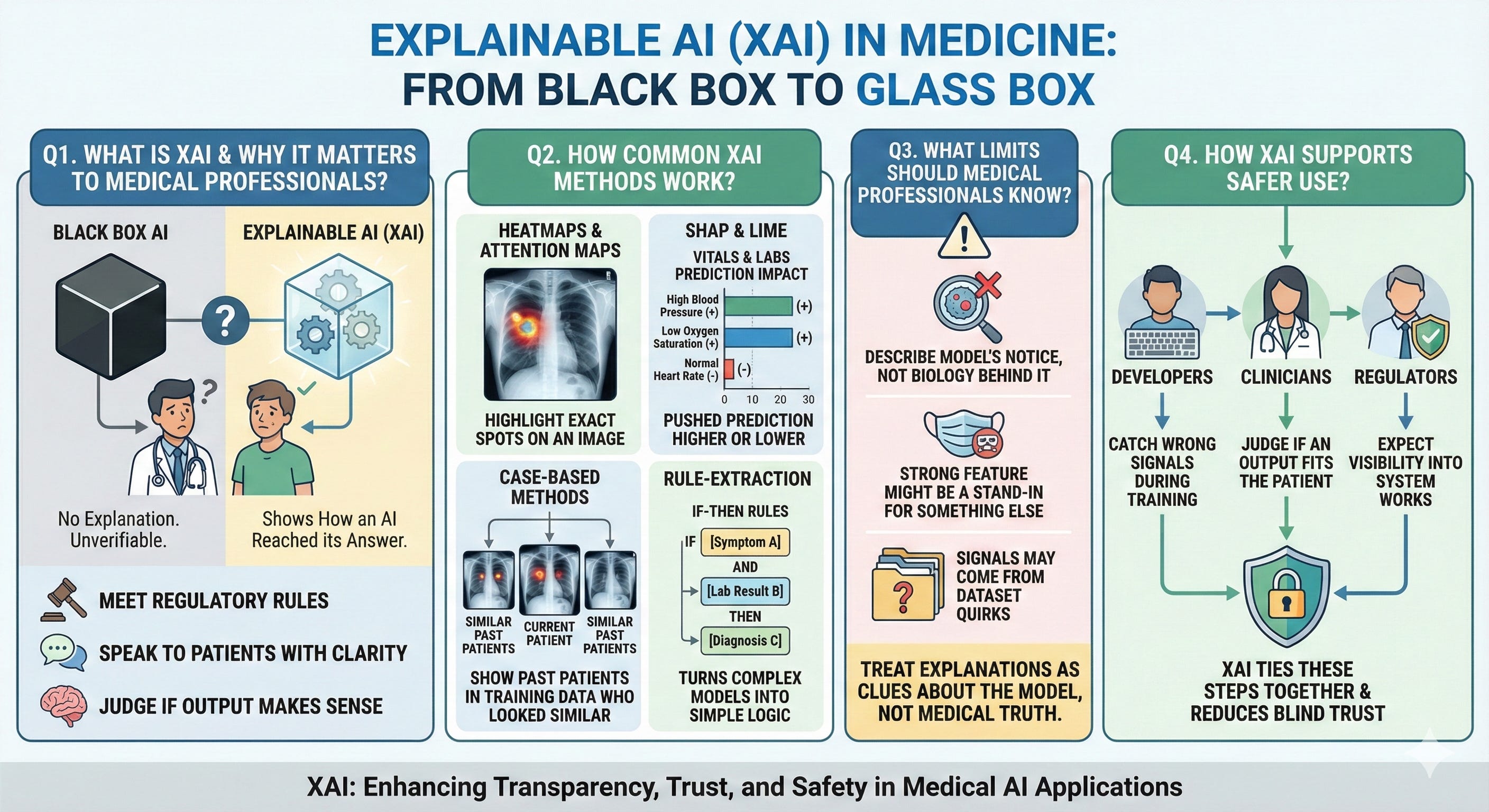
The concept for today is Explainable AI.
Q1. What is XAI and why does it matter to medical professionals?
It shows how an AI reached its answer. Without this, the model becomes a black box. You need explainability to judge if the output makes sense, to meet regulatory rules, and to speak to patients with clarity.
Q2. How do common XAI methods work?
Heatmaps and attention maps highlight the exact spots on an image the model used. SHAP and LIME show which numbers in the chart, like vitals or labs, pushed a prediction higher or lower. Case-based methods show past patients in the training data who looked similar. Rule-extraction turns parts of a complex model into simple if-then rules so you see the logic in plain form.
Q3. What limits should medical professionals know?
These tools describe what the model noticed, not the biology behind it. A strong feature might be a stand-in for something else. Some signals come from dataset quirks. Treat explanations as clues about the model, not medical truth.
Q4. How XAI supports safer use?
Developers use XAI to catch wrong signals during training. Clinicians use it to judge if an output fits the patient. Regulators expect some visibility into how the system works. XAI ties these steps together and reduces blind trust.
Mark your answer and think about it as you read through the remaining newsletter, and find the correct answer at the end!
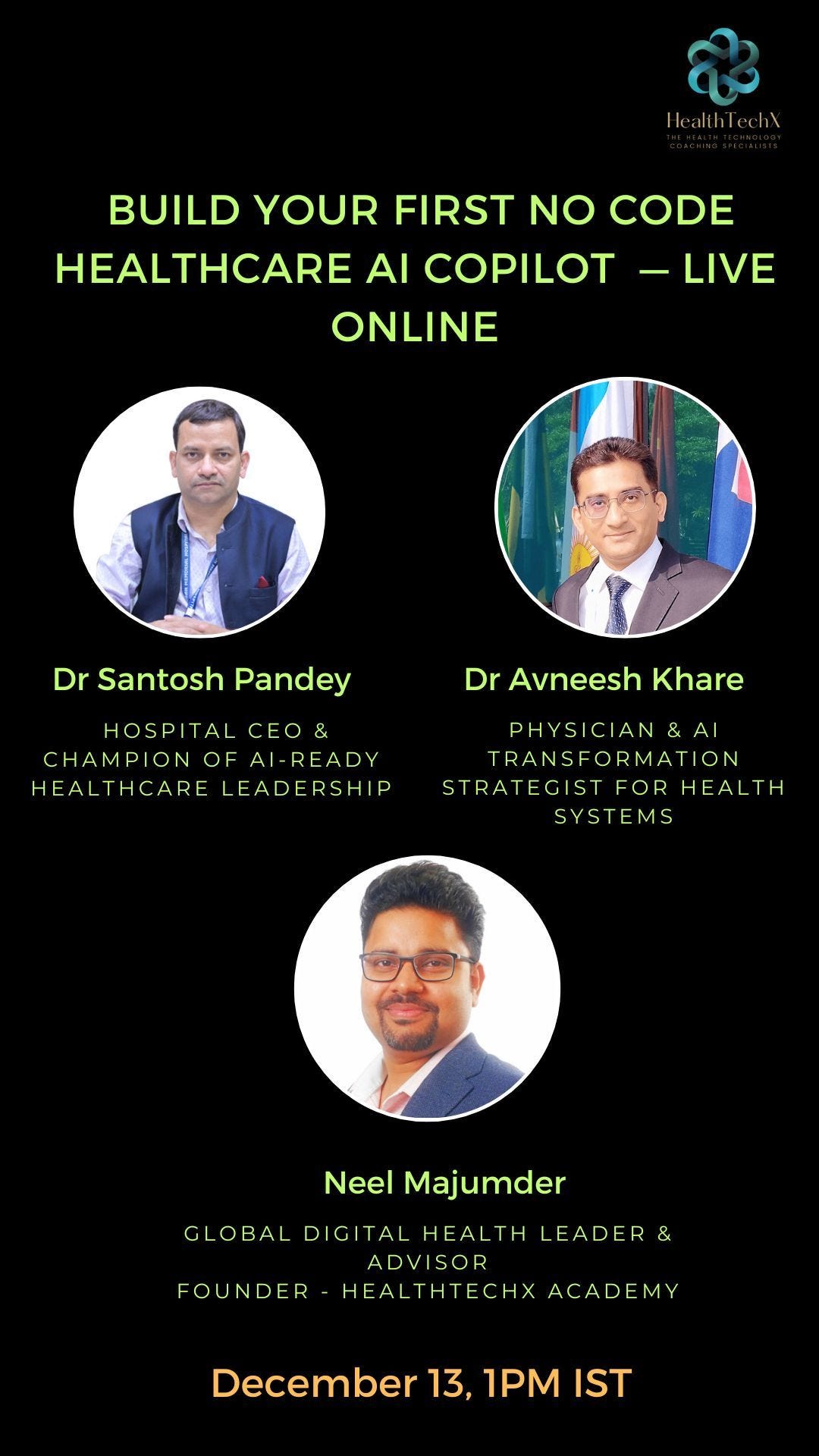
A panel webinar discussing how India’s Digital Personal Data Protection Act, 2023 and its 2025 rules will impact healthcare data, consent, storage, research, AI use, and hospital operations across the health sector:
A thought experiment arguing that most anesthesia tasks are not exclusively anesthesiologist-owned and that the specialty must reinvent its role by partnering with AI and focusing on perioperative leadership and patient-centric presence:
The 'Artificial Intelligence’ Bundle by Dr Ashish Bamania:
Your feedback is crucial to me, as it helps me understand your interests and improve my offerings. I would appreciate it if you could take a few minutes to share your thoughts about what you've enjoyed and what you think I could do better.
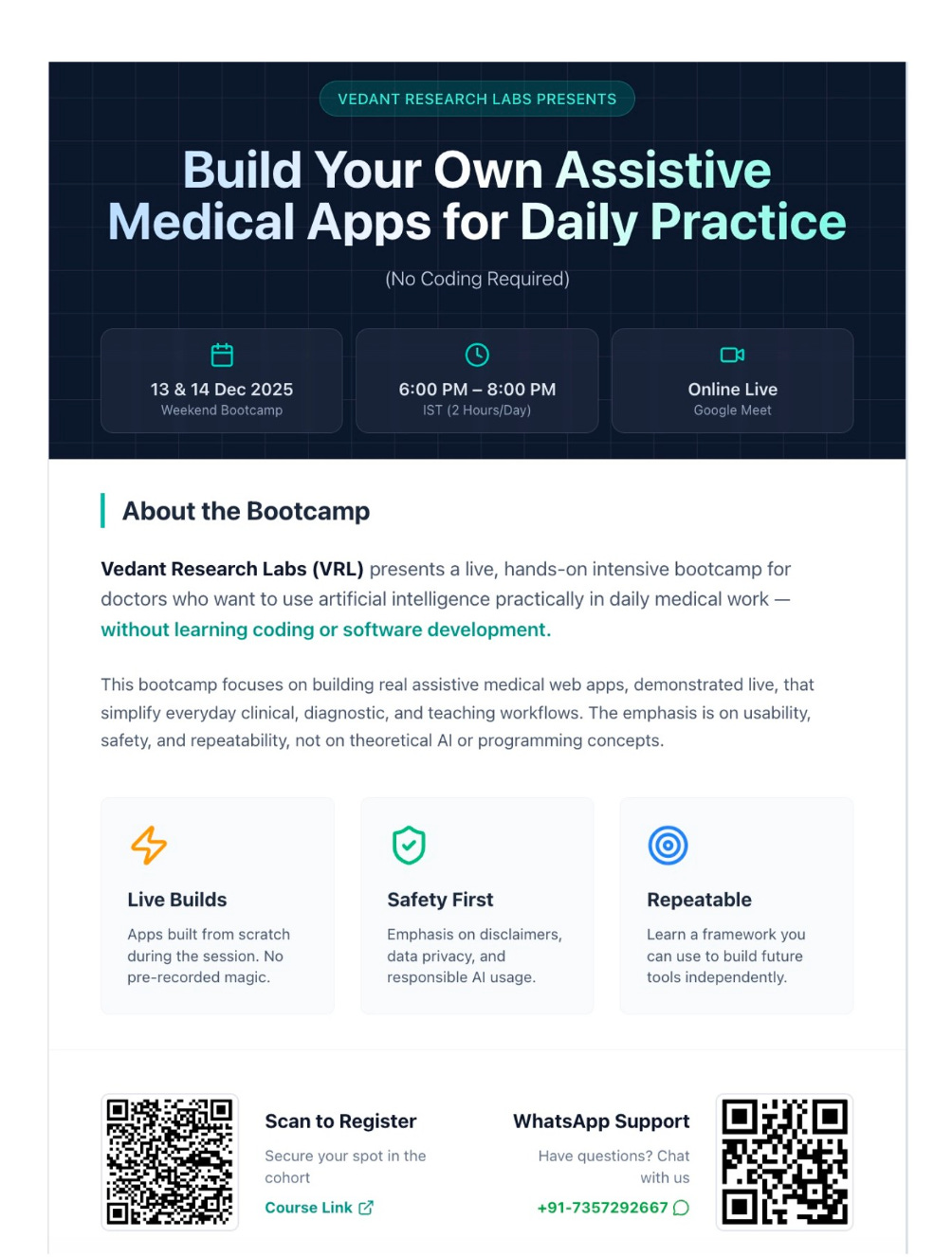
New AMA policy mandates standardized AI education across medical school and CME to strengthen physician workforce, improve patient outcomes, and safeguard against risks such as deepfakes in healthcare.
A Yale-led multicenter study found that using ambient AI scribes (Abridge) in outpatient settings markedly reduced physician burnout and documentation burden while improving clinicians’ undivided attention to patients within just 30 days of use.
Free, 10‑hour online RCSI–Microsoft Ireland course launched for all healthcare workers, introducing AI fundamentals, ethics, and practical clinical and administrative applications to improve patient care and operations.
Stay tuned for the upcoming issues of my newsletter to explore the latest breakthroughs and dive deep into the transformative power of artificial intelligence and emerging technologies, shaping a healthier future. 🚀
Disclaimer: The content in this newsletter was partly curated and summarized using AI LLMs, which can make mistakes. Please check all important information. For any issues or inaccuracies, please reach out at avneeshkhareonline@gmail.com.
Comments
Nothing yet. Say the first thing.
Sign in to join the conversation.