
“Pilots used to fly planes manually, but now they operate a dashboard with the help of computers. This has made flying safer and improved the industry.
Healthcare can benefit from the same type of approach, with physicians practicing medicine with the help of data, dashboards, and AI. This will improve
the quality of care they provide and make their jobs easier and more efficient.”
Ronald M. Razmi, cardiologist-turned-healthcare entrepreneur and author
Welcome to The ‘Med AI’ Capsule Newsletter—your go-to source for exploring how AI and emerging technologies are transforming medicine! Whether you're a medical professional 👩⚕️, a tech enthusiast 💻, or simply curious 🧠, The 'Med AI' Capsule is for you! Stay ahead of the curve with the latest trends, insights, and updates in the rapidly evolving world of AI and emerging technologies in medicine. 🚀
5 QnA Primer
4 Research Picks
3 Learning Resources
2 Worth-Attending Events
1 Industry Spotlight, and more..
Time to Read: Around 8-10 minutes.
The concept for today is RAG (Retrieval Augmented Generation).
1. How does RAG work, in simple terms?
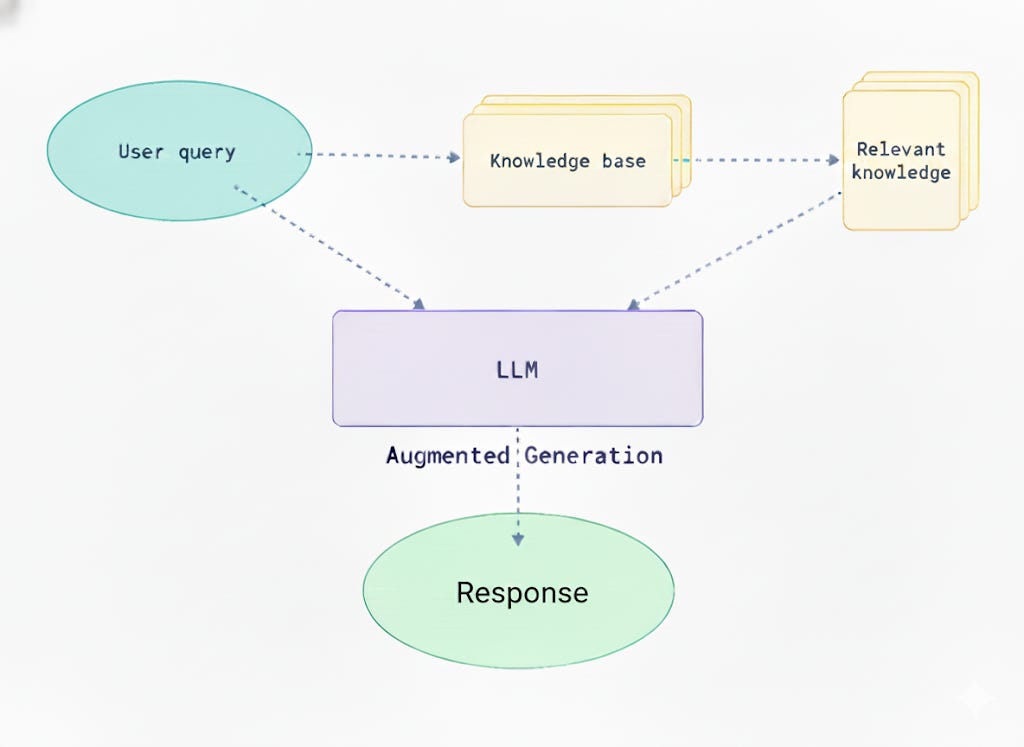
When a clinician asks a question, the system first searches a curated medical knowledge base for relevant information and then uses that retrieved content to generate the response. In short, the AI answers after checking references, not from memory alone.
2. What problem does RAG solve in healthcare AI?
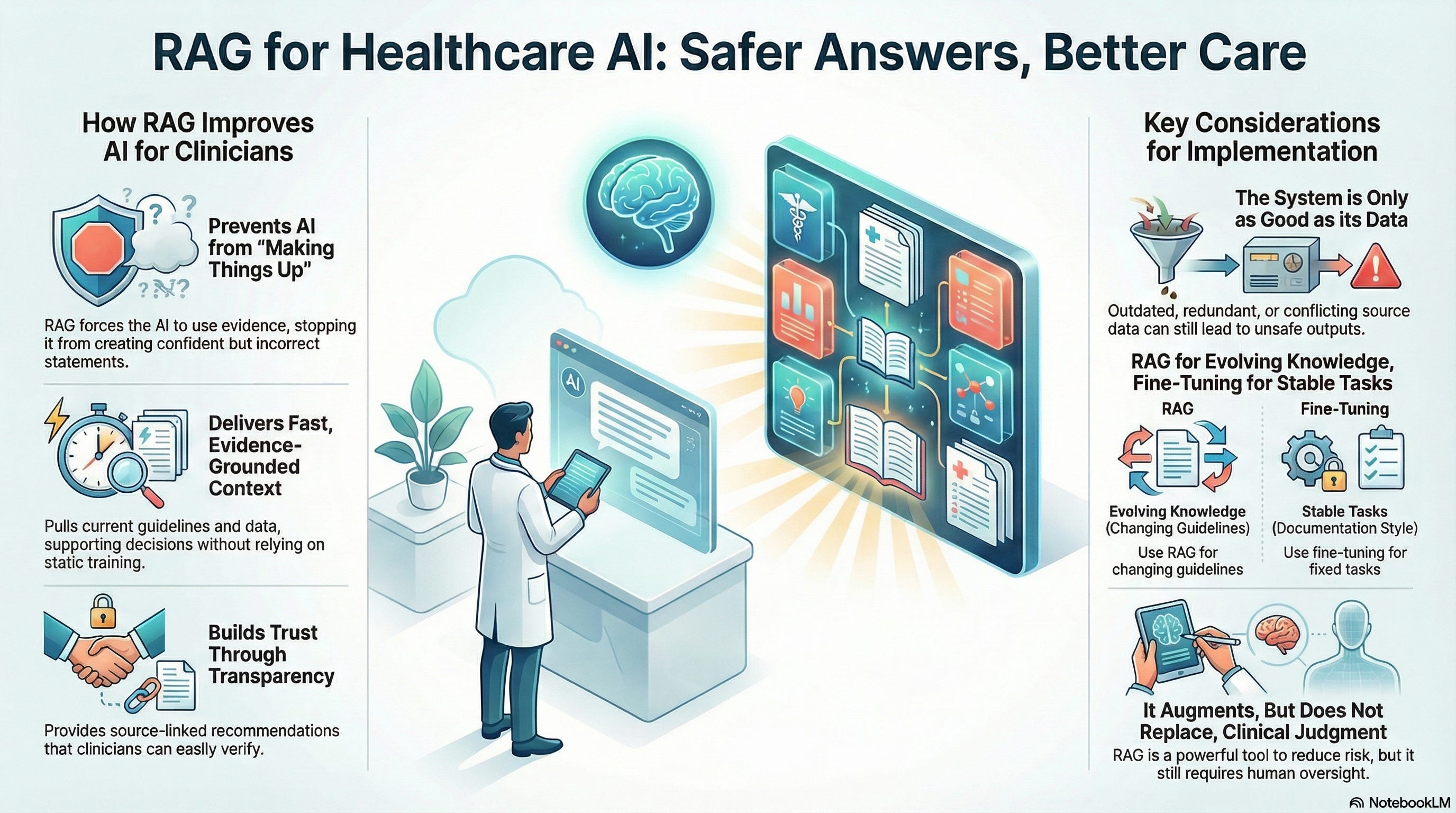
RAG prevents AI from “making things up.” Traditional language models rely on static training and can produce confident but incorrect medical statements. RAG forces the AI to retrieve relevant guidelines, research, or clinical data first, and then generate an answer based on that evidence—making outputs safer and more trustworthy for clinical use.
3. Is RAG better than fine-tuning medical AI models?
They solve different problems. RAG is better when medical knowledge changes frequently, such as guidelines or evidence updates, while fine-tuning works best for stable tasks like documentation style or coding logic. In practice, most healthcare systems should start with RAG and later add fine-tuning where consistency matters.
4. Where is RAG most useful for clinicians today?
RAG is most useful when clinicians need fast, evidence-grounded context rather than raw answers. It supports clinical decision-making by pulling current guidelines, resistance patterns, and similar historical cases instead of relying on static training data, while improving trust through source-linked recommendations that clinicians can verify.
5. What are the key caveats clinicians should keep in mind?
RAG is only as good as its data—outdated, redundant, or conflicting sources can still lead to unsafe outputs. It can also be slower and still requires human oversight. RAG reduces risk and improves transparency, but it does not replace clinical judgment.
References
Gargari OK, Habibi G. Enhancing medical AI with retrieval-augmented generation: A mini narrative review. Digit Health. 2025 Apr 21;11:20552076251337177.
Liu S, McCoy AB, Wright A. Improving large language model applications in biomedicine with retrieval-augmented generation: a systematic review, meta-analysis, and clinical development guidelines. J Am Med Inform Assoc. 2025;32(4):605–615.
Amugongo LM, Mascheroni P, Brooks S, Doering S, Seidel J. Retrieval augmented generation for large language models in healthcare: a systematic review. PLOS Digit Health. 2025;4(6):e0000877.
Mark your answer and think about it as you read through the remaining newsletter, and find the correct answer at the end!
Priorities for artificial intelligence education: clinicians’ perspectives | BMJ Digital Health & AI: Clinicians in this UK survey want AI training that focuses on real-world issues like liability, appropriate confidence in algorithm outputs, and managing security and privacy risks, where their current confidence is low. The findings are limited by a low regional response rate, possible selection bias, and some ambiguities in survey questions, so results may not generalise beyond this setting.
Performance comparison of artificial intelligence models in predicting 72-h emergency department unscheduled return visits | Front Public Health: TabNet, a deep learning model, predicted 72-hour unscheduled emergency department return visits more accurately than traditional machine learning models, with good overall performance. However, the evidence is limited by its single-center retrospective design, missing returns to other hospitals, incomplete psychosocial data, data imbalance, and uncertainties about real-world implementation in busy ED workflows.
Improving Clinical Decision-Making in Treating Airway Diseases with an Expert System Built Upon the Free AI Tool Google NotebookLM® | JMIR Med Inform (Epub ahead of print): The NotebookLM-based expert system for airway diseases produced guideline-consistent, reference-backed recommendations and may save physicians’ time, but this time-saving was not statistically significant in the small ED sample. The authors stress that LLM limits (reliance on uploaded sources) mean it should only augment human judgment and needs broader validation in more complex domains.
Impact of generative AI in medical education in India: a systematic review | Front Artif Intell: Indian medical students are widely using generative AI for learning, but mostly informally and ahead of institutional policies or structured curricular support. Because current evidence is small, perception-based, and short term, the authors recommend careful, ethics‑driven, monitored integration rather than fear or uncritical enthusiasm.
P.S. Each research pick title links to the original paper—do explore yourself for deeper insights, methodologies, and study limitations.
DoctorPPT.in is an innovative online platform created by medical professionals for medical professionals, educators, and students. It simplifies the process of creating, sharing, and discovering high-quality medical presentations, using both artificial intelligence (AI) and a rich community-contributed library.
What DoctorPPT does: An AI-powered platform to quickly generate medical presentations and access a peer-reviewed community library, with clear ownership, quality checks, and evidence-based standards.
How it works: Users generate AI slides by entering topic, audience, specialty (optional PDF), or upload their own presentations; credits are used for generation/downloads and earned via approved uploads.
Who it’s for & support: Useful for doctors, students, and faculty; transparent dashboards track credits and files, with time-limited downloads and dedicated email/WhatsApp support.
CLICK HERE to Claim 1000 FREE Credits
*This ‘Industry Spotlight’ is editor-picked, not sponsored. Mention reflects interest, not endorsement.
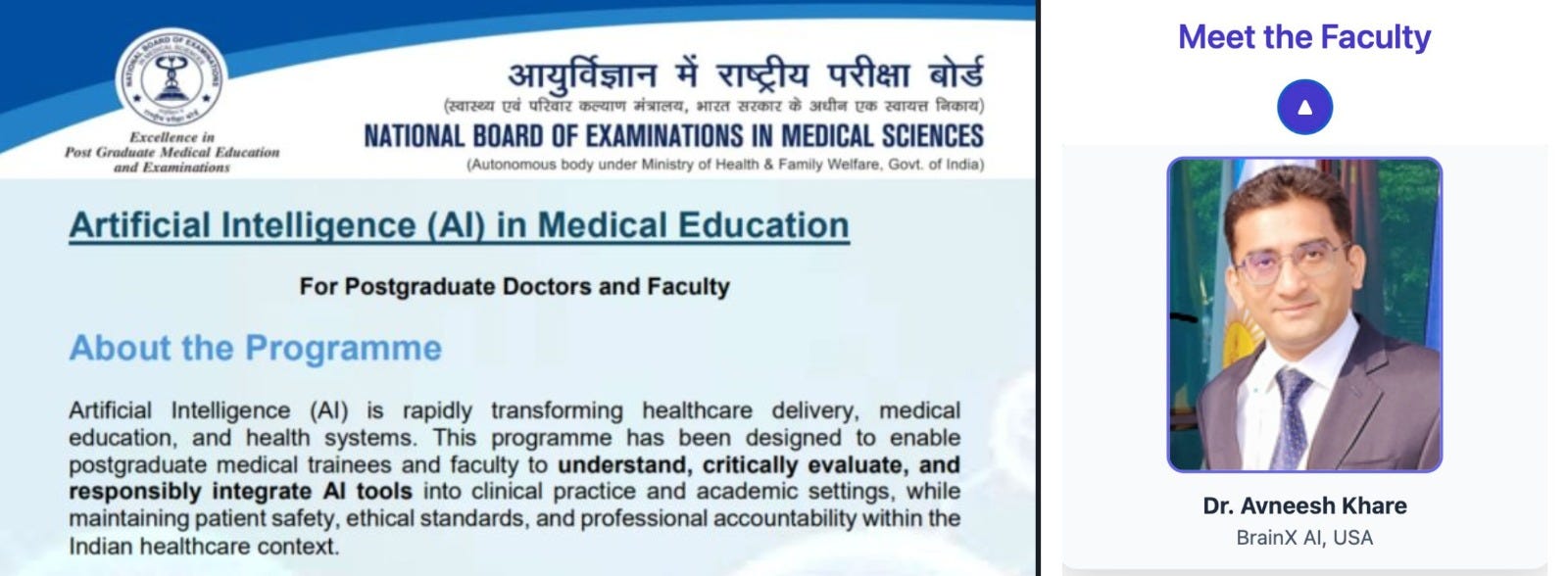
FREE Course on Artificial Intelligence (AI) in Medical Education by National Board of Examinations in Medical Sciences (NBEMS):

This video explores the future role of clinicians in an AI-driven world, emphasizing a "human-in-the-loop" approach:
This NEJM AI Grand Rounds podcast episode is a long-form conversation with Dr. Zak (Isaac) Kohane about how values get embedded in AI systems and what that means for clinical practice and patient care:

Your feedback is crucial to me, as it helps me understand your interests and improve my offerings. I would appreciate it if you could take a few minutes to share your thoughts about what you’ve enjoyed and what you think I could do better.
OpenAI has launched ChatGPT Health in the US to analyse users’ medical records and health app data for personalised advice, while it has also rolled out ChatGPT for Healthcare, an enterprise GPT‑5.2 workspace for hospitals and clinics to streamline clinical, research and administrative workflows under HIPAA-oriented safeguards.
India has opened its first government-run AI clinic at GIMS, Greater Noida, where doctors use artificial intelligence and genetic screening within a public hospital setup to improve early detection and diagnosis of serious diseases, positioning it as a pilot model for future AI-enabled government healthcare services across India.
Utah is piloting an AI-driven autonomous prescription refill service that lets patients with chronic conditions obtain legally authorized, automated refills processed by pharmacists, reducing delays and clinician burden.
Stay tuned for the upcoming issues of my newsletter to explore the latest breakthroughs and dive deep into the transformative power of artificial intelligence and emerging technologies, shaping a healthier future. 🚀

✅ Correct Answer:
B. Check evidence before answering
💡 Short Explanation:
RAG reduces AI hallucinations by retrieving relevant medical guidelines or data before generating a response, rather than relying only on pre-trained knowledge.
Disclaimer: The content in this newsletter was partly curated and summarized using AI LLMs, which can make mistakes. Please check all important information at your end. For any issues, please reach out at avneeshkhareonline@gmail.com.
Comments
Nothing yet. Say the first thing.
Sign in to join the conversation.