
“The optimist in me hopes that AI can make us doctors better versions of ourselves to better care for our patients.”
Adam Rodman, Assistant Professor at Harvard Medical School and physician at Beth Israel Deaconess Medical Center
Welcome to The ‘Med AI’ Capsule Newsletter—your go-to source for exploring how AI and emerging technologies are transforming medicine! Whether you're a medical professional 👩⚕️, a tech enthusiast 💻, or simply curious 🧠, The 'Med AI' Capsule is for you! Stay ahead of the curve with the latest trends, insights, and updates in the rapidly evolving world of AI and emerging technologies in medicine. 🚀
In today’s capsule:
5 QnA Primer
4 Research Picks
3 Learning Resources
2 Worth-Attending Events
1 Industry Spotlight, and more..
Time to Read: Around 8-10 minutes.
💬 5 QnA Primer
The concept for today is Multimodal AI.
Prefer Video/ Audio? Watch/ Listen Here
Q1: What exactly is Multimodal AI, and how does it differ from the AI tools currently used in medicine?
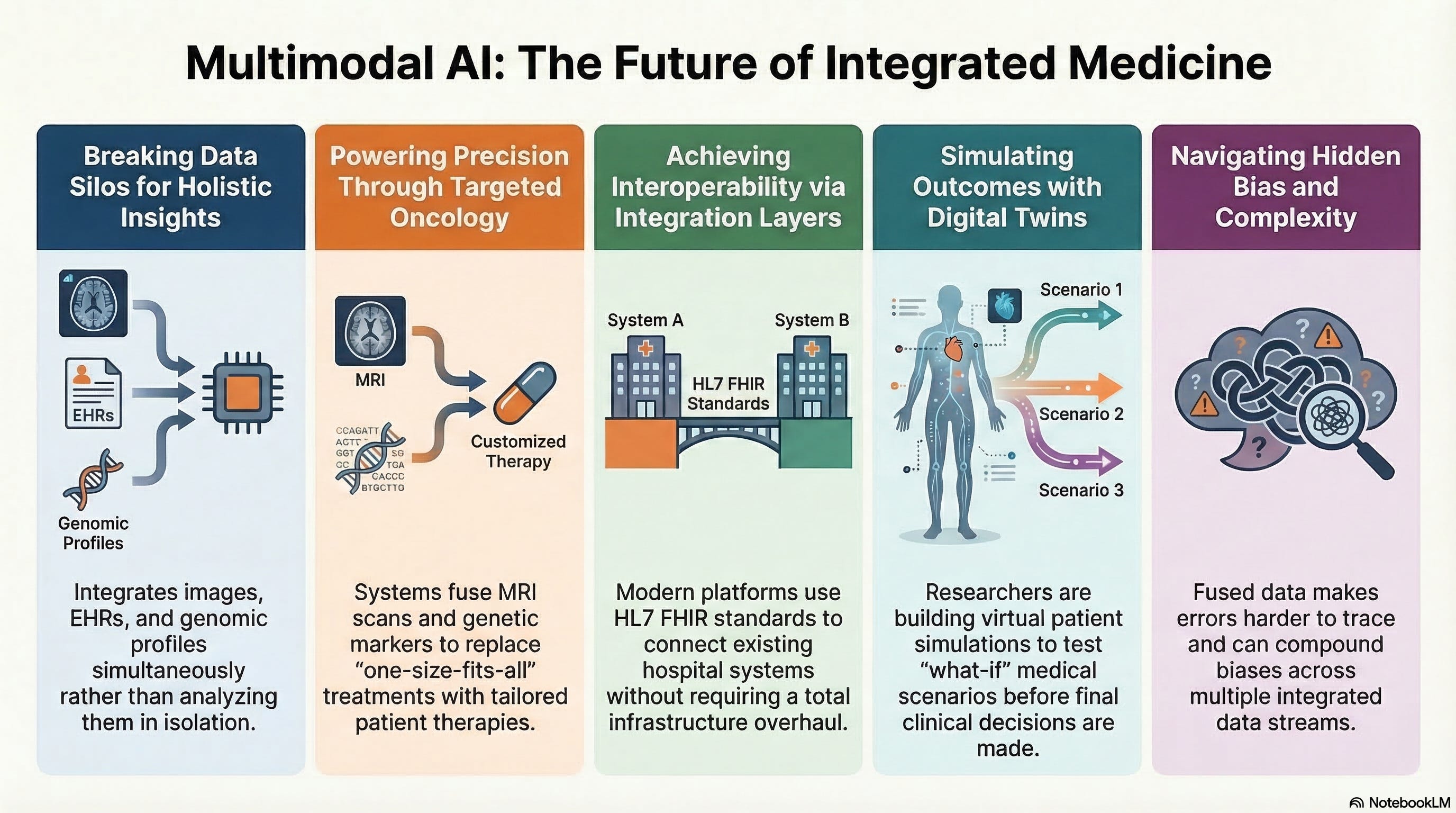
Most AI tools in clinical use today are unimodal—radiology AI reads chest X-rays, sepsis algorithms parse vitals and labs—but each works within its own data silo. Multimodal AI breaks this by functioning like a seasoned physician, integrating images, EHRs, genomics, and even consultation audio to form a holistic, context-aware view of a patient. Research consistently shows multimodal fusion outperforms single-modality models in diagnostic tasks, since real clinical decisions rarely rely on a single data type.
Q2: How can this technology practically improve diagnostic accuracy and patient care?
The clinical strength of multimodal AI lies in cross-referencing data types, reducing diagnostic blind spots that occur when a single modality is interpreted in isolation. In oncology, it can fuse MRI scans, pathology slides, genetic markers, and unstructured clinical notes to recommend patient-specific targeted therapies—showing particular promise in lung and ovarian cancers—and shifting away from the one-size-fits-all treatment protocols still common in routine practice.
Q3: Often hospitals use multiple disconnected systems — EMRs, PACS, lab software. Can multimodal AI actually work in such fragmented environments?
Fragmented infrastructure is the norm in most hospitals. Multimodal AI systems address this by using interoperability standards like HL7 FHIR as a common language for structured data exchange across disparate systems. Instead of requiring a full overhaul, these platforms act as an integration layer over existing EMR, imaging, and lab systems. However, output quality depends directly on data quality and completeness, making clean, well-structured data pipelines essential for meaningful deployment.
Q4: What is the most advanced capability of Multimodal AI that we are heading toward?
Researchers are advancing toward the medical “Digital Twin”—a dynamic, continuously updated virtual model of a patient built from integrated multi-omic, imaging, and lifestyle data. This enables predictive “what-if” simulations, such as testing drug responses against a patient’s genetic profile or forecasting surgical outcomes in a safe, virtual setting before real-world decisions. While not yet routine, it remains an active precision medicine frontier with strong foundational progress underway.
Q5: What are the critical limitations and caveats to be aware of before trusting these systems?
The risks of multimodal AI stem from its core strength—data fusion. When imaging, genomics, and clinical data are tightly integrated, failures become harder to trace, and biases from multiple streams can compound into confident but systematically flawed outputs, especially for underrepresented groups. Explainability is also limited, as decisions arise from cross-modal interactions that current tools cannot clearly decompose. Combined with higher re-identification risks from merged data, these systems have failure modes as integrated as their strengths.
Further Reading
Khan SN, Danishuddin, Khan MWA, Guarnera L, Akhtar SMF. Multi-modal AI in precision medicine: integrating genomics, imaging, and EHR data for clinical insights. Front Artif Intell. 2026 Jan 7;8:1743921.
Jandoubi B, Akhloufi MA. Multimodal Artificial Intelligence in Medical Diagnostics. Information. 2025; 16(7):591.
Judge CS, Krewer F, O'Donnell MJ, Kiely L, Sexton D, Taylor GW, Skorburg JA, Tripp B. Multimodal Artificial Intelligence in Medicine. Kidney360. 2024 Nov 1;5(11):1771-1779.
🔬 Research Picks
Deep learning on histopathological images to predict breast cancer recurrence risk and chemotherapy benefit: a multicentre, model development and validation study | Lancet Oncol.: A deep-learning model using routine histopathology slides and clinical data can estimate genomic recurrence risk and predict chemotherapy benefit in early HR-positive, HER2-negative breast cancer, offering a low-cost alternative to Oncotype DX. However, it is based on retrospective data with limited randomized evidence for high-risk patients, and requires broader validation, especially in underrepresented populations and real-world settings.
Personalised health plan development using agentic AI in Singapore's national preventive care programme: a pilot study | NPJ Digit Med.: An agentic AI–powered digital assistant integrated into Singapore’s national preventive care programme generated personalised diet and exercise plans, with a small pilot showing high user and clinician satisfaction and acceptance. However, findings are preliminary—based on just 20 residents and 7 clinicians—and focus on usability rather than long-term health outcomes or real-world effectiveness.
AI-Powered Ambient Scribe Technology Experiences Among Emergency Physicians: Cross-Sectional, Mixed Methods Pilot Survey Study | JMIR Form Res.: Ambient AI scribes in emergency departments improved perceived documentation efficiency and reduced after-shift charting time, with about two-thirds of physicians reporting satisfaction. However, the pilot involved a small sample (16 early adopters), trust in AI-generated notes was lower than with human scribes, and patient outcomes or broader real-world impact were not assessed.
Comparing artificial intelligence and healthcare professional performance in surgical and interventional video analysis: a systematic review and meta-analysis | NPJ Digit Med.: A systematic review and meta-analysis of 146 studies found AI achieves higher sensitivity and similar specificity to unassisted clinicians in surgical video analysis, and that AI-assisted clinicians outperform those working alone. However, most studies were early-stage, retrospective, and conducted under ideal conditions (e.g., high-quality videos, limited real-world context), limiting generalisability to routine clinical practice.
P.S. Each research pick title links to the original paper—do explore yourself for deeper insights, methodologies, and study limitations.
✨ Industry Spotlight
Easiofy Solutions is an AI-first medical imaging company focused on making radiology workflows faster, more connected, and clinically actionable. Its portfolio includes secure, instant image sharing, AI-driven automatic segmentation for surgical and radiation planning, and neuro-AI tools for triaging brain tumors, traumatic brain injury, and stroke.
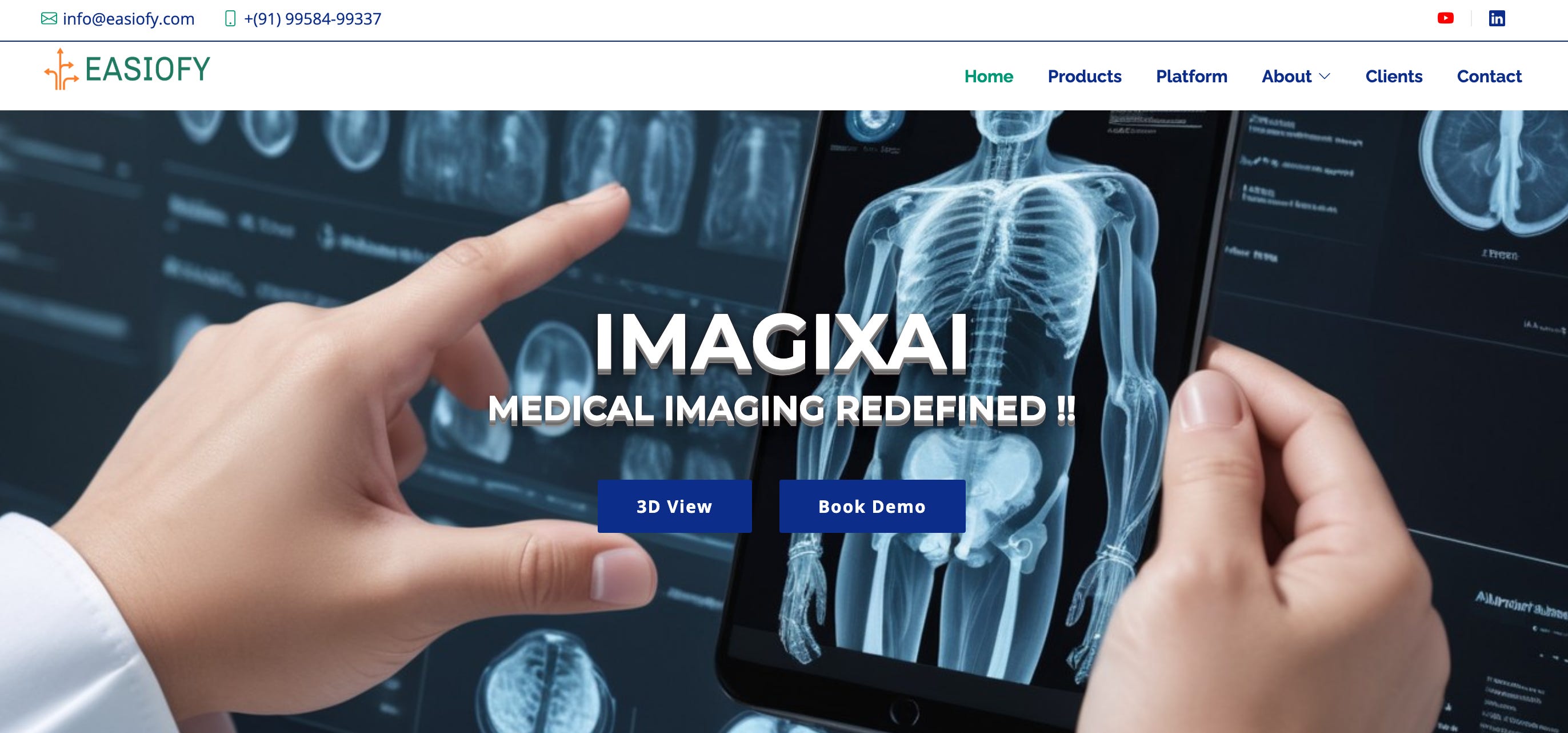
At its core, Easiofy’s ImagiXAI platform is a cloud-based PACS alternative enabling seamless imaging access and sharing, augmented by a 3D XR Viewer for AR/VR-driven visualization, collectively enhancing diagnostic accuracy and surgical planning while serving as an implementation-ready partner for healthcare providers worldwide.
*This ‘Industry Spotlight’ is editor-picked, not sponsored. Mention reflects interest, not endorsement.
📚 Learning Resources
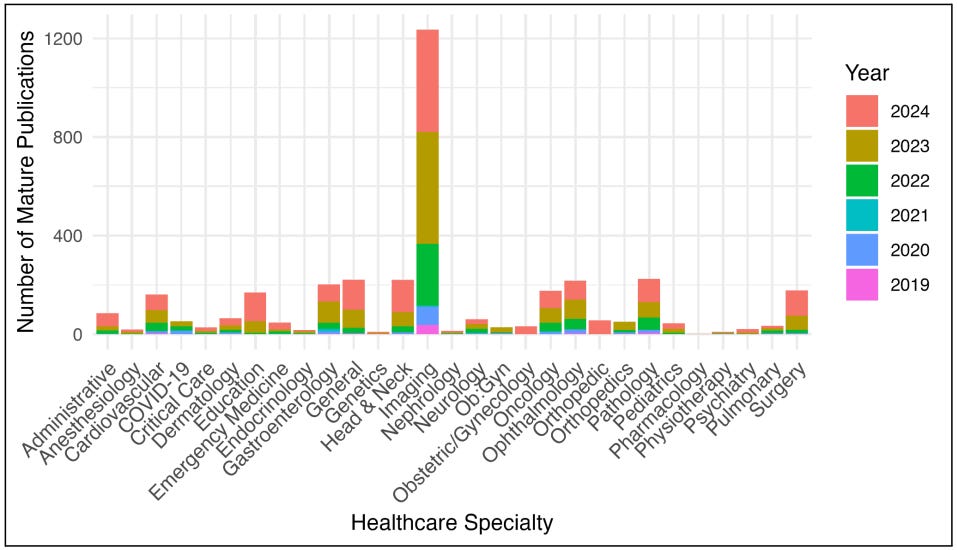
Artificial Intelligence in Healthcare: 2024 Year in Review
This video is a comprehensive guide on how to leverage NotebookLM for research, learning, and productivity through 6 real-world use cases:
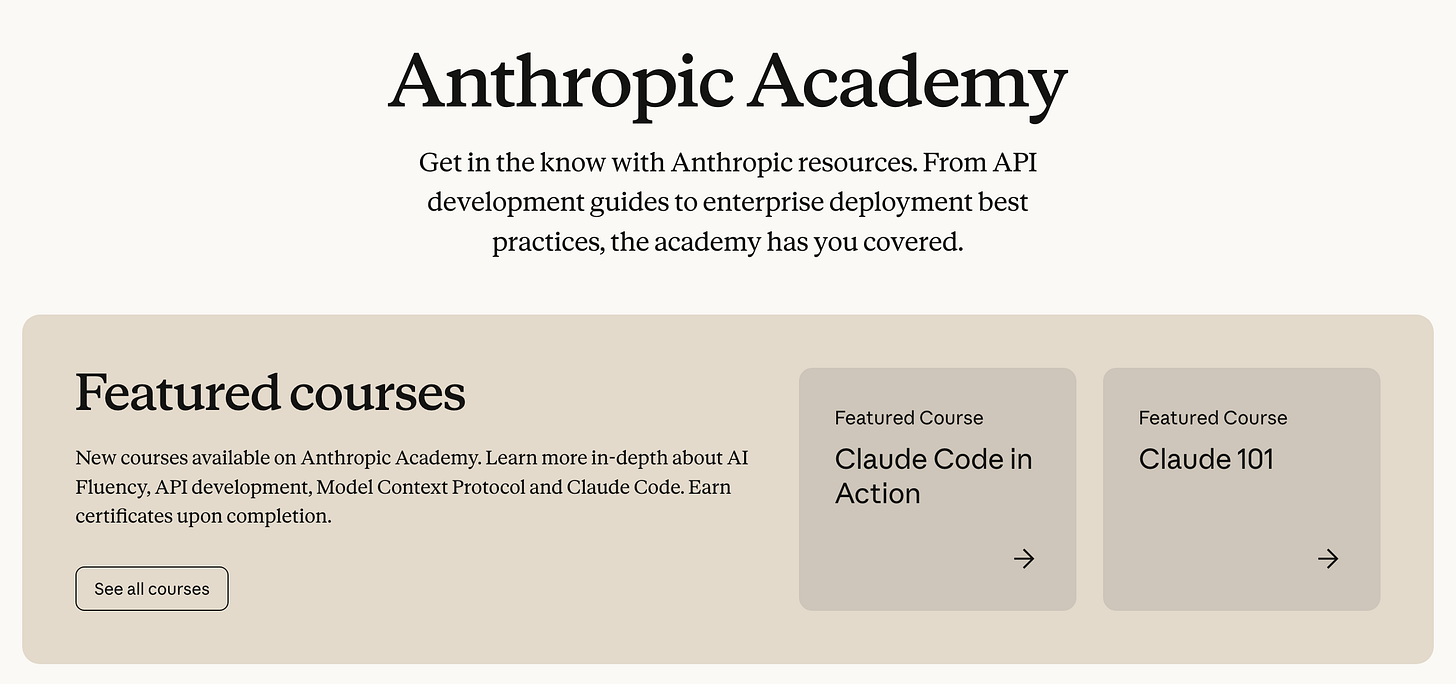
New courses available on Anthropic Academy. Learn more in-depth about AI Fluency, API development, Model Context Protocol and Claude Code. Earn certificates upon completion:
🧑💻 Worth-Attending Events

Your feedback is crucial to me, as it helps me understand your interests and improve my offerings. I would appreciate it if you could take a few minutes to share your thoughts about what you’ve enjoyed and what you think I could do better.
Let’s wrap it up with some latest news updates! 📰
India has launched AI in Healthcare Strategy (SAHI) & Data Platform (BODH) to drive safe, ethical, and evidence‑based adoption of AI across its healthcare system, supported by ABDM’s sandbox and CDSCO’s regulatory pathway for AI‑enabled medical devices.
National Board of Examinations in Medical Sciences (NBEMS) set a Guinness World Record by drawing 17,999 simultaneous viewers to its nationwide AI-in-healthcare masterclass for doctors.
Microsoft launched Copilot Health as an AI companion that unifies medical records and wearable data to provide personalized, safe, clinician‑validated health insights for consumers.
Stay tuned for the upcoming issues of my newsletter to explore the latest breakthroughs and dive deep into the transformative power of artificial intelligence and emerging technologies, shaping a healthier future. 🚀

Disclaimer: The content in this newsletter was partly curated and summarized using AI LLMs, which can make mistakes. Please check all important information at your end. For any issues, please reach out at avneeshkhareonline@gmail.com.
Thanks for reading The 'Med AI' Capsule Newsletter! Subscribe for free to receive future issues in your inbox and support my work.
Comments
Nothing yet. Say the first thing.
Sign in to join the conversation.