
Welcome to The ‘Med AI’ Capsule Newsletter—your go-to source for exploring how AI and emerging technologies are transforming medicine! Whether you're a medical professional 👩⚕️, a tech enthusiast 💻, or simply curious 🧠, The 'Med AI' Capsule is for you! Stay ahead of the curve with the latest trends, insights, and updates in the rapidly evolving world of AI and emerging technologies in medicine. 🚀
4 News Updates
3 Research Papers
2 Learning Resources
1 Worth-Attending Event, and more!
Time to Read: Around 7 to 10 minutes.
Exciting News! You can now enjoy this newsletter issue in a new, accessible format. Click below to listen to the podcast version and dive deeper into the latest insights and stories while on the move!
Listen to the Podcast Version Here
Microsoft’s AI team has introduced the Sequential Diagnosis Benchmark (SD Bench), designed to evaluate diagnostic reasoning across 304 New England Journal of Medicine (NEJM) Case Records. The benchmark mimics real clinical workflows, where models must iteratively ask questions and order tests to reach a final diagnosis.
MAI-DxO combines multiple models into a virtual diagnostic team; evaluates both accuracy and test-related costs.
Paired with GPT-4o, MAI-DxO achieved 85.5% diagnostic accuracy—compared to 20% for experienced physicians.
Physician participants worked solo, without tools, for fair model comparison.
Models also tracked virtual costs per test—MAI-DxO used fewer diagnostics to reach correct answers.
Results emphasize the importance of sequential reasoning and cost-sensitive evaluation.
Currently a research prototype; undergoing peer review and not yet available for clinical use.
“To move beyond the limitations of multiple-choice questions, we’ve focused on sequential diagnosis, a cornerstone of real-world medical decision making. In this process, a clinician begins with an initial patient presentation and then iteratively selects questions and diagnostic tests to arrive at a final diagnosis. For example, a patient presenting with cough and fever may lead the clinician to order and review blood tests and a chest X-ray before they feel confident about diagnosing pneumonia.”
- Authors
Why It Matters: This is a major leap in applying LLMs to complex diagnostic reasoning. MAI-DxO could evolve into a trustworthy co-pilot in high-stakes care—if validated in real settings. It also underscores the importance of benchmarks that reflect clinical workflow and cost constraints.
After 18 years of infertility due to azoospermia, a couple became pregnant at Columbia University Fertility Center using the AI-powered STAR (Sperm Tracking and Recovery) system, which identified 3 hidden sperm from 8 million scanned images—marking its first clinical success.
Mayo Clinic’s AI tool, StateViewer, identifies 9 dementia types—including Alzheimer’s—from a single FDG-PET scan, boosting diagnostic speed and accuracy up to 3x while offering visual, pattern-based insights to support early, precise care.
Guangdong Medical University has launched China’s first AI-focused medical school, integrating large medical models, VR, and digital twins to train future physicians in AI-driven diagnosis, research, and clinical care.
Docstribe is a Vendor-neutral AI‑Powered Precision Care Coordination Platform that identifies high-risk patients and closes care gaps across service lines. It offers AI-powered insights to anticipate patient behavior and proactively activate outreach.
Supports precision care pathways with customized, tiered notifications integrated into clinicians’ workflows
Enables patient tracking, searchable lists, and real-time dashboards to monitor care impact
Delivers measurable outcomes: 18× average ROI across partners, 30% care improvement rate
Built on deep clinical expertise, combining data-driven precision medicine with personalized follow-up
Active in multiple regions, designed to improve clinical outcomes, revenue, and patient experience
*This edition’s ‘Industry Spotlight’ is editor-picked, not sponsored.
Interested in sponsoring an issue of The 'Med AI' Capsule Newsletter?
Would you like to showcase your innovative health tech brand or product to a community of 25,000+ healthcare technology enthusiasts?
Please feel free to reach out at avneeshkhareonline@gmail.com.
A study published in BMC Medical Education evaluated a four-week AI in Medicine Association (AIM) program for pre-med students at Brigham Young University (BYU).
Used a pretest-posttest control design to measure AI and pathology-related knowledge.
AIM participants showed significant gains with large effect sizes.
Covered foundational AI, ethics, data preprocessing, and histological image analysis.
Prior AI experience and attitudes didn’t predict improvement—suggesting broad accessibility.
Highlights extracurricular programs as scalable models for early AI integration in medicine.
“The AIM educational model offers a promising blueprint for scalable, interdisciplinary learning that bridges the gap between medicine and machine learning—laying the foundation for a more informed, ethically grounded, and AI-aware healthcare workforce.”
- Authors
Why It Matters: As AI becomes central to clinical practice, early exposure—before med school—may be key to preparing the next generation of physicians.
A novel reinforcement learning algorithm optimized vital sign management in ICU patients with traumatic brain injury, improving 28-day survival from 81% (clinicians) to 88% by adjusting temperature and MAP using personalized AI strategies.
An Interpretable Artificial Intelligence System for Crohn's Disease Ulcer Identification and Grading on Double-Balloon Enteroscopy Images | UEG Journal: A new AI system using YOLO‑v5 analyzes double-balloon enteroscopy images to locate and grade Crohn’s disease ulcers with ~92% sensitivity and ≥90% accuracy across size, surface, and depth, markedly improving junior endoscopists’ grading sensitivity by 12.7% and consistency by ~27%.
Mark your answer and think about it as you read through the remaining newsletter, and find the correct answer at the end!
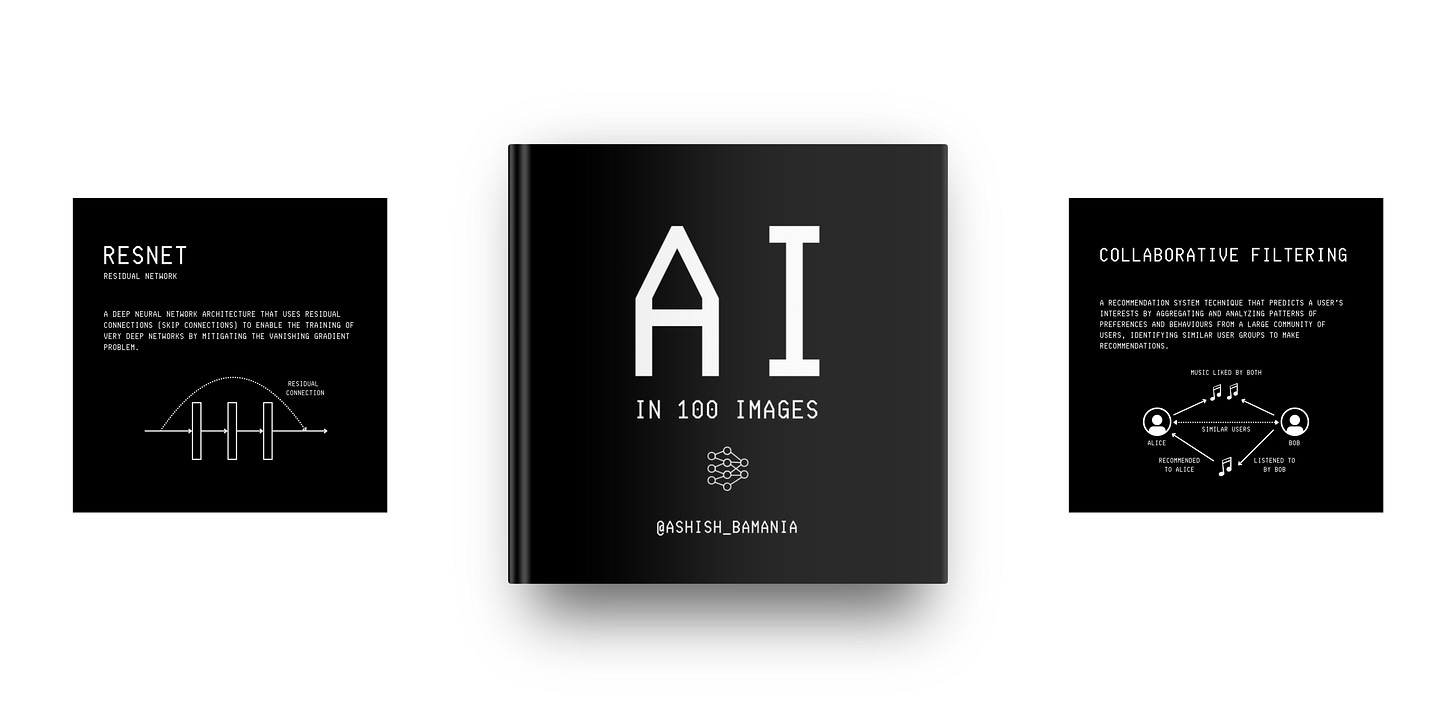
Your feedback is crucial to me, as it helps me understand your interests and improve my offerings. I would appreciate it if you could take a few minutes to share your thoughts about what you've enjoyed and what you think I could do better.
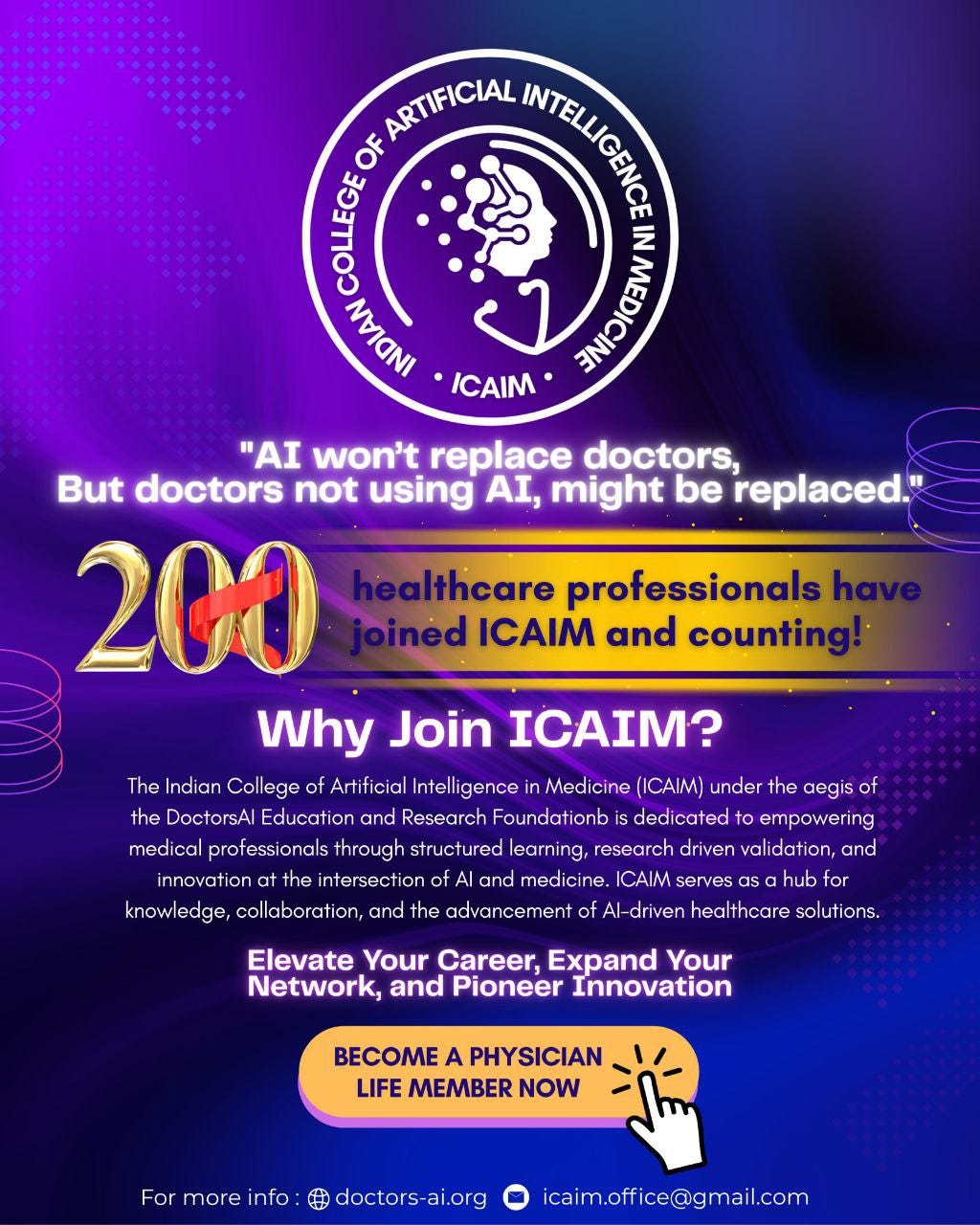
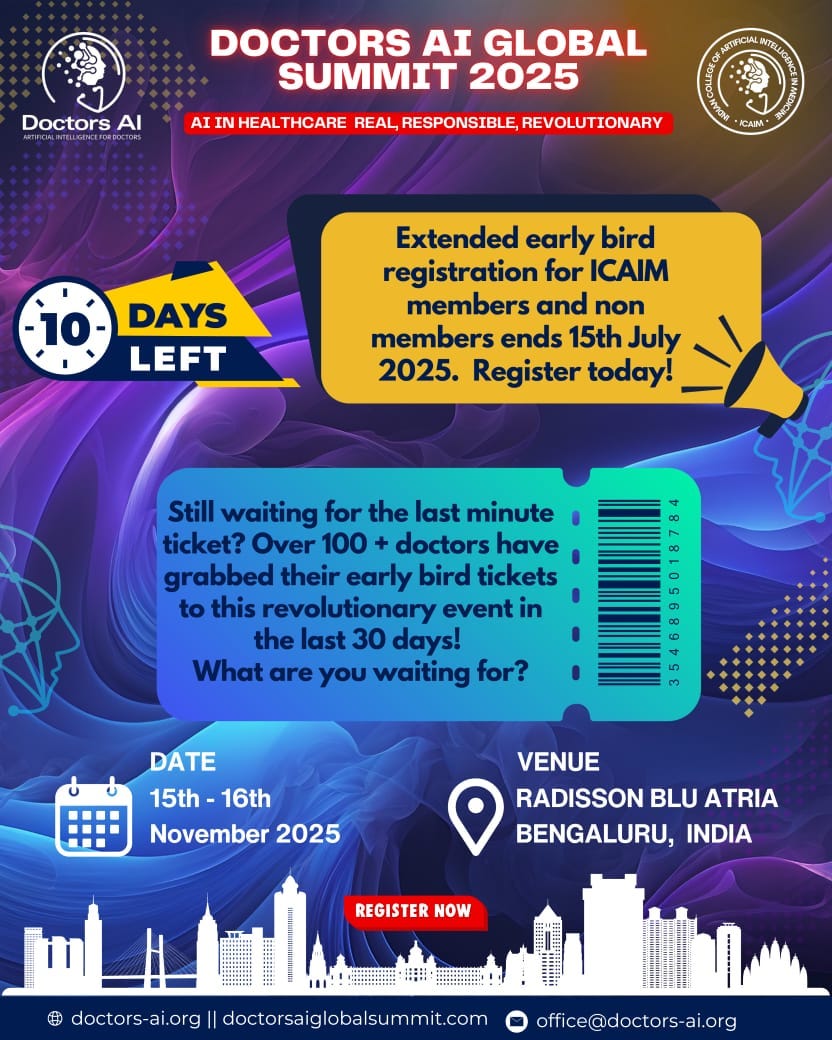
“Eventually, doctors will adopt AI and algorithms as their work partners. This leveling of the medical knowledge landscape will ultimately lead to a new premium: to find and train doctors who have the highest level of emotional intelligence.”
— Eric Topol, Deep Medicine
Stay tuned for the upcoming issues of my newsletter to explore the latest breakthroughs and dive deep into the transformative power of artificial intelligence and emerging technologies, shaping a healthier future. 🚀
Disclaimer: The content in this newsletter was partly curated and summarized using AI LLMs, which can make mistakes. Please check all important information. For any issues or inaccuracies, please reach out at avneeshkhareonline@gmail.com.
Comments
Nothing yet. Say the first thing.
Sign in to join the conversation.