
“If you want to go quickly, go alone. If you want to go far, go together. Artificial intelligence and humans will solve society’s biggest challenges by working together.”
Fei Fei Li, Computer Scientist, Stanford University
Welcome to The ‘Med AI’ Capsule Newsletter—your go-to source for exploring how AI and emerging technologies are transforming medicine! Whether you're a medical professional 👩⚕️, a tech enthusiast 💻, or simply curious 🧠, The 'Med AI' Capsule is for you! Stay ahead of the curve with the latest trends, insights, and updates in the rapidly evolving world of AI and emerging technologies in medicine. 🚀
5 QnA Primer
4 Research Picks
3 Learning Resources
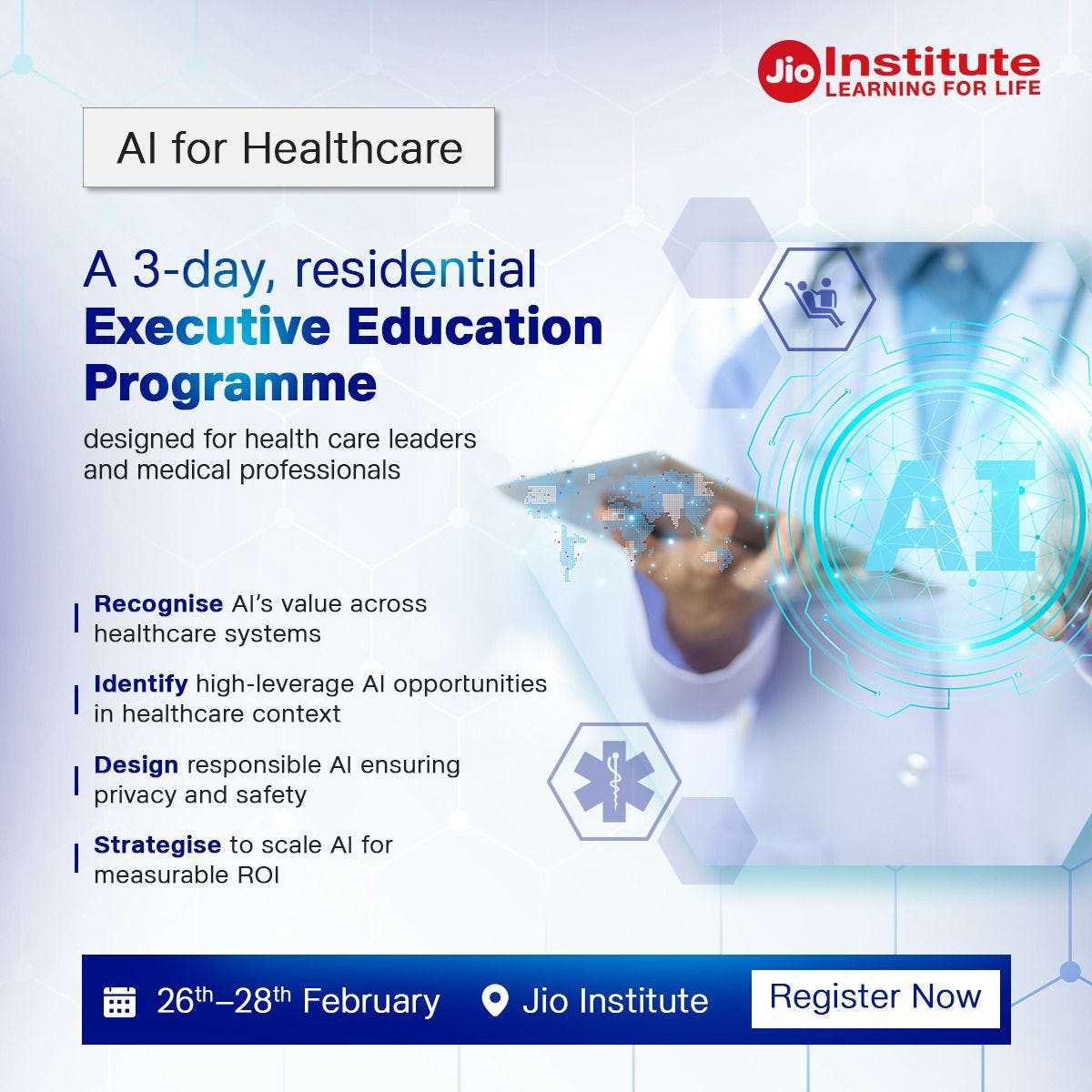
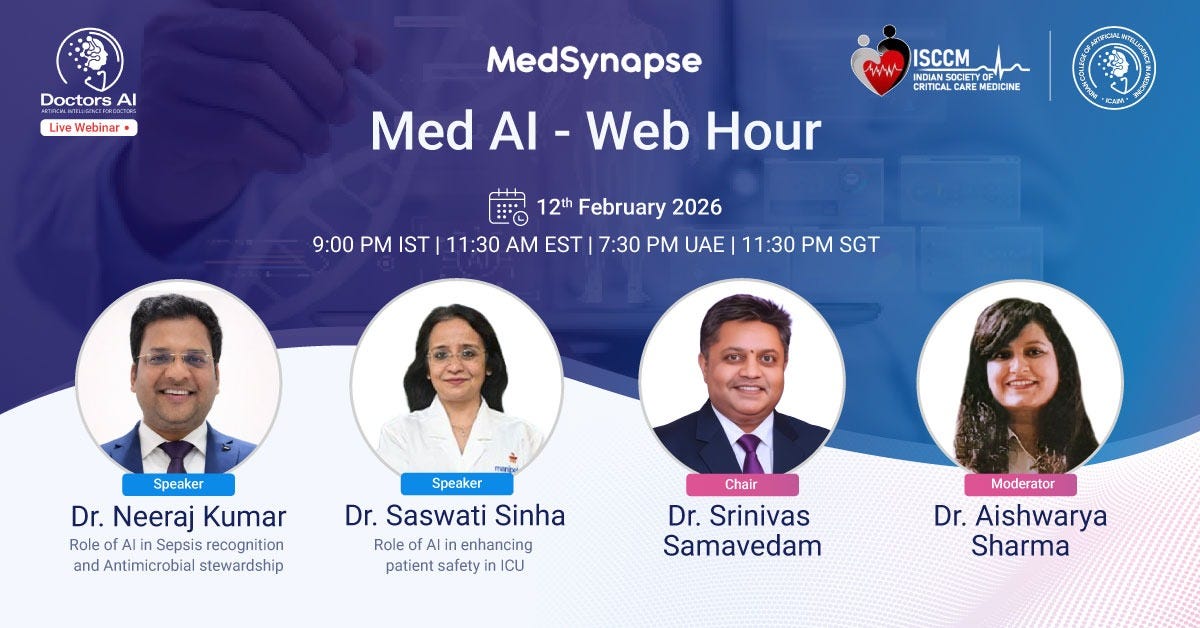
2 Worth-Attending Events
1 Industry Spotlight, and more..
Time to Read: Around 8-10 minutes.
The concept for today is Federated Learning.
1. What is federated learning?
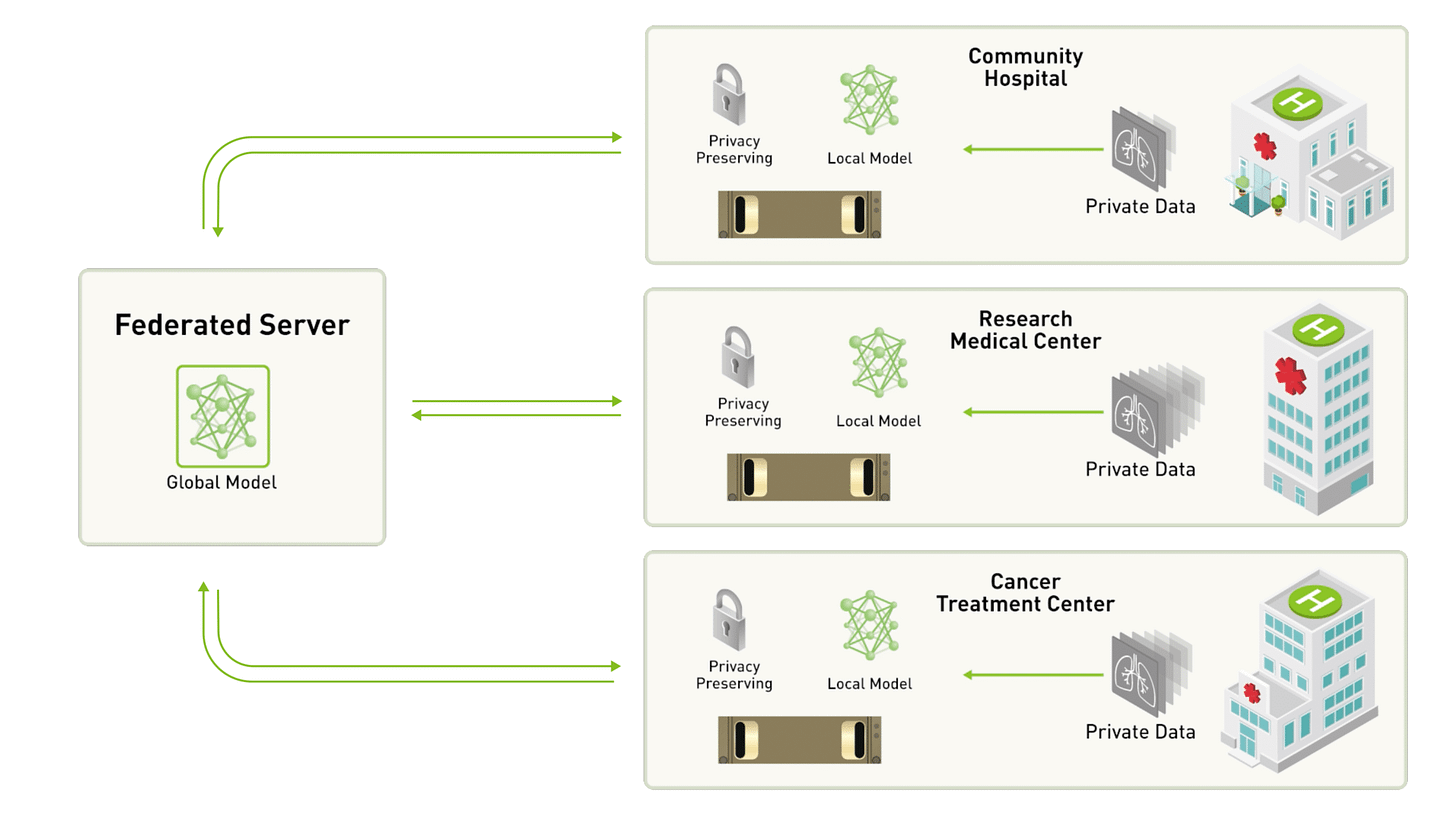
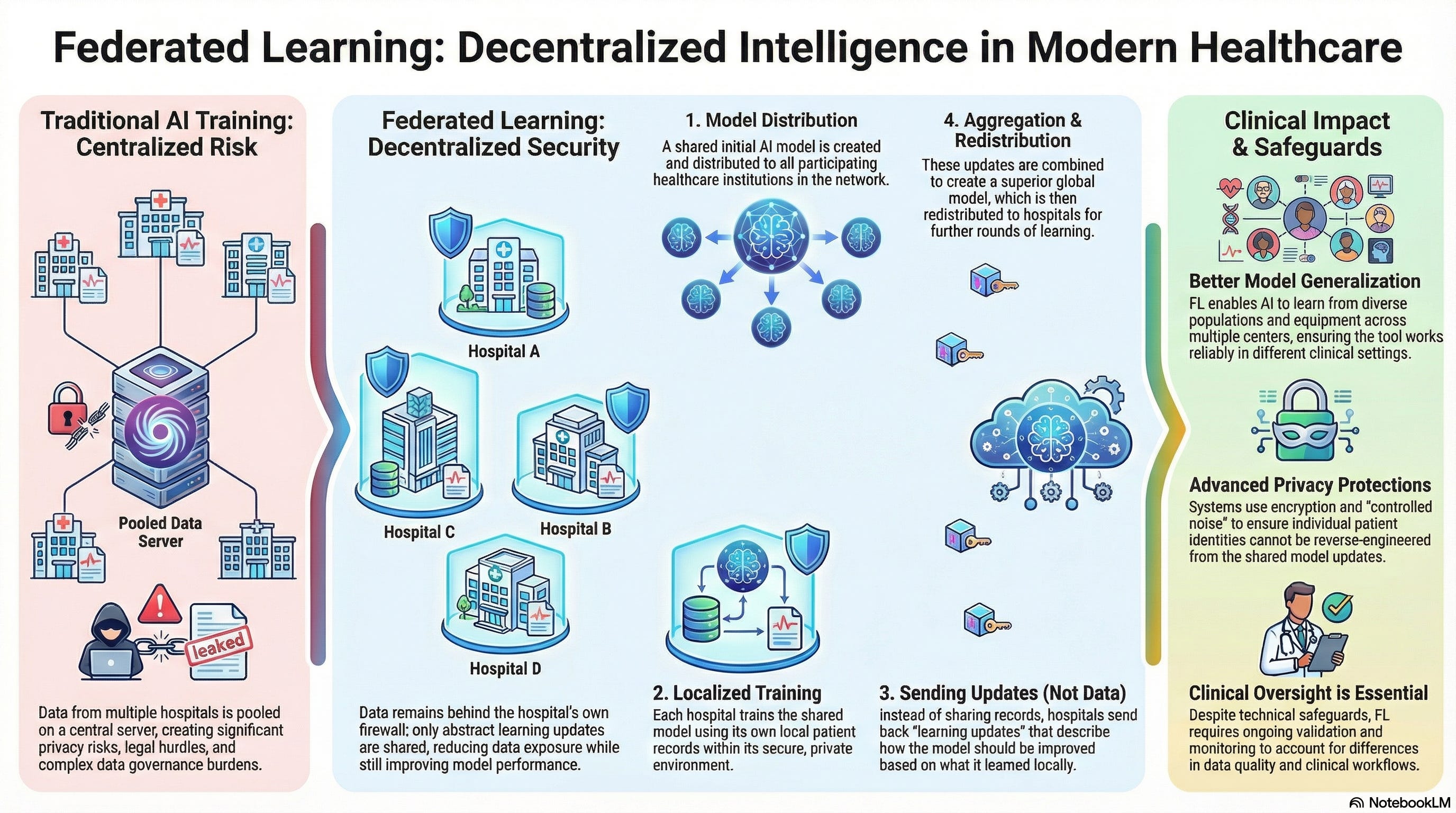
Federated learning is a method of training an AI model using data from multiple hospitals without collecting that data in a single place. Instead of moving patient records, the AI model is sent to each hospital, learns from local data, and sends back what it has learned.
The hospital never shares raw patient information—only abstract learning updates. This allows collaboration while keeping data under local control.
2. How is federated learning different from traditional (non-federated) AI training?
In traditional AI training, data from many hospitals is pooled on a central server and used to train a model. While effective, this approach creates privacy risks, legal hurdles, and operational complexity.
Federated learning flips this approach: data stays inside each hospital, and learning is combined across sites. Both methods aim to improve model performance, but federated learning reduces data exposure and governance burden.
3. Why is federated learning especially important in healthcare?
Medical AI must learn from diverse populations to work reliably across settings. A model trained in one hospital often performs poorly elsewhere due to differences in patients, equipment, and clinical practice.
Federated learning enables multi-center training without sharing patient data, making it possible to build models that generalize better while respecting privacy laws and institutional boundaries.
4. How does federated learning work in practical terms?
A shared AI model is first created and distributed to participating hospitals. Each hospital trains the model using its own data within its secure environment.
Instead of sending data back, the hospital sends learning updates that describe how the model should improve. These updates are combined to create a better model, which is then redistributed for further learning rounds.
5. What are the limitations and caveats clinicians should understand?
Federated learning greatly reduces privacy risk, but it does not remove it completely. To protect patients, systems use encryption and controlled noise so individual patient information cannot be inferred from shared learning updates.
At the same time, differences in data quality, patient populations, and clinical workflows can affect performance. Like any clinical tool, federated AI requires validation, monitoring, and clinical oversight to ensure safe and meaningful use.
Further Reading
Thrasher J, Devkota A, Siwakotai P, Chivukula R, Poudel P, Hu C, et al. Multimodal Federated Learning in Healthcare: a Review. arXiv preprint arXiv:2310.09650. 2023.
Florrence JM. Federated Learning for Privacy‑Preserving AI in Healthcare Applications. Int J Creative Research Thoughts. 2025;13(11):e447‑e454.
Eden, R., Chukwudi, I., Bain, C. et al. A scoping review of the governance of federated learning in healthcare. npj Digit. Med. 8, 427 (2025). https://doi.org/10.1038/s41746-025-01836-3
Mark your answer and think about it as you read through the remaining newsletter, and find the correct answer at the end!
Effectiveness of Informed AI Use on Clinical Competence of General Practitioners and Internists: Pre-Post Intervention Study | JMIR Med Educ.: Structured AI training was associated with improved test-based clinical decision-making and greater confidence among GPs and internists in a large multinational cohort, supporting its integration into medical education and CME, while acknowledging selection bias, absence of a non-training control arm, and the need to assess long-term effects and real patient outcomes.
Patients' Attitudes and Beliefs Toward Artificial Intelligence Use in Cancer Care: Cross-Sectional Survey Study | JMIR Cancer: Most oncology patients viewed AI in cancer care positively, though nearly half had concerns—mainly about reduced clinician interaction and potential errors—highlighting the need to incorporate patient perspectives into AI design and policy, while acknowledging limited generalizability from single-center convenience sampling, high education levels, possible social desirability bias, and the need for longitudinal studies as AI use evolves.
Generative artificial intelligence in palliative care: A comparative evaluation of ChatGPT-4o and ChatGPT-5 as clinical decision support tools | Digit Health: ChatGPT-5 outperformed ChatGPT-4o in palliative care symptom-management tasks while maintaining high ethical sensitivity, indicating potential as a complementary decision-support tool; however, results are limited by standardized Turkish-language scenarios and a small expert panel, restricting real-world and cross-cultural generalizability and reinforcing the need for multilingual, real-world validation, model-by-model re-evaluation before clinical use, and continued clinician responsibility for final decisions.
AI-driven analysis of patient safety reports using large language models: an exploratory multiple methods study | BMJ Qual Saf.: LLMs can enhance patient safety by rapidly analysing large volumes of reports to uncover system-level risks and support a shift from reactive to proactive improvement; however, evidence is limited by use within a single system and LLM, potential human confirmation bias, small validation samples, and the need for continuous human oversight to address hallucinations, model drift, and cross-setting variability, highlighting the importance of careful, context-specific implementation and validation.
P.S. Each research pick title links to the original paper—do explore yourself for deeper insights, methodologies, and study limitations.
DoctorPPT.in is an innovative online platform created by medical professionals for medical professionals, educators, and students. It simplifies the process of creating, sharing, and discovering high-quality medical presentations, using both artificial intelligence (AI) and a rich community-contributed library.
What DoctorPPT does: An AI-powered platform to quickly generate medical presentations and access a peer-reviewed community library, with clear ownership, quality checks, and evidence-based standards.
How it works: Users generate AI slides by entering topic, audience, specialty (optional PDF), or upload their own presentations; credits are used for generation/downloads and earned via approved uploads.
Who it’s for & support: Useful for doctors, students, and faculty; transparent dashboards track credits and files, with time-limited downloads and dedicated email/WhatsApp support.
CLICK HERE to Claim 1000 FREE Credits
*This ‘Industry Spotlight’ is editor-picked, not sponsored. Mention reflects interest, not endorsement.
This self-paced course equips you with essential AI skills and techniques to boost workplace productivity and empower India's workforce for an AI-driven future:
This video playlist is from the FREE Course on Artificial Intelligence (AI) in Medical Education by National Board of Examinations in Medical Sciences (NBEMS):

BrainX Waves - The Newsletter of BrainX Community:
Your feedback is crucial to me, as it helps me understand your interests and improve my offerings. I would appreciate it if you could take a few minutes to share your thoughts about what you’ve enjoyed and what you think I could do better.
Armed Forces Medical Services (AFMS), India and Indian Institute of Science (IISc) have partnered to develop AI‑driven, battlefield-ready medical technologies for faster diagnosis, emergency care, and improved combat injury outcomes.
National Board of Examinations for Medical Sciences (NBEMS), India has launched a six‑month AI-in-medicine course that has already attracted over 42,000 doctors across India.
NTR University of Health Sciences (NTRUHS), Andhra Pradesh, India is rolling out India’s first AI‑driven competency‑based medical education system to modernise training across Andhra Pradesh’s medical colleges.
Stay tuned for the upcoming issues of my newsletter to explore the latest breakthroughs and dive deep into the transformative power of artificial intelligence and emerging technologies, shaping a healthier future. 🚀
✅ Correct Answer:
A. Training without sharing data
💡 Short Explanation:
Federated learning lets hospitals train a shared model while keeping all raw patient data inside their own systems, protecting privacy and complying with regulations.
Disclaimer: The content in this newsletter was partly curated and summarized using AI LLMs, which can make mistakes. Please check all important information at your end. For any issues, please reach out at avneeshkhareonline@gmail.com.
Comments
Nothing yet. Say the first thing.
Sign in to join the conversation.