
Welcome to The ‘Med AI’ Capsule Newsletter—your go-to source for exploring how AI and emerging technologies are transforming medicine! Whether you're a medical professional 👩⚕️, a tech enthusiast 💻, or simply curious 🧠, The 'Med AI' Capsule is for you! Stay ahead of the curve with the latest trends, insights, and updates in the rapidly evolving world of AI and emerging technologies in medicine. 🚀
In today’s capsule:
4 News Updates
3 Research Papers
2 Learning Resources
1 Worth-Attending Event, and more!
Time to Read: Around 7 to 10 minutes.
Exciting News! You can now enjoy this newsletter issue in a new, accessible format. Click below to listen to the podcast version and dive deeper into the latest insights and stories while on the move!
Listen to the Podcast Version Here
📰 News Updates
🧪 OpenAI Launches HealthBench to Benchmark AI in Clinical Scenarios
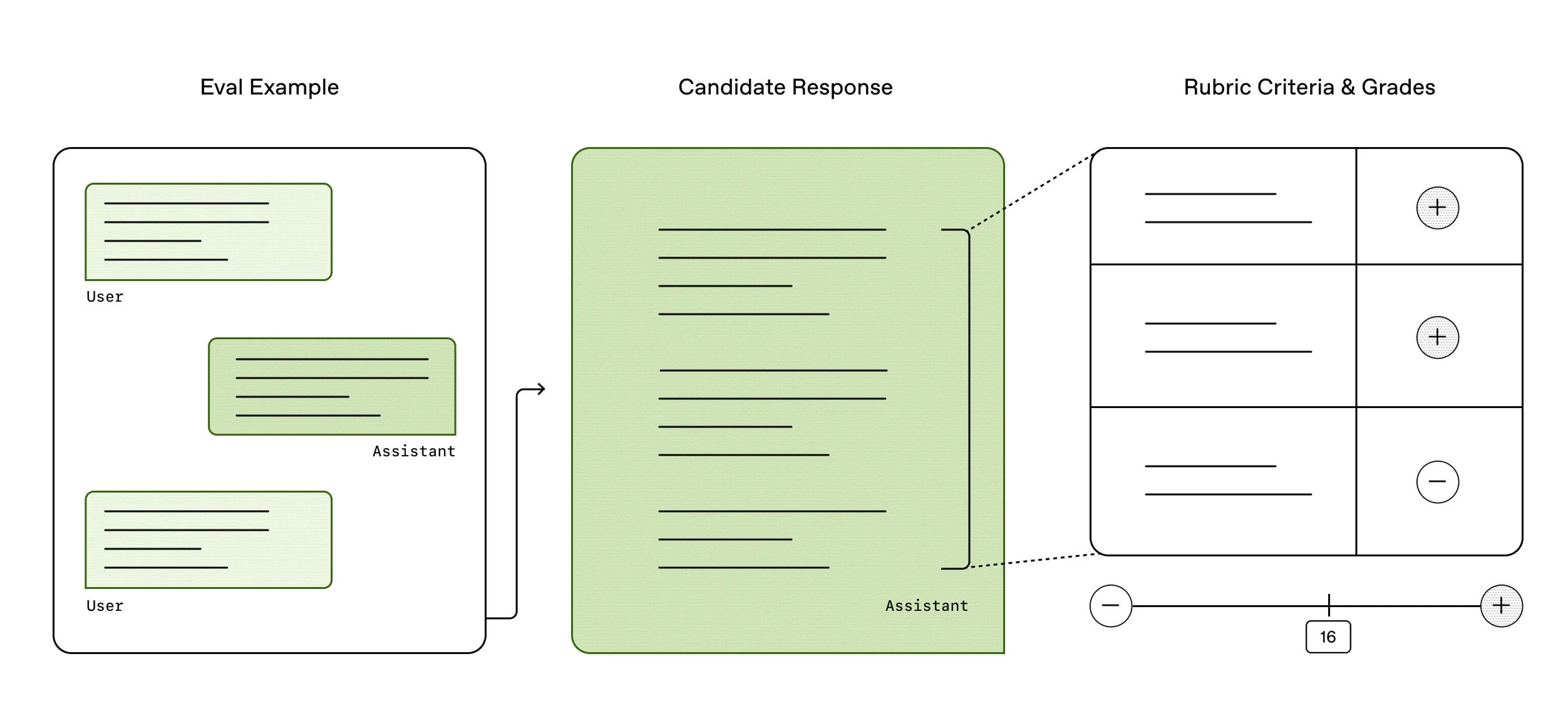
As medical AI tools proliferate, OpenAI has released HealthBench, an open-source framework designed to evaluate how large language models (LLMs) perform in realistic clinical conversations—not just multiple-choice tests.
Built with 262 physicians across 60 countries, featuring 5,000 multi-turn scenarios and 48,562 rubric criteria.
Focuses on real-world themes: emergency care, uncertainty, global health, tailored communication, and more.
Shifts away from multiple-choice exams—tests decision-making, depth, and reliability in messy contexts.
o3 model scores ~60%, doubling GPT‑4o and far surpassing GPT‑3.5 (~16%). Small models like GPT‑4.1 nano also excel.
Includes HealthBench Hard, a challenging subset where top scores drop to ~32%.
Benchmarks are open-source, with data and code available for public use and improvement.
Praised for transparency and clinical relevance, but experts urge caution: grading bias and subgroup disparities still need attention.
“HealthBench tests how well AI models perform in realistic health scenarios, based on what physician experts say matters most.”
- Authors
Why It Matters: HealthBench raises the bar for evaluating clinical AI—offering transparency, physician-driven scoring, and an open framework for ongoing development. As more health systems begin deploying LLMs, tools like this are crucial for aligning model capabilities with frontline realities.
📌 Other Highlights
Microsoft unveils an agentic AI orchestrator for cancer care, integrating multimodal agents into clinical workflows to streamline tumor board reviews and enable precision medicine.
IIT Delhi and AIIMS launch a ₹330 crore Centre of Excellence to develop scalable, AI-driven healthcare solutions targeting national health priorities like cancer, TB, and rural diagnostics.
Oracle Health, Cleveland Clinic, and UAE’s G42 partner to build a global AI health platform enabling real-time, point-of-care insights and nation-scale analytics across the U.S. and UAE.
✨ Industry Spotlight*
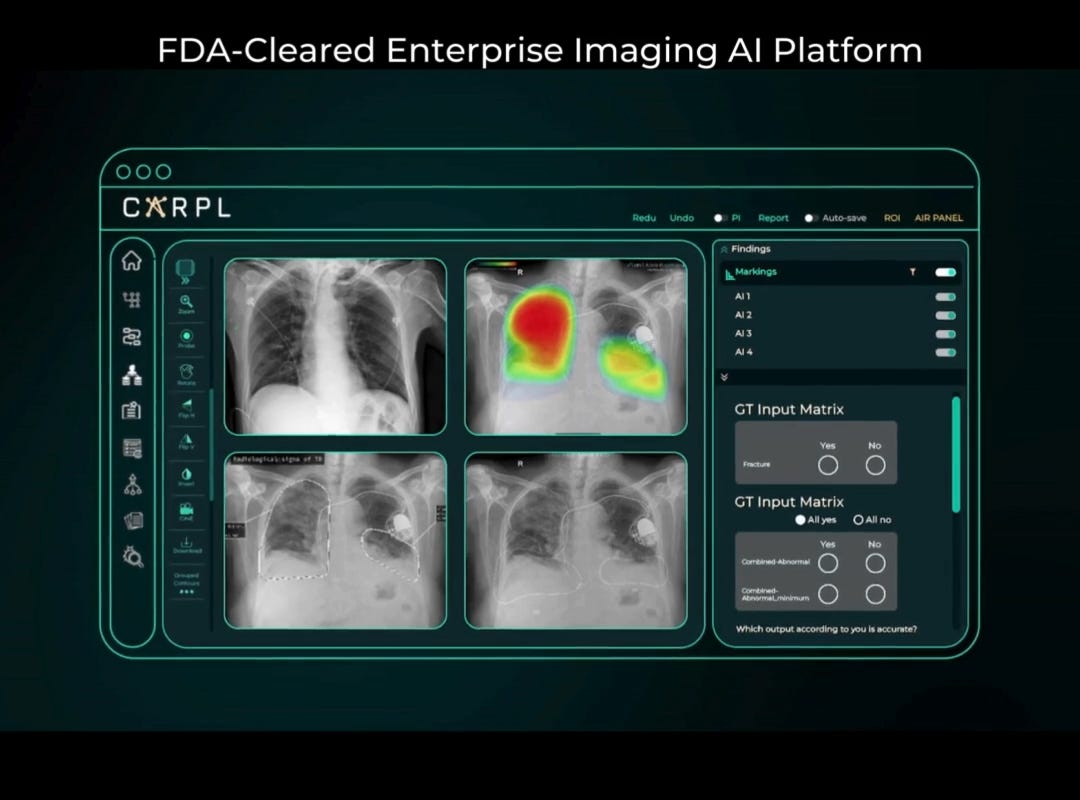
CARPL.ai is building a vendor-neutral platform that helps hospitals deploy and monitor radiology AI tools at scale. With over 175 apps from 75+ vendors, their FDA-cleared system integrates directly into existing PACS and RIS workflows—no extra hassle for clinicians.
The platform offers a full suite for AI lifecycle management, from pre-deployment validation to real-time monitoring. Hospitals can test models on their own imaging data, track performance across demographics and devices, and get alerts for bias or model drift.
Already live in the U.S., Brazil, Singapore, and India, CARPL is improving diagnostic speed and accuracy in real-world settings. Their $6M seed funding and partnerships with top imaging players show serious momentum in streamlining AI adoption for radiology teams.
*This edition’s ‘Industry Spotlight’ is editor-picked, not sponsored.
Interested in sponsoring an issue of The 'Med AI' Capsule Newsletter?
Would you like to showcase your innovative health tech brand or product to a community of 22,000+ healthcare technology enthusiasts?
Please feel free to reach out at avneeshkhareonline@gmail.com.
🔬 Latest Research Papers
📚 GPT-4o with Iterative Refinement Outperforms Clinical Mentors in InterProfessional Education (IPE) Scenario Design
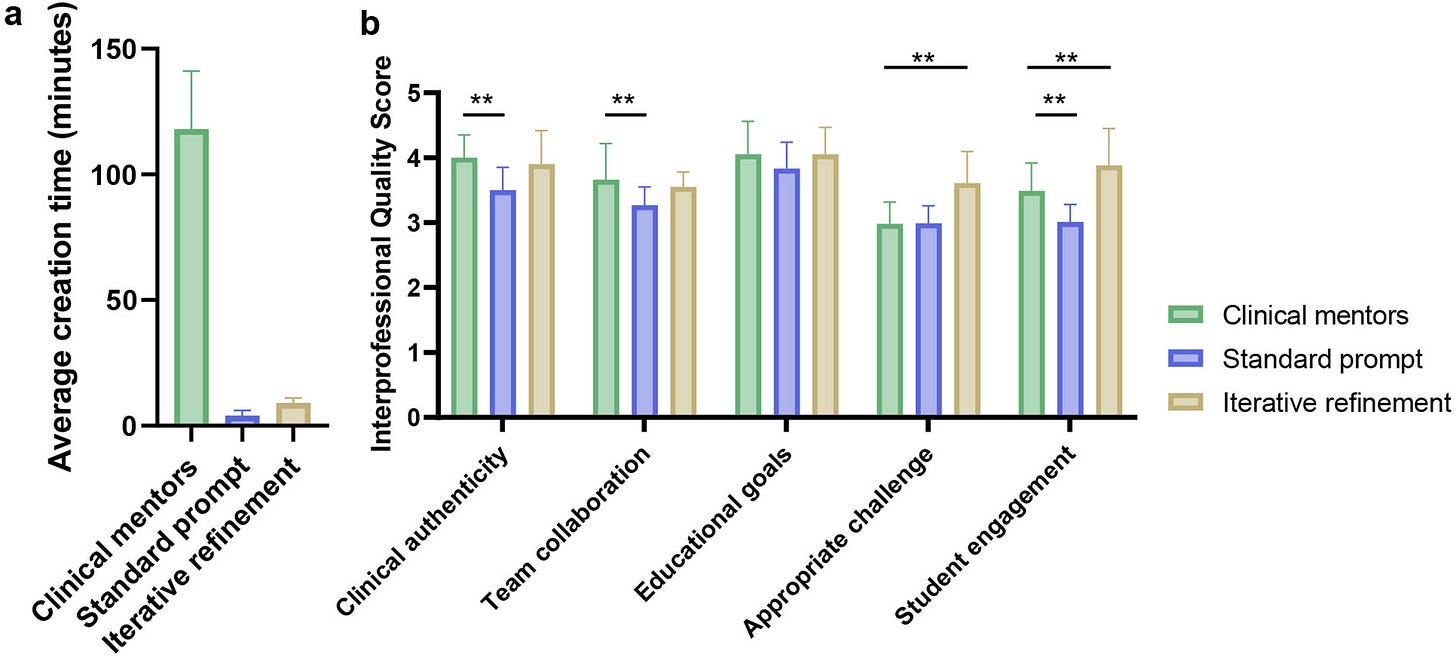
GPT-4o with iterative refinement produced IPE scenarios faster and of higher quality than clinical mentors.
Scenarios scored better in challenge and student engagement; standard prompts lagged behind.
Cases took 9 minutes to generate vs. 118 minutes for human-crafted ones.
Blinded reviewers couldn’t distinguish refined AI scenarios from human-written ones.
The iterative method mimics real clinical case development using multi-role feedback loops.
“This approach not only showcases the substantial potential of AI in creating personalized learning materials but also presents an innovative and effective solution to the current challenges in IPE.”
- Authors
Why It Matters: Faculty shortages and scheduling conflicts often hinder IPE implementation—especially in resource-limited settings. This study highlights a scalable, AI-assisted approach to scenario design that maintains high educational quality while reducing reliance on interprofessional faculty.
📌 Other Highlights
Patients view AI-CDSS as potentially supportive but raise concerns about trust, responsibility, and self-determination, emphasizing the need for transparency, human oversight, and shared decision-making.
AI assistance significantly improves endoscopists’ sensitivity and accuracy in detecting superficial esophageal squamous cell carcinoma, benefiting both experts and non-experts in video-based evaluations.
❓ Knowledge Quiz
Mark your answer and think about it as you read through the remaining newsletter, and find the correct answer at the end!
Thanks for reading The 'Med AI' Capsule Newsletter! Subscribe for free to receive future issues in your inbox and support my work.
📚 Learning Resources
Your feedback is crucial to me, as it helps me understand your interests and improve my offerings. I would appreciate it if you could take a few minutes to share your thoughts about what you've enjoyed and what you think I could do better.
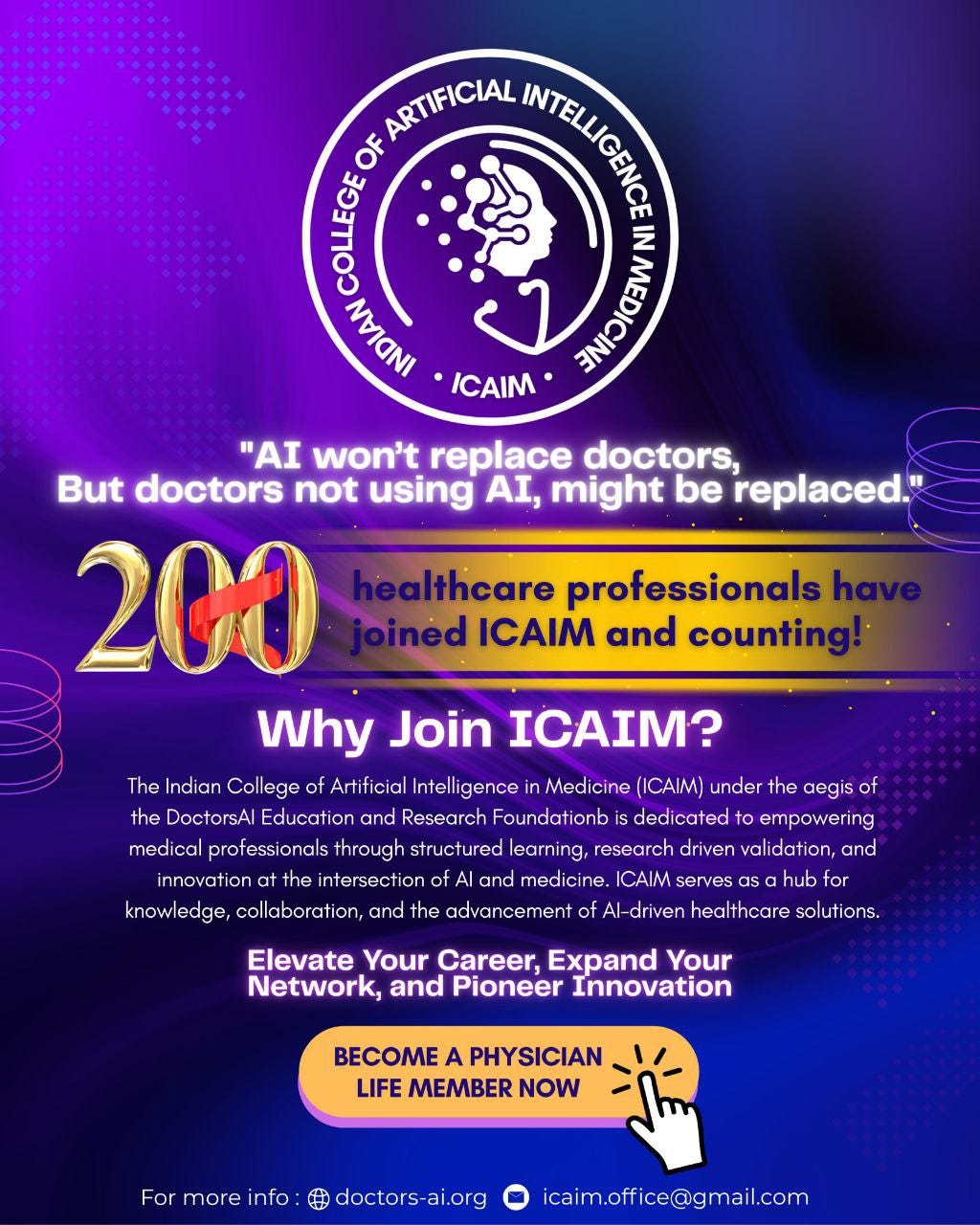
Exciting Announcement
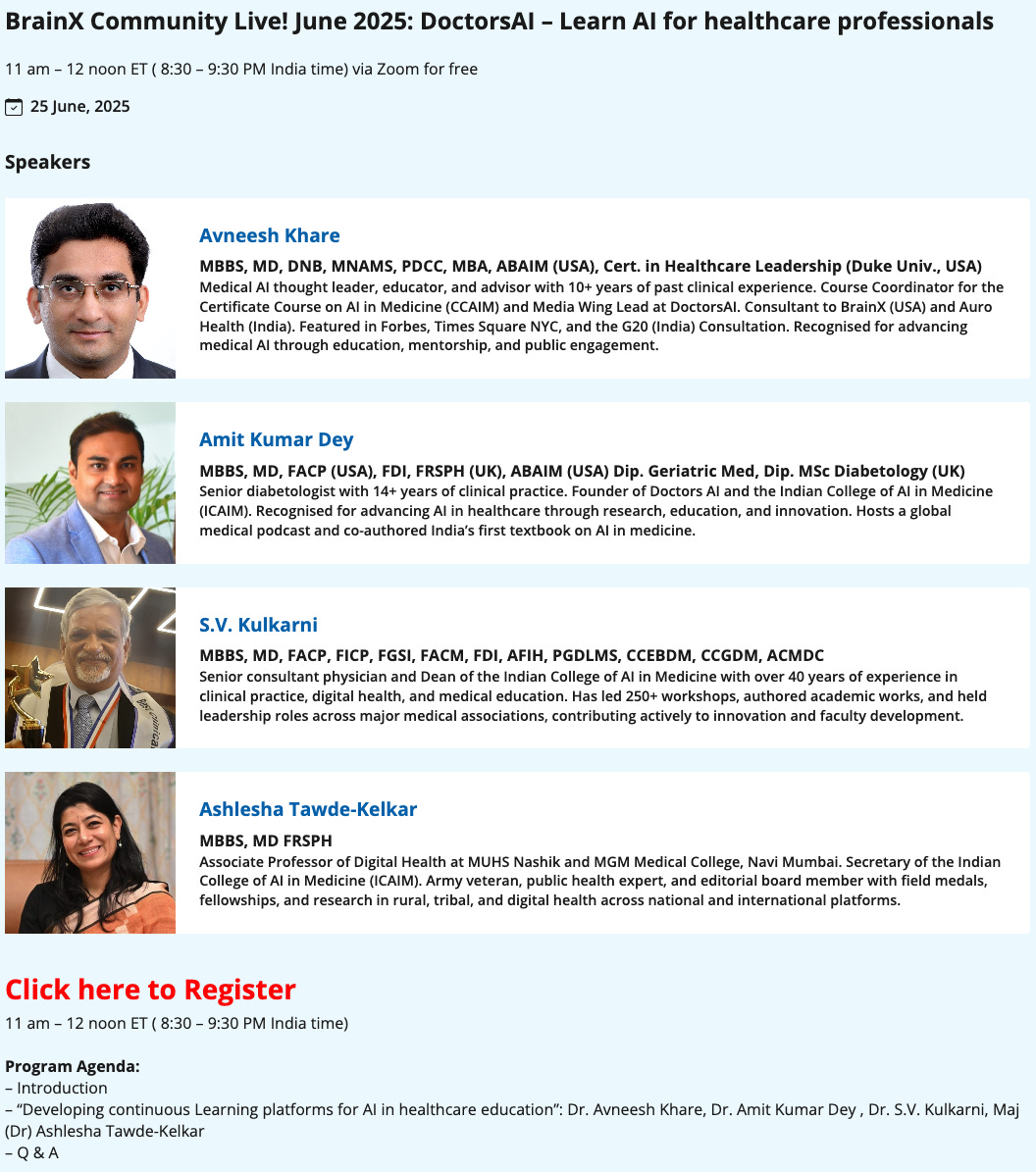
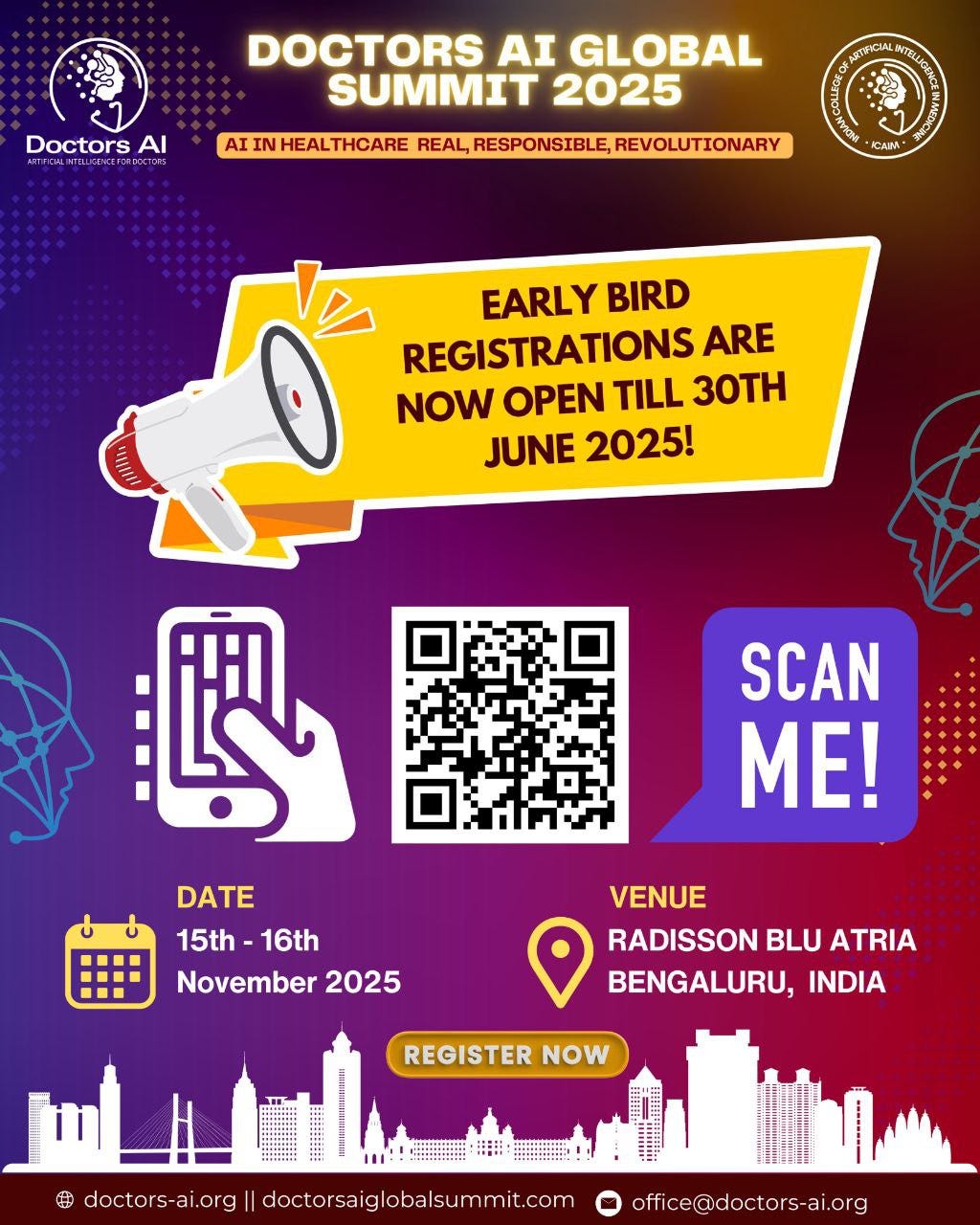
🧑💻 Worth-Attending Event
Let’s wrap it up with a thought-provoking quote! 💡
“AI has allowed me, as a physician, to be 100% present for my patients.” - Michelle Thompson, DO, family medicine specialist
Stay tuned for the upcoming issues of my newsletter to explore the latest breakthroughs and dive deep into the transformative power of artificial intelligence and emerging technologies, shaping a healthier future. 🚀
Thanks for reading The 'Med AI' Capsule Newsletter! Subscribe for free to receive future issues in your inbox and support my work.
Disclaimer: The content in this newsletter was partly curated and summarized using AI LLMs, which can make mistakes. Please check all important information. For any issues or inaccuracies, please reach out at avneeshkhareonline@gmail.com.
Comments
Nothing yet. Say the first thing.
Sign in to join the conversation.