
“The greatest opportunity offered by AI is not reducing errors or workloads, or even curing cancer: it is the opportunity to restore the precious and time-honored connection and trust—the human touch—between patients and doctors. Not only would we have more time to come together, enabling far deeper communication and compassion, but also we would be able to revamp how we select and train doctors.”
Eric Topol, Deep Medicine: How AI Can Make Healthcare Human Again
Welcome to The ‘Med AI’ Capsule Newsletter—your go-to source for exploring how AI and emerging technologies are transforming medicine! Whether you're a medical professional 👩⚕️, a tech enthusiast 💻, or simply curious 🧠, The 'Med AI' Capsule is for you! Stay ahead of the curve with the latest trends, insights, and updates in the rapidly evolving world of AI and emerging technologies in medicine. 🚀
5 QnA Primer
4 Research Picks
3 Learning Resources
2 Worth-Attending Events
1 Industry Spotlight, and more..
Time to Read: Around 8-10 minutes.
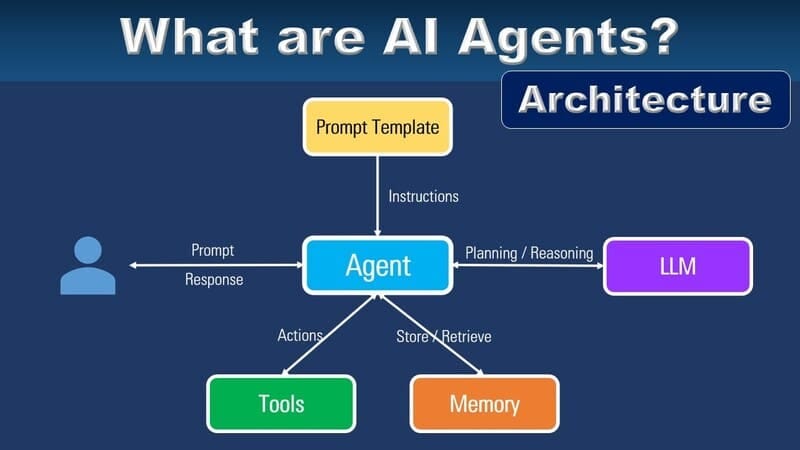
The concept for today is AI Agents.
Prefer Video/ Audio? Watch/ Listen Here
Q1: What is an AI agent?
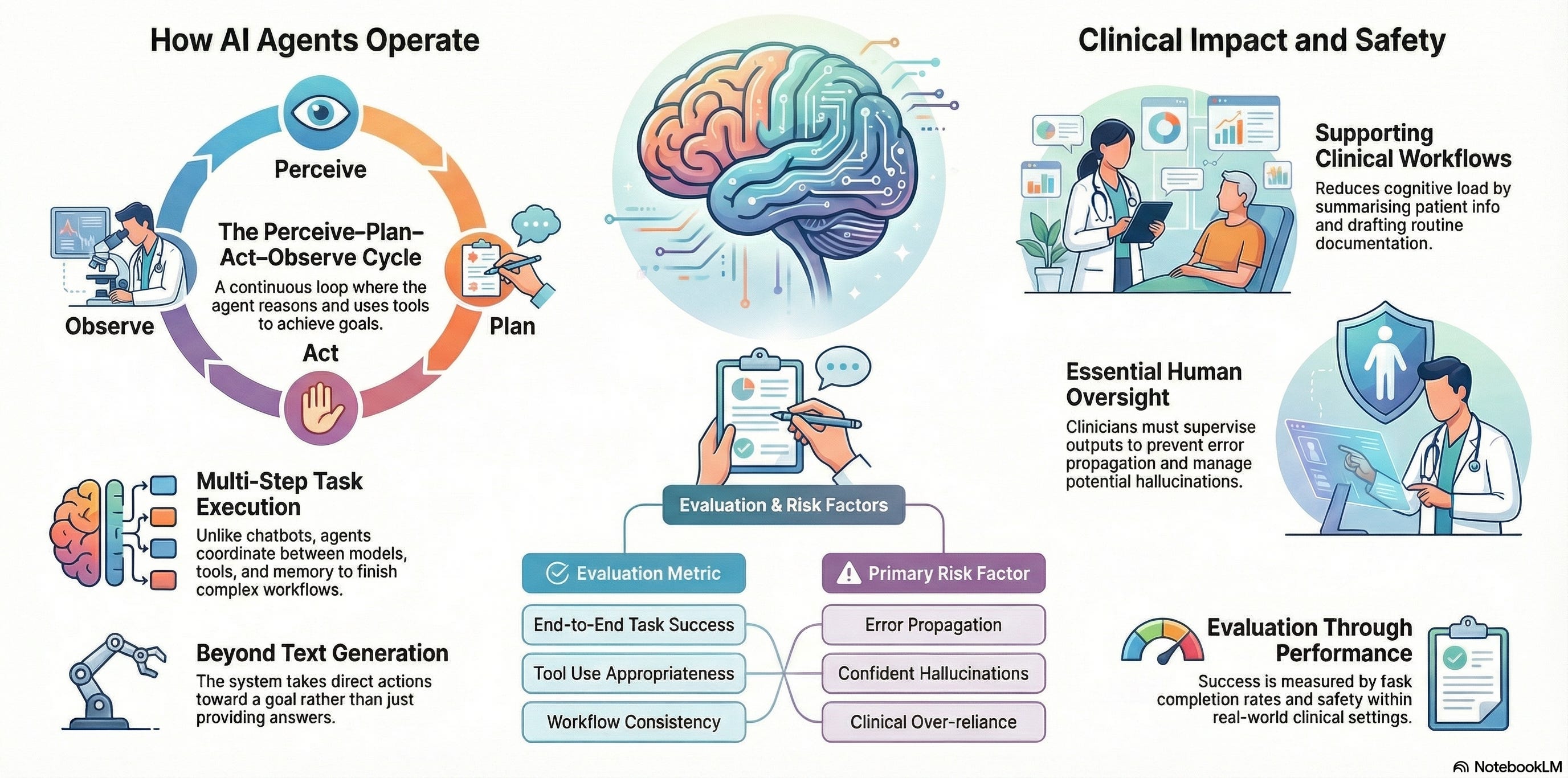
An AI agent is a system that can take actions toward a goal, not just generate answers. It typically combines a language model with external tools (such as databases or software) and operates through a feedback loop (e.g., perceive–plan–act–observe cycle). The key difference from a chatbot is that it can execute multi-step tasks, not just respond in text. You can think of it as a central system that coordinates between a model, tools, and memory to get work done.
Q2: How do AI agents work in simple terms?
AI agents combine a language model with access to tools and follow a stepwise loop: they perceive the task, reason about the next step, act using tools if needed, and update based on results. This cycle may repeat multiple times, which is why agents can handle multi-step tasks rather than one-off responses. Their performance depends not just on the model, but also on how well the system manages planning, tool use, and feedback.
Q3: Why are AI agents relevant in clinical practice?
Clinical work is inherently multi-step and workflow-driven—involving data gathering, interpretation, and action. AI agents can assist with routine, structured tasks such as summarizing patient information and drafting documentation, which may reduce time and cognitive load. Their role is best understood as supporting clinical workflows, not replacing clinical judgment.
Q4: How should AI agents be evaluated in healthcare settings?
Evaluation should focus on end-to-end task performance and safety, not just the accuracy of a single output, using metrics like task success rate and failure modes. This includes whether the agent completes tasks correctly, uses tools appropriately, and produces consistent results across cases. Ideally, evaluation should occur in real or realistic clinical workflows, with clear definitions of success, failure, and acceptable risk.
Q5: What are the key limitations and risks clinicians should be aware of?
AI agents can make errors, and because they operate across multiple steps, mistakes can propagate through the workflow. They may produce confident but incorrect outputs (hallucinations), depend heavily on data quality, and perform inconsistently across settings. Over-reliance is a known risk. In practice, they should be treated as assistive systems requiring clinician oversight, especially for clinical decisions.
Further Reading
AI Agents in Healthcare Revolutionizing Patient Care (Commun ACM, 2025).
Zhao, L., Liu, S., Xin, T. et al. AI agent in healthcare: applications, evaluations, and future directions. npj Artif. Intell. 2, 31 (2026).
Liu F, Niu Y, Zhang Q, Wang K, Dong Z, Wong IN, Cheng L, Li T, Duan L, Li K, Li G, Hou TW, Fok M, Luo H, Chen X, Zhang K, Yin Y. A foundational architecture for AI agents in healthcare. Cell Rep Med. 2025 Oct 21;6(10):102374.
Cost-effectiveness analysis of artificial intelligence-assisted risk stratification of indeterminate pulmonary nodules | PLoS One: AI-assisted risk stratification for indeterminate pulmonary nodules is cost-effective and improves outcomes when the pre-test malignancy probability exceeds ~5%. However, results rely on idealized guideline-based models and limited accuracy data, and real-world benefit depends on how much AI actually changes clinician decision-making.
Prospective evaluation of artificial intelligence integration into breast cancer screening in multiple workflow settings: the GEMINI study | Nat Cancer: AI integration into breast cancer screening can improve cancer detection (~10% increase), maintain or reduce recall rates, and significantly cut workload (up to ~30%+), with flexibility across workflows. However, findings are based on a single AI system in one region, include simulated workflows, limited follow-up, and exclude some patients—so real-world performance and generalizability remain uncertain.
AI-enabled predictive, preventive and personalised oral health management: a lightweight patient-centred model for automated assessment of dental plaque and gingival inflammation | EPMA J: A lightweight AI model can detect dental plaque and gingival inflammation from images with clinically useful accuracy, enabling early risk detection and supporting personalised, preventive oral health care. However, performance is moderate, based on small controlled datasets, and real-world effectiveness (e.g., smartphone use, longitudinal outcomes) remains unproven.
Assessing the effectiveness of artificial intelligence education and training for healthcare workers: a systematic review | BMC Med Educ: AI education programs for healthcare workers improve awareness, attitudes, and basic skills, but remain introductory and fall short of driving real clinical or organisational impact. However, evidence is limited by small, heterogeneous, often self-reported studies with inconsistent outcome measures, making it hard to draw strong or generalisable conclusions.
P.S. Each research pick title links to the original paper—do explore yourself for deeper insights, methodologies, and study limitations.
RadAI is an India‑built medical imaging AI startup that integrates directly into existing radiology workflows to deliver faster, more accurate, and more scalable diagnostics across modalities.
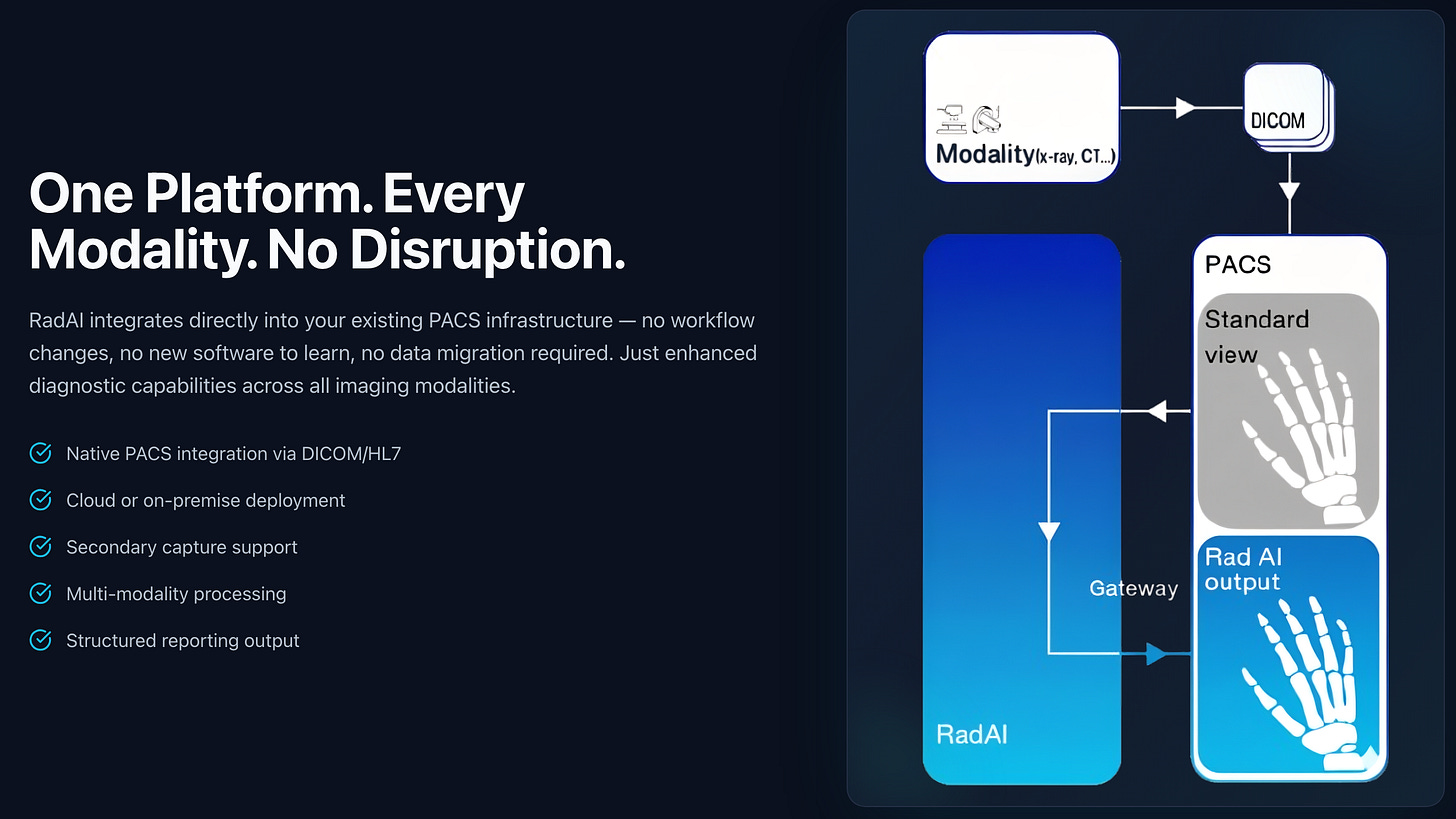
Its platform offers purpose‑built modules such as MammoX for breast cancer detection, MedAxis for automated musculoskeletal measurements, and AtrofiQ for early neurodegeneration assessment—each designed to cut reporting time, reduce diagnostic errors, and automate repetitive tasks without requiring new software or workflow changes.
*This ‘Industry Spotlight’ is editor-picked, not sponsored. Mention reflects interest, not endorsement.
This video features the BrainX Community's March 2026 session, focusing on their annual “AI in Healthcare: 2025 Year in Review.”
A curated list of practical, no-fluff AI learning resources (mostly around Claude) aimed at helping people build real skills without expensive courses.

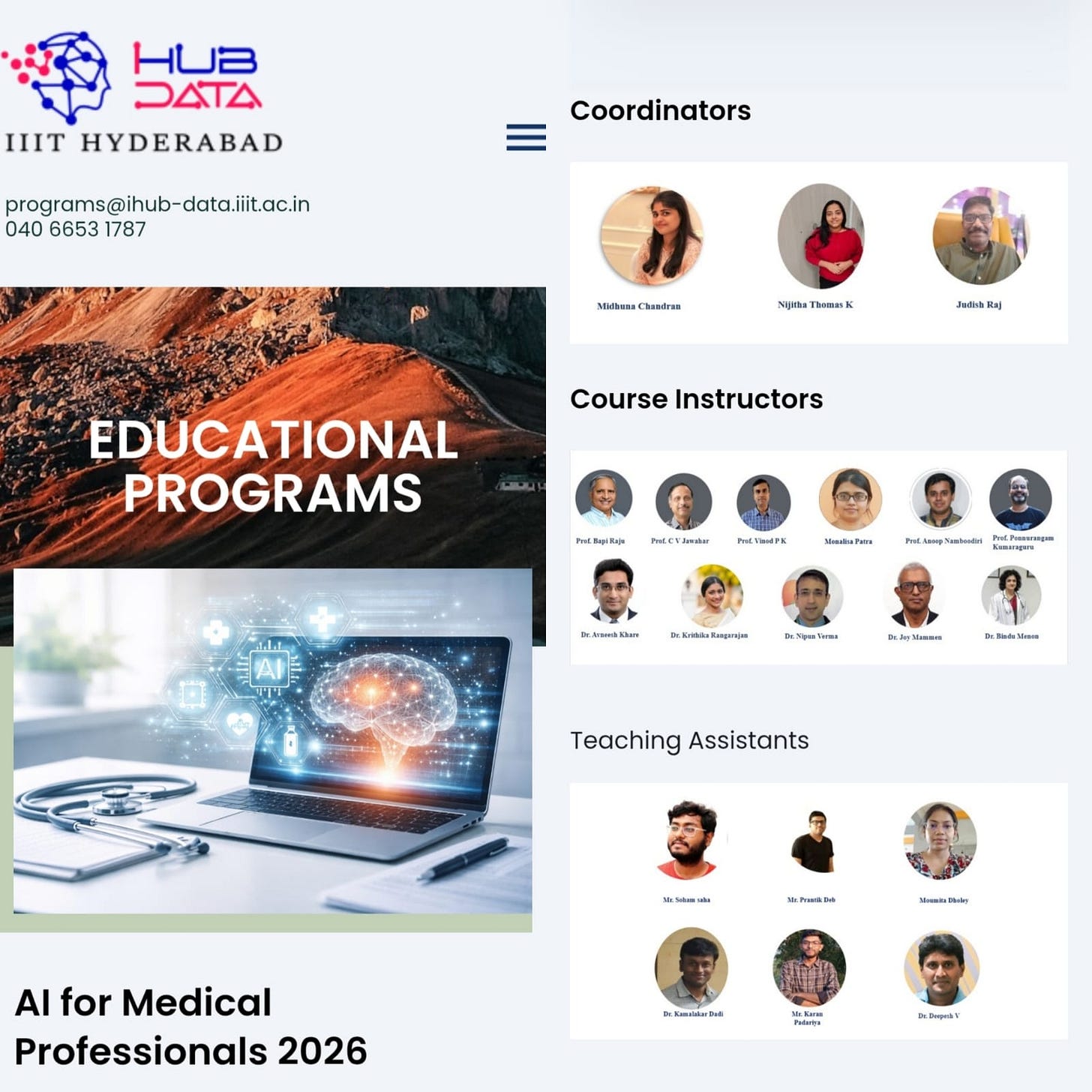
AI for Medical Professionals 2026: Online Certificate Course (3 Months) by IIIT Hyderabad and National Academy of Medical Sciences (NAMS), India.

Your feedback is crucial to me, as it helps me understand your interests and improve my offerings. I would appreciate it if you could take a few minutes to share your thoughts about what you’ve enjoyed and what you think I could do better.
Mount Sinai is rolling out OpenEvidence across its entire system to give clinicians evidence‑based, AI‑powered answers directly inside Epic and reduce cognitive load.
Amazon has rolled out a HIPAA‑compliant, agentic Health AI assistant that interprets medical records, offers personalized guidance, and connects users to One Medical clinicians at scale.
AI adoption among U.S. physicians has doubled since 2023, with 81% now using it and growing confidence tempered by concerns around privacy, patient misuse, and skill loss.
Stay tuned for the upcoming issues of my newsletter to explore the latest breakthroughs and dive deep into the transformative power of artificial intelligence and emerging technologies, shaping a healthier future. 🚀

Disclaimer: The content in this newsletter was partly curated and summarized using AI LLMs, which can make mistakes. Please check all important information at your end. For any issues, please reach out at avneeshkhareonline@gmail.com.
Comments
Nothing yet. Say the first thing.
Sign in to join the conversation.