
(If you have received this by email, please click on the title to read the latest version. I often correct typos and continue to edit my essays after publishing the first version).

For All Mankind is now in its fifth season, and if you resist getting too distracted by the science fiction, the technology, and the special effects, you notice the mirror the series holds up to us.
The series has three recurring actors, and I don’t mean characters. I mean structural forces: state organisations, private enterprises, and — caught between them — ordinary people trying to survive within those machines, or resist them, or sabotage them from within or without.
The picture For All Mankind shows us is nothing more than our actual reality. Enormously powerful actors, state, corporate, technological, pushing in their own directions, each serving their own interests, whilst regular individuals try to make sense of their lives inside systems that were never designed with them in mind. Those who resist — the ones the series invites us to care about — are not perfect. They carry human flaws and insecurity, and the fear of retribution against themselves and their families for stepping out of line and resisting.
For All Mankind does not offer solutions. It can’t. It is written by people who inhabit the same world we do. But what it does — and what all good cinematic writing does — is make us identify with its characters deeply enough to ask ourselves: where would I be in that situation? Which role would I actually play? If you’re honest with yourself, you probably know the answer.
There is a recurring theme that runs through every season: the good people — those who fight back, or who attempt to change the machines they were originally part of, who sometimes sabotage from within, those who defect — make alliances across the very borders and divisions created by those in power. The character of Ed Baldwin (brilliantly played by the Swedish American actor Joel Kinnaman) is a highly decorated American pilot and astronaut, practically a legend. He starts out a patriot, fiercely and passionately loyal to his country and its systems. But as the story develops, he finds himself in solidarity with people he was indoctrinated to believe were his moral enemies, Soviet, North Korean astronauts and others.
Ed Baldwin’s character isn’t the only one. The same theme runs right through in all seasons and involves many key characters. Those who were traditional enemies fall out of love with their countries or the companies they work for and end up meeting through their shared humanity. They discover they have the same concerns for their families, the same desire to do right by the people they love, and the same dawning realisation that the faceless and powerful organisations they serve are not operating in anyone’s best interest except their own. That betrayal, the empathy across all the traditional divides and shared humanity become the basis not only of collaboration, but of lifelong friendships and the willingness to make sacrifices for the sake of those friendships.
Nothing fundamentally changes across the decades the series spans. Insatiable corporate greed, governmental cynicism and control, pointless rivalries between nations, exploitation of ordinary people’s need to earn a living and their desire to be loyal to something larger than themselves: all of it gets exported wholesale to Mars. There is always a minority of people fighting against big machines that exploit them, and genuine scientific curiosity hijacked for the purpose of pointless predatory competition, greed and rivalry. And just like in our very real universe, all of it is dressed up to appear as if it is in our best interest. Mars may be a new physical frontier representing incredible technological evolution, but the human logic, if you can call it that, never changes, never evolves.
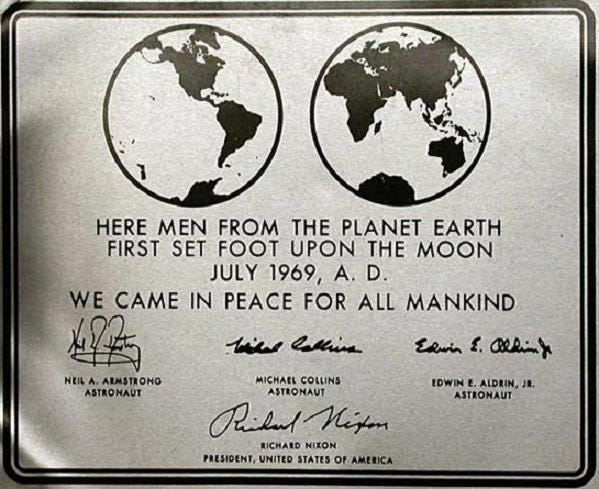
The title For All Mankind was taken directly from the plaque left on the moon by the Apollo 11 mission: “We came in peace for all mankind”. But I find myself wondering whether the writers meant something more by it — whether the title functions as a kind of gift. We are giving you a mirror. We are showing you what humanity is, what it keeps doing, what it exports wherever it goes. The technology will not save us. If we don’t evolve we will carry our murderous competitiveness, our greed, our shortsightedness, our hierarchical instincts, our capacity for exploitation, our cruelty, and our extractive nature, all the way to the furthest reaches of the solar system.
Unless we change, nothing will change.
The writers may not know what change actually looks like. But I witness change and evolution repeatedly in my clinical work. I have also experienced it. I grew up with abuse and trauma that nearly destroyed me. I know what it’s like to recover from it; to no longer live in the shadow of it, no longer driven by fear and confusion, no longer hijacked by a frightened five-year-old at the worst possible moments. Most people — even those fortunate enough to have been raised in relatively safe and loving environments come to therapy with chronic low-level fear (anxiety).
What neuroscientific research confirms and that the framework of Interpersonal Neurobiology (IPNB) brought into my profession is the fact that something genuinely different is possible. People can change the architecture of their brains and while it isn’t necessarily easy the principles are simple and everyone can grasp them. Our prefrontal cortex — the part of our brain that gives us ethical and moral thinking and enables us to regulate ourselves and live with ease as true adults — can be brought into real integration with the limbic system. This prevents us from being hijacked by our limbic system, from being always at the mercy of an ancient survival responses that no longer serve us.
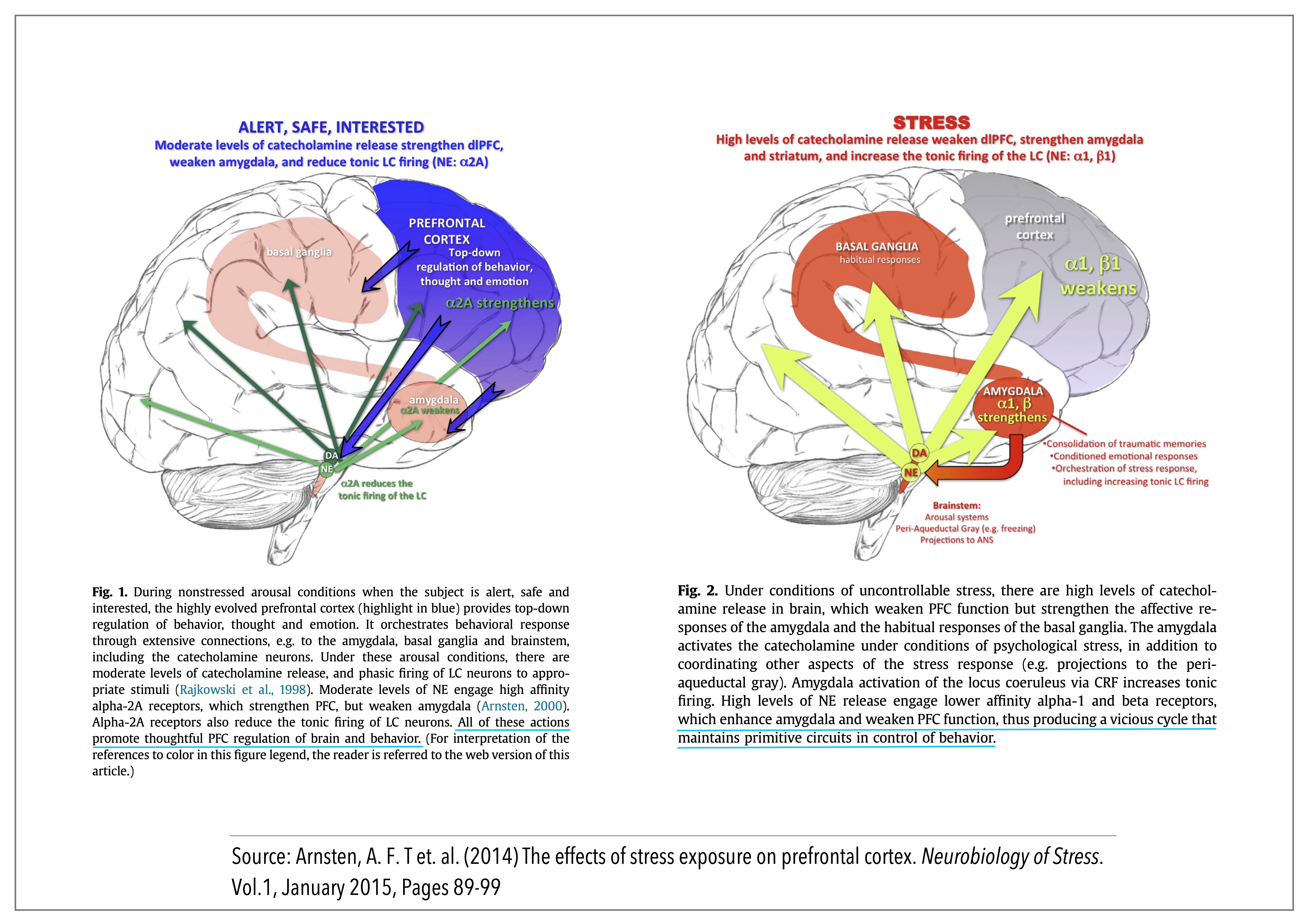
But here is the hard thing that For All Mankind keeps showing us without quite saying it: it is not enough for good people to come together across borders and form movements. Revolutions, even when they succeed, tend not to produce what they promised — because the people who rise to lead them are too often the same kind of people who were running the old system, drawn to power precisely because of what power means to them. Unless we are changed — genuinely, neurologically, relationally changed — then any movement we build will eventually be vulnerable to being hijacked by the very predatory dynamics we were trying to overturn. History has proven this repeatedly and the evidence is all around us. We don’t need to replace one alpha with another. We need to stop organising ourselves around alphas.
It does not escape me that a series so preoccupied with institutional corruption, injustice, exploitation, greed and individual courageous dissent is produced and distributed by Apple TV — a multi billion dollar company born in the heartland of American capitalism. Perhaps the writers are using the platform to smuggle in a message anyway. Perhaps they are simply making very expensive television. Perhaps — and I think this is probably the honest answer for most of us — it functions as sophisticated comfort, something that lets us feel we’ve engaged with the problem whilst continuing along the same path, the silent majority soothed by art that names the cage without opening it.
Human art has always been good at showing us that the patterns don’t change, that it’s always the same story, that no matter how much technology we accumulate, no matter how many advancements we think we’ve made, ultimately, we carry the same ancient mindset with us — across millennia, and now perhaps across the impossible distances of space.
The question For All Mankind keeps leaving in my mind, even when the credits roll, is the oldest one: What do we actually want? Do we want merely to continue to exist — to manage, to cope, to survive inside the destructive machine we’ve created in our traumatised image — or do we want to discover what human potential actually holds, and try to reach it?
Maslow asked it more precisely than I can:
“All the evidence that we have ... indicates that ... in practically every human being and certainly in almost every newborn baby, that there is an active will toward health, and impulse toward growth, or toward the actualization of human potentialities. But at once we are confronted with the very saddening realization that so few people make it... This is our great paradox. We have the impulse towards full development of humanness. Then why is it that it doesn’t happen more often? What blocks it?”
— Abraham Maslow, The Farther Reaches of Human Nature (1971), p.26
A comment on paid subscriptions
Substack encourages writers to activate paid subscriptions. They take a small cut to enable them to provide this, otherwise free-to-use platform. I am grateful to the readers who have pledged money for monthly or yearly subscriptions, but I have no intention of monetising my work.
I do not want to turn my writing into an obligation, but even more importantly, I don’t believe in a tiered system where those who can pay get preferential treatment over those who can’t, such as the right to comment, or privileged content. This hierarchy of ‘worthiness’, especially based on such an arbitrary principle like how much money people have, couldn’t be further away from my values.
If you do feel moved to make a contribution to support my writing, see the ‘buy me a coffee’ button below. If you haven’t seen it before, it is a way of offering a donation to freelance writers. Payments are processed securely by Stripe on the ‘Buy Me A Coffee’ site. I believe people can keep donations anonymous if they wish. This is entirely voluntary. Everyone is and always will be welcome to read my work free of charge.
Thank you so much for reading my work!
Comments
Nothing yet. Say the first thing.
Sign in to join the conversation.