


The editor stopped in the newsroom: “Andy, can you choose us a nice white wine for the theatre awards dinner?” During most of my years as the London Evening Standard’s Comment Editor, I was also the paper’s wine critic, and it fell to me to choose wines for corporate functions. “Anything as long as it’s not Chardonnay,” she added. “Maybe a nice Chablis?”
It didn’t seem the moment to explain that appellation rules permit only Chardonnay grapes in Chablis. Plus, this was the late 2000s and the backlash against the over-ripe, oaky Australian Chardonnays of the 1980s and 90s was in full force. And yet despite a big stylistic shift since then in Aussie and other Chardonnays, “Anything But Chardonnay” (ABC) still sometimes rears its head. Last Easter weekend, someone told me that their friends’ twenty-something son had turned his nose up at Chardonnay at dinner the night before, muttering about not liking oaky wines.
I’m intrigued by how such ideas penetrate to the mainstream of consumers who, I’m sure, never read anything by wine journalists like me. Conversely, I’d like to know how Chardonnay, or Prosecco, or Albariño, originally became wine’s next big thing – because it isn’t a simple question of marketing spend. And this is obviously a question the wine trade asks itself a lot. As Dan Jago, who led Tesco’s wine operation from 2006 to 2015, once told me: “When was the magic moment, who was the clever bastard? It’s always hard to say.”
I was reminded of this puzzle recently while tasting in Australia’s Mornington Peninsula and in various New Zealand regions. Staff at several Kiwi wineries told me that some people are still hesitant to taste Chardonnays. At Elephant Hill, in Hawke’s Bay, sommelier Lucas Beaucamp told me, “Americans say they don’t like Chardonnay, so many people.” At Ata Rangi, in Martinborough, Vanessa Paton told me: “People are still afraid… but we are slowly trying to break it”.
Helen Masters, Ata Rangi’s winemaker, clarifies: “When people tell me, ‘l don’t like Chardonnay’, I say, ‘You mean you don’t like $15 [£6.50] Chardonnay’.” But Paul Brajkovich at Kumeu River, probably New Zealand’s best-known Chardonnay specialist, says it’s not hard to change visitors’ minds: “People say, ‘I don’t like Chardonnay’ and then taste our Village Chardonnay and say, ‘That’s nice!’”
These consumer reactions are the confused remnants of the ABC phenomenon first identified in the New York Times in 1995 by wine writer Frank Prial. In the US, it was largely a reaction to the very big, ripe, alcoholic and oaky Chardonnays then gushing out of California. But in Britain, it was firmly a reaction to Australia’s equivalent: by the mid-90s, Chardonnay had become almost synonymous over here with “Australian”. And yet this hostility would have been surprising to everyone just a few years earlier.
Although Chardonnay was one of the first vines brought from Europe to Australia in the 1830s, it was little grown before the 1970s, with the first bottle labelled as such appearing from Tyrrell’s only in 1971. It first gained attention in Britain when Rosemount’s Show Reserve Chardonnay 1980 won a double gold medal at the International Wine and Spirit Competition in London in 1981. Rosemount quickly became one of the UK’s top-selling wines in the following 25 years. Indeed Aussie whites and reds were the wine phenomenon of the 1980s, “sunshine in a bottle”. “Ripeness ruled and we loved them,” says Wine Australia’s Laura Jewell MW.
It was part of Australia’s remarkable national rebranding as a youthful, fun country. A decade earlier, there had been nothing unusual in Monty Python’s 1972 spoof on “Australian table wine” (“Château Chunder… specially grown for those keen on regurgitation.”) Even in 1981, Australia was only the world’s eighteenth-biggest wine exporter. But by 2004/05 its exports to the UK had surged to AU$961m (£501m - €548m/US$66m) in. And Aussie Chardonnay producers struggled to keep up with demand, over-planting in the 1990s as a result.
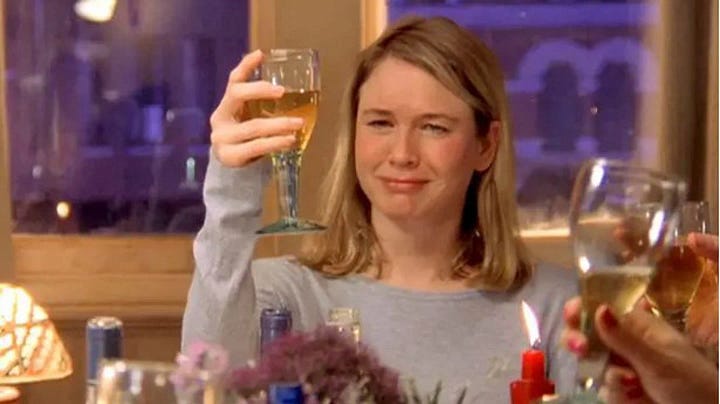
Yet while exporters wrestled with such practical issues – and with the challenge from New Zealand Sauvignon Blanc from the late 1980s – the real problem in the UK was cultural. Somehow in the mid 90s in Britain, Chardonnay jumped the shark. In the same year that the ABC movement was identified in New York, Helen Fielding’s Bridget Jones’s Diary began as a column in the Independent newspaper, with a novel of the same name following in 1996 and a film in 2001. Jones’s favourite source of solace in her disastrous twentysomething love life is a large glass of Chardonnay.
As wine writer Oz Clarke, an early champion of Australian wine, later commented: “Bridget Jones… goes back to her miserable bedsit, sits down, pours herself an enormous glass of Chardonnay, sits there with mascara running down her cheeks saying, ‘Dear diary, I’ve failed again.’ Great marketing aid.” The “Chardonnay girl” gained a certain cultural recognition – perhaps not without with a degree of misogyny. In 2001, TV drama Footballers’ Wives spawned the character of model Chardonnay Lane-Pascoe: trashiness personified. At primary school, my son even had a classmate, a girl presumably named around 2002/03, called “Shardonnay” (but this was south London).
Yet it’s hard to pin down how much effect the ABC movement actually had on sales. A consumer survey by TNS reported 200,000 fewer Britons had bought Chardonnay in the 12 months to 2008 – down three per cent. But it’s hard to separate out such changes from wider market trends. David Gleave, Chairman of big UK importer Liberty Wines, thinks that Chardonnay sales have suffered over the past 10-15 years, but partly because of Sauvignon Blanc taking a chunk of its market.
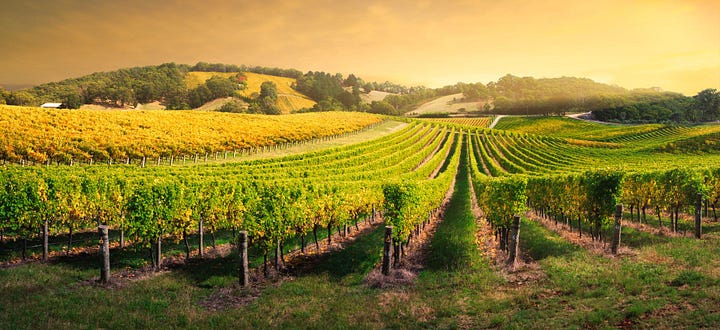
What is certainly true is that Chardonnay changed. The past three decades have seen a huge shift in Australian styles as the country’s wine scene has matured. Lara Jewell MW points to the use of new clones, planting in cooler regions, earlier picking and the use of less new oak. This meant a move to leaner, even Chablis-like styles, particularly in the late 2000s. Indeed while Aussie partisans claim that the pendulum has now swung back a bit, to judge from a big Aussie Chardonnay tasting in London last year, I’d say a lot of them are still on the leaner side. But clearer regional differences have emerged too, with most of the richer styles coming from Margaret River, in Western Australia, and fresher ones from the Adelaide Hills and elsewhere.
It’s not just Australia. In South Africa there has been a similar shift towards more mineral, restrained Chardonnays. In Argentina, the high Uco valley in Mendoza’s Andean foothills has become a source of elegant, precise Chardonnays from the likes of Zuccardi and others. Even in California, long a holdout of ripe, oaky styles, there seems to have been some move towards fresher Chardonnays, to judge by a big tasting in London last month. The Santa Rita Hills in Santa Barbara, always a cooler area, have become even fresher and more mineral, and while I tasted more buttery, chunky, sweeter wines from the Central Coast and Napa especially, the style wasn’t dominant in the tasting.
Indeed in Burgundy, home of the buttery Meursault style that was the original benchmark for so many New World producers, there has been an analogous shift of styles. As Jancis Robinson MW wrote last summer, “Today I defy any taster to find butteriness in any of the Meursaults made by the village’s most admired exponents… These wines are taut and tense with marked acidity.”
For me, where this leaves us today is simply with some of the classiest, most versatile white wines in the world – from several different countries. That is an indication of Chardonnay’s adaptability – it is relatively easy to grow, across different terroirs – and it’s a grape that gives the winemaker a wide palette from which to develop different styles.
David Gleave thinks Australian Chardonnay is “one of the most exciting categories in the world of wine” – and some of the Chardonnays I tasted in February this year in Mornington Peninsula and the Yarra Valley, just outside Melbourne, were indeed brilliant. Meanwhile New Zealand has perfected Chardonnays in a style which is, I think, often a little closer to the Côte d’Or. As Paul Brajkovich told me, “It’s no secret that for us the benchmark from the word go was white Burgundy.” At the same time, as Burgundy prices have spiralled ever higher, even high-end Australian and New Zealand Chardonnay looks good value by comparison. “I see a lot more interest from the sommeliers and buyers,” says consultant and Australian expert Amelia Jukes.
“Anyone who jumped on the ABC bandwagon deprived themselves of some of the world’s greatest wines,” says Gleave. “But perception lags behind, so sales aren’t what they should be in the UK.” Could Chardonnay be the next big thing in wine? You read it here first.
Cherubino Chardonnay 2022, Margaret River – winemaker Larry Cherubino has made his name as one of Margaret River’s most skilful producers of Chardonnay. This shows his wines’ trademark beautiful balance of freshness and minerality with complexity and richness (London End Wines, Surrey Wine Cellar, Vinum, from £35.)
Yeringberg Chardonnay 2023, Yarra Valley – Sandra de Pury makes her Chardonnay in a slightly more traditional style than some, with 30 per cent new oak – “Chardonnay should taste like Chardonnay,” she told me, and I think it’s very attractive for it. This is quite rich and has weight but is very well balanced (I can’t find the 2023 in the UK but Yerinberg’s UK importer, Woodwinters, has the 2019, £32.)
Craggy Range Kidnapper’s Vineyard Chardonnay 2025, Hawke’s Bay – from a vineyard right by the Pacific, this has gentle apple and zesty citrus fruit, quite lean but with judicious oak: just perfectly balanced (the 2025 doesn’t appear to be in the UK yet but the 2024 is available from All About Wine, Hic!, Vinum, from £16.99.)
Kumeu River Maté’s Vineyard Chardonnay 2024, New Zealand – Michael Brajkovich’s top cuvée is named after his father, Maté, who started the business. From a small, sheltered site with vines over 30 years old, this has a dense nose and intense palate, silky, almost oily, balanced with crisp acidity. A powerful, complex Chardonnay, and one that ages brilliantly – the 2012 was showing spectacularly when I visited (One More Wine Shop, Brunswick, from £52.75.) But their entry-level Village Chardonnay is also excellent – and fantastic value (The Wine Society and elsewhere, from £14.50.)
Domaine Frantz Chagnoleau Prélude 2022, St Véran – beautiful Burgundian Chardonnay at a price lower than almost anything serious in the Côte d’Or these days, though the Mâconnais has always been a source of good value whites. Power and weight with elegance and freshness – lovely (Lea & Sandeman, £32.50 or £28.75 as part of a mixed dozen.)
Iona Chardonnay 2023, Elgin – a nice example of the new wave of South African Chardonnay from one of the country’s coolest areas, Elgin in the Western Cape. This won the Chardonnay of the year award from South Africa’s Platter guide: beautiful precision and elegance with weight and complexity – gorgeous (Banstead Vintners, Cellar Door and elsewhere, from £25.99.)
Zuccardi Fosíl Chardonnay 2023, Mendoza – a classic example of the leaner Chardonnay style, this is made with no oak or malolactic fermentation. Some tropical fruit notes, mineral, very fresh and clean (Drinks Direct, £47.25. The 2021 is at Vinum and elsewhere.)
Check out the latest episode of Get Yourself a Glass, my podcast with my friend and Telegraph wine critic Victoria Moore, where we investigate the wines of Lebanon in time of war. On Apple, Spotify and wherever you get your podcasts.
Louis Brochet Champagne Tradition Brut NV – I drank this last night to celebrate my son and his girlfriend’s homecoming from India. This independent grower-producer near Reims makes a fine, fragrant, Pinot Noir-dominated champagne, beautiful fruit and weight (The Wine Society, Waud Handford, from £32; currently on offer from the Wine Society for £28.66 when you buy a case of six. Good value for champagne of this quality.)
Idaia Vidiano 2023, PGI Crete – Vidiano is the most individual Cretan white grape. This is quite fragrant, with an attractive oiliness on the nose and palate; bright, fresh citrus fruit, a nice texture. This one does seem a shade expensive for what it is, though (Drink Direct, The Whisky Exchange and elsewhere, also other recent vintages, from £18.99.)
Alberto Orte “Atlántida” Tintilla 2021, VT Cádiz – Alberto Orte is a Spanish winemaker who specialises in rescuing near-extinct varieties in old vineyards, across several regions. This one is from the sherry country of Jerez, an almost forgotten red grape called Tintilla. Amazingly for a red from so far south, it’s juicy and mineral, with plenty of acidity, more like a Galician Mencía – unusual and very enjoyable (Swig, £37. That’s a little steep, to be honest: I bought mine from the Wine Society in bond at about £10 less than that, but they don’t appear to have any of their allocation left. Yet another canny buy from their Spanish buyer, Harriet Kininmonth.)
No posts
Comments
Nothing yet. Say the first thing.
Sign in to join the conversation.