
This week’s Substack is just a short piece as I’m on holiday with my family on a small Greek island. And then next week I’m walking in Scotland, so I’ll be taking a break – normal service resumed on 22 July.
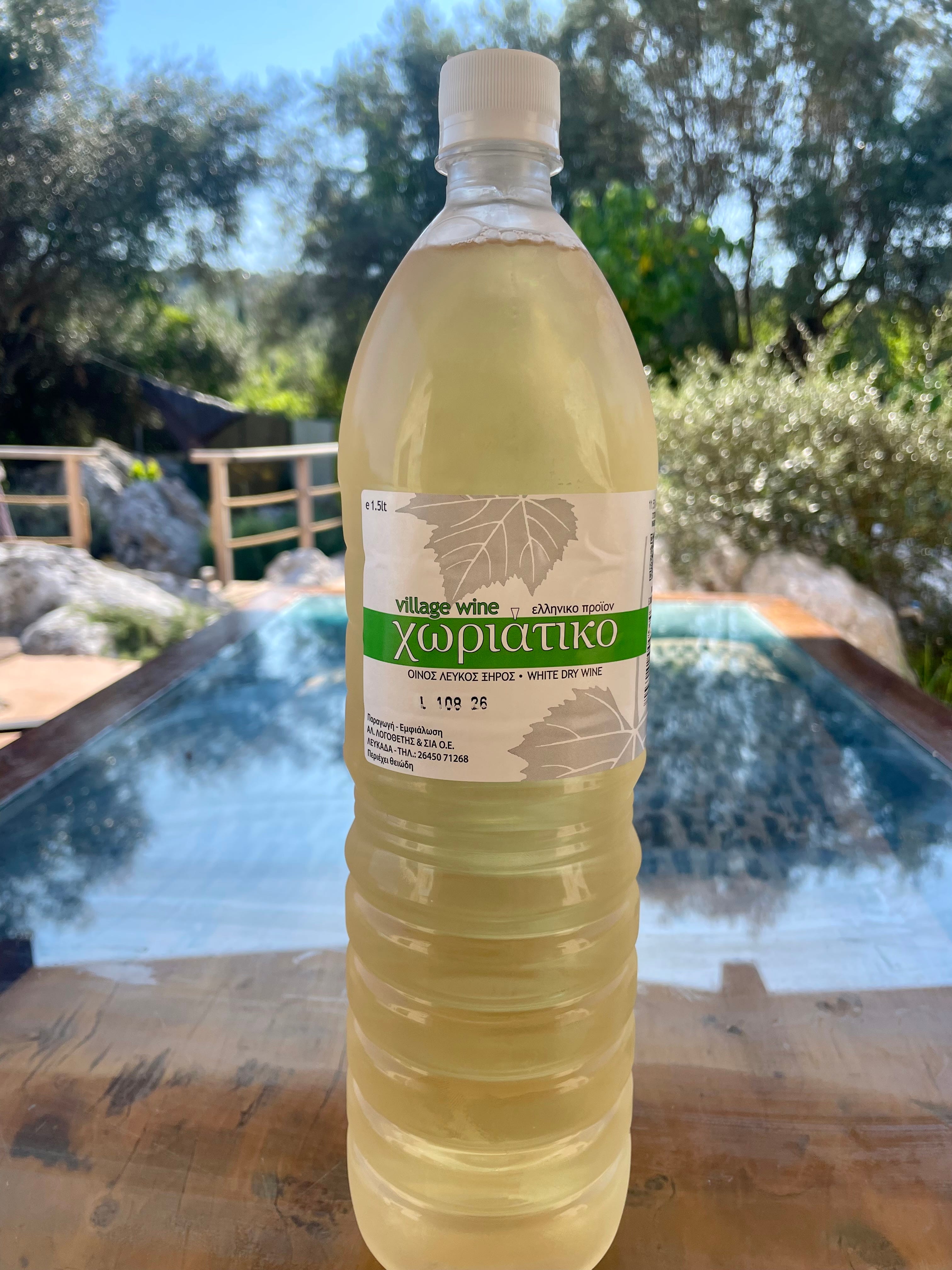
The wine gracing my table last night came in a plastic litre bottle and cost €4.50 [£3.80/US $5.15]. There, I’ve admitted it.
It was local, purchased on the island of Lefkada before we got the ferry to its smaller and wilder neighbour, Meganisi. The woman who sold it me was vague about the grape; I bought a bottle of white and one of rosé. When that runs out, the next bottle in the fridge, another Lefkadan white, cost all of €4.70 at the nearest village mini-mart. And we will down it with gusto with our barbecue tonight, much as most taverna meals have been accompanied by similar house whites and rosés at around €7 for a litre carafe.
There seems to be an assumption among many people that wine professionals drink only fancy bottles. Dirty our refined palates with anything cheap and cheerful? As if! That impression is doubtless encouraged by wine writers posting pictures on social media of amazing bottles they’ve just consumed – I know, I do it too. And I would be lying if I denied taking occasional pleasure in laying into grim supermarket wines after a trying press tasting.
But while in London I can usually avoid plonk (notable exception: book launches), out in somewhere like Meganisi, different calculations operate. In seaside places in Greece frequented by the Athenian upper-middle class, even scruffy mini-marts boast bottles from high-end wineries such as Biblia Chora and Gerovassiliou. This is true on the Argo-Saronic island of Aegina, which I visited ten days ago, a favourite Athenian weekend break just over an hour from the capital. But those bottles are fairly expensive – well north of €20 – and in any case, there are only local wines on the shelves in somewhere out-of-the-way like where I am now. Here, there is Lefkadan wine in glass bottles around the €13 mark, which won’t be anything special, or else something similar but cheaper, in plastic.
It’s true that in general, bad red wine tends to be more actively offensive than white or rosé plonk (provided the latter are dry). Rough tannins are harder to ignore than a chilled white that’s just a bit blah. But in 33℃ heat I rarely feel like drinking red anyway. The kind of local whites offered here are unmistakably Greek; their labels rarely indicate the grape, though I’d guess Roditis or possibly Robola, and rarely the vintage either. They’re light – mostly 11-12.5 per cent ABV – fresh, citrussy, maybe with some herbal notes. But the main point is that they’re cold, easy, and go with most things on the Greek table. They’re good enough.
And that’s all you really need when the main focus, as it is for us, is being together: my wife, three twenty-something kids and one girlfriend, in a beautiful place, in dazzling sunshine. It’s a perfect example of why the context of where and how you drink a wine can matter almost as much as what’s in the bottle.
This is a key idea I explore with my friend Victoria Moore in our most recent podcast about the impact of AI on wine. We discuss the puzzle of why that wine that you’ve enjoyed on holiday can taste pretty ropey once you’re home: the wine didn’t change, but you – or your mood – did. Which is one reason why AI sommelier apps and the like, trying to break down a wine’s constituent flavour components via machine learning, can simply never capture the whole of your drinking experience.
And on a summer holiday, the totality of that experience – the setting, the company, the food, the vibe – is all important. So it doesn’t matter what I’d score my plastic-bottle non-vintage white in a technically focussed press tasting. That’s another world, one of the things that makes the place I’m in at present so enjoyable. This bottle is good enough for now: we enjoy it in this moment.
The best places I’ve eaten in Greece this visit
OK, so I haven’t just eaten in tavernas and drunk Greek plonk over the past two weeks-plus. These are the better meals I’ve had, and what I drank with them.
Dromaki, Aegina – the standard of food on Aegina is pretty good, since the majority of the clientele are well-heeled Athenians. The tables at Dromaki stand on the sand of the beach itself – a magical place to watch the sunset while eating red mullet and drinking Skouras Moschofilero, as I did.
Taverna ton Filon, Athens – this bistro in a nondescript neighbourhood northwest of Metaxourgeio serves some of the best Greek food I’ve eaten. Traditional with all sorts of twists: the sardines grilled in vine leaves were just sublime. Interesting and well-priced wine list too: I drank Ktima Theodorakakou Kydonitsa and Samartzis “Klepsidra” Malagousia.
Manari, Athens – Manari is a very meaty Monastiraki restaurant, a slick modern take on the traditional χασαποταβέρνα (“butcher-taverna”). I ate irresistible lamb sweetbreads and a dish of grilled liver with Florina peppers. A more upmarket wine list here: I had a couple of glasses of Dalamaras’ brilliant Naoussa Xinomavro 2023.
Errikos, Vathi, Meganisi – this is the island’s best fish restaurant (we had an anniversary to celebrate), offering serious and unusual seafood with fusion influences, such as Japanese-influenced hamachi, thinly sliced, semi-cured amberjack with tomato and parsley or sea bream carpaccio with lime, soy salt and jalapeño. Errikos also boasts a fairly fancy and pricey wine list: we drank Theodora Rouvalis’ lovely Asprolithi from the northern Peloponnese (I was too blissed out to remember the vintage.)
Comments
Nothing yet. Say the first thing.
Sign in to join the conversation.