
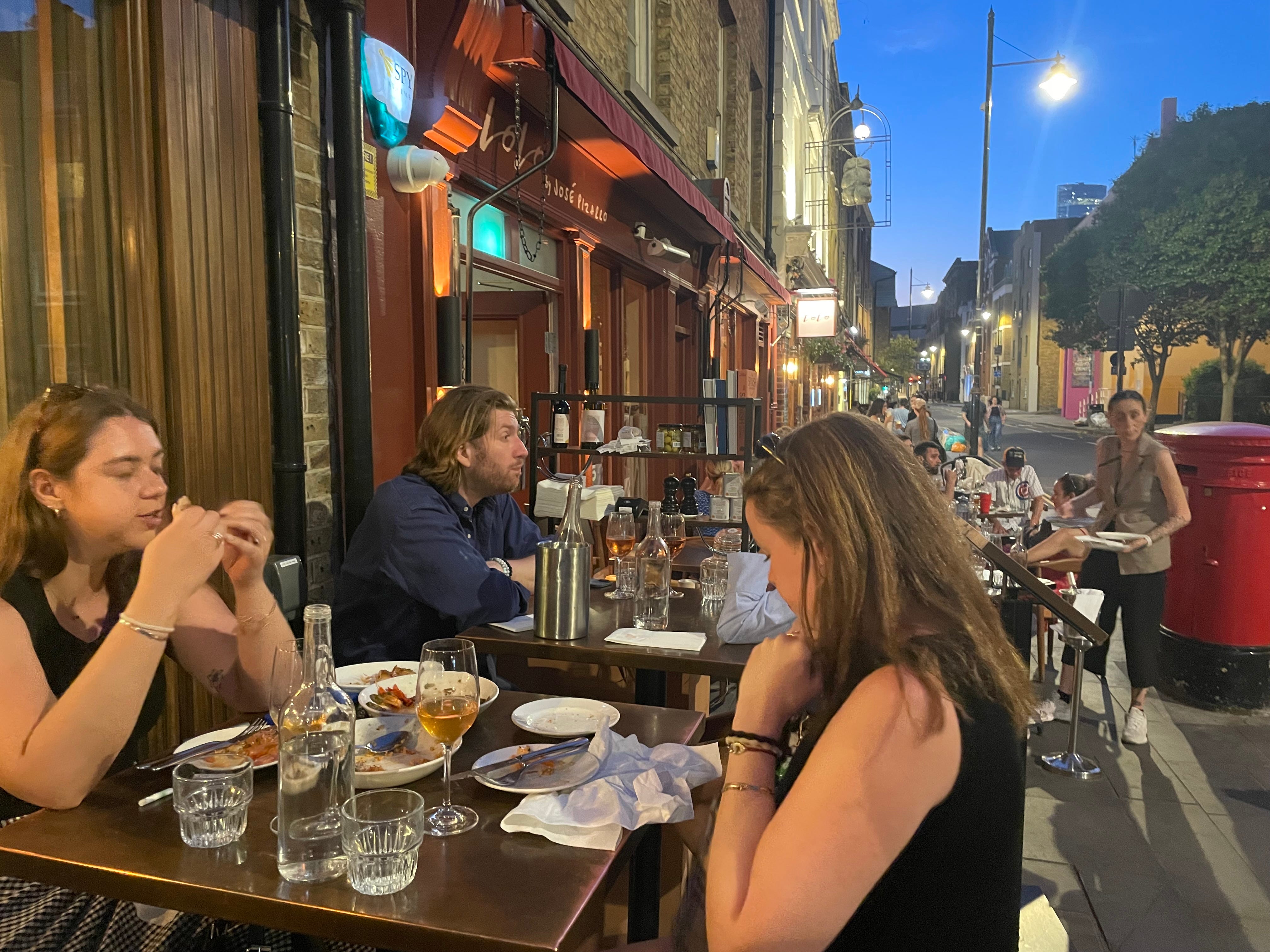
It wasn’t really Keir Starmer’s fault that the wine I was drinking at £33 a bottle was revolting. After all, it was Brasserie Blanc, where a friend had suggested we dine, that sold Garrus rouge, from Languedoc co-op Les Coteaux du Pic. And it was me that ordered the wine, since it looked the least-awful red by the glass. Still, the galloping inflation in restaurant wine prices, which means this is what such muck now costs and that something merely ordinary is nearer £50 (US$67/€59), is a symptom of the UK hospitality industry’s dire straits. And since many of those financial woes are caused by the tax burden, it has a lot to do with government. This is something our new Prime Minister, Andy Burnham, could remedy if he so chose.
Our hospitality industry is in deep trouble. In April this year, a leading industry consultancy said that more than three British restaurants and pubs are closing daily. Almost a quarter of UK pubs and restaurants operate at a loss, and nearly one in six risk insolvency in the next year. Industry body UK Hospitality predicts that almost 1,000 restaurants will shut this year.
Alcohol sales are crucial for most restaurants’ finances, on average contributing around 40 per cent of revenue. Thus as their woes have mounted, so wine prices have climbed ahead of inflation. In December 2024, restaurant critic Andy Hayler conducted a mammoth survey of 278 British restaurant wine lists, 224 of them in London. The average markup was just over three times retail price, though on around a third of the lists, at least one bottle gouged in at seven times retail cost. (It’s not just here: last week the Drinks Business website reported that some US restaurants are now charging a sixfold mark-up.)
Of course, restaurants’ tough times are not just down to booze inflation – just as higher wine prices won’t keep them afloat. The reasons are not far to seek.
Writing in his indispensable Substack, Notes on a Napkin, Bristol chef and restaurateur Dan O’Regan gives the example of a prix fixe lunch for two with a glass of wine each, totalling £78.75 including 12.5 per cent service. After taking out service and taxes, that leaves £58.33: which, based on the average net profit margin for a UK restaurant (4.5 per cent), means the house is making just £2.45 on the table.
Other restaurateurs cite the long-term impact on dining habits of the Covid lockdowns and the persistence of remote working. Monday is the now the quietest day of the week on London’s public transport system, and Friday not much busier. Meanwhile Brexit continues to be a slow-motion disaster for restaurants, as for other business, in terms of staffing – never mind its outsized impact on wine prices.
But government plays a major role in restaurants’ fortunes too – which is somewhere Burnham could turn Monday’s fine words at Downing St into positive action. From April last year, when then-Chancellor Rachel Reeves’s tax hikes came into force, employers’ National Insurance contributions rose from 13.8 to 15 per cent, while the wage threshold at which they start paying them dropped from £9,100 to £5,000. Meanwhile the National Living Wage surged another 6.7 per cent, to £12.21/hour.
Restaurant finances have also been altered by the October 2023 Employment (Allocation of Tips) Act, which – rightly – made it illegal for businesses to keep any tips given to staff. As essential news Substack Londoncentric reported earlier this month, as a result hospitality businesses are trying to extract more in service charges – for instance through automatic American-style percentage options offered when paying electronically for drinks or coffees – in order to improve their staff’s take-home earnings while cutting their own tax burden.
However, a new industry campaign is targeting a different tax: VAT. In the UK, VAT is levied at 20 per cent on all restaurant, bar, cafe and hotel bills. Yet in France, Spain, Italy and elsewhere, diners pay only 10 per cent sales tax on restaurant meals. In Ireland it’s nine per cent and in Germany just seven. Changing this is the demand of the #VATsTheProblem campaign, fronted by English chef and restaurateur Tom Kerridge. The campaign, launched last month, is backed by UK Hospitality, the British Beer and Pub Association and other trade bodies. So far their petition to the Government has gathered almost 300,000 signatures.
It’s a call which Burnham has backed – at least before arriving in Downing Street. He made much of his support for Manchester’s nightlife as the city’s mayor. He told a Night Time Industries Association event this year that, “I would… argue for a VAT rate more consistent with what you find in Europe, because of the social value that your businesses bring.” More recently, however, his team have gone quiet on the issue, with a spokesperson last month telling City AM newspaper that Burnham is “not going to set out policy positions off the cuff” – something he’s actually spent a lot of time doing – and that a tax cut “would be something we will need to look at in due course”. Oh dear: that’s spin-doctorese for “forget it.”
Potential problems lurk in such a VAT cut. It has been estimated that it would cost the Treasury over £12 billion a year; by comparison, Burnham’s newly announced cut to VAT on household electricity bills will cost an estimated £850 million this financial year. And cutting VAT for all hospitality business would hand giant tax breaks to the likes of McDonald’s (a projected £432m gain) and pub chain owner Mitchells & Butlers (£246m). But there are ways to target a cut for small firms.
There is also pressure to reform business rates, the main local taxes paid by UK businesses, raising around £34 billion a year. It’s an antiquated system based on “rateable value”, the theoretical annual rent a commercial property is worth. Governments then apply a “multiplier” to that figure, which they can play around with: for example, this year saw a Covid-era discount for retail, hospitality and leisure firms scrapped. The tax hits the hospitality industry disproportionately: despite being less than three per cent of the economy, the sector pays 11 per cent of the country’s business rates. By contrast, according to the Institute of Directors, digital firms pay just nine per cent of business rates, despite making up a fifth of the economy. Burnham has this week announced a 20 per cent cut in business rates from next April for pubs, clubs and live music venues in England, which is welcome. But the system needs much more radical reform than that.
Meanwhile wine lists have been hit by swingeing increases in alcohol taxes. Since the crazily complicated new duty regime was announced in August 2023, the duty on a bottle at 14.5 per cent ABV has jumped by almost half, adding up £1.65 in extra duty (including the VAT on it). For that bottle at 14.5 per cent, the UK now has the highest alcohol tax in Europe – even more than Sweden. Ministers could help both restaurants and the wine industry if they stopped treating alcohol duty like a cash cow.
But the biggest shot in the arm the Government could give restaurants, the drinks industry and indeed the whole of British business would be moving to reverse the madness of Brexit – and re-joining the EU’s Single Market. That would take long and difficult negotiations: the damage wrought by charlatans such as Boris Johnson and Nigel Farage is deep. But Burnham could at least take a firm step that way by ignoring the right-wing tabloids and signalling a clear direction of travel back towards the EU.
I’m not holding my breath. For what it’s worth – speaking as a former Labour Party comms grunt, prime ministerial speechwriter and newspaper political journalist – I think Burnham’s a sentimental and shallow player who ducks hard decisions. As for the wine industry, our Cambridge-educated PM’s Northern man-of-the-people image is probably too zealous for him to admit to drinking anything except beer. Though I hope I’m wrong on both counts.
In the meantime, wine drinkers are left with those spiralling restaurant prices. We can back efforts to make the taxes on the industry fairer. And we can support our local eateries (and local wine shops). Not all restaurants are as rubbish at wine as Brasserie Blanc, and the good ones deserve our regular business. An interesting glass of wine in a welcoming restaurant or bar, with people we like, is one of life’s great pleasures – a quite different experience to sipping it at home. It deserves nurturing.
What I’ve been drinking this week
La Colombera “Derthona” Timorasso 2024, DOC Colli Tortonesi – Timorasso isn’t common but it’s one of Piemonte’s best whites. This one is fragrant and aromatic, complex and layered: rich but crisp apple and plum fruit with some minerality, all delivered with subtle weight and power. Classy and unusual (Call Me Wine, The Wine Society, Lea & Sandeman, from £16.)
Herdado do Rocim “Amphora” tinto 2024, Alentejo – this Portuguese red boasts bright, sweet, tangy cherry fruit, with nice acidity and dusty tannins. They make a similarly-named more natural version of the same wine, though I thought this one better balanced (Ratcliffe & Co, £23.99. Other vintages available from All About Wine and elsewhere.)
Fedellos “As Xaras” 2023, Ribeira Sacra – made from (uncertified) organic Mencía grapes grown in two high-altitude vineyards in this unique corner of Galicia, this red is so fresh, juicy and bright – mouthwatering. I drank by the glass at brilliant south London wine shop and bar The Sourcing Table, where it was served chilled (The Sourcing Table, The Cellarhand, Cork & Cask and elsewhere, from £26.40.)
Transparency declaration: the Portuguese wine was a free sample.
Comments
Nothing yet. Say the first thing.
Sign in to join the conversation.