
Out of sheer curiosity, I briefly stepped away from my work on the Eternal Feminine to take a look at a new release circulating within the American Catholic women’s ecosystem: Something Wicked: Why Feminism Can’t Be Fused with Christianity. The title is admirably direct. Feminism, we are informed, is wicked — and, for good measure, fundamentally incompatible with Christianity.
This appears to be the third or fourth book in which Carrie Gress undertakes the noble task of reminding her readers that feminism is bad at its roots and, being rooted in evil soil, predictably fails to bear wholesome fruit.
At first glance, this is curious. Gress had already made her position quite clear with Anti-Mary Exposed (2019), where feminism was presented as decisively anti-Marian and, therefore, anti-Catholic. One might reasonably wonder what remained to be uncovered.
Well, apparently, quite a lot. The implicit promise of the new book is that feminism’s sins are even more ecumenical than previously thought and incompatible of Christianity as such. This naturally raises an intriguing question. Is Gress now prepared to argue that feminism is not merely anti-Catholic, but anti-Christian in a broader sense — Protestantism(s) included? That must be something worth watching. So I got my bag.

The book arrives within a broader landscape of contemporary Christian critiques of feminism, a field that has become increasingly crowded and stylistically diverse.
At one end, one finds careful historical analyses and genuinely reflective engagements, including those offered by Abigail Favale, Erika Bachiochi and Marry Harrigton; who attempt the risky maneuver of criticizing feminism without pretending that four centuries of intellectual history never happened.
At the other end, lies a more reactive genre: loudly antifeminist, such as Pearl Davis, ideologically streamlined, and animated by the comforting conviction that all complexity is merely a liberal affectation.
The apparent originality of Gress’s thesis lies less in her rejection of “mainstream” feminism — which has been a staple of this literature for generations — than in the metaphysical ambition of her framing. Gress does not treat feminism as a tangled web of historical movements, internal disputes, theological tensions, and philosophical mutations. Instead, she presentes it as a single, complete and unified Movement, with a stable philosophical essence and a shared core, intact across centuries and immune to qualitative change.
She claims that Mary Wollstonecraft, Simone de Beauvoir, and contemporary radical feminists participate in the same underlying philosophy.
Now, halfway there, good news!
Everyone (or at least everyone on the Righ) already “knows” that the kind of feminism preaching sexual revolution is openly hostile to Christianity. One only needs to picture the girls of the Women’s Liberation Movement, marching with raised fists and protest signs. Their symbols were unmistakable, their philosophy shouted through megaphones. They were animated by the metaphysics of revolution — communist, socialist, or anarchist — and made a point of advertising this through scandal, happily repeating that religion is the opium of the people, and so on.

But the further one goes back in time, the quieter the laughter becomes.
In nineteenth-century America, everyone was a good Christian. And in a world where everyone is a good Christian, ad hominem arguments become a risky business. After all, what biographical stain could one possibly pin on those gentle suffragist women, demanding equal rights in a world buried under Victorian oppression? Were they not all good Christians? And at that point, does it really matter whether by “Christian” we mean Quakers, Presbyterians, Methodists, or dissenters more broadly?
Even if figures such as Elizabeth Cady Stanton left behind explicit expressions of hostility toward God in The Woman’s Bible, others were careful enough to cultivate impeccable public reputations.1 At this stage, the game of personal accusation begins to fail, so to decide whether suffragists should be thrown onto the pyre or crowned in the pantheon of civil-rights heroines, it is not enough to ask who slept with whom or how many cigarettes Virginia Woolf smoked.
One must ask a different question: what Spirit breathed into the lungs of revolt?
This is a reader-supported publication. To receive new posts and support my work, consider becoming a free or paid subscriber.
Gress then faces a serious problem. She is, at bottom, an antifeminist.
To the extent this the phenomenon admits of systematization, antifeminism can be understood as a fundamentally reactive intellectual and political posture, without an autonomous system of thought. Rather, it emerges as a poorly organized response to the rise of feminism as a socially and discursively significant force.
This reactive orientation helps explain its defining features. Antifeminism tends to privilege political urgency over analytical rigor. It frequently relies on conceptual shortcuts, adopts a denunciatory tone, and leans on excessive rhetoric, including the recurrent use of ad hominem strategies. Although antifeminists usually mobilize moral, religious, or historical arguments, its rationality remains largely instrumental, oriented toward “debunking feminist lies” rather than understanding the phenomenon in its complexity.2
As has already shown in Steelman or Strawman? Carrie Gress’s Something Wicked, Gress operates entirely within this reactive logic, amassing ad hominem arguments, reducing complex philosophies to slogans, and relying on straw men to persuade through urgency and emotional appeal rather than through reason.
This approach may suffice in political debates, but in a work of this kind Gress would need something more. She would have to do precisely what she herself acknowledges: to “map through the hidden valleys and ridgelines that make up the philosophical, theological, and cultural landmarks of the feminist movement.”3
That, alas, is where her ambition quietly collapses.
Instead of analysis, we are offered historical cherry-picking. Among women who made public, social, or political claims in the past, Gress consistently highlights figures she can safely brand as heterodox — Unitarians, spiritualists, dissenters of assorted kinds — and presents them as the true face of early feminism. Meanwhile, women who were both doctrinally orthodox and publicly influential slip out of frame, as if by clerical error.
Feminism becomes a shape-shifter, expanding or contracting to fit the needs of the argument at hand.
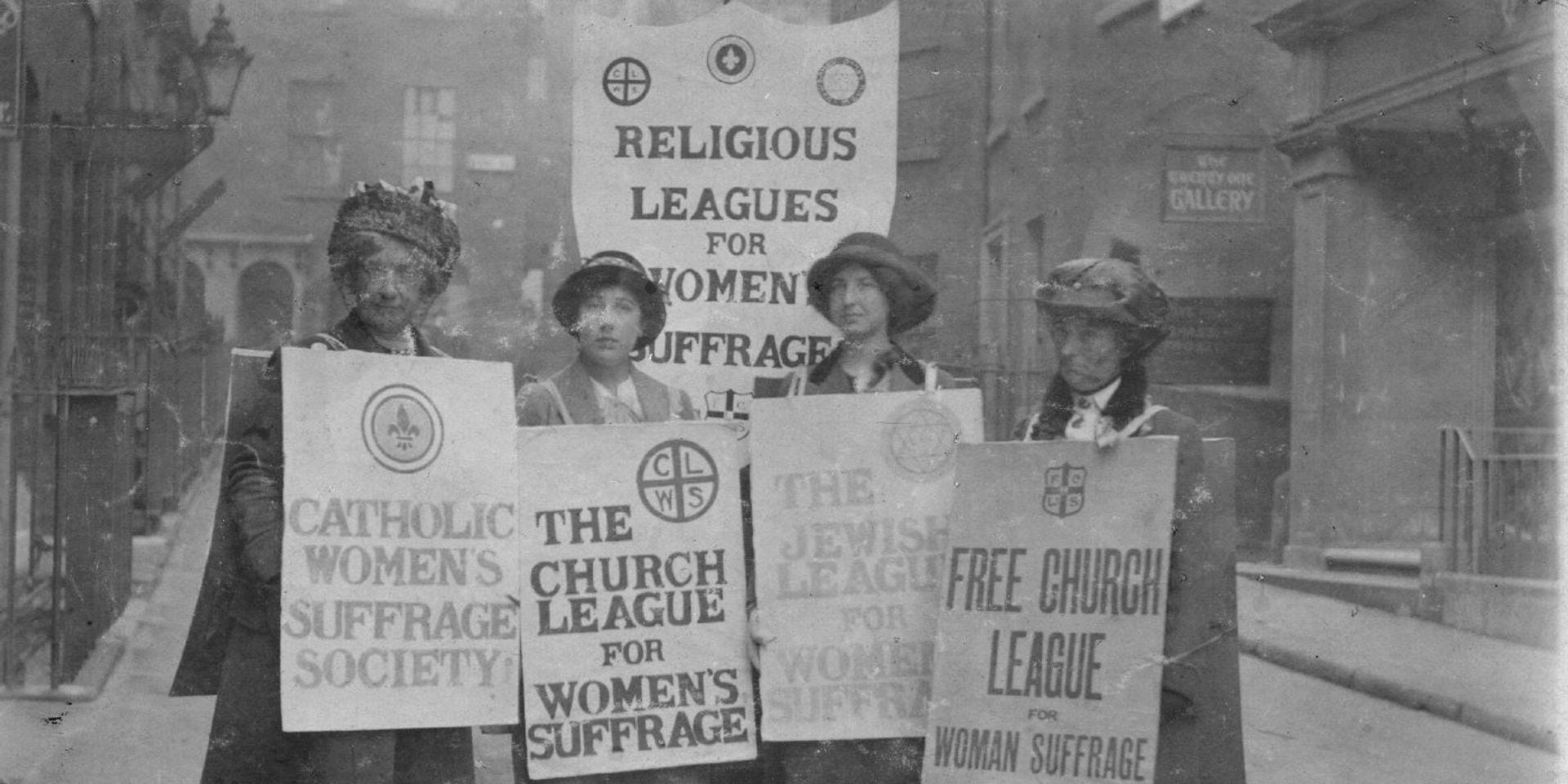
At times, feminism seems to mean little more than the belief that “woman can be like men” — or at least that is how Mary Wollstonecraft is framed, once her ideas are filtered through a layer of personal denigration.4 By contrast, women such as Hannah More are classified as respectable Christian ladies and struck from the feminist record altogether.5
On what grounds are some of these figures admitted into Gress’s implicit feminist canon while others are excluded? By what criterion does Hannah More fall outside it? And if she does, what, then, are we to make of figures such as Mary Astell or Elizabeth Montagu, whose work clearly engages questions central to women’s condition, yet does not easily fit into a simplified narrative of “feminism”?
In fact, even with the considerable advantage of deciding in advance who qualifies as a feminist, Gress still fails to account for the alleged incompatibility between feminism and the Christian women who played an active role in shaping early women’s movements. All we get is that they were “not typical Christian ladies”:
The first element that bound these women of “the women’s movement” together is that they were not typical Christian ladies. Like Wollstonecraft and her “revolutionary men,” nearly all the early feminist leaders were some kind of Dissenter or Unitarian who had left mainline churches for new ideas they considered more in accord with rationalist principles.6
Why Dissent or Unitarianism should automatically disqualify someone as Christian for the purposes of the argument is never explained. The label does the work that analysis should have done. Heterodoxy becomes a rhetorical exit ramp that once invoked, further thinking is no longer required.
Maybe the book should have been called Something Wicked: Why Feminism — which I never bothered to define — is incompatible with the “mainline churches,” which I never bothered to identify.
This essay is brought to you by the supporters of the blog. Consider buying me a coffee!
This likely happens (and continues to happen in similar books), because the claim of an absolute incompatibility between feminism and Protestantism is simply false. The historical and theological record does not support such a position.
There is a deep and demonstrable continuity between Protestantism and feminism. Both largely emerge on English soil; both share a common hermeneutical orientation; and both depend on particular readings of Genesis and the figure of Eve that reconfigure traditional understandings of the Fall, authority, and symbolic order. Also the modern subject — autonomous, self-authorizing, and emancipated from sacramental mediation — stands at the center of both traditions.
In this sense, Protestantism did not merely coexist with feminism; it supplied much of its anthropological groundwork.
And yet, dismissing the book outright would be a mistake. There is a fundamental intuition in Something Wicked that deserves to be taken seriously.
I have proved elsewhere that it is true that Feminism does function, in many of its historical forms, as a movement — with a capital M — possessing a certain internal unity and a shared metaphysical core. And that at its center lies a metaphysics of revolt: a gnostic refusal of feminine suffering, of incarnation, and ultimately of creation itself. In this sense, Feminism is structurally incompatible with Catholicism and with those forms of Protestantism that preserve the Christological grammar of incarnation and mediation: the affirmation of the Theotokos, Mary as Mother of God.7
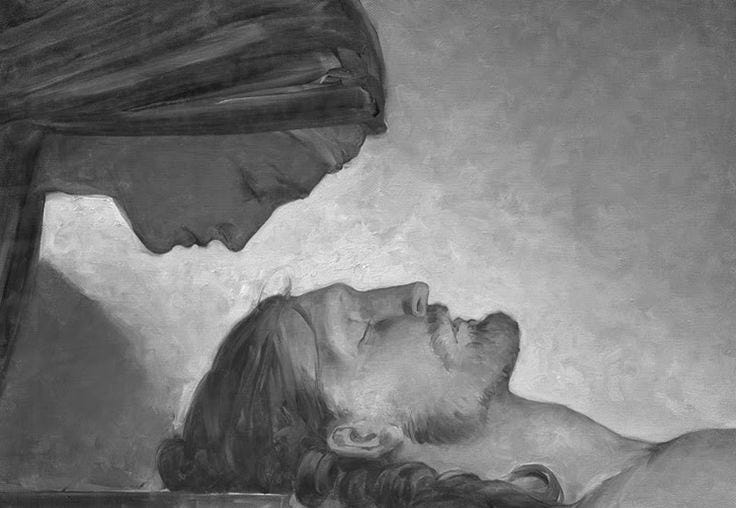
The same holds for critiques of foundational figures such as Wollstonecraft, whose work, despite its Christian language, is embedded in a distinctly modern intellectual matrix detached from the classical metaphysics of nature.8
It also applies to debates surrounding so-called “new Catholic feminism,” where the retention of the term feminism often functions as a form of nominalism — attempting to name something the concept itself cannot contain. Names are not neutral; they carry historical sediment and symbolic weight.
These are all true claims. But true claims cannot be sustained through a reactive antifeminist posture. Appeals to genetic fallacies, biographical indictments, and pamphleteering devices ultimately undermine the truth they seek to defend. Truth defended badly is truth weakened.
A serious cultural critique of feminism must therefore hold two positions simultaneously. It must recognize the metaphysical dimension of feminist rebellion, and it must reject the intellectual laziness of reactive antifeminism.
Ibid, p. 253.
cf. Autópsia do Feminismo (2025), especially the chapter "Abandone o antifeminismo: uma nova proposta para a necessária superação corrosiva dialética negativa."
Gress, C. Something Wicked: Why Feminism Can’t Be Fused with Christianity. Sophia Institute Press, 2026, p. 19.
ibid., p. 33.
For an understanding of the role of Reformed women as Hannah More in the formation of feminism, see Luciano, 2025, p. 186.
Gress, 2026, p. 39.
Luciano, 2025.
Notably, Gress advances essentially the same critique of Erika Bachiochi that I have made myself; ibid, p. 286.
Comments
Nothing yet. Say the first thing.
Sign in to join the conversation.