
Originally published in Filmmaker Magazine, Summer 2025 “Film School” issue
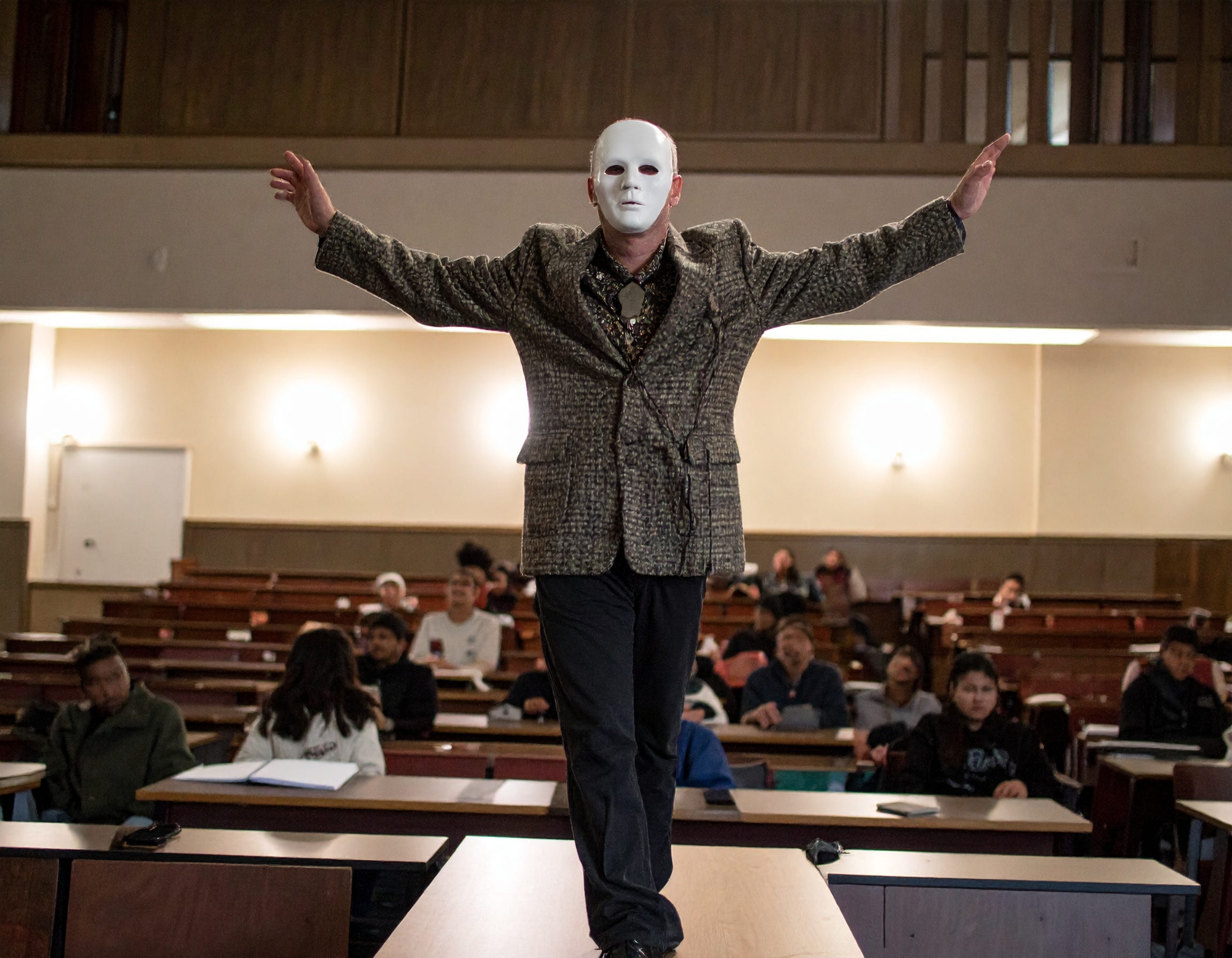
I’m a bit of a hypocrite: I hated school but now advocate for the experience, I force my kid to do her nightly homework when I failed to do mine, I failed art class in high school (and later dropped out of high school) but ended up with a BFA. This is because (I’ve been told) I possess a Protestant work ethic; while I believe deeply in the power of education, I’m unsure anything can truly be taught beyond what one is willing to teach oneself. Despite abhorring being told what to do, I teach full-time in an undergraduate media program while believing that “film school” boasts little tangible advantage over online tutorials as far as craft is concerned. I hate authority, especially in the classroom—nothing irks me more than the smug unquestioned power of the middle-aged Professor—yet I operate with authority. I both play the part of teacher and reject that part. I am perpetually of two minds.
Given my personal and professional contradictions, I try to keep aware of what I do or do not bring to the table for my students. One belief I offer is that the Movies — which I consider in the singular as a behemoth now 100 years past its middle-age—is the ultimate hypocritical art, pretending from day one to be what it is not, starting with still images feigning life. As the Movies matured into young adulthood, it developed a peculiar, hypocritical reputation as a so-called “collaborative art” while still demanding—at the end of the day, like any good art—the decisive voice of an author. Try thinking of any movie that is good (actually good; not accidentally good or socially good), and you will find collaboration collared by authority. I try to teach the way I direct my movies: a collaborative exchange of ideas—up to a point.
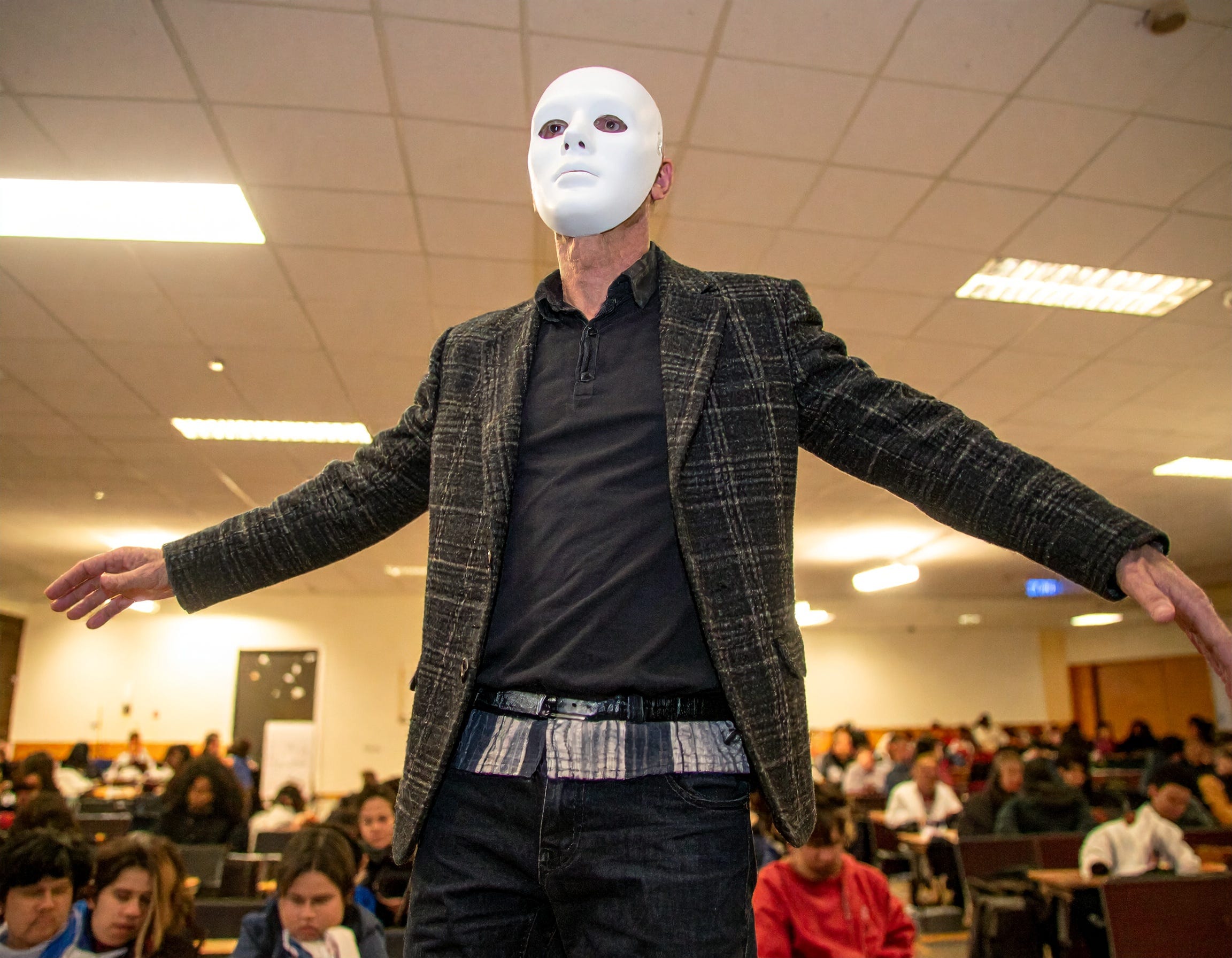
The most efficient way I can describe my attitude towards moviemaking vis-à-vis teaching is “superimposition”—a word that’s intrinsically cinematic (I once made a feature that was entirely superimposed), while describing a type of questionable authority (the “imposition”), while meanwhile referencing a core principle of quantum physics: that an object can exist in multiple states at the same time: on and off; left and right; wave and particle; documentary and fiction; good and bad; real and unreal; faithful and faithless; love and hate. As I teach younger people how to make movies in the Quantum Age, I’ve come to believe it is no longer enough to simply be cinephilic (watching 1000 movies, movies logged as Letterboxd merit badges, yadda yadda). One must also cultivate a well-developed cine-phobia in order to push the art forward — a discontent with the same old recipes and forms, to question whether it is even worth it in order to find worth. Because it can’t remain business as usual. Making movies should never be stagnant, never just be a job.
The reality is that I teach in a liberal arts school, not a film school proper, and I know enough not to promise jobs to my students. But it often feels hypocritical and almost irresponsible to humor the fantasies of young, aspiring writer-directors who hope to land big gigs unless they’re from a well-connected family, have a popular TikTok, are some sort of rising Disney Channel star or lucked into European dual citizenship and have the smarts to get the hell out of dodge upon graduation. I’m the last person to ask how to get a dream project properly funded: I’ve made six features for less than the cost of two shorts funded by the French CNC; that’s six features for less than the cutoff tier of a single SAG Ultra Low Budget (ULA) project, minus the hassle of dealing with The Nanny. That’s six features that cost basically nothing, yet six features that managed to screen beyond the confines of my mom’s basement—so maybe I’m actually the first person to ask about funding? Whatever the case, there’s surely more rational ways to fund movies (like the French CNC), but I live and work in America.
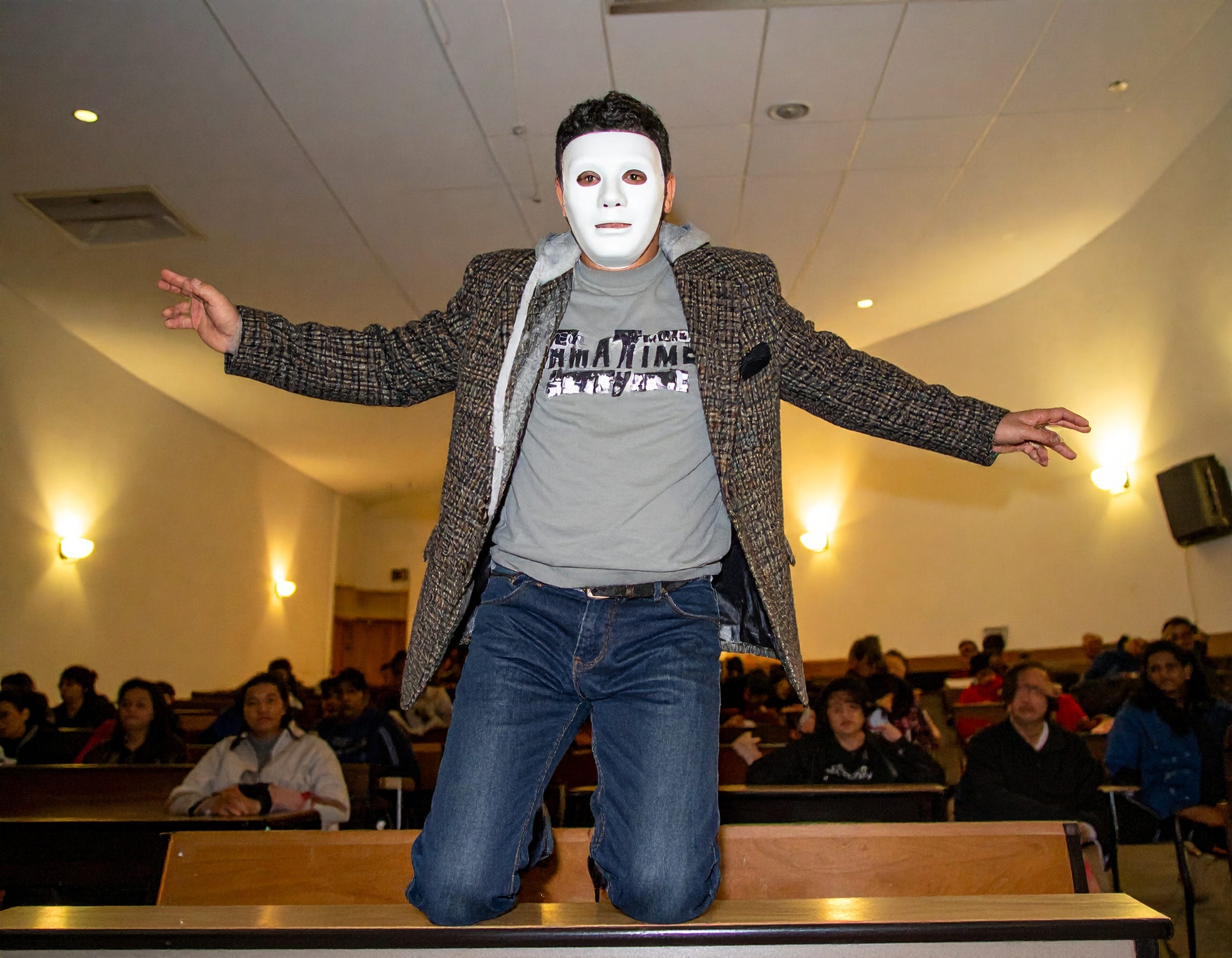
Obviously there is no direct path to becoming a successful filmmaker, markedly none as simple as going to “film school.” One possible route I haven't tried is becoming a famous actor and only then directing. In my nonacademic-after-work-hours opinion, the financing of American films seems to have veered into the hands of actors with production deals who have maximized their celebrity to unlock new levels of authority as producer-directors. I’ve often wondered what exactly qualifies an actor to transition to the role of director over, say, the boom operator—a much more reliable and silent witness to the complex mechanics film production—but that’s just me expecting that a certain type of knowledge should be the determining factor in what gets made and how.
So what am I supposed to tell my students these days? Keep on TikTokin’? Go to acting school? That I’m considering it myself, just to get my movies funded? That I’m a world-class grump after work hours, when I drink too many dank DIPAs in the dark (the nectar of aging Millenials)? Fortunately, I am not paid to humor delusions, including my own. I am paid to teach and advise: I am a full-time moviemaker, but my full-time job is to teach, and that is a blessing. The duality provides a certain freedom that took me thirty years to figure it out. So, in class and in life, I try to demonstrate an alternative vision—that moviemaking can be more than a career; it can be a compulsion. There are those among us who must do it, at any cost, and it is worth studying why: why are some of us are less concerned with making a living in the movies than bringing the movies to life, however irrational the task may be? Why do some of us persist against the known odds? I try to provide all my students with the tools to determine whether they are this person—the person who knows better on a cold professional level, yet acts in creative contradiction to that knowledge—through the lens of my time and my entangled beliefs. An abridged list of those thoughts on movies (subject to change):
You can make a movie out of nothing if you think hard enough. A feature film is only a lot of minutes, so don’t be scared. The anti-commercial movie is potentially profitable under the right conditions. Funding is no fun. Film festivals need you more than you need them. Awards are terribly stupid unless you win one. When you think you’re done, you’re probably not. Don’t be fooled by “production value.” If you’re concerned with creating “likeable characters,” you need to like yourself better. If you make commercials, your movies will look like commercials, not to mention that commercials are lame. Shooting on 16mm is fun and pointless unless you're also projecting on film, which hardly anyone is. Always watch the credits til the end—here lies the secret to how the movie got made, and Netflix doesn’t want you to know the secret. YouTube is as helpful as film school, except you can meet someone like me in film school. And please don’t rely on someone like me, because I’m a bit of a hypocrite. Unless you want to be a hypocrite, which is to say, someone who makes movies.
Comments
Nothing yet. Say the first thing.
Sign in to join the conversation.