
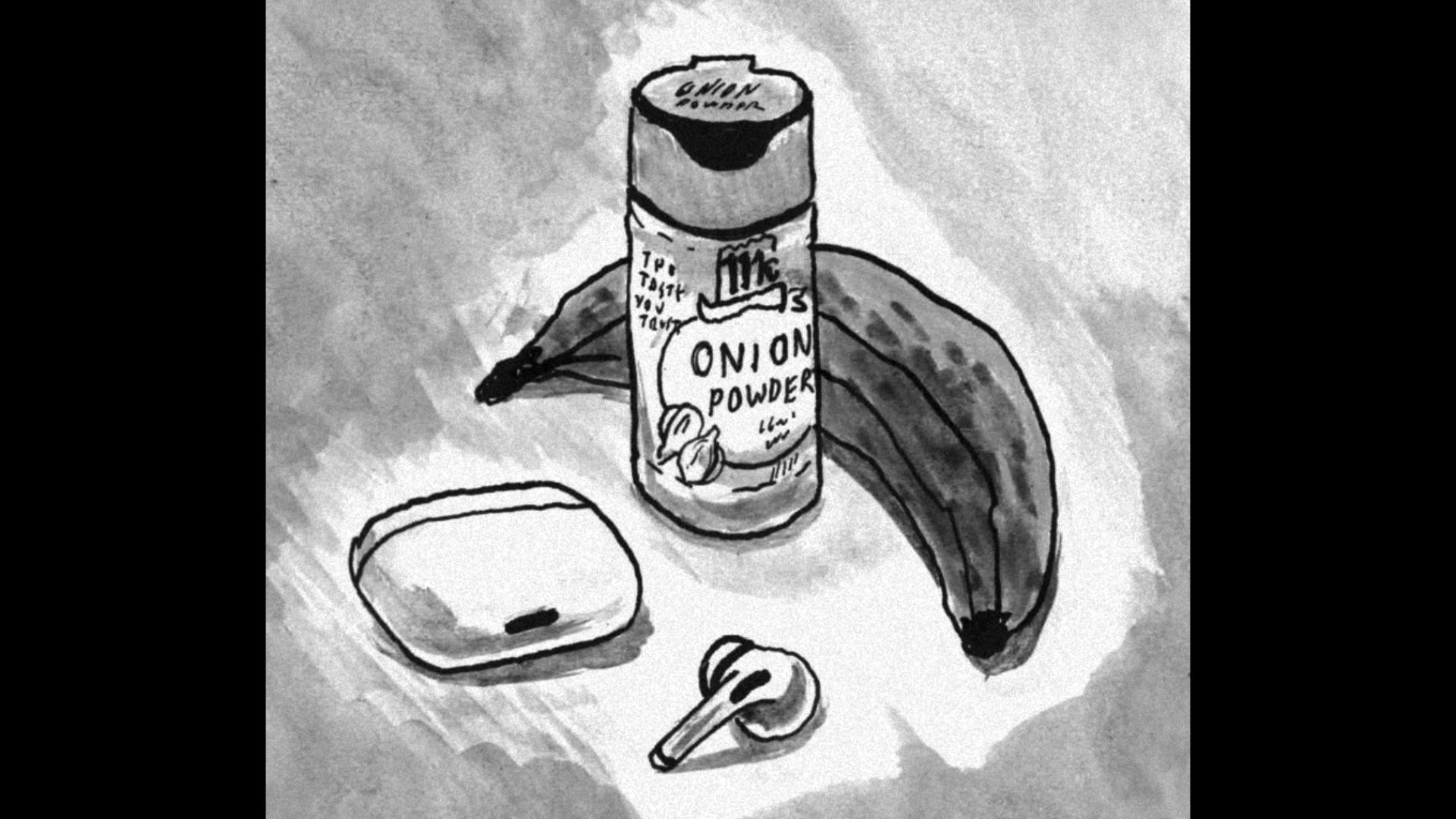
Marty McCormick had a bum knee. He also had the last name of a world famous spice manufacturer. He didn’t know which was more annoying. The knee was a hell of a lot of trouble, and the limp made him look older than his fifty-five years, but he got really spicy when people snickered about McCormick because, coincidentally, he’d worked in the logistics department at McCormick & Company for over fifteen years. His ex-wife used to call herself his “Cinnamon Girl.” She was always pushing him to be more romantic. “Keep Neil’s name out of your mouth,” he said to her when they were breaking up. She left him for a guy named Neil. That was five years ago.
Marty’s knee, which had ailed him since childhood, flared up in hot, humid weather, so it was at least predictable. But last year, he’d slipped in the office bathroom on a dusting of thyme, sage, and marjoram poultry seasoning. The weird thing was that he hadn’t hit his knee. The contortion of the fall had done it, the pathetic way he’d unscrewed himself in midair to save his ass, moving in a manner he’d never moved before. He saw himself go down in the mirror—it was so cartoonish, those ugly HOKAs in the air, like Bugs Bunny on a banana skin, he almost laughed before slamming on the tile, and then the pain bit into his lower back, and twelve hours later, his fragile knee. The doctor told him the time had come for arthroplasty and told him he’d be laid up for a while. Marty added up the workers’ comp and his 401K, and it appeared he could eke out an early retirement (blessed in a cursed way to have no wife anymore). So Marty read the tea leaves and told himself “It’s gonna be great,” understanding it was time to move on from McCormick.
He decided once he could walk again he’d take a long holiday like they did in novels; somewhere he could focus on healing, far away from the depressing, flavorless, humid environment that inflamed him for nearly two decades. He Googled for roughly ten minutes before renting a cabin in a modest beach town in Maine about a mile from the nearest store—theoretically walking distance since the physical therapist ordered him to continue their regimen of daily strolls and stretches for at least three months. He’d never been to Maine, but the rates were attractively low in the late fall, and it wasn’t one of the fancy towns where he’d feel like he was putting on airs. The cabin was right off I-95, a sluiceway for the middle-class Quebecois who zoomed their tiny cars down in the summer to tan their chubby rolls like lobsters for a week before zipping down to Boston to catch the Blue Man Group at the Charles Playhouse. Of course, the recent political situation had reduced their numbers—red, blue, or otherwise—but in any case it was always only locals in the off-season. The beach was empty, the rental cottages mostly boarded up; a definitive chill was in the air. The two-room cabin was two blocks from the beach. Marty ordered an L.L.Bean Rambler PowerLock 2.1 hiking staff with a cork handle that awaited him boxed on the porch upon arrival. He minded his business, and no one bothered him. Every morning he woke up, fixed a cup of coffee, grabbed a snack, and prepared for his daily constitutional.
At first, Marty walked the beach. Rationally, he felt obligated to do so, as if there were a rider in the Vrbo rental contract to properly maximize the rental, or maybe it was the lingering memory of his ex-wife’s pleadings: “Long walk on the beach, Marty?” But limping on the uneven sand in the sharp autumn breeze got uncomfortable after a few days, and walking the mile to the store down the big avenue was too depressing and exposed in a different way, like he’d become some wandering junkie who’d permanently lost his driver’s license and custody of his kids, to boot. Fortunately, Marty discovered Avery Park. It was a small woodsy zone of about fifteen acres managed by the community beach association—open 7 a.m. to 9 p.m., no camping, no alcohol, no motor vehicles, no dumping, no fires—designed for walking, then, though a little too far to walk, so Marty drove. He parked in the breakdown lane, since there wasn’t an official parking spot at the footbridge that opened up to one mile of interlocking trails winding through old growth hemlocks and white pines that cast muted shadows and a kind of permanent murk in welcome contrast to the glare of the beach.
Avery Park suited Marty. The small forest was quiet and beautiful in a modest way. The circuit he walked each day was fairly flat and perfect for his bum knee. He hardly needed the hiking staff. He usually arrived around 7:30 in the morning and walked for an hour, often pausing to check the news or scroll through Facebook on his phone. Only rarely was anybody else in the park. Once, as he returned over the footbridge, he locked eyes with a young dad who’d pulled over to help his toddler take a squatty on a tree stump. They nodded in mutual acknowledgement that certain things are necessary at some times. Once a group of gangly runners with glowing smart devices startled him, splitting a V around him like a herd of high-performance antelope before disappearing around the bend, never to be seen again. Marty wondered if he’d ever run like that, and he knew the answer was no.
The only person he saw with regularity, maybe every few days, was a big guy with a rusty Range Rover and a tiny dog. He assumed they walked the trails, but he never witnessed them arrive or leave. The guy was perpetually at the edge of the road, fussing with his dog’s tangled, threadbare leash. He wore the same outfit every day, no matter the weather: cargo shorts and a flannel shirt and a bucket cap. He had a giant tattoo of a face on his right calf which turned out to be (it took a few passings to verify) a hyper-realistic portrait of Donald Trump with his fist raised: a close-up rendering of the famous assassination-attempt photograph. Even from the other side of the road, Marty could make out the giant goose pimples and varicose veins of the guy’s thick calf that granted a severe, practically four-dimensional living aspect to Trump’s face. It was nearly impossible to tell where the drawing ended and twitching, weatherbeaten muscle began. Marty stared a little too long once and they briefly met eyes and pretended they hadn’t. Marty drove home.
Three weeks in, Marty encountered a woman in the park. He wasn’t looking for a woman—he’d hardly thought about the gender during his residency in Maine—but still, the unexpected appearance of a female caused his leaky pelvic floor to tighten and his bum knee to tingle in remembrance of intimate movements; a jolt not dissimilar to the quick kick of McCormick Culinary MSG Flavor Enhancer that he and his ex–office mate would sometime sprinkle on their Panera takeout, just because it was lying around the office and made life that much more flavorful without committing to any specific flavor profile.
The woman was in her mid-thirties and looked nothing like an ex-wife. She was dressed in athleisure yoga pants and sneakers and a light fleece pullover. Marty first noticed her at the calming intersection where the white pines got tallest and formed a bit of a clearing with a soft carpet of needles that shone in the gentle drizzle of the overcast morning. The woman was briskly walking, exercising. Although it didn’t look like it, Marty wondered if something was wrong with her, too; something that had steered her to Avery Park in search of self-improvement. Because of this woman, Marty turned down a different trail than usual. He was unresolved about sharing his daily ritual—not only with a woman, but with anybody at all, and especially someone who made his knee tingle. It seemed more trouble than it was worth. In this way, Marty knew himself.
Marty found himself on the path less traveled, one of the deeper trails that ran along the back perimeter of the park that bordered an unseen railroad track. Here, it dipped lower in elevation toward a small tinkling stream. It was darker and foggier, and roots and stones compromised the path. Marty vaguely understood the trail should loop back to the pine clearing at some point, so he picked his way forward, heartened that his L.L.Bean staff wasn’t a waste of money after all, while making a mental note to avoid the route in the future.
It was there he saw the tree. It was a small tree, probably technically a sapling, with a dark speckled trunk growing out of an old hemlock stump. It wasn’t thriving, and it may have been dead. Instead of leaves, fleshy brown drips hung from its branches like spooky Christmas ornaments. It took Marty a good ten seconds to understand that the strange decor was old banana skins. An abundance of old banana skins. His first thought, of course, was that this was bananas. Someone had obviously eaten a ton of bananas and hung their peels as a prank; or maybe it was a ceremonial rite, Marty suddenly considered with a jolt, glancing around for cult members, or more likely, depraved TikTokers sniggering at him from behind their phones in the bushes. He was completely alone. He inspected the grotesque sculpture. There were too many peeled skins to count, all of different consistencies, some blackened and nearly rotted away, others still possessing their inner flesh. Each had been carefully hung on the twigs of the branches and left to mark the moment. One skin stood out, bright yellow with a faint streak of green. Marty realized it was fresh enough to have been placed that day. He shivered, suddenly aware of the morning’s dampness. He took a quick picture of the tree on his phone and left the scene.
Marty didn’t go walking the next two days. The weather had been bad all week, and he’d caught a cold. He spent the time catching up on financial planning tasks. It remained unclear to him whether he’d work again and in what capacity. Approaching a month in the vacation cabin, he was starting to see how not being occupied with work could be an unexpected living nightmare—not in the dramatic wake-up-drenched-in-sweat sense, but through the endless repetition of hours and days without feedback or communion. The oppressive, familiar stuffiness he’d hoped to escape by leaving McCormick was sneaking up again; the bad thoughts had followed him up I-95. Maybe it was because the place wasn’t designed for the off-season. Maybe it wasn’t prepared to accommodate human experience when the sun wasn’t disinfecting and distracting him from his essential aloneness, like so much creeping black mold on cedar shingles. Of course, he still had a sister in California. She was married to a guy who frankly seemed like a classic cuck, and she was on Ozempic, he assumed, based on her Facebook posts, and she had two or three grown kids, and she and Marty never talked, but at least she was there as a reference point on Google maps to signal he wasn’t yet floating in a void of absolutely craven and circular self-preservation. At least with a sister in California, if he got hit by an Uber full of Quebecois making a U-ey out of the Dunkin’ drive-thru, or if he got inspired in a beach-town community theater sort of narrative to randomly murder someone and ended up as a pop-up on HuffPo.com or on one of those grisly Ring-camera crime posts on TMZ.com (Warning: Graphic Content), his sister could say, “Yes, dear lord, I’m related to him, but I haven’t talked to the guy in decades, he was always off, he was touched, probably cause he had a different dad, and I hated my step-dad, and I can trace all my problems to the day my mom married that creep’s creepy father.” Marty thought about the strange banana tree and wondered if it was telling him something.
When he beat the cold and returned to Avery Park, he was shocked to discover that nothing had changed. The banana tree was exactly the same, which is to say another fresh banana skin was balanced on the fine twig of a branch. It appeared to have replaced the former, which was browned and drooped. The new skin was so impossibly fresh and glistening with dew that it could only have been placed that morning. Marty hadn’t seen a soul at the parking spot when he arrived, nor on the trails as he hiked out of his way to check on the tree out of pure and innocent curiosity, so he told himself. Yet there it was: uncompromising proof that someone had been there. He checked the photo on his phone to compare. He took another photo. He poked at the fresh skin with the tip of his hiking staff. It plopped down upon the hemlock stump. For a moment, Marty considered taking it with him as evidence. But it wasn’t like this was a crime scene. And it wasn’t like he could check it for DNA. It’d just be a damp banana in his pocket, like the start of a bad joke by a middle-aged man. Plus he worried that whoever was doing it would notice the missing skin, and there was no predicting the consequences to that. He didn’t want to send the wrong message, especially since he had no idea what any of it meant. Marty picked up the skin and gave it a once over. He noticed a little oval sticker that said “Dole.” Then he rehung it on the branch.
On his way out of the park, Marty saw the big guy with the Trump tattoo. As usual, the guy was fussing with his leash in the breakdown lane, his little dog yapping and making trouble. Marty wondered if a guy like that ate bananas. Hung bananas on trees like a freak. Marty kept himself hidden in the tree line and watched the guy pause and light up a cigarette. He thought about asking him, but he knew he’d sound crazy.
The next morning, Marty arrived at Avery Park a half hour early. He walked faster than he’d walked since well before his surgery, but he didn’t clock the milestone because he was on a mission. When he arrived at the banana tree, a new skin was hung. Marty couldn’t believe it, now three skins he’d personally witnessed; three in a row, a gradient of decay among all the others. At this point, there was no reason there shouldn’t have been a fresh banana skin, almost as if, in an alternate universe, the healthiest trees grow undisturbed in that manner, complicated only by the small intervention that Marty had changed up his schedule that morning. It dawned on him that whoever was doing could have been watching him to learn his habits. Whoever was doing this was surely methodical. Some kind of master of their pointless trade; a perverse completionist. Marty sat on a rock to think. He wondered if they snuck in at night. But the park was closed at night, and the banana skins were so firm and fresh, even a couple hours offset would be obvious (Marty had enough experience with bananas to know this much). He reflected that the subterfuge (if that was the word), in its near perfect execution, was teetering on the edge of a performance fit for the Charles Playhouse, or the attempt at a truly medieval calendar, tracking the days indefinitely via the natural cycle of decomposition and regeneration.
On his way back over the footbridge, he nearly collided with the woman. She yelped in surprise. Her AirPods popped out of her ears, scattering on the forest floor like acorns. Marty understood he owed her a fast signal that he wasn’t a disabled rapist limping after early morning female joggers. “I’m sorry!” he said, dropping into a crouch to search for the AirPods. His knee shot with sudden pain.
The woman softened. “Those damn things never fit right!” she said. Marty unsteadily got to his feet and handed her a clump of pine needles with the electronics mixed in.
“Thank you,” she said, “I’ve seen you walking—you live here?”
“Visiting.”
“People usually visit in the summer.”
“Exactly why I’m visiting now.”
She seemed to get this, and smiled.
“I’m Marty. Marty McCormick,” he offered.
“Like the spice company?”
“Exactly.”
“I’m Anne. Not like the spice company.” Anne dusted off her AirPods, removing small leaves and dirt. “I guess you probably know this is wintergreen.” She held up a small, shiny green leaf and pointed around to the surrounding patch of such leaves with red berries.
“Oh yeah?”
“You can chew it like gum.”
“I’ll have to try it sometime.”
“Similar to birch, if you’ve tried that. I forage. Make teas and tinctures.”
He thought about asking her about the bananas. Instead, he said, “You know, I saw this weird… mushroom.”
“What did it look like?”
“I can’t remember.”
“Well, don’t go eating it. Not without checking first.”
“Wasn’t planning on it.”
“The bad ones can look like the good ones,” she said. “Well, nice to meet you.”
“Nice to meet you, Anne. See you around.”
Anne refitted her AirPods and jogged off.
Marty was feeling strange. He wasn’t expecting so much action during his early retirement. He wasn’t prepared for it, mentally or physically. He was worried he’d set his knee back weeks by scooping up those AirPods. So he tried not to think about Anne. Instead, he drove to the grocery store—not the little provisions shack a mile from his cabin, but the big Hannaford twenty minutes away, in the next town. He told himself it was to buy a new knee wrap, a tube of Bengay, and a week’s worth of frozen dinners.
Marty quickly found everything he needed at Hannaford and then found he’d drifted into the fruit section. A worker was restocking blueberries, bobbing his head to the Crosby, Stills, Nash & Young song lightly playing throughout the store. Marty looked at the blueberries, shuffling like he was going to buy a pack, then said, “Pardon me.”
“How can I help you?” said the worker with a smile.
“Where can I find bananas?” Marty asked.
“Behind you,” said the worker.
There was a big pile of bananas directly behind Marty. He’d asked a stupid question. He shifted his basket from hand to hand. “I mean Dole. Do you sell Dole here?”
“Could be Dole. Sometimes it’s Dole. Sometimes Chiquita. Sometimes Del Monte. Have you checked?”
“No, I thought I’d—”
The worker smiled wider, then placed his hands on his aproned hips to begin a sermon. Marty realized he’d stumbled upon a talker; a spring-loaded social type who specialized in appearing busy when, in fact, like a sensitive and greatly annoying insect, they’re hyper-tuned into the conversational openings, divining with their little mosquito receptors the tiniest excuse to penetrate the thick, humid wall of air that smothers and divides collective human experience—the type of air that filled Marty’s lungs every day of his life. Talkers made Marty tired, and he usually avoided them. His ex-wife was one of these people. She’d say, “Why do you get so mad when I talk to people, Marty? I learn new things! Variety is the spice of life.” Of course, whenever she said “variety,” she meant “Neil.”
The worker reached over and grabbed a lone banana, separated from its tribe. He held it aloft between two fingers like a baton. “It all depends on the price,” said the worker. “Imports. Costa Rica, Guatemala, Honduras, Ecuador, Colombia. We haven’t had avocados under three dollars for months! But bananas… People expect bananas, no matter what, every day. So they’re the great loss leader.”
“Loss leader?”
“Product that gets you into the store. We never make money on bananas.”
Marty nodded. What a peculiar concept, he thought, to be the leader of losing.
“Everybody loves bananas,” said the worker. Then he did something unbelievable. He gently peeled the banana and ate it. Marty’s eyes widened. He looked down upon the heap of hands that each divided into dozens of fingers, and all the little stickers that said “Del Monte.” After thinking for a moment, he grabbed a bunch and put it in his basket.
Every day of the following week there was a new banana skin. Each was as uncurled and yellow and bright as the rising sun. Each predecessor was limp and brown, haloed in degrees of mold, collecting or having collected fruit flies, foretelling the fate of the latest addition in its staggered state, to dust all shall return. Somehow, the tree forever seemed to be nearing capacity yet was endlessly able to accommodate precisely one new banana skin a day. Marty experimented with arriving at different times in the morning, but still, each day fulfilled its promise in the same way. It was almost becoming a comfort to Marty. And he wasn’t any closer to solving the mystery. He hadn’t seen Anne, or almost anyone, for that matter, in the park for days. Once, he saw an older woman walking a fluffy Portuguese Water Dog. She made a quick escape when she realized Marty was loitering.
Marty began slicing banana over his cereal in the morning. He’d never been a fruit-on-cereal type of man, but he had to admit that Kellogg’s Corn Flakes took well to bananas. It was a strong and simple meal to start the day. His knee was feeling better, too. It could have been all the potassium.
Early one Saturday morning, the mists parted, and Marty saw Anne on the footbridge. He’d just returned from the banana tree for the second time that day. He’d arrived much earlier and encountered, as usual, the daily skin. The occurrences had long ceased to surprise him. They were now as regular as his morning coffee. Sometimes the skins had stickers, and sometimes not. That day, Marty had noticed the latest sticker had changed from “Dole” to “Del Monte.” His curiosity had gotten the best of him, and couldn’t help but handle the fresh Del Monte skin, slipping it off the delicate twig and dissecting it for further clues. Maybe there were residual teeth marks, possibly a smudge of lipstick? He had gotten carried away and made a mess of it. He had ruined the banana skin, and it couldn’t be rehung. Consumed with worry that he’d thoughtlessly meddled with the great system at play, Marty hurried back to his car as fast as his knee would carry him, sped to the rental cabin, plucked a fresh banana from the kitchen counter, ate it on the drive back, and replaced the skin on the tree. He was emerging from this adventure when he caught sight of Anne. She was lightly bouncing in place, adjusting her AirPods and preparing to run her circuit. He thought about telling her about the strange tree—he was practically dying to tell her, he realized. He wondered if she’d be interested, if she’d find it as unusual and special as he did, but then again, a small part of him was scared that she already knew about the tree, and therefore, knew about him. How could she not? She ran the entire park.
As Marty approached, Anne half-waved in a polite mixed signal that any socialized adult would understand to mean, “Nice to see you but I’m busy.” Marty took a deep breath.
“Hi, Anne. How’s it going?”
Anne pulled out her AirPods. “I’m sorry?”
Marty was thrown by her coldness. As he fumbled for a response, he noticed the big guy with the terrier parked at the edge of the road, fussing with his dog’s leash.
“Sorry, I had my podcast in. Good morning.” said Anne.
“Nice to see you again,” said Marty.
“Yes, you too, uh…”
“Marty.”
“Right. The spice man.”
Marty knew she would say this, and knew he wouldn’t mind when she did. “I’ve been meaning to ask,” he began, “Have you seen…” Anne waited for him to spit it out, rolling her AirPods in her palm like a pair of dice. “That guy really likes Trump.”
“What guy?”
Marty nodded behind her, toward the road.
“The guy with the terrier?” asked Anne.
“His tattoo?”
“Oh. He’s OK. We’ve talked at, like, the grocery store and the post office once.”
“The grocery store?”
“Yeah.”
“Hannaford. I think he works there.”
“He works there?”
Anne gave him a queer look. “I don’t know,” she said, popping her AirPods in, “You keeping away from the mushrooms?”
Marty wryly smiled.
“Take care, Marty,” Anne said. She jogged off.
Later that day, Marty cursed himself. He never knew to quit while he was ahead; not to push for his own satisfaction alone and instead ease into things to make people comfortable—he should have asked Anne about the banana tree, or else shut his mouth. He should have given her an interesting second impression instead of confusing her with unspoken needs and unnerving misdirection and, frankly, the impression that he was as judgmental as he actually was, specializing in a brand of indirect judgment that leads directly to divorce. “You’re a sneaky pepper that gives you diarrhea in the morning, Marty,” his ex-wife had said, in so many words. The truth is that he had probably done it to infuriate her, voted for Trump. It’s not like he was committed to the guy or anything. In fact, he rarely thought about politics. The guy was clearly a sociopathic asshole. But sometimes Marty did things—almost random things, symbolic things—just to see what would happen. Once, when he was driving to work, a traffic cone rolled into the street and got stuck under his bumper. Once he had dislodged it, he decided to keep it. There was nothing particularly special about it: It was orange and it looked interesting. When he got to work that day, he remembered the traffic cone. He didn’t want to keep it in his trunk forever. So he put in a parking spot, right in the middle of the spot next to his own. There was no deep analysis or motivation, except that he knew people would respect the cone. It remained there for two months. No one parked in the spot for two months. Then one day it disappeared. Another time, he sprinkled poultry seasoning on the floor of the bathroom at work. It was there for two days, and he completely forgot about it. It was that kind of stuff that Marty did, and when people found out, it alienated them. He didn’t mean anything by it, and usually it didn’t mean anything in the grand scheme of things, and he’d usually forget he did anything at all, but once in awhile there would be a consequence, like Trump getting elected and people tattooing his ugly face on their ugly calves like a sacrifice to the brutal gods, reminding Marty every time he saw it, and as much as he disliked it, that he had played some small part in it, the way the world worked these days.
On Sunday, he paid a visit to Hannaford with half a plan to suss out whether the big guy with the tattoo worked there. There was no sign of him. He wondered how he’d inquire at the help desk: “Does a husky man with a hideous tattoo work here? Possibly with a drug problem?” That’d describe half the workforce. Marty crept through the aisles, scanning the townspeople. Slicing past the fruit section, he saw the talky worker and pulled a quick U-ey, waiting until the worker was called elsewhere. Then Marty moved in to inspect the bananas. The whole heap was labeled with stickers for Del Monte. Without a moment’s hesitation, Marty scooped up three bunches and stacked them in his cart. Then he grabbed a fourth, for good measure. He figured if anyone asked, he could say he was making banana bread. And maybe he would make banana bread. There was an oven in the cabin he hadn’t tried. He grabbed some canisters of nutmeg, cinnamon, and allspice to convince himself. Once a McCormick, always a McCormick, he muttered to himself with a healthy, resigned sigh. He bought it all and drove home.
Marty never saw Anne again. Maybe because the weather changed fast one day, with winter signaling its dominant intent. She probably hopped on a Peloton and never looked back. Here and there, he saw the big guy with the tattoo on the side of the road with his dog or other random people. He never talked to them and eventually stopped paying them any mind. Even in the cold, he always made sure to keep a banana on him during his visits to Avery Park. He’d developed a taste for them. Sometimes he’d add a foraged bite of wintergreen to spice up the experience, slowly chewing a banana-wintergreen cud during his hour-long stroll, then ending at the footbridge, he’d alternate between swallowing or spitting, depending on his mood. He often thought about the registered trademark of the company he worked for for fifteen years: “Taste You Trust.” He trusted his new way of life. He no longer needed the help of the L.L.Bean walking staff. Marty extended his rental into spring. The rates had stayed attractively low, and he was at a loss to where he’d rather lead his life. He kept up his walks and figured he’d deal with summer when the time came. It wasn’t particularly bad in this part of Maine, nor was it particularly good. As always, Marty was hanging in there, waiting for a sign.
Comments
Nothing yet. Say the first thing.
Sign in to join the conversation.