
Once a month I write an article about media I enjoy. These are paid articles that are intended as a reward to my paying subscribers. The idea is that it allows me to give them something special that’s extra, without paywalling any of my more ‘hard hitting’ or pertinent articles. The paid ones are a little less edited, and a little more raw, and on a lot less serious topics. They bounce around and allow themselves to have fun with it. This is one such article.
I no longer have any PhD funding. That means I’ve zero income from what is effectively my day job. A Pistachio Frappuccino® from Starbucks costs $7.35USD plus sales tax A subscription to my Substack costs $8USD. Because I’m a Canadian that’s $10.88CAD to me. I currently have 104 paid subscribers. If I get 120 paying subscribers I can make my previous PhD income off Substack alone. I’ve set 150 as my goal for being able to quit SW. If I got 200 I could probably actually afford to like live comfortably (phd income levels are precarious at best)! Basically for the price of buying me a coffee a month you can be a shockingly large part of how I stop doing SW and get out of poverty. Please Consider subscribing!
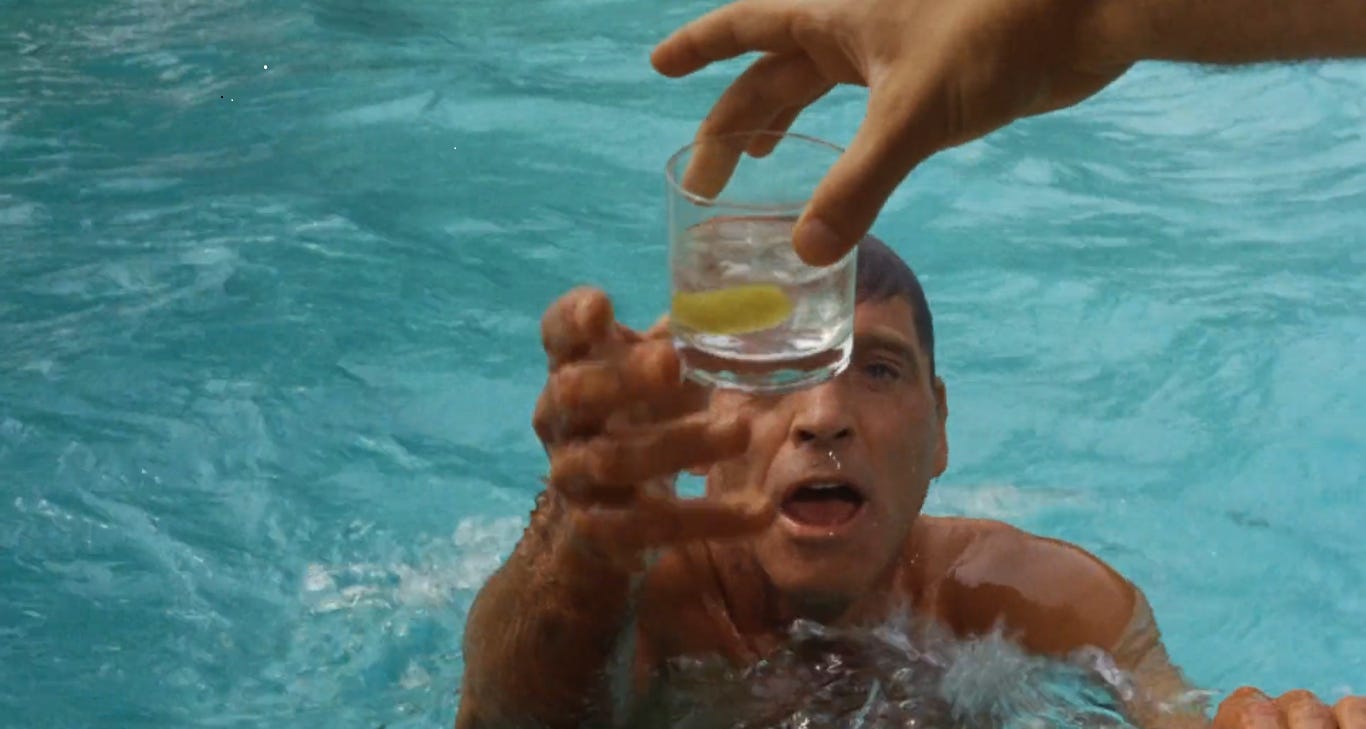
Much like transness, the apocalypse is typically associated with abundance, perhaps even decadence. Typically, there is a before that must be, that demands to be mourned. Sometimes that before isn’t so great. In The Matrix, Agent Smith tells Morpheus “Did you know that the first Matrix was designed to be a perfect human world? Where none suffered, where everyone would be happy. It was a disaster. No one would accept the program.” So instead, the evil robots redesigned the Matrix to be the then contemporary 1999. The Wachowski sisters reject the idea of utopia, but they also reject nostalgia. 1999 kind of sucks, but it’s the best we’re going to get. This is one of the things that makes The Matrix an abnormal apocalypse film. The rest of them, or at least most of them, want you to think that things were good. They traffic in nostalgia. The average apocalypse film says, “remember when things were good?” while dialectically suggesting “that goodness held the seeds of its own destruction”. Civilization is something to be protected, or to be mourned. Perhaps the best example of this recently was HBO’s The Last Of Us. The TV writers changed the apocalypse from occurring in 2013 (as it does in the video game) to 2003. The surface level reason for this was so that the main plot of the tv show could be occurring in the year it aired. However, it does more than this. It does not go so far as to ask its presumed American viewer to remember a pre-9/11 world. Afterall, who really can remember what that feels like anymore. But it does seem to suggest, “What if we’d never shelled Bagdad?”, “what if America did not spend decades entrenched in middle eastern wars of attrition? Do you remember that America? Don’t you wish you could go back?
Yes, apocalypticism is about abundance and nostalgia. The apocalyptic genre is concerned with “how did we get here?”, “how did we let that become this?”. Meanwhile, apocalyptic films that are not of the apocalyptic genre (that is, moves where the apocalypse is personal or the result of social change, not a zombie hoard) tend to focus on affluence. For instance, Mississippi Masala (directed by Zohran Mamdani’s mother) does not focus on the immediate upset of Idi Amin’s violent removal of the Ugandan Indians (who had previously functioned as imported colonial overseers of an apartheid state). Instead, the movie focuses on living in the ‘afterwards’ of a small tightknit Ugandan-Indian immigrant community in Mississippi. It concerns itself with the new social and material reality clashing with remnants of the old dead world’s. It necessarily relies on the characters having sufficient finances and free time to feel the weight of what has changed. Lost In Translation likewise centers on two affluent people with far too much time on their hands, navigating a world that feels alien to them. It is not merely that Scarlet Johanseen and Bill Murray are in a world where they cannot speak the language or know the social norms. Yes, they cannot move with any ease through this world. But additionally, it is centrally important that this lack of ease does not create financial hardship. It would be a very different and far more tragic movie if our two fish out of water had no money, food, and shelter. Could you imagine them attempting to pan handle at the Shibuya Crossing? Would they have time to ponder what they mean to each other? Wait fate would befall them unaware of how to be homeless in Japan? We can ask the same about pretty much any apocalyptic film. Would Petra Von Kant’s tears still be bitter if she was not a lavishly living fashion designer, if she did not have Marlene to boss around?
Which reminds me, this article is essentially additional content for my article “Unstuck In Gender: The Experience of Trans Apocalypse”. If you are hitting this paywall, and don’t want to pay, but do want to read something about apocalypses, go check it out!
^ Here is a discount code if you would like to subscribe and continue reading!
Comments
Nothing yet. Say the first thing.
Sign in to join the conversation.