
A few years ago, I had the privilege of working at my local library. To me, libraries have always been sanctuaries of intellectual freedom. They are the safe havens I have relied on again and again in my life, the keepers of magical realms: Oz, Hobbiton, Narnia, Earthsea, Discworld, Pern, Lankhmar, and every strange little world we find when we need a door out of our own.
To actually work in a library and have people refer to me as “a librarian” was a dream job. It was also the closest I had ever come to quitting as a writer.
Cue the existential crisis.
It was the first days of COVID, and the library was only open for the drive-thru window and curbside service. Because we weren’t letting patrons peruse the stacks in person, we kept the main lights off. It was my break, and I had gone off to explore the rows of books, feeling extremely privileged to have all this to myself.
The lights were dim. The building was quiet. The books waited in their rows, universes cataloged in alphabetical order. Every spine was proof that someone else had found the courage, discipline, delusion, or divine stubbornness to create something and finish what they began.
Most days, that inspired me. That day, for some reason, it almost broke me. Unbidden, a toxic thought chain popped up in my brain like tell-tale bubbles in a swamp.
So many books, I thought. So many books, and this huge library is just a pinprick-sized contribution to the body of words we have created as humans. Who am I to think I can add to this? I am unworthy.
I stood there feeling something inside me go still, as if the air were escaping from my dreams and they were collapsing all around me like sad balloons. I was surrendering.
For one moment, stopping felt noble, humble even. Withdrawing my dreams felt respectful, as if the right thing to do in the presence of so many books was to bow my head, back away, and leave the making of literature to better writers.
This false humility is one of the fake muse’s most convincing disguises.
You may have heard the whispers too. Look how much has already been written! Look how many voices are already on the shelf. Look how many people have said this better, sooner, louder, prettier, smarter, stranger, cleaner, braver. Who are you to add one more book? Who are you to take up space? The fake muse can make self-erasure feel like wisdom, but there is a difference between humility and letting your creative dreams fade.
Standing in that darkened library, surrounded by thousands of books, I almost forgot something essential: every book in that building was proof that someone, somewhere, had once looked at the massive cosmos of human language and decided to add one more voice anyway. The library was not telling me there was no room. It was showing me the path, shelf by shelf, spine by spine.
The fake muse is very good at twisting abundance into accusation. It can turn a room full of books into proof that the world doesn’t need one more. It can turn another writer’s success into evidence of your failure. It can turn admiration into paralysis. This is how awe curdles in our bellies and smothers the fire there.
Awe is supposed to open us. It reminds us that we are part of something vast and ancient and alive. Awe is what we feel when we stand under the night sky, read a sentence that splits us open, hear a song that reminds us that we have a voice, or walk between shelves of books and realize how much humanity has dreamed, feared, loved, lost, survived, and imagined.
Awe should make us more alive, but under the influence of the fake muse, awe becomes comparison.
Comparison says, “If someone else shines, there is less light for me.”
Comparison says, “If someone else has written beautifully, my attempt is embarrassing.”
Comparison says, “If the shelves are already full, my book is an intrusion.”
Comparison says, “If I cannot be the best, I should be silent.”
That is the fake muse. It doesn’t always tell us we are terrible. That would be too obvious. Instead, it tells us we are almost ready… but not quite yet.
It keeps us in a permanent waiting room, holding our manuscript in our lap, hoping someone official will walk in and tell us we may proceed. Maybe we should research more, or rebrand first, or study the market, or take another course. Maybe we should reorganize our notes, redesign the website, change the title, check the rankings, refresh the feed, read one more book about how to write the book, and spend another year preparing to become the person we already are.
That day in the library, I was having an existential crisis. I had assumed that with so many books there would be no room for me on the shelf.
I needed to remember that creativity is not a single chair at a crowded table. It isn’t a scarcity economy where every book diminishes the need for another. Art doesn’t work that way.
No one has your exact wound. No one has your exact rhythm, memory, hunger, humor, grief, vocabulary, tenderness, fury, faith, doubt, or strange collection of obsessions. No one else can make the thing that comes from your particular collision with the world.
This doesn’t mean everyone will want it. They won’t.
This doesn’t mean everyone will understand it. They can’t.
This doesn’t mean your work is automatically brilliant, finished, marketable, or immune from revision. It isn’t.
It does mean your voice is not invalidated by the existence of other voices. It means the shelves are never too full to welcome one more. That was the lie I had to reject in the library: that abundance meant I was unnecessary.
The fake muse wanted me to look at all those books and feel defeated. The real muse asked me to look again and see that every shelf is an invitation. Every book that exists is proof that someone else survived the question: Who am I to add to this? And then they added to it.
So this week, if the fake muse is whispering that the world already has enough books, enough poems, enough paintings, enough songs, enough essays, enough strange little projects, enough people with something to say, I invite you to answer differently.
Tell your fake muse that the shelves are not too full any more than the sky is too full of stars. You are not required to justify your place in the creative cosmos before you begin. You begin, and the work becomes your place.
The fake muse asks, “Do you really think there is room for one more?”
The real muse answers, “Yes, there is always room, and more.”
This Week in the Ecosystem
📅 · The Authortunities Calendar has been updated.
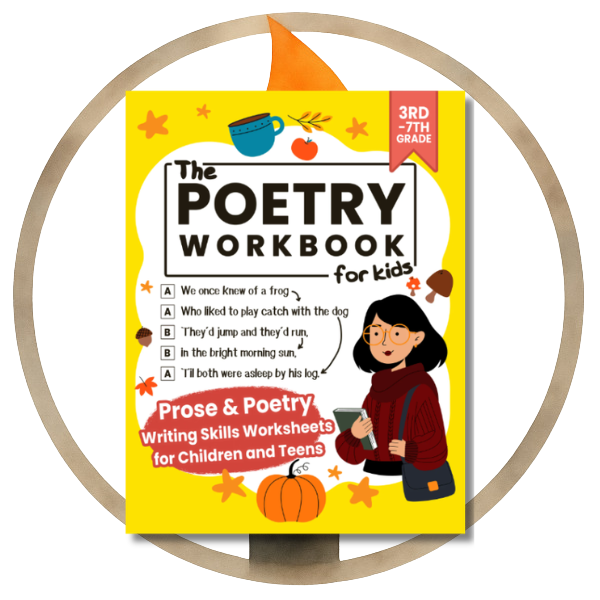
🔥 · Authortunities Press released three new books this week, including The Poetry Workbook for Kids by Kyra Starr.
🎙️· This week on Reading Space & Time, we will share more stories and poems from our July issue. This week we will feature “Raid on Rockfall” by Lixin Foo, “The Fall of King Shedim” by Maxwell I. Gold, “Floating Shift” by Mark Leslie, and “To the Unmasked Self” by Michael Bailey.
Comments
Nothing yet. Say the first thing.
Sign in to join the conversation.