
When I was a teenager, it was considered in vogue to carry around a copy of Seventeen magazine (we were too young for Vogue) and wait to “be discovered” by a talent scout. By the time I was in my twenties, the jig was up. I had realized two valuable things: being discovered is a lot of hard work, and I’d rather be a superauthor than a supermodel. So I went to work for the newspapers.
By 2020, when author events shifted online, I discovered something uncomfortable about myself: I could write books, publish books, edit books, advocate for other writers, teach, mentor, organize, and talk passionately for an hour about the importance of creativity… but the moment someone asked me to introduce myself, I wanted to crawl under my desk and have my mail forwarded there.
Every online event seemed to begin the same way. A grid of faces appeared, and everyone smiled politely. Someone welcomed us. Then came the sentence I dreaded:
“Let’s go around and introduce ourselves.”
I kept my hands off camera so no one would see the nervous tremors start.
My turn would approach like a slow-moving doom cloud. I would sit there rehearsing my own name, which only made me more nervous. Then, when the spotlight finally landed on me, I would do everything possible to step out of it.
“Haha, I’ve written some stuff.”
“I’ve gotten lucky and won a few awards.”
“I’m not very good at talking about myself, but what I really want to hear is…”
Then I would toss the attention to another author as quickly as possible, grateful to escape my own accomplishments.
I told myself I was being humble so I’d feel better about it. No one likes the person who enters a room wearing a crown made of their own press clippings, right? No one wants to sound arrogant, pushy, or self-important, I would tell my disappointed reflection. Looking back, however, I can see what was really happening.
The fake muse had made a bargain with my fear, and it went something like this:
If I stay small, I stay safe.
If I minimize myself first, no one else can do it to me.
If I hide the thing I made, it cannot be mocked, misunderstood, ignored, or found wanting.
That is the bargain of staying small.
It sounds like protection, humility, and good manners. It sounds like the safe, sensible choice in a world where confidence can be mislabeled as ego and marketing can feel like trying to sell snake oil to healthy people.
The fake muse likes to tell us that hiding is humility, silence is dignity, and visibility is vanity. She tries to convince us that wanting readers is embarrassing. She whispers that if the work were good enough, people would somehow find it without us ever having to open the door.
If we think about that, really think about it, we can see the logic flaw. For this to be true, readers would all need to be psychic, with book recommendations beamed directly into their brains from the magic book faeries.
We all know what to do when we need something. Need a mechanic, banking, a bathtub, or a BLT? We look for signs, ads, reviews, and recommendations.
The same is true for our books. We can believe in book faeries, but our books will likely gather dust while we wait to be discovered by them. Unlike the mythological talent scouts of the ’80s, there are actual hordes of ravenous readers looking for books to devour. They usually reach for the books placed in front of them. The authors who seem to be “accidentally” discovered are often practicing visibility.
I used to think selling myself meant selling out.
I was wrong.
That belief was one of my fake muse’s favorite disguises. It allowed me to pretend I was protecting the purity of the work when I was really protecting myself from the discomfort of being seen.
Marketing felt scammy to me because I associated it with manipulation. I pictured someone trying to sell water to mermaids, shouting into strangers’ faces about something they did not need. I thought promotion meant becoming louder, slicker, shinier, less myself.
Of course I resisted that. I wanted to be authentic.
In truth, ethical marketing is not about tricking people into wanting something useless. It is helping the right people find something they may genuinely need, enjoy, learn from, or be changed by.
Readers need books.
Writers have books.
So where is the problem?
A book unread is not morally superior to a book shared. A poem hidden is not purer than a poem offered. A service no one can find is not more ethical than a service clearly named, fairly priced, and honestly described.
Hiding the work does not protect the work. It imprisons it.
Imagine baking a beautiful cherry pie, setting it on the windowsill, smelling the cinnamon and butter, admiring the golden crust, knowing there are hungry people nearby who would love a slice, and then deciding the humble thing to do is hide it in the back room. We would never call that virtue. We would call it waste.
The problem is not that creators want their work to be read, heard, purchased, shared, or remembered. The problem is when we are taught to feel ashamed of wanting those things. We are allowed to love the making, but not the wanting. We are allowed to labor, but not to ask. We are allowed to create, but not to stand beside the creation and say, clearly, “I made this for someone like you.”
Standing there as ourselves, sharing what we have made, is simpler than we think. It gets awkward when we try to do it as the person we think we should be. We know our readers. They are usually similar to us. Copying someone else’s marketing tactics is like hiking in stilettos or clubbing in hiking boots. We might think we are bad at marketing when the real problem is that we are trying to move through the world in a shape that was never designed for us.
Some people are wonderful on video. Some are brilliant in long essays. Some build community through conversation. Some teach, joke, host, design, correspond, or shine one-on-one. Some are magnetic in person. Some are most themselves on the page. All of these approaches are valid when they fit.
Aligned visibility should feel like an extension of the creative self, not a costume that cuts off circulation.
This does not mean it will always feel easy. Sharing work can still be vulnerable. Pricing your work can still bring up old stories about worth. Announcing good news can still feel like standing in a bright room with no place to hide. That doesn’t mean you’re doing it wrong.
Art is not a safe word. Discomfort is how growth feels.
The fake muse asks you to put your creativity away with the fine china, wrapped in bubble wrap and brought out only on special occasions.
The real muse asks you to put it to daily use. Let it be chipped, broken, and worn. Repair it with a little kintsugi, or mosaic the shards into a tabletop and eat on paper plates.
This week, I invite you to break the bargain of staying small, not by changing who you are or gaming the system, but by making the work visible in a way that feels true. Take that glorious, messy, wonderful cherry pie you made and slap it on the windowsill where the hungry readers can catch the scent.
Start in the comments here. I happen to be hungry.
This Week in the Ecosystem
📅 · The Authortunities Calendar has been updated.
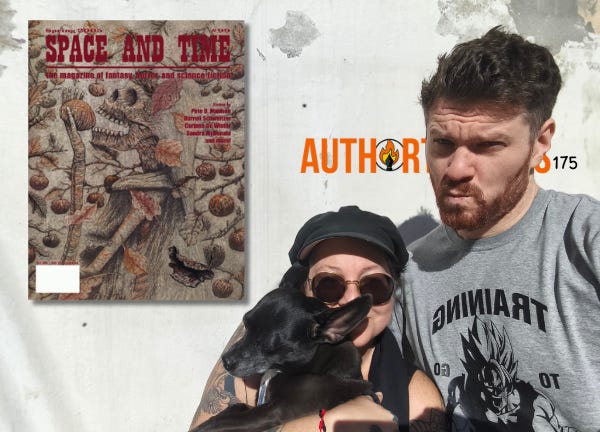
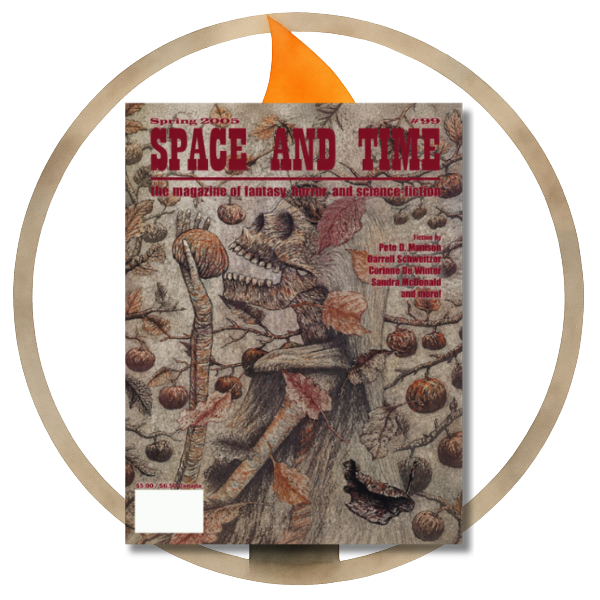
🔥 · Authortunities Press released Space & Time back issues this week, edited by Hildy Silverman and No. 99: 2005 Spring, the final issue edited by Gordon Linzner.
🎙️· This week on Reading Space & Time, we will be sharing more stories and poems from the July issue, namely “Cas9” by Geisa Fernandes, “I’m Proud of You” by Jamal Hodge, “Finding the Path” by Miguel O. Mitchell, and “I Dream of Black Quantum Futures” by Maurice Broaddus.
Comments
Nothing yet. Say the first thing.
Sign in to join the conversation.